Contents
show
What Is an Optometry Virtual Assistant and What Do They Do
American optometry practices continue to face rising patient volumes, increasingly complex insurance requirements, and ongoing difficulty recruiting reliable administrative staff. An optometry virtual assistant provides a flexible remote solution that manages essential back-office work so doctors and optical teams can concentrate on clinical care and patient relationships. This approach has gained traction as practices seek practical ways to maintain efficiency without expanding physical office space or full-time local headcount.
In today’s competitive eye care environment, 53% of medical group leaders identified finding candidates as their top staffing challenge in 2024. Virtual support can improve schedule utilization, reduce administrative bottlenecks, and strengthen patient communication. It can support smoother operations and sharpen focus on high-value activities, including comprehensive exams and optical sales, helping owners assess whether an optometry virtual assistant suits their needs and growth plans.
Understanding the Role of an Optometry Virtual Assistant
An optometry virtual assistant is a trained remote professional who supports eye care offices through secure digital tools and specialty knowledge of vision workflows. Unlike general administrative help, these specialists work inside the practice’s electronic health records, practice management systems, and communication platforms while handling tasks unique to optometry. Their contribution allows on-site teams to stay focused on patient care while the administrative backbone of the office runs reliably from a remote location.
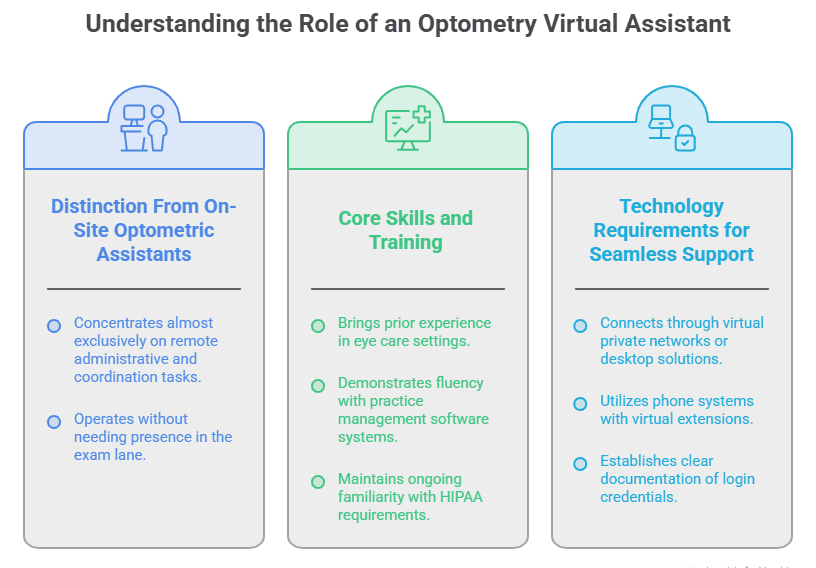
1. Distinction From On-Site Optometric Assistants
On-site optometric assistants typically combine clinical support duties such as pre-testing, visual acuity measurements, and frame adjustments with clerical responsibilities performed in the physical office. An optometry virtual assistant concentrates almost exclusively on remote administrative and coordination tasks that do not require hands-on patient interaction. This clear separation of duties prevents overlap and allows each role to operate at peak effectiveness within its own environment.
Because the virtual assistant never needs to be present in the exam lane or optical dispensary, practices gain flexibility in staffing without adding square footage or managing additional in-office logistics. The remote professional still communicates seamlessly with the clinical team through shared systems and structured handoffs. As a result, the overall workflow remains coordinated while each team member stays within their area of greatest strength and training.
2. Core Skills and Training
Successful optometry virtual assistants usually bring prior experience in eye care or medical office settings and demonstrate fluency with systems such as RevolutionEHR, Crystal PM, Compulink, OfficeMate, or Eyefinity. They understand vision plan structures including VSP, EyeMed, Spectera, and Davis Vision, as well as medical insurance eligibility and the differences between routine and medical visits. Strong written and verbal communication skills, attention to detail, and the ability to work independently across time zones are also essential for consistent performance.
Ongoing familiarity with HIPAA requirements and secure remote work practices further strengthens their value to any practice. Many candidates complete specialized training modules focused on optometry terminology, recall processes, and optical order workflows before or during onboarding. Practices that prioritize these competencies during hiring tend to experience faster integration and fewer process errors over time.
3. Technology Requirements for Seamless Support
Practices equip the optometry virtual assistant with secure remote access through virtual private networks or approved desktop solutions that connect directly to the existing electronic health record and practice management software. The same scheduling tools, patient communication platforms, and insurance eligibility systems used by on-site staff become available to the remote team member. This shared technology environment enables real-time updates and consistent patient information across locations.
Phone systems that support call forwarding or virtual extensions allow the assistant to answer and route inbound calls as if they were sitting at the front desk. Clear documentation of login credentials, escalation protocols, and daily priorities further ensures smooth collaboration. When these technical foundations are established properly, the virtual assistant functions as a fully integrated member of the practice team.
Key Responsibilities of an Optometry Virtual Assistant

The daily work of an optometry virtual assistant keeps practices organized, schedules optimized, and patients engaged through reliable remote support. With 23% of practice leaders citing administrative burdens as their biggest productivity obstacle, these responsibilities support clinical efficiency and revenue. Success requires optometry-specific knowledge and careful attention to patient experience.
1. Appointment Scheduling and Calendar Management
- Book comprehensive eye exams, contact lens fittings, dilations, medical visits, pediatric appointments, and specialty referrals while correctly distinguishing appointment types.
- Manage cancellations, fill open slots from the waitlist, and place confirmation calls or messages the day before visits to reduce no-shows.
- Keep the daily and weekly calendar organized so the doctor’s time remains productive and patient flow stays consistent throughout the clinic day.
2. Insurance Verification and Benefits Coordination
- Verify patient eligibility for vision and medical benefits before every appointment, covering major plans such as VSP, EyeMed, Spectera, and medical insurers.
- Confirm exam allowances, frame and lens benefits, contact lens coverage, and expected copays so patients receive accurate financial information at check-in.
- Reduce claim denials and billing surprises by completing thorough pre-visit checks and documenting benefits clearly in the practice management system.
3. Patient Communication and Recall Outreach
- Handle inbound calls and portal or SMS messages, route inquiries appropriately, and maintain professional patient interactions throughout the day.
- Run recall campaigns for annual exams and prescription renewals while coordinating contact lens reorder reminders before supplies expire.
- Support optical finalization, lab order status updates, and follow-up outreach that encourages reviews or additional family appointments when appropriate.
4. Billing Support, Claims Follow-Up, and Data Entry
- Assist with claim submission, track pending or denied claims, and help maintain accurate billing records within the practice’s systems.
- Enter intake information, update electronic health records, and keep patient data clean and organized for clinical and administrative use.
- Monitor optical order tracking and support basic inventory coordination for frames or contact lenses as directed by the practice team.
5. Additional Administrative and Marketing Tasks
- Manage the Google Business Profile, respond to online reviews, and handle routine digital reputation tasks that influence new patient inquiries.
- Prepare simple reports on schedule fill rates, collections, or recall performance to give practice leadership clear visibility into key metrics.
- Coordinate specialty referrals to ophthalmology or retina specialists and complete other back-office administrative duties that free on-site staff for higher-priority work.
Benefits of an Optometry Virtual Assistant
Hiring an optometry virtual assistant delivers operational, financial, and clinical advantages amid staffing and efficiency pressures, while 43.2% of U.S. physicians reported at least one burnout symptom in 2024. These benefits compound as the remote team member learns practice-specific processes and patient preferences. Eye care offices can achieve measurable improvements once the role is fully integrated.
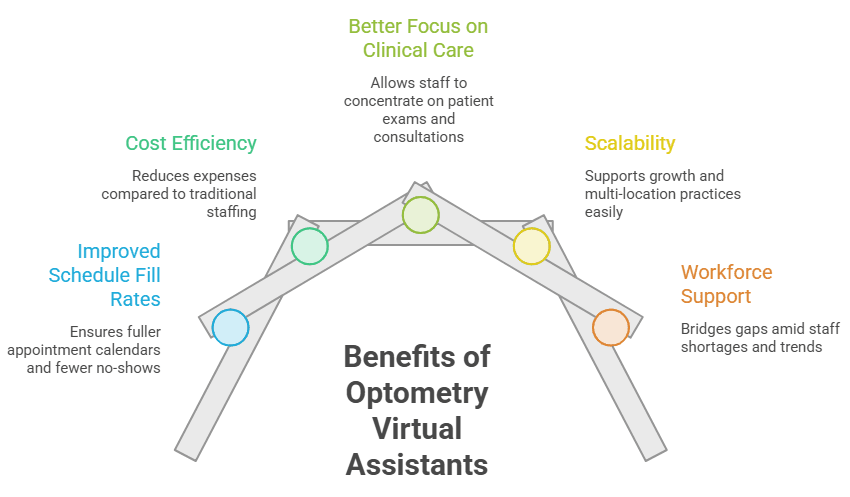
1. Improved Schedule Fill Rates and Reduced No-Shows
Consistent confirmation calls, text reminders, and active waitlist management help practices maintain fuller appointment calendars and fewer empty slots. When administrative outreach is handled reliably from a remote location, on-site teams can devote more attention to patient-facing activities that improve the overall experience. Over time, these efforts contribute to stronger schedule utilization and more predictable daily patient volume.
2. Cost Efficiency Compared With Traditional Staffing
Remote support frequently costs less than a comparable full-time local hire once salary, benefits, workspace, equipment, and ongoing training expenses are factored in. Practices gain flexible coverage during peak call times or extended hours without the need for overtime or additional physical office capacity. This cost structure is particularly helpful as employment of opticians, who held about 79,900 jobs in 2024, is projected to grow more slowly at 3 percent through 2034.
3. Better Focus on Clinical Care and Patient Relationships
Optometrists and technicians can devote more attention to exams, medical decision-making, and optical consultations. Administrative bottlenecks that previously delayed patient flow or left phones unanswered are minimized. In an environment where about 49.1% of U.S. adults aged 18 and older reported an eye exam from a specialist in the preceding year (2022 data), efficient operations help practices meet demand.
4. Scalability for Growing or Multi-Location Practices
A virtual assistant can support multiple locations or expand hours of coverage more easily than hiring additional on-site staff at each site. This flexibility suits independent practices, private-equity groups, and corporate optical settings that need consistent processes across different offices. As patient volume grows, the same remote professional can absorb additional administrative load without requiring new physical workspace or proportional increases in local headcount.
5. Support Amid Workforce Trends
With optometrist employment projected to rise 8 percent from 2024 to 2034 and many practices reporting moderate to severe shortages of support staff, remote assistance helps bridge gaps without waiting for local talent pipelines to expand. U.S. optometrists held about 47,800 jobs in 2024, with roughly 2,400 openings expected each year on average over the decade. An optometry virtual assistant provides a practical interim and long-term solution while practices continue to recruit and retain on-site team members.
How to Hire and Integrate an Optometry Virtual Assistant

Selecting and onboarding the right person determines whether the investment delivers lasting operational improvements. A structured approach that begins with clear role definition and continues through performance measurement produces the strongest results. Practices that treat the virtual assistant as a true team member rather than temporary help typically see faster returns.
1. Defining the Scope and Required Experience
- List priority tasks such as daily scheduling volume, insurance verification needs, recall campaign goals, and optical follow-up responsibilities before beginning the search.
- Seek candidates with proven optometry or medical office experience, familiarity with specific EHR platforms used by the practice, and strong professional communication skills.
- Consider specialized healthcare virtual staffing agencies that pre-screen for industry knowledge and HIPAA readiness when internal recruiting capacity is limited.
2. Interview and Trial Process
- Conduct video interviews that include scenario-based questions about handling cancellation waitlists, explaining vision plan benefits, or recovering no-show appointments.
- Evaluate accuracy, professionalism, and cultural fit during conversations that mirror real practice interactions.
- Begin with a paid trial period of one to four weeks so both sides can assess working style, responsiveness, and overall compatibility before making a longer commitment.
3. Onboarding and Technology Setup
- Provide secure access credentials, detailed standard operating procedures, approved scripts for common patient interactions, and clear escalation paths for clinical questions.
- Schedule regular check-ins during the first 30 to 60 days and assign a primary on-site liaison so the assistant has a consistent point of contact.
- Confirm that remote technology connections function reliably and that the assistant understands documentation and communication expectations from day one.
4. Measuring Performance and ROI
- Track metrics that include call answer rates, appointment confirmation rates, no-show percentages, insurance verification accuracy before visits, and recall response rates.
- Monitor optical finalization conversions and other revenue-related indicators that reflect the assistant’s contribution to practice goals.
- Review performance data monthly and adjust responsibilities or provide additional training as the practice’s needs and priorities evolve over time.
Challenges and Best Practices for an Optometry Virtual Assistant
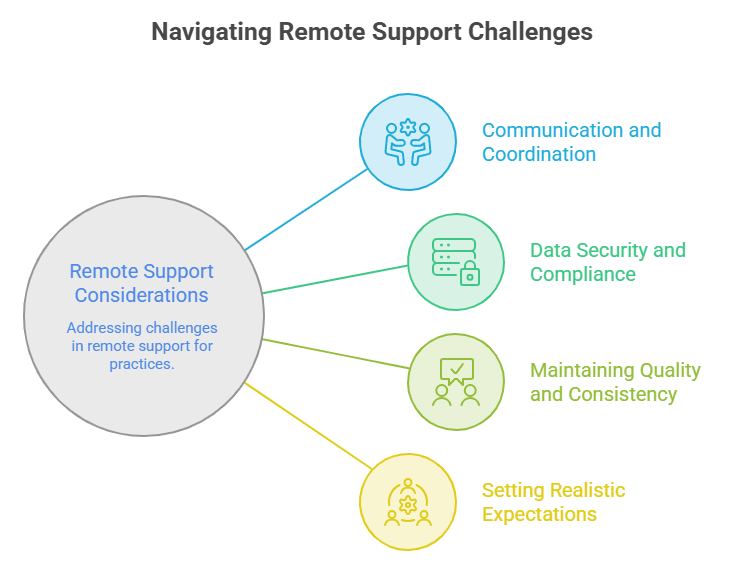
Remote support introduces considerations, especially because 48% of hybrid workers say teams have not discussed a collaboration plan. Successful practices address such challenges through clear processes, ongoing communication, and early best practices that maintain quality, prevent frustration, and keep partnerships productive.
1. Communication and Coordination
Time-zone differences and the absence of informal hallway conversations require structured handoffs, shared digital task lists, and regularly scheduled video or phone meetings. Daily or weekly priority lists ensure the assistant knows which tasks take precedence when volume fluctuates. Practices that maintain open channels for questions and feedback experience fewer misunderstandings and smoother daily operations.
2. Data Security and Compliance
HIPAA compliance remains non-negotiable for any remote team member who accesses protected health information. Practices should use encrypted connections, role-based access controls, and signed business associate agreements while training the assistant on privacy protocols specific to the office. Periodic audits of access logs and refresher training further protect patient data and reduce risk.
3. Maintaining Quality and Consistency
Provide ongoing feedback, updated scripts when processes change, and opportunities for the assistant to learn new software features or workflow adjustments. Some practices cross-train the virtual assistant on related tasks so coverage remains robust during vacations or unexpected volume spikes. Regular quality reviews help sustain the high standards patients expect from the practice.
4. Setting Realistic Expectations
An optometry virtual assistant excels at administrative work but cannot replace clinical judgment, in-person optical dispensing, or hands-on patient care. With only 44% of employees fully knowing what was expected in 2024, practices should define boundaries, document responsibilities, and provide training. Transparent communication about what the role can and cannot cover prevents disappointment and supports sustainable results.
TaskVirtual: Your Partner for Optometry Virtual Assistant Services

Running a successful optometry practice requires constant attention to scheduling, insurance verification, patient recalls, billing follow-up, and optical coordination. These administrative demands often pull doctors and on-site staff away from clinical care and patient relationships. TaskVirtual specializes in providing expert optometry virtual assistant services that integrate smoothly into existing workflows and handle the remote support needs outlined throughout this guide.
1. Specialized Optometry Expertise and Guidance
TaskVirtual’s virtual assistants understand vision-specific processes, including VSP and EyeMed benefits, contact lens reorders, annual exam recalls, and practice management systems commonly used in eye care. They assist practices in optimizing appointment calendars, verifying insurance eligibility before visits, and maintaining consistent patient communication that supports both clinical continuity and optical revenue.
2. Affordable and Flexible Pricing
Hiring a full-time local administrative employee can be costly when salary, benefits, and workspace are included. TaskVirtual offers cost-effective remote support with pricing plans starting from just $3.12/hour to $14.99/hour, making specialized optometry virtual assistant services accessible to solo practitioners, multi-location groups, and growing optical practices.
3. Full-Spectrum Administrative Solutions for Eye Care
From managing daily schedules and waitlists to handling insurance verification, recall outreach, claims support, and optical order tracking, TaskVirtual covers the core responsibilities of an optometry virtual assistant. Their services scale easily whether a practice needs part-time coverage or dedicated full-time remote support aligned with patient volume.
4. Continuous Support and Performance Standards
TaskVirtual provides ongoing coordination, regular updates, and quality monitoring so practices maintain reliable administrative performance. Their proactive approach helps keep schedules full, reduce no-shows, and ensure patient inquiries and follow-ups are handled promptly without adding burden to the on-site team.
5. Established Reputation for Reliability
With 364 positive reviews and a 4.7-star rating on trusted VA platforms, TaskVirtual is recognized as a dependable partner for practices seeking remote administrative assistance. Clients rely on their trained virtual assistants to streamline optometry operations and free clinical staff to focus on high-value patient care.
FAQ Section
1. What is the main difference between an optometry virtual assistant and a traditional medical virtual assistant?
An optometry virtual assistant understands vision-specific workflows, plan benefits (VSP, EyeMed, etc.), optical finalization, contact lens reorders, and terminology unique to eye care, whereas a general medical VA may lack that specialty knowledge.
2. Can an optometry virtual assistant handle insurance verification for both vision and medical plans?
Yes. Experienced assistants routinely verify eligibility, benefits, and copays for major vision plans and medical insurance before appointments.
3. How much time can an optometry virtual assistant free up for the doctor or optical team?
Results vary by practice size and task volume, but many offices report significant reductions in administrative interruptions, allowing more focus on exams and patient interactions.
4. Do practices need special software to work with a virtual assistant?
Most use existing EHR and practice management systems with secure remote access. Phone systems that support call forwarding or virtual extensions are helpful.
5. Is an optometry virtual assistant suitable for a solo or small practice?
Yes. Smaller practices often benefit the most from flexible, part-time or full-time remote support that scales with patient volume without adding overhead.
6. What metrics should a practice track after hiring an optometry virtual assistant?
Key indicators include schedule fill rate, no-show rate, call answer rate, insurance verification completion before visits, recall response, and optical order finalization rates.
Conclusion and CTA
An optometry virtual assistant has become a valuable resource for U.S. eye care practices managing growth, staffing constraints, and administrative complexity. By handling scheduling, insurance verification, patient outreach, and related tasks remotely, these professionals help keep calendars full and free doctors and optical teams to focus on quality care.
Review your current challenges—unanswered calls, incomplete recalls, delayed insurance checks, or optical follow-up gaps—and consider how dedicated remote support could address them. Document priority tasks and explore specialized staffing partners that understand optometry. Taking this step can improve efficiency and patient experience in the months ahead.
Sources
- U.S. Bureau of Labor Statistics, Occupational Outlook Handbook: Optometrists (2024 data and 2024–34 projections). https://www.bls.gov/ooh/healthcare/optometrists.htm
- U.S. Bureau of Labor Statistics, Occupational Outlook Handbook: Opticians, Dispensing. https://www.bls.gov/ooh/healthcare/opticians-dispensing.htm
- National Health Interview Survey data summarized in visual impairment and eye care services research (2022 eye exam rates among U.S. adults). https://iovs.arvojournals.org/article.aspx?articleid=2796556
- Centers for Disease Control and Prevention, Vision and Eye Health Surveillance System resources on prevalence and service utilization. https://www.cdc.gov/vision-health-data/
- Additional context drawn from publicly available industry reports on staffing pressures and telehealth utilization trends consistent with CMS and BLS data.
For more such content, visit our website.
 Siddhartha Basu is a Technical Writer at Task Virtual. He loves online games, e-book reading, and Yoga.