

Contents
show
How a Roofing Virtual Assistant Helps Roofing Companies Scale
Running a roofing company in the United States means balancing strong replacement demand with persistent labor constraints and heavy administrative loads. Many owners spend too many hours on scheduling, lead follow-up, insurance coordination, and invoicing instead of closing jobs or managing crews. A roofing virtual assistant provides a practical way to reclaim that time and support sustainable growth.
In 2026, the U.S. roofing contractors market reaches roughly $92.5 billion, driven largely by renovation and storm-related work. At the same time, the broader construction industry needs an estimated 349,000 net new workers, while roofers number about 166,700 with 6 percent projected growth through 2034. These conditions make specialized remote support a strategic tool for companies that want to scale without proportionally increasing fixed overhead.
The Scaling Challenges Facing Roofing Companies Today
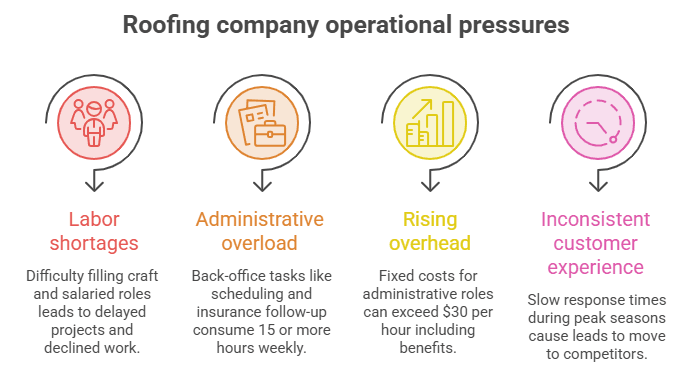
Roofing companies face interconnected operational pressures that limit growth even when market demand remains solid. Labor shortages, administrative overload, rising fixed costs, and uneven customer experiences during peak periods all compete for limited owner and office capacity. Addressing these issues is essential for any firm that wants to expand crews, improve margins, or capture a larger share of available work.
1. Persistent Labor Shortages and High Turnover
Skilled labor continues to rank as the primary constraint for most contractors. Construction firms report widespread difficulty filling both craft and salaried roles, and many have delayed projects or declined work because crews were unavailable. Roofing feels these pressures acutely because of the physically demanding nature of the work, seasonal fluctuations, and competition from other trades for the same workers.
Higher wages and longer time-to-fill for experienced installers force owners to step into field or administrative roles that pull them away from sales and strategic activities. The result is slower growth and increased burnout at the leadership level. Without additional capacity, companies struggle to convert available demand into completed jobs.
2. Administrative Overload That Limits Owner Capacity
Even when field crews stay productive, back-office tasks consume large blocks of time. Lead response, CRM updates, appointment scheduling, insurance claim follow-up, material coordination, and routine customer communication can easily absorb 15 or more hours each week for an owner or office manager. Entrepreneurs across small businesses commonly lose around 16 hours weekly to administration, and roofing firms often face heavier loads because of insurance complexity and weather-driven urgency.
This constant context-switching reduces the time available for estimates, site visits, and relationship building. Over time, the administrative burden becomes a hidden ceiling on revenue and company growth.
3. Rising Overhead and Thin Margins
In-house administrative staff carries full salary, benefits, office space, equipment, and training costs. For many firms, a fully loaded U.S. administrative role approaches or exceeds $30 per hour once taxes and benefits are included. Material price volatility and insurance challenges already pressure margins, so adding fixed overhead for support roles further slows profitable scaling.
Companies that rely solely on traditional local hires often find that administrative costs rise faster than revenue during growth phases. This dynamic makes it harder to invest in marketing, equipment, or additional field capacity.
4. Inconsistent Customer Experience During Peak Seasons
Storm seasons and busy replacement cycles create sharp spikes in inquiries. Slow response times cause leads to move to competitors who answer faster, while follow-up quality often declines under volume pressure. Without dedicated capacity, review volume and online reputation suffer, directly affecting future referrals.
These service gaps become more costly as competition intensifies. Consistent communication and reliable scheduling are now expected baseline standards rather than differentiators.
What a Roofing Virtual Assistant Actually Does

A roofing virtual assistant is a remote professional trained to handle the recurring administrative and coordination tasks that keep a roofing business running. The role focuses on processes that do not require physical presence on a job site while still delivering industry-specific knowledge and responsiveness.
1. Core Administrative and Operational Support
- Managing incoming leads from websites, referral partners, and marketing campaigns and updating the CRM promptly.
- Scheduling inspections, installs, and follow-up appointments while coordinating with field teams and customers.
- Tracking invoices, payments, and basic accounts receivable follow-up to keep cash moving.
2. Specialized Roofing Workflow Support
- Coordinating insurance claims by gathering photos, tracking supplements, and communicating with adjusters.
- Handling data entry in estimating platforms, warranty registrations, and permit tracking.
- Running post-job follow-up sequences that request reviews and nurture referral opportunities.
3. Marketing and Sales Pipeline Assistance
- Maintaining content calendars, social media posting schedules, and review-request campaigns.
- Qualifying inbound inquiries so estimators and salespeople focus only on serious opportunities.
- Supporting nurture sequences for leads that are not yet ready to buy.
4. Flexible Coverage That Matches Seasonal Demand
- Scaling hours upward during peak storm or reroofing seasons without long-term commitments.
- Reducing coverage during slower periods so costs align more closely with revenue.
- Providing consistent coverage across time zones or extended business hours when needed.
How Roofing Virtual Assistants Directly Enable Scaling
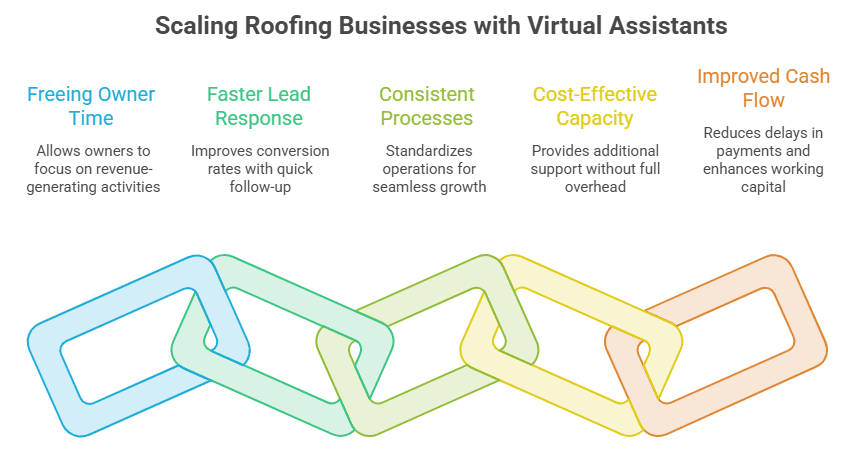
A roofing virtual assistant removes capacity bottlenecks that otherwise limit growth. By absorbing routine work, the assistant allows owners and key staff to concentrate on revenue-generating activities while improving consistency across the customer journey. The result is higher throughput, better margins, and a business that can expand beyond the founder’s personal bandwidth.
1. Freeing Owner and Key Staff Time for Revenue Work
When an owner or sales manager reclaims 10–15 hours per week previously spent on admin, those hours can go toward estimates, site visits, networking with realtors and insurance agents, or training crews. The opportunity cost of owner time is high; recovering it compounds quickly into additional closed jobs.
2. Faster Lead Response and Higher Conversion
Speed-to-lead is a proven differentiator. A dedicated assistant monitoring channels can respond within minutes rather than hours. Faster acknowledgment improves conversion rates and creates a professional first impression that supports premium pricing and better online reviews.
3. Consistent Processes That Support Growth Beyond the Founder
As companies add crews or expand into new service areas, inconsistent processes become bottlenecks. A virtual assistant following documented checklists for lead handling, job setup, and closeout helps standardize operations so the business is less dependent on any single person’s memory or availability.
4. Cost-Effective Capacity Without Full Overhead
Virtual assistants typically cost substantially less than equivalent in-house roles once benefits, taxes, workspace, and management time are factored in. Small businesses already outsource at meaningful rates; about 37 % outsource at least one function, and many report meaningful time savings and cost reductions when using remote support.
5. Improved Cash Flow Through Better Follow-Through
Missed invoices, delayed insurance supplements, and incomplete documentation slow cash collection. An assistant focused on tracking and follow-up reduces those leaks and shortens the cycle from job completion to payment. Consistent attention to receivables and claim status improves working capital and gives owners clearer visibility into upcoming cash needs.
Measuring the Impact: Key Metrics Roofing Companies Track

Successful companies treat virtual assistant investment like any growth initiative, tracking clear before-and-after metrics. With 24% of small businesses outsourcing to enhance efficiency, focusing on operational and financial indicators reveals whether support delivers capacity and margin gains.
1. Time Savings and Capacity Gains
- Hours reclaimed each week by owners and office staff.
- Number of additional estimates completed or jobs booked that previously would have been delayed.
- Reduction in after-hours or weekend admin work performed by leadership.
2. Lead Response and Conversion Metrics
- Average first-response time to new inquiries.
- Contact rate and qualified-lead percentage.
- Overall close rate on leads that receive rapid, consistent follow-up.
3. Cost Per Administrative Hour and Overall Overhead Ratio
- Fully loaded cost of previous in-house support or owner time versus the virtual assistant investment.
- Administrative costs as a percentage of revenue as volume grows.
- Total monthly support spend relative to revenue generated from the reclaimed capacity.
4. Customer Satisfaction and Review Volume
- Changes in Google, Angi, and other platform ratings and review volume.
- Internal customer satisfaction or Net Promoter Score trends.
- Frequency of positive mentions of communication and professionalism.
5. Project Throughput and Backlog Management
- Number of jobs completed with the same field capacity.
- Reduction in delayed starts caused by missing paperwork or unclear customer communication.
- Average days from signed contract to job completion.
Best Practices for Implementing a Roofing Virtual Assistant
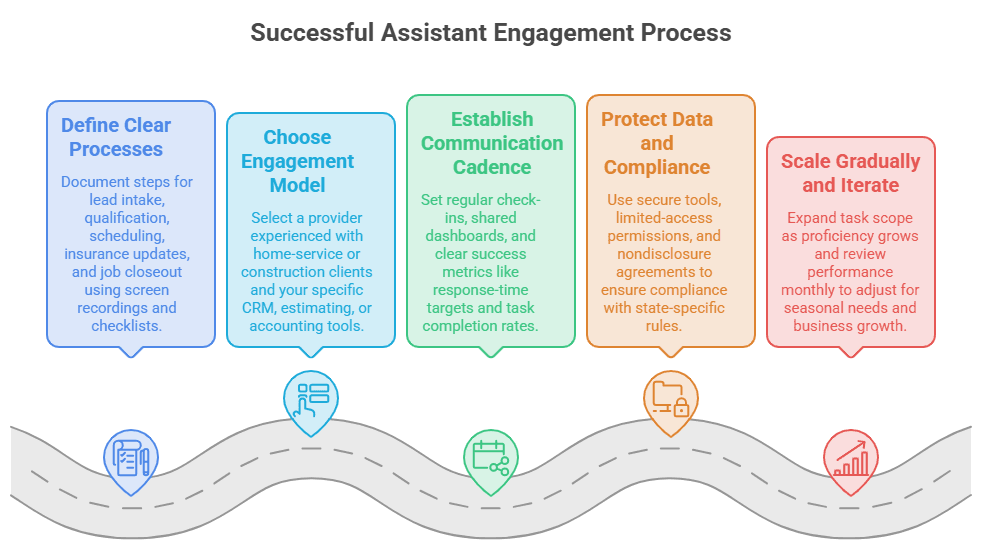
A successful engagement begins with clear expectations and structured onboarding rather than simply handing over a list of tasks. Companies that invest a modest amount of time up front in process documentation and communication protocols achieve faster results and fewer frustrations. Treating the assistant as an integrated team member produces better outcomes than treating the role as a pure vendor relationship.
1. Define Clear Processes Before Handing Off Work
Document the exact steps for lead intake, qualification, scheduling, insurance updates, and job closeout. Screen recordings, checklists, and CRM field definitions reduce training time and errors. Start with one or two high-volume processes rather than attempting a full office handover on day one.
2. Choose the Right Engagement Model and Provider
Options range from part-time hours through specialized agencies to dedicated full-time remote staff. Look for providers experienced with home-service or construction clients, strong communication protocols, data security practices, and the ability to train on your specific tools (CRM, estimating software, accounting platform).
3. Establish Communication Cadence and Performance Metrics
Set regular check-ins (daily stand-ups or weekly reviews), shared dashboards, and clear success metrics such as response-time targets, task completion rates, and error thresholds. Treat the assistant as a team member rather than a vendor for best results.
4. Protect Data and Maintain Compliance
Use secure tools, limited-access permissions, and nondisclosure agreements. Ensure the arrangement complies with any state-specific employment or data rules relevant to your operations. Most reputable providers already operate under standard business-associate and confidentiality frameworks.
5. Scale Gradually and Iterate
Begin with a defined set of tasks and expand scope as trust and proficiency grow. Review performance monthly and adjust hours or responsibilities based on seasonal needs and business growth. Periodic process reviews keep the arrangement aligned with changing company priorities and prevent scope creep or under-utilization.
Common Pitfalls and How to Avoid Them
Many companies encounter avoidable friction when they introduce remote support. Awareness of the most frequent issues allows owners to design the engagement for smoother adoption and stronger results from the start.
1. Vague Instructions Leading to Rework
- Provide written process documents, screen recordings, and examples of both good and incomplete work.
- Establish a short daily or weekly feedback loop during the first several weeks.
- Clarify decision rights so the assistant knows when to escalate versus act independently.
2. Choosing Purely on Lowest Price
- Evaluate total cost of ownership, including management time and the cost of errors or lost leads.
- Prioritize industry experience and communication quality over the lowest hourly rate.
- Request references from other home-service or roofing clients before committing.
3. Failing to Integrate with Existing Systems
- Grant the assistant appropriate access to the CRM, shared calendars, and project tools from day one.
- Provide short training sessions or recorded walkthroughs of each platform.
- Confirm that the chosen tools support secure remote access and audit trails.
4. Neglecting Cultural Fit and Communication Style
- Screen candidates for professional tone, responsiveness, and comfort with construction or home-service language.
- Share examples of preferred customer communication style during onboarding.
- Include the assistant in relevant team channels so they absorb company culture and expectations.
TaskVirtual: Your Partner in Roofing Virtual Assistant Services

Roofing company owners and managers often lose valuable hours each week to lead follow-up, scheduling, insurance coordination, CRM updates, and customer communication. These recurring tasks pull attention away from estimates, crew management, and closing work. TaskVirtual delivers dedicated roofing virtual assistant services that handle these operational responsibilities so contractors can focus on scaling their businesses and serving more customers.
1. Expert Roofing Workflow Support
TaskVirtual’s trained virtual assistants help manage inbound leads, update CRM records, coordinate inspections and installs, and support insurance claim processes. They also assist with invoice tracking, supplier communication, and post-job follow-up sequences that encourage reviews and referrals.
2. Affordable and Flexible Pricing
Hiring full-time in-house administrative staff can strain budgets, especially for growing roofing firms. TaskVirtual offers cost-effective remote support with pricing plans starting from just $3.12/hour to $14.99/hour, making professional assistance accessible whether you need part-time coverage or more consistent hours.
3. Comprehensive Virtual Assistant Solutions for Contractors
From rapid lead response and appointment scheduling to insurance supplement tracking and review request campaigns, TaskVirtual covers the core administrative and sales-support functions roofing companies rely on. Services scale easily to match seasonal demand spikes or quieter periods.
4. Ongoing Support and Quality Assurance
TaskVirtual provides proactive updates, clear communication protocols, and consistent performance monitoring. Their approach helps ensure leads are handled promptly, jobs stay organized, and customer interactions remain professional throughout the project lifecycle.
5. Proven Track Record of Excellence
With 364 positive reviews and a 4.7-star rating on trusted VA platforms, TaskVirtual is recognized as a reliable partner for businesses seeking dependable remote support. Roofing contractors and other service companies count on their team to streamline operations and free up capacity for growth.
FAQ Section
1. What tasks can a roofing virtual assistant handle most effectively?
Lead response and qualification, CRM updates, scheduling, insurance claim coordination, invoicing follow-up, supplier communication, review requests, and routine customer service. Field work and complex estimating stay in-house.
2. How much does a roofing virtual assistant typically cost compared with an in-house hire?
Costs vary by experience and hours, but remote support is generally substantially lower than a fully loaded U.S. administrative employee once benefits, taxes, and overhead are included. Many companies begin part-time.
3. How quickly can a company see results after hiring one?
Most firms notice reduced owner admin load and faster lead response within the first 2–4 weeks after processes are documented. Full impact on revenue and capacity usually appears within 60–90 days.
4. Is a virtual assistant secure enough for customer and insurance data?
Reputable providers use secure platforms, access controls, and confidentiality agreements. Companies should still apply least-privilege permissions and verify security practices.
5. Can a virtual assistant work with my existing software?
Yes. Most can learn common CRMs, estimating tools, accounting platforms, and communication apps when given access and brief training.
6. What size of roofing company benefits most?
Solo operators, small crews, and multi-crew firms constrained by admin capacity or owner time. Larger operations often use multiple specialized assistants.
Conclusion and CTA
A roofing virtual assistant removes the administrative ceiling that keeps many companies from scaling. By reclaiming owner time, accelerating lead response, and improving process consistency, firms can take on more work and protect margins without a proportional rise in fixed costs.
Start by auditing the hours currently spent on non-revenue tasks and identifying the first processes to hand off. Companies that implement focused, well-documented support now will be better positioned to capture demand in the next busy season.
Sources
- IBISWorld, Roofing Contractors in the US industry data (market size approximately $92.5 billion in 2026; ~109,000 businesses; growth trends).
- U.S. Bureau of Labor Statistics, Occupational Outlook Handbook – Roofers (employment ~166,700 in 2024; median annual pay $50,970; 6% projected growth 2024–2034; ~12,700 annual openings).
- Associated Builders and Contractors, 2026 construction workforce shortage analysis (estimated need for 349,000 net new workers in 2026).
- Associated General Contractors of America / related workforce surveys (high percentages of firms reporting difficulty hiring qualified craft and salaried workers).
- Clutch small-business outsourcing surveys (approximately 37 percent of small businesses outsource at least one function).
- Time etc / related entrepreneur surveys (administrative time burden commonly around 15–16 hours per week).
For more such content, visit our website.
 Siddhartha Basu is a Technical Writer at Task Virtual. He loves online games, e-book reading, and Yoga.