Contents
show
How CRM Order Management and Contract Management Close Deals
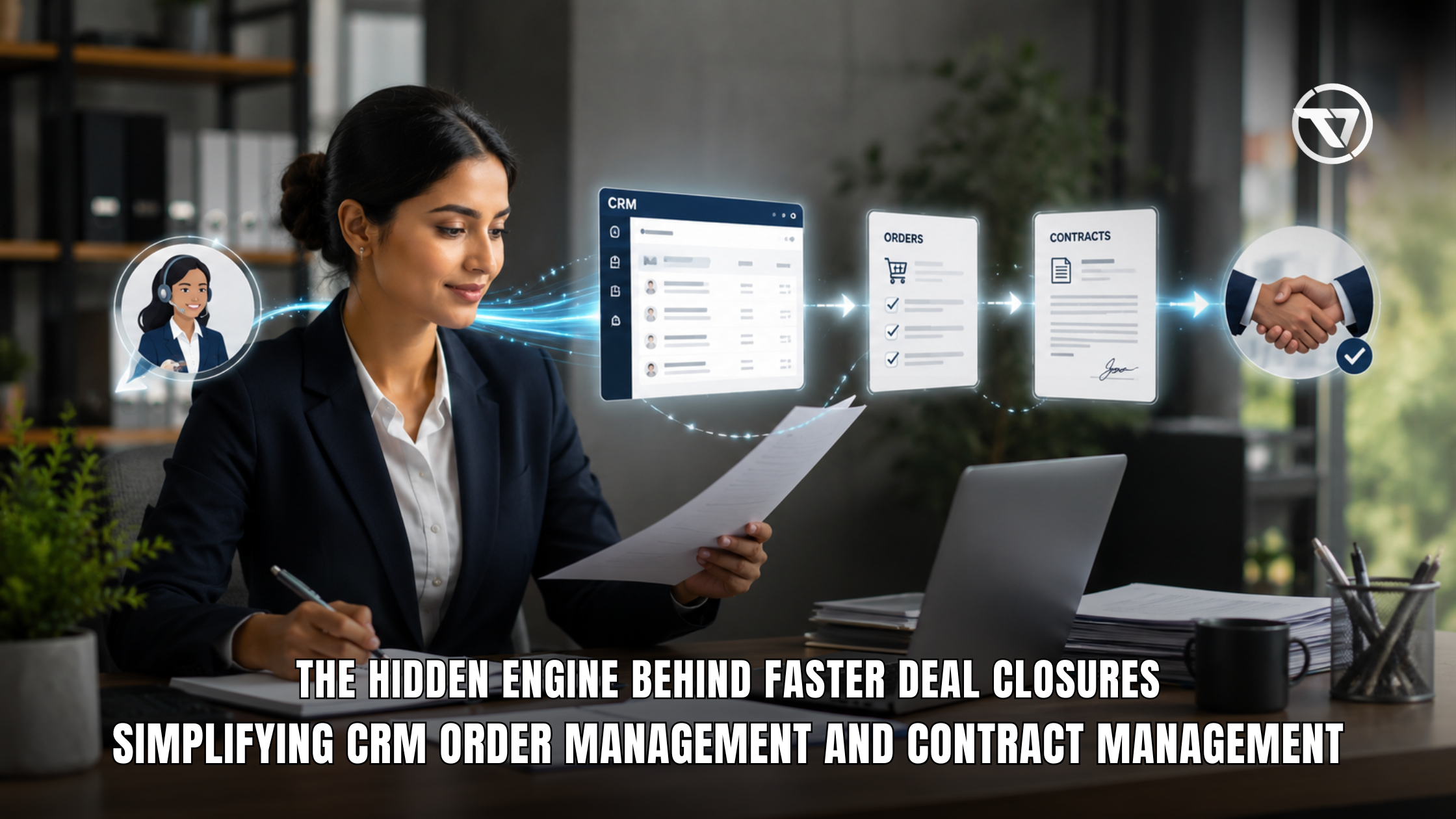
In today’s fast-paced B2B landscape, sales teams lose deals due to slow processes, manual errors, and disjointed systems. CRM order management and contract management solutions integrate customer data, order processing, and the contract lifecycle into a single, seamless platform.
Businesses using these integrated tools see significant gains in revenue and productivity, including an average 29% increase in sales revenue. With AI-powered automation, American companies can close deals faster while minimizing compliance risks.
Why CRM Order Management Matters in 2026
Businesses face growing pressure for faster fulfillment and error-free transactions amid supply chain issues and rising expectations. CRM order management unifies sales, operations, and customer data in real time. Adopting these systems provides a strong competitive edge by cutting administrative work and boosting revenue operations, with many companies reporting up to 40% faster order fulfillment.
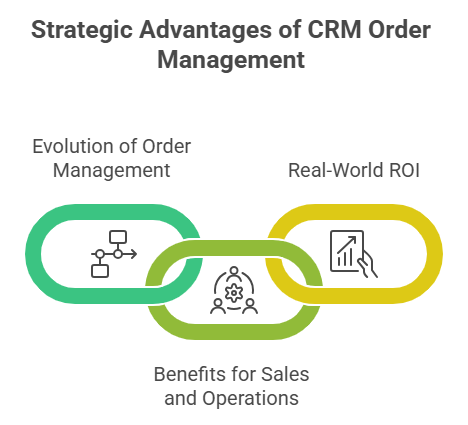
1. The Evolution of Order Management in CRM Systems
Traditional order management used spreadsheets and disconnected ERP systems, leading to errors and delays. Modern CRM order management integrates with sales pipelines for full visibility from quote to delivery. This supports omnichannel selling in the U.S., allowing reps to manage complex orders with real-time inventory, automated routing, and custom pricing within the CRM.
2. Key Benefits for Sales and Operations Teams
Integrated CRM order management reduces errors and speeds up fulfillment, giving teams more time for customer relationships. For U.S. businesses facing labor shortages and supply chain volatility, these tools offer strong resilience through automated routing and exception handling. Teams gain higher productivity and better customer satisfaction.
3. Real-World ROI Statistics
Businesses using advanced CRM systems achieve an impressive ROI through paid online marketing of $8.71 for every $1 spent, according to Nucleus Research. Companies leveraging CRM order management also report a 29% increase in sales revenue alongside a 34% boost in sales productivity. Many see shortened sales cycles by 8 to 14 days, improved forecast accuracy up to 42%, and returns within 12 months. These metrics show strong value for U.S. companies.
Core Features of Effective CRM Order Management
Effective CRM order management platforms provide unified visibility and automation that connect sales pipelines directly to fulfillment processes. These capabilities help businesses eliminate data silos and respond quickly to customer demands.
- Real-time inventory sync prevents overselling and ensures accurate delivery promises.
- Distributed order management routes orders optimally to cut shipping costs and times.
- Automated workflows handle order creation to invoicing with smart approvals.
- AI tools predict delays and suggest corrective actions.
- Analytics dashboards track order velocity and identify bottlenecks.
- Multi-channel consolidation creates a single view for all orders.
Mastering CRM Contract Management
CRM contract management has evolved into a strategic capability that goes far beyond simple document storage. Modern tools integrate tightly with CRM systems to manage the full contract lifecycle while supporting faster sales cycles and lower risks, with businesses seeing an average 45% reduction in contract cycle times. American businesses benefit greatly from these solutions as they navigate complex regulatory environments and customer expectations for quick agreements.
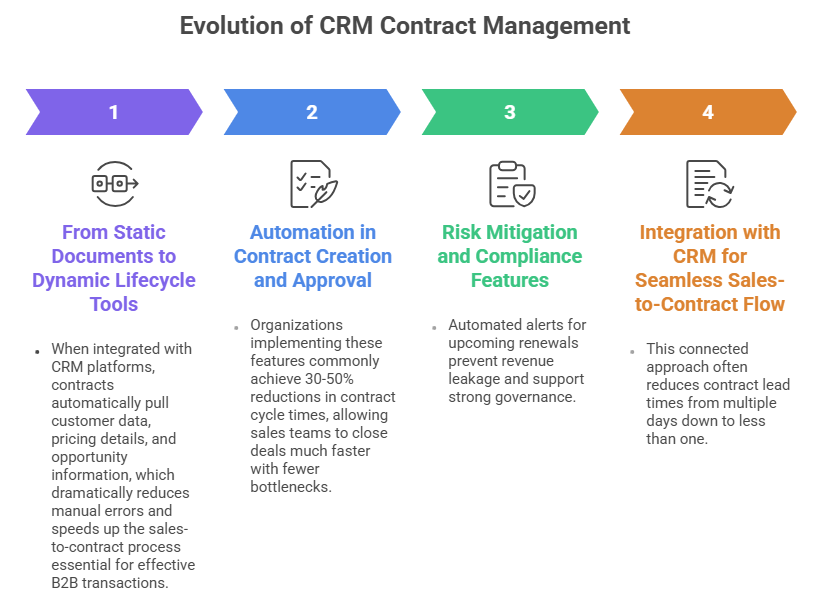
1. From Static Documents to Dynamic Lifecycle Tools
CRM contract management transforms traditional static documents into active, dynamic tools that oversee the entire lifecycle from creation and negotiation to execution, renewal, and analysis. When integrated with CRM platforms, contracts automatically pull customer data, pricing details, and opportunity information, which dramatically reduces manual errors and speeds up the sales-to-contract process essential for effective B2B transactions.
2. Automation in Contract Creation and Approval
Automation in contract creation and approval leverages template libraries, contact management & database mastery, and AI-powered suggestions to accelerate drafting while intelligent workflows route documents based on value, risk level, or department requirements. Organizations implementing these features commonly achieve 30-50% reductions in contract cycle times, allowing sales teams to close deals much faster with fewer bottlenecks.
3. Risk Mitigation and Compliance Features
Risk mitigation and compliance features include built-in clause risk scoring, automated regulatory checks, and obligation tracking that help U.S. businesses stay aligned with data privacy laws and industry-specific regulations. Automated alerts for upcoming renewals prevent revenue leakage and support strong governance.
4. Integration with CRM for Seamless Sales-to-Contract Flow
Integration with CRM for seamless sales-to-contract flow enables sales representatives to initiate contracts directly from opportunities with real-time status visibility that eliminates back-and-forth emails between sales and legal teams. This connected approach often reduces contract lead times from multiple days down to less than one.
How Integrated CRM Order and Contract Management Closes Deals Faster
Integrated CRM order management and contract management create powerful synergies that eliminate traditional friction points in the sales process. When these systems work together, businesses achieve faster deal velocity and more predictable revenue outcomes.
- End-to-end visibility converts quotes to orders without data re-entry.
- Automation frees sales teams to focus on value discussions.
- Shared platforms improve collaboration between sales, legal, and operations.
- AI insights recommend optimal terms and flag risks early.
- Predictive scoring helps prioritize high-probability deals.
- Unified workflows reduce post-sale issues and surprises.
Implementation Best Practices for U.S. Businesses
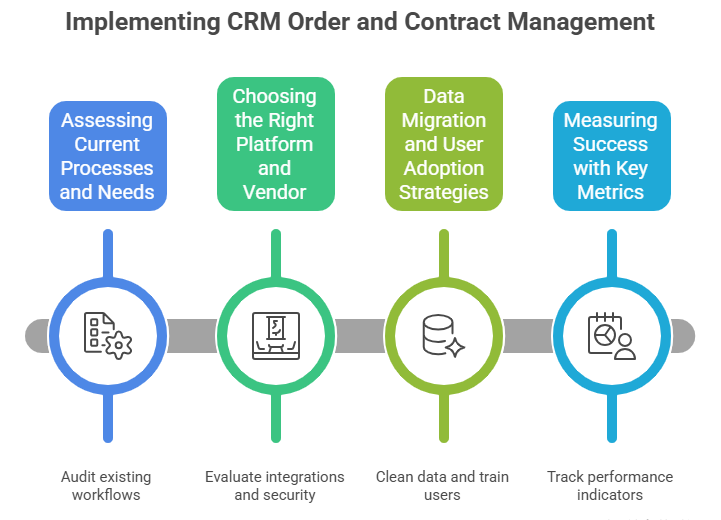
Successful implementation of CRM order management and contract management requires careful planning and cross-functional collaboration. U.S. companies benefit from structured approaches that address both cost-effective technical support and organizational factors. A thoughtful rollout strategy maximizes adoption and delivers faster returns on investment.
1. Assessing Your Current Processes and Needs
A thorough assessment of current processes and needs begins with auditing existing order and contract workflows to identify specific pain points related to data flow, approval delays, error rates, and compliance gaps. Engaging stakeholders from sales, legal, finance, and IT early ensures the selected solution addresses real operational challenges while aligning with broader business objectives.
2. Choosing the Right Platform and Vendor
Choosing the right platform and vendor involves evaluating native integrations, scalability, security standards, and U.S. data residency options that match industry-specific requirements. Cloud-based solutions now represent 87% of CRM deployments, offering flexibility and lower upfront costs.
3. Data Migration and User Adoption Strategies
Data migration and user adoption strategies succeed when teams clean source data thoroughly before transfer and implement role-specific training with phased rollouts. Strong change management emphasizing quick wins leads to higher adoption rates.
4. Measuring Success with Key Metrics
Measuring success with key metrics requires tracking indicators such as contract cycle time, order accuracy, win rates, revenue per representative, and customer satisfaction. Regular reviews ensure the system continues delivering value and adapts to business needs.
Advanced Trends Shaping CRM Order and Contract Tools

AI and cloud innovations continue to reshape CRM order management and contract management capabilities in meaningful ways. These trends help businesses stay competitive while addressing modern demands for speed, compliance, and sustainability.
- Generative AI drafts contracts and suggests optimized terms.
- Cloud platforms enable mobile access for field sales teams.
- Predictive analytics improve forecasting and decisions.
- Sustainability tools track ESG clauses in contracts.
- API-first designs support easy integration with new channels.
- Smart compliance features adapt to regulatory changes.
Overcoming Common Challenges
Data security and privacy concerns remain top priorities when implementing these systems. Companies should choose vendors with SOC 2 compliance, encryption, and audit trails. Integration with legacy systems can be complex, but middleware solutions help bridge gaps. A phased rollout focused on key areas reduces risks.
Cost justification needs clear pilot programs with defined KPIs. User resistance can be overcome with targeted training and quick wins. Ongoing governance maintains data quality over time. Regular audits support continuous improvement and better ROI.
How Virtual Assistants Help With CRM Order Management & Contract Management

Virtual assistants can significantly ease the burden of implementing and managing CRM order management and contract management systems. By handling routine tasks and providing expert support, they allow sales and operations teams to focus on high-value activities that drive revenue.
- Virtual assistants configure CRM workflows for smooth order processing and fulfillment.
- They manage contract templates and streamline approval routing processes.
- VAs monitor real-time inventory through the Claude AI virtual assistant service and update order statuses accurately.
- Virtual assistants track contract obligations and send renewal alerts.
- They generate performance reports and analyze CRM data insights.
- VAs deliver team training and ongoing technical support for better adoption.
TaskVirtual: Your Partner in CRM Order Management & Contract Management

Implementing and managing CRM order management and contract management systems can feel complex for busy sales and operations teams. From configuring workflows to handling contract approvals and order fulfillment, these tasks often demand significant time and expertise. TaskVirtual offers expert virtual assistants for CRM handling that simplify CRM adoption, streamline daily operations, and ensure your order and contract processes run smoothly.
1. Expert CRM Consultation and Setup
TaskVirtual’s skilled virtual assistants help evaluate your current processes, recommend optimal CRM configurations, and support the implementation of order management and contract tools tailored to your business needs.
2. Affordable and Flexible Pricing
Hiring a full-time specialist can be expensive, but TaskVirtual makes expert support accessible. With pricing plans starting from just $3.12/hour to $14.99/hour, their services are budget-friendly and scalable for growing businesses.
3. Comprehensive CRM Support Solutions
TaskVirtual handles everything from task management and workflow automation to contract template management and order processing oversight. Their flexible services adapt to your requirements, whether you need occasional help or full ongoing management.
4. Ongoing Support and Quality Assurance
TaskVirtual provides continuous monitoring, updates, and troubleshooting for your CRM systems. Their proactive assistance ensures orders are processed efficiently and contracts stay compliant without disrupting your daily operations.
5. Proven Track Record of Excellence
With 364 positive reviews and a 4.7-star rating on trusted VA platforms, TaskVirtual is recognized as a reliable partner worldwide. Clients rely on their expertise to optimize CRM order management and contract management processes effectively.
FAQ Section
1. What is CRM order management?
CRM order management integrates order processing, inventory, and fulfillment directly into your customer relationship platform for seamless sales-to-delivery workflows.
2. How does crm contract management improve deal closing?
It automates drafting, approvals, and tracking, reducing cycle times by 30-50% while minimizing risks and errors.
3. What ROI can I expect from these tools?
Businesses typically see 29% sales revenue growth, 34% productivity gains, and strong returns like $8.71 per dollar invested.
4. Are these tools suitable for small businesses?
Yes. Scalable cloud solutions offer entry points for SMBs with pay-as-you-grow pricing and essential automation features.
5. How do I integrate with an existing CRM?
Most modern platforms offer native or easy API integrations with Salesforce, HubSpot, Microsoft Dynamics, and others.
6. What security features should I look for?
Prioritize SOC 2 compliance, encryption, audit logs, and U.S.-based data centers for regulatory adherence.
Conclusion
CRM order management and crm contract management are no longer nice-to-haves—they’re essential for competing in 2026’s efficiency-driven market. By unifying customer insights, order fulfillment, and contract processes, businesses close deals faster, reduce risks, and scale smarter.
The companies winning today invest in integrated, AI-enhanced platforms that empower their teams rather than bog them down. Start your journey with a process audit and pilot— the ROI potential is substantial.
Sources
- SellersCommerce CRM Statistics (2026)
- PipelineCRM and Grand View Research reports
- Fortune Business Insights CRM Market Report
- Sirion, Ironclad, and industry CLM benchmarks
- Various Gartner, Nucleus Research, and Salesforce-aligned studies
For more such content, visit our website.
 Siddhartha Basu is a Technical Writer at Task Virtual. He loves online games, e-book reading, and Yoga.