Contents
show
How CRM Campaign Management Enhances Email and Content Strategy
In today’s hyper-competitive digital landscape, American businesses face mounting pressure to deliver personalized experiences at scale while maximizing every marketing dollar. CRM campaign management has emerged as the cornerstone solution, seamlessly blending campaign management CRM, CRM email management, and CRM content management into unified platforms that drive measurable results. With the global CRM market projected to reach $126.17 billion in 2026, companies mastering these strategies are pulling ahead of competitors.
Businesses using CRM systems report an average ROI of $8.71 for every $1 spent, alongside 27% higher customer retention rates. This comprehensive guide explores actionable, data-backed approaches tailored for U.S. marketers and sales teams. Whether you’re a growing SMB or enterprise leader, you’ll discover how to orchestrate campaigns, emails, and content within your CRM for sustainable growth.
Why Integrated CRM Campaign Management Matters in 2026
Integrated CRM campaign management has become essential for American companies navigating an increasingly complex customer journey in 2026. By combining campaign orchestration, email automation, and content delivery in one platform, businesses eliminate data silos and create cohesive experiences that boost engagement and revenue. This unified approach allows real-time decision-making powered by accurate customer insights and AI-driven recommendations.
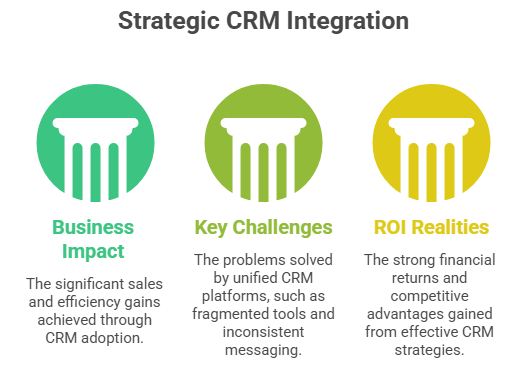
1. The Business Impact of Modern CRM Adoption
91% of U.S. companies with 10 or more employees now rely on CRM software as core infrastructure. Organizations adopting these systems experience up to 34% higher sales productivity and sales cycles shortened by 8-14 days on average. This widespread adoption reflects the critical role CRM plays in driving efficiency and competitive advantage across industries.
2. Key Challenges Addressed by Unified Platforms
Many businesses still struggle with fragmented marketing tools that create inconsistent messaging, wasted ad spend, and poor customer experiences. A robust CRM campaign management system solves these issues by providing a 360-degree customer view, enabling precise targeting and seamless cross-channel coordination. North America commands the largest CRM market share at 31.7%, highlighting strong demand for solutions that reduce operational friction while improving overall marketing effectiveness and team collaboration.
3. ROI Realities and Competitive Edge
Companies implementing integrated CRM strategies consistently achieve strong returns, with email marketing alone delivering up to $36 for every $1 invested when properly managed. When combined with effective CRM content management, these platforms can boost conversion rates by up to 300% through highly relevant, personalized customer journeys. Forward-thinking U.S. businesses gain a significant edge by leveraging these tools to not only improve immediate campaign performance but also build long-term customer loyalty and lifetime value.
Mastering Campaign Management CRM Fundamentals
Effective campaign management CRM serves as the foundation for successful marketing execution by online marketing service and centralizes planning, tracking, and optimization in one powerful system. Modern platforms empower teams to move beyond manual processes and embrace data-driven decision-making at every stage.
- Successful campaigns start with clear objectives linked to business goals like lead generation or retention.
- Audience segmentation by behavior and demographics enables precise multi-channel targeting.
- Automation rules trigger timely sequences based on user actions for better relevance.
- Dynamic lead scoring prioritizes prospects and routes high-value leads to sales.
- Real-time budget tracking optimizes spend on top-performing segments.
- Continuous A/B testing with analytics supports ongoing improvements.
Advanced CRM Email Management Techniques
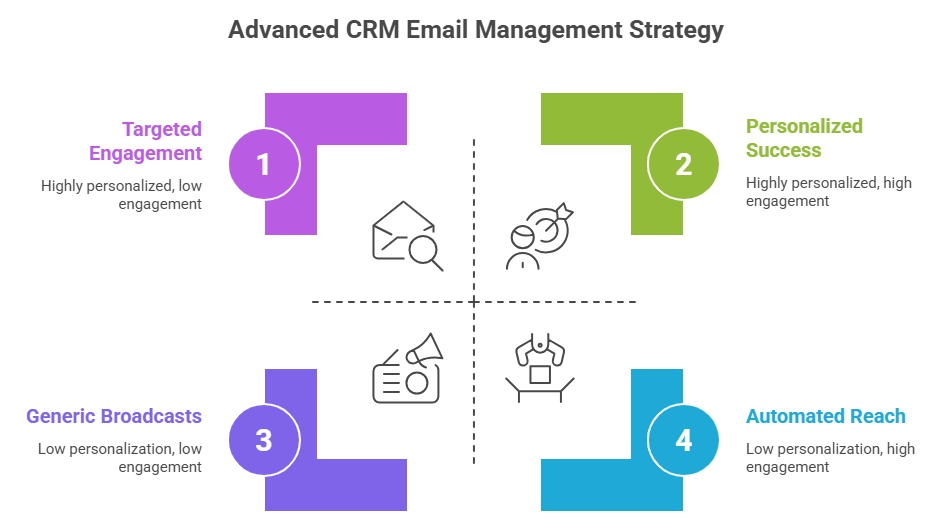
CRM email management has evolved into a sophisticated discipline that combines personalization, automation, and analytics to deliver exceptional results. By leveraging unified customer data, marketers can create highly targeted campaigns that resonate with recipients and drive action. In 2026, businesses that master these techniques gain a clear advantage through improved deliverability, engagement, and conversion rates.
1. Personalization at Scale with Dynamic Content
Segmented email campaigns using CRM data generate up to 760% more revenue compared to generic broadcasts. Dynamic content blocks allow insertion of personalized product recommendations, location-specific offers, and behavior-based messaging in real time. With average open rates around 21%, personalized subject lines and content can increase opens by 50% while significantly improving overall campaign performance.
2. Automation Workflows for Nurturing and Retention
Well-designed drip campaigns, win-back sequences, and lifecycle automations nurture leads effectively throughout their journey. CRM systems trigger emails based on specific milestones such as cart abandonment, milestone anniversaries, or engagement changes. 61% of sales leaders prioritize automation for lead nurturing, resulting in stronger customer relationships and higher long-term retention rates.
3. Compliance, Deliverability, and List Hygiene
Maintaining clean subscriber lists and strict adherence to CAN-SPAM and privacy regulations protects sender reputation and avoids costly penalties. Advanced CRM tools automatically manage suppression lists, bounces, and consent tracking to ensure compliant communications. This proactive approach improves inbox placement rates and builds trust with American audiences who value data privacy.
4. Performance Metrics and Optimization Loops
Key metrics, including open rates, click-through rates averaging 2.5-2.6%, and conversion percentages, provide clear performance insights. CRM reporting dashboards help identify drop-off points and optimize future campaigns based on real data. Email continues to deliver one of the highest ROI channels, making ongoing optimization essential for sustained success.
Strategic CRM Content Management Best Practices
CRM content management enables organizations to centralize assets while delivering personalized experiences based on individual customer data. This integration ensures consistent branding and more effective content distribution across all customer touchpoints.
- Centralizing content storage with versioning maintains brand consistency and easy distribution.
- Performance tracking via pixels and UTM parameters shows which assets drive revenue.
- Strategic repurposing turns one piece into multiple formats for various channels.
- Automated workflows deliver the right content at optimal journey moments.
- User-generated content integration adds authentic reviews to customer profiles.
- Cross-channel analytics enable continuous strategy refinement.
Integrating Email, Content, and Campaign Strategies for Conversions
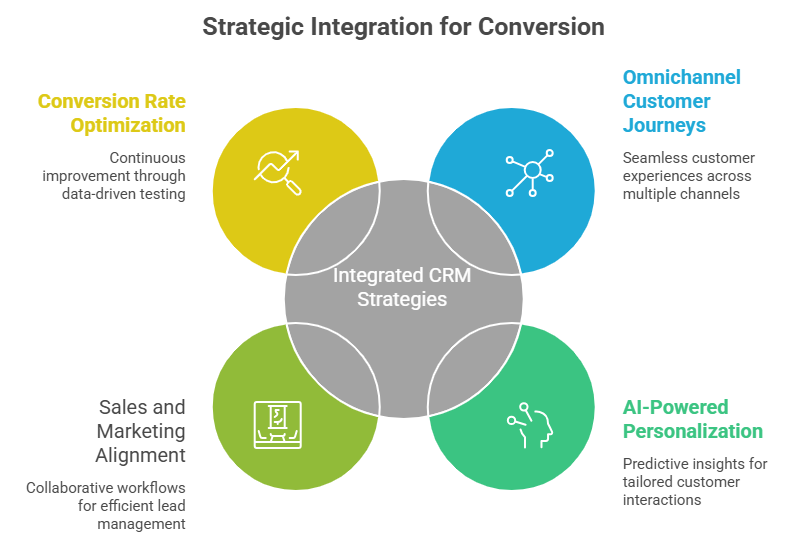
Creating seamless integration between email, content, and campaign strategies within a CRM platform unlocks powerful conversion opportunities. This holistic approach ensures every customer interaction feels intentional and relevant rather than disjointed. American businesses implementing these integrated systems see significant improvements in both immediate results and long-term customer value.
1. Building Omnichannel Customer Journeys
Customers who engage across multiple channels demonstrate 90% higher retention rates and 13-25% increases in purchases. CRM systems act as the central hub synchronizing data to maintain message consistency across email, web, social, webinar marketing service, and SMS touchpoints. This coordinated approach creates frictionless experiences that guide prospects smoothly through the buying journey.
2. Leveraging AI for Predictive Personalization
AI capabilities in CRM platforms analyze behavioral patterns to predict optimal next actions and content recommendations. The AI CRM market is experiencing rapid expansion, projected to grow substantially as businesses seek competitive advantages. Predictive scoring and automated personalization help deliver the right message at the right time, dramatically improving relevance and conversion potential.
3. Sales and Marketing Alignment Workflows
78% of salespeople report that CRM systems significantly improve alignment between sales and marketing teams. Shared dashboards, automated lead handoffs, and collaborative campaign planning reduce friction and accelerate pipeline velocity. This alignment ensures marketing efforts directly support sales goals while creating more cohesive customer experiences.
4. Conversion Rate Optimization (CRO) Frameworks
Behavioral triggers combined with personalized content and timely email sequences form the foundation of effective CRO. Testing landing pages linked from CRM campaigns, along with integrated analytics, helps identify winning elements quickly. Continuous optimization based on real performance data leads to steady improvements in overall conversion rates.
Implementation, Tools, and Common Pitfalls to Avoid
Selecting and implementing the right CRM solution requires careful evaluation of business needs, scalability, and integration capabilities with HubSpot. A thoughtful rollout strategy combined with proper training maximizes adoption and return on investment.
- Choose platforms with strong native tools and AI features for scalability.
- Prioritize data quality with clean imports and ongoing governance.
- Invest in user training to drive high adoption rates.
- Implement strong security, including encryption and access controls.
- Track key KPIs like CAC, CLV, and campaign ROI.
- Avoid pitfalls such as neglecting mobile optimization and poor alignment.
Future Trends Shaping CRM Campaign, Email, and Content Management
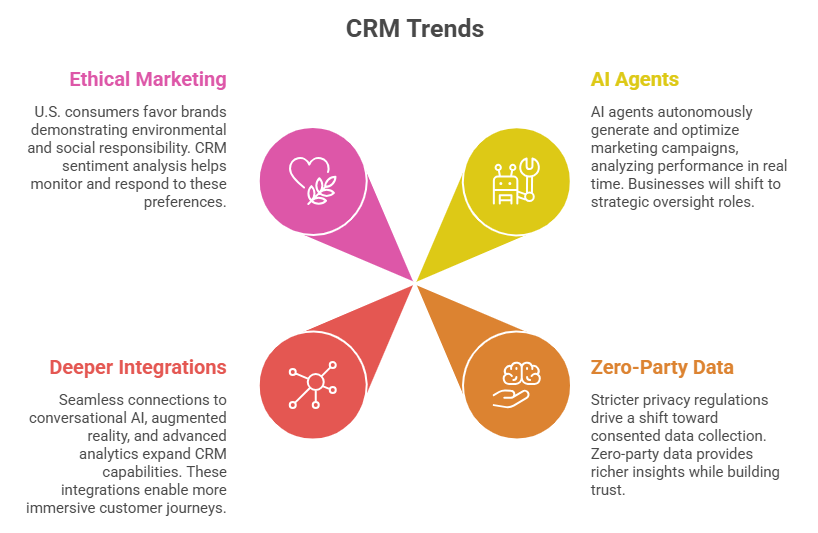
The CRM landscape continues evolving rapidly with new technologies reshaping how American businesses approach campaign, email, and content strategies. Organizations that stay ahead of these trends gain significant advantages in customer engagement and operational efficiency. Forward-looking implementations will leverage emerging capabilities to create even more intelligent and personalized experiences.
1. AI Agents and Autonomous Campaigns
AI agents are poised to autonomously generate, optimize, and execute entire marketing campaigns with minimal human intervention. These systems analyze performance in real time and make adjustments to creative elements, timing, and targeting for better outcomes. As adoption grows, businesses will shift from manual campaign management to more strategic oversight roles.
2. Privacy-First and Zero-Party Data Strategies
Stricter privacy regulations are driving a shift toward consented, value-exchange data collection methods. Zero-party data obtained directly from customers through interactive experiences provides richer insights while building trust. CRM platforms will increasingly support these privacy-first approaches to maintain personalization effectiveness.
3. Deeper Integrations with Emerging Channels
Seamless connections to conversational AI, augmented reality experiences, and advanced analytics will expand CRM capabilities significantly. These integrations enable more immersive and interactive customer journeys beyond traditional channels. Marketers will orchestrate complex multi-channel experiences from within their CRM dashboard.
4. Sustainability and Ethical Marketing Focus
U.S. consumers increasingly favor brands demonstrating environmental and social responsibility in their communications. CRM sentiment analysis and tracking tools help monitor and respond to these values-driven preferences effectively. Ethical marketing practices integrated into campaign strategies will strengthen customer loyalty and brand reputation.
How Virtual Assistants Help with CRM Campaign Management

Virtual assistants are becoming valuable allies for businesses looking to maximize their CRM investments without expanding full-time teams. They bridge the gap between strategy and execution, handling day-to-day tasks while ensuring that digital marketing campaigns with AI, emails, and content stay aligned with business objectives.
- Virtual assistants set up campaign workflows, segments, and automation rules in your CRM.
- They build personalized email sequences and dynamic content using customer data.
- VAs maintain list hygiene, ensure compliance, and monitor deliverability.
- They organize, tag, and distribute content assets while tracking engagement.
- Virtual assistants run A/B tests, analyze reports, and suggest optimizations.
- They support lead scoring, journey mapping, and team alignment.
TaskVirtual: Your Partner in CRM Campaign Management

Implementing advanced CRM campaign management, email automation, and content strategies can feel overwhelming for busy marketing and sales teams. From setting up complex workflows to maintaining consistent personalization across channels, the process demands significant time and expertise. TaskVirtual offers a specialized virtual assistant for CRM handling that simplifies CRM implementation, campaign execution, and ongoing optimization so your team can focus on growth.
1. Expert CRM Strategy Consultation
TaskVirtual’s trained virtual assistants provide guidance on selecting the right CRM tools, building effective campaign structures, and creating personalized email and content workflows tailored to your business goals.
2. Affordable and Flexible Pricing
Hiring a full-time CRM specialist can be expensive, but TaskVirtual makes expert support accessible. With pricing plans starting from just $3.12/hour to $14.99/hour, their services are budget-friendly and scalable for businesses of all sizes.
3. Comprehensive CRM Support Solutions
From audience segmentation and lead scoring setup to content asset management and task management with workflow automation sequence design, TaskVirtual handles the full spectrum of campaign, email, and content management needs within your CRM platform.
4. Ongoing Support and Quality Assurance
TaskVirtual delivers continuous monitoring, performance reporting, and real-time adjustments to your CRM campaigns while ensuring compliance, data hygiene, and alignment with evolving marketing trends.
5. Proven Track Record of Excellence
With 364 positive reviews and a 4.7-star rating on trusted VA platforms, TaskVirtual is recognised as a reliable partner worldwide. Clients rely on their expertise to streamline CRM operations and drive measurable conversion improvements.
Conclusion
Mastering CRM campaign management, CRM email management, and CRM content management is no longer optional for American businesses seeking sustainable growth. These integrated strategies deliver personalized experiences, operational efficiency, and impressive returns in a challenging market.
Start by auditing your current setup, prioritizing data quality, and implementing one high-impact workflow—such as a personalized nurture sequence. The businesses that act decisively today will dominate customer relationships tomorrow.
Sources
- Fortune Business Insights CRM Market Report
- HubSpot State of Marketing Reports
- Nucleus Research CRM ROI Studies
- DemandSage and Statista CRM Adoption Data
- Additional industry benchmarks from SellersCommerce, WaveCNCT, and Forbes Advisor (2025-2026 reports)
For more such content, visit our website.
 Siddhartha Basu is a Technical Writer at Task Virtual. He loves online games, e-book reading, and Yoga.