Contents
show
How a Clinical Virtual Assistant Supports Provider Workflows
American healthcare providers face mounting pressure from administrative overload, staffing shortages, and rising patient demands. The Association of American Medical Colleges projects a U.S. physician shortage of up to 86,000 by 2036, emphasizing the need to use clinical capacity efficiently. A clinical virtual assistant helps by managing recurring administrative and workflow tasks so clinicians can focus more on patient care.
This approach can help independent practices, group clinics, and larger health systems manage fluctuating workloads without adding physical office capacity. As practices adapt to digital workflows and workforce pressures in 2026, clearly defined virtual support can improve workflow consistency, reduce administrative bottlenecks, and create a more sustainable division of work across the care team.
Understanding the Role of a Clinical Virtual Assistant in Modern Healthcare
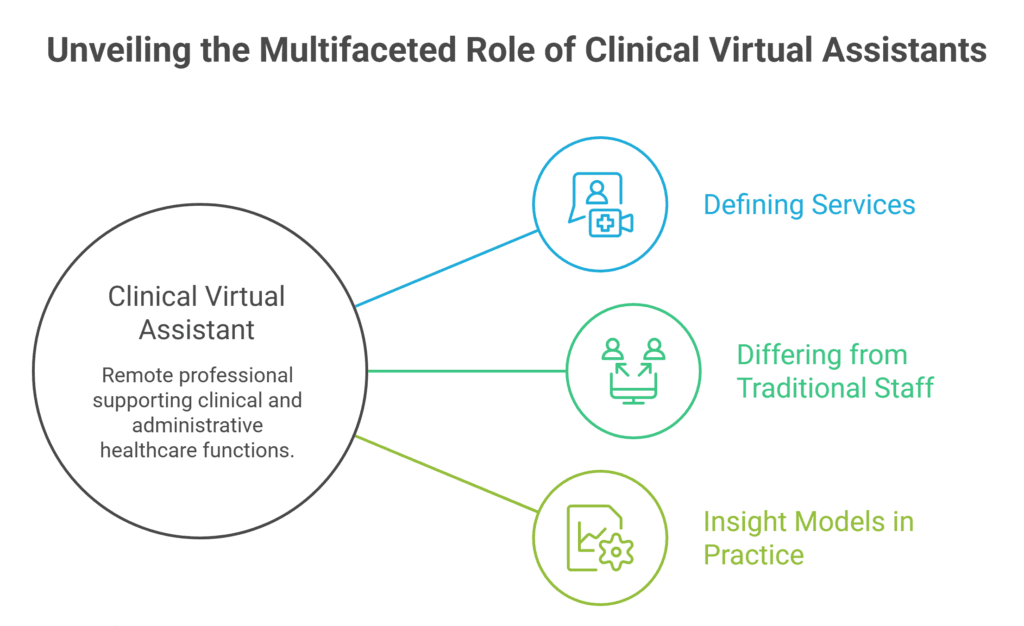
A clinical virtual assistant is a trained remote professional—often with healthcare experience—who supports clinical and administrative functions without requiring an on-site presence. Unlike general virtual assistants, these specialists understand medical terminology, electronic health record (EHR) systems, HIPAA requirements, and the nuances of provider workflows. They work as an extension of the in-office team, managing tasks that otherwise consume valuable clinician time.
1. Defining Clinical Virtual Assistant Services
Clinical virtual assistant services typically include virtual appointment scheduling, patient intake support, insurance verification, prior authorization tracking, referral management, and basic documentation assistance. Many providers also use them for inbox triage, refill coordination, and other repeatable tasks that can be completed through defined protocols.
Services can be adapted to the needs of primary care, specialty practices, or multi-provider groups. Some organizations assign support to individual providers, while others use virtual staff across shared workflows, allowing practices to adjust capacity according to patient volume and operational demand.
2. How Virtual Clinical Assistants Differ from Traditional Staff
Traditional medical assistants and front-desk employees work on-site and often balance patient-facing responsibilities with administrative duties. A virtual clinical assistant works remotely and is generally focused on digital and non-face-to-face processes such as scheduling, follow-up, documentation preparation, and administrative communication.
This structure can reduce dependence on local recruitment and physical workspace while giving practices access to a broader healthcare talent pool. It also allows on-site staff to concentrate more consistently on responsibilities that require direct interaction with patients.
3. Insight Clinical Virtual Assistant Models in Practice
Insight clinical virtual assistant approaches emphasize measurable workflow integration rather than simple task outsourcing. Practices may monitor completion rates, response times, outstanding tasks, or reductions in after-hours administrative work to determine whether virtual support is producing operational improvements.
These models can also include a Virtual EHR assistant to support EHR-based workflows, along with EHR-specific training, structured escalation procedures, and regular performance reviews. Ongoing measurement helps practices adjust responsibilities as staffing levels, patient volume, and workflow priorities change.
The Growing Need for Virtual Support in Provider Workflows

U.S. healthcare continues to grapple with workforce challenges that directly affect daily operations. Administrative tasks consume a large share of clinician time, contributing to dissatisfaction and reduced capacity for patient-facing work.
1. Physician Burnout and Administrative Burden Statistics
- According to the American Medical Association, 41.9% of physicians reported at least one symptom of burnout in 2025.
- Administrative responsibilities remain a major contributor to physician workload and professional dissatisfaction.
- Research has shown that physicians can spend nearly two hours on EHR and desk work for every hour of direct patient care.
- Ambulatory physicians spend an average of 5.8 EHR hours for every eight hours of scheduled patient care.
- Unfinished documentation and inbox responsibilities frequently extend beyond scheduled clinical hours.
2. Staffing Shortages and Their Impact on Workflows
- The Association of American Medical Colleges projects a physician shortage of up to 86,000 by 2036.
- HRSA projects an overall shortage of 187,130 full-time equivalent physicians by 2037.
- Nonmetro and underserved communities are expected to experience especially significant workforce gaps.
- Staffing shortages can slow scheduling, documentation, referrals, authorizations, and other essential workflows.
- Virtual clinical assistant staffing provides another source of capacity when local recruitment cannot meet demand.
3. Rising Patient Communication Demands
- Patient portal messages more than doubled between 2020 and 2025 in systems using major EHR platforms.
- Patients increasingly expect timely responses related to appointments, referrals, forms, medications, and routine administrative concerns.
- High inbox volume can make it difficult for providers to distinguish routine requests from issues requiring clinical judgment.
- Virtual assistants can organize, route, and address permitted administrative messages before escalation.
- Structured inbox support can reduce the number of unresolved requests that remain for clinicians after normal working hours.
Best Tasks for Virtual Clinical Assistants
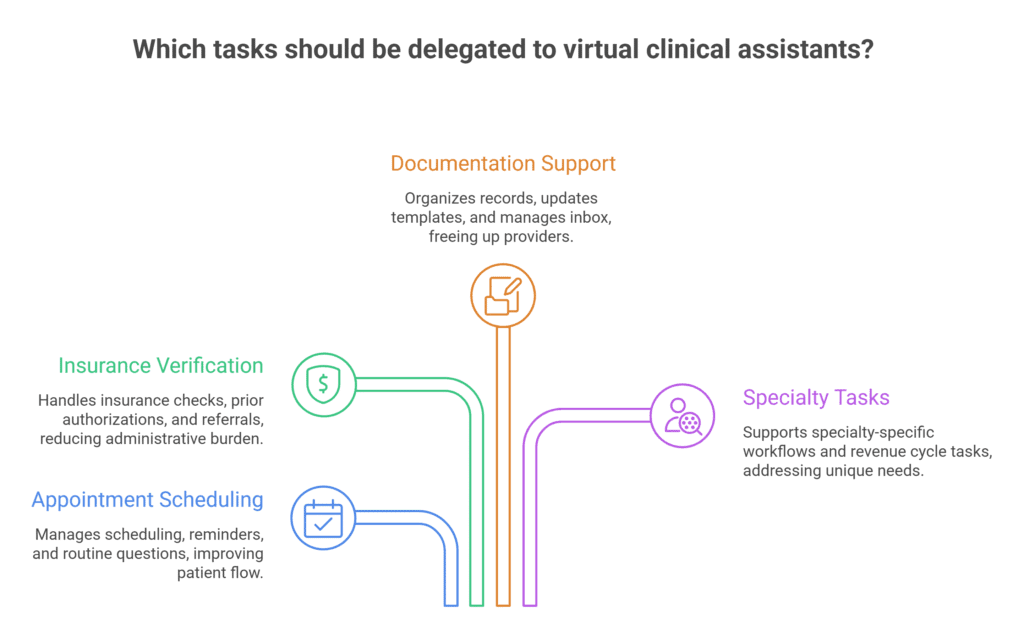
The most valuable tasks for a clinical virtual assistant are typically repetitive, structured, and suitable for completion through secure digital systems. Delegating these responsibilities helps prevent routine work from competing with clinical priorities. Clear protocols also ensure that tasks requiring professional judgment remain with the appropriate licensed team member.
1. Appointment Scheduling and Patient Intake
Virtual clinical assistants can manage scheduling, rescheduling, cancellations, reminders, and routine appointment questions. They can also help patients complete intake requirements by reviewing demographic details, insurance information, consent forms, and questionnaires before the visit. Addressing missing information early can reduce check-in delays and help on-site staff maintain a smoother patient flow.
2. Insurance Verification, Prior Authorizations, and Referrals
Insurance verification, prior authorizations, and referrals often require repeated follow-up with payers and outside providers. A virtual clinical assistant can confirm eligibility, track authorization requests, document status updates, send required records, and monitor referral completion. Cases requiring clinical input or medical justification can be escalated to the appropriate licensed professional.
3. Documentation Support and Inbox Management
Virtual clinical assistants can prepare charts, organize medical records, update approved templates, and help categorize portal messages, refill requests, and administrative inquiries. This structured support allows providers to focus more quickly on communications that require clinical judgment. It can also prevent routine documentation and inbox tasks from accumulating after normal working hours.
4. Specialty-Specific and Revenue Cycle Tasks
Specialty practices can use virtual support for procedure coordination, authorization follow-up, record collection, recall lists, and specialty-specific administrative workflows. Depending on training and assigned responsibilities, assistants may also help with claim-status follow-up, missing documentation, quality reporting, and population health outreach. This flexibility allows practices to direct support toward their most time-consuming operational needs.
How a Clinical Virtual Assistant Supports Provider Workflows Day-to-Day

A clinical virtual assistant creates the greatest value when integrated into normal practice operations rather than managed as a separate service. Clear task ownership, communication standards, and escalation rules allow remote personnel to work effectively with both clinical and administrative teams. This structure helps routine work move forward without creating unnecessary interruptions for providers.
1. Seamless EHR and Communication Integration
- Secure remote access allows assistants to work directly within approved practice systems.
- Shared task queues clarify responsibilities across virtual, on-site, and clinical teams.
- Secure messaging and structured updates keep remote staff aligned with practice priorities.
- Defined escalation procedures prevent unusual or incomplete tasks from becoming stalled.
2. Reducing After-Hours Work and Improving Work-Life Balance
- Completing administrative preparation during business hours reduces unfinished routine work.
- Inbox organization helps prevent low-priority requests from overwhelming provider queues.
- Better chart preparation can reduce time spent searching for information after patient visits.
- Virtual Documentation formatting support models have been associated with reductions in EHR and after-hours workload.
3. Enhancing Team Capacity and Patient Experience
- Delegating appropriate administrative work gives on-site staff more time for direct patient needs.
- Faster handling of routine requests can improve scheduling and administrative communication.
- Fewer interruptions allow clinicians to maintain stronger focus during patient encounters.
- Virtual staffing provides additional capacity without requiring more physical office space.
4. Measuring Impact with Insight Clinical Virtual Assistant Approaches
- Task completion rates reveal whether delegated workflows are moving efficiently.
- Response and turnaround times help identify delays in scheduling, referrals, and authorizations.
- After-hours EHR activity can indicate whether virtual support is reducing unfinished work.
- Regular performance reviews help practices assess operational, staffing, and financial value.
Implementing Clinical Virtual Assistant Services Successfully
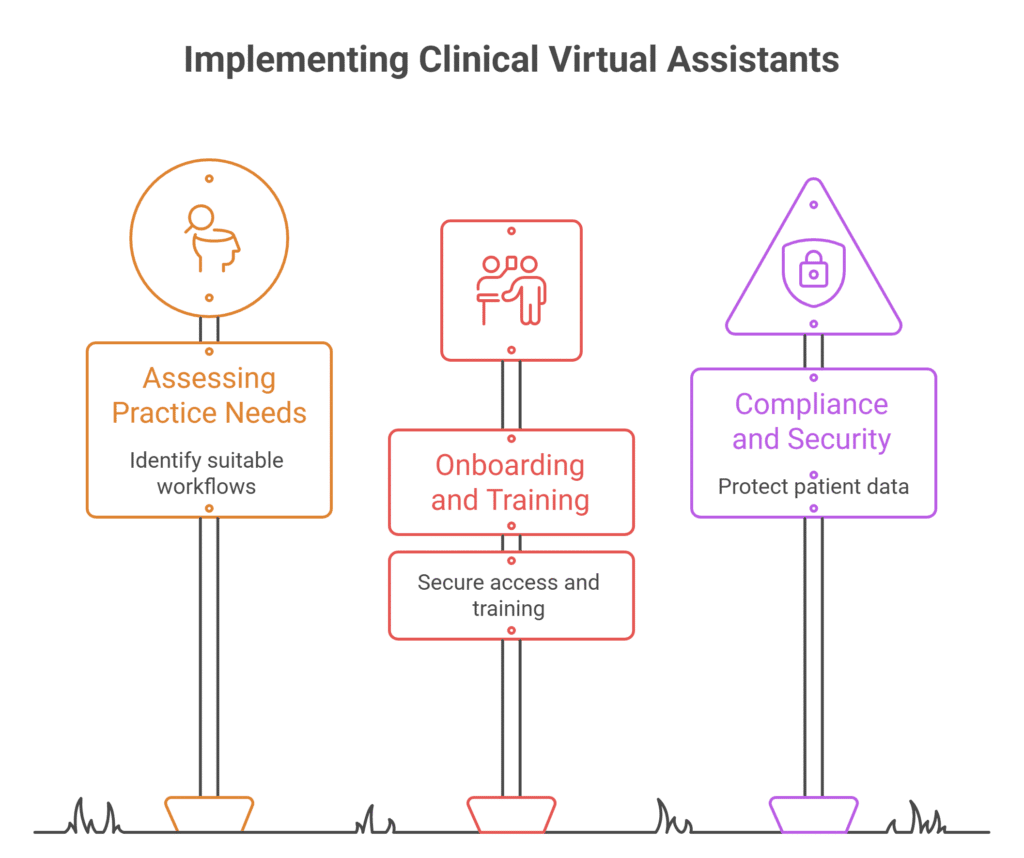
Successful implementation requires clear planning, defined responsibilities, and appropriate oversight. Practices should determine which workflows are suitable for remote delegation before assigning live tasks. A structured rollout helps both virtual and on-site staff understand expectations from the beginning.
1. Assessing Practice Needs and Selecting the Right Partner
Begin with a workflow audit to identify repetitive, high-volume tasks that consume significant staff or provider time. Select a healthcare-experienced partner with appropriate security practices, trained personnel, transparent reporting, and familiarity with relevant systems. Strong communication skills can increase growth by improving collaboration, while scalability, service continuity, and cultural fit should also be considered.
2. Onboarding, Training, and Ongoing Collaboration
Onboarding should include secure access setup, role-specific training, workflow demonstrations, and clear escalation procedures. Establish consistent communication channels and feedback routines so performance issues can be corrected early. Including virtual assistants in relevant operational updates helps them remain aligned as practice processes change.
3. Addressing Compliance, Security, and Quality
HIPAA compliance, data security, and quality assurance remain non-negotiable when remote personnel access protected health information or practice systems. Healthcare organizations should use appropriate safeguards such as controlled system permissions, secure connections, access monitoring, confidentiality procedures, and vendor oversight while ensuring contractual requirements are addressed when applicable. Practices must also retain appropriate clinical oversight, reserve medical judgment for authorized professionals, and periodically review delegated workflows for accuracy, security, and adherence to organizational standards.
The Broader Benefits for American Healthcare Practices
Beyond individual workflows, clinical virtual assistants can strengthen the overall resilience of healthcare practices by helping teams use limited clinical and administrative resources more effectively. Reducing routine workload may address one component of burnout, which is estimated to cost the U.S. healthcare system $4.6 billion annually through physician turnover and reduced clinical hours. Virtual staffing can also support rural and underserved areas where hiring qualified local personnel may be particularly difficult.
As healthcare becomes increasingly digital, combining remote human support with emerging AI-assisted tools offers practices a flexible operating model. Human assistants can manage communication, context, workflow coordination, and escalation, while technology can support appropriate repetitive processes. Used thoughtfully, this combination can help practices manage administrative complexity while keeping clinician attention centered on higher-value patient care.
TaskVirtual: Virtual Support for Healthcare Provider Workflows

Healthcare practices often need reliable administrative support without adding another full-time on-site position. TaskVirtual provides remote assistance that can complement clinical virtual assistant workflows by helping practices manage structured, non-clinical responsibilities such as scheduling coordination, data organization, follow-up tasks, and routine communication. Its flexible service model can be useful for practices seeking additional operational capacity while keeping provider attention focused on patient care.
1. Healthcare Workflow Support
TaskVirtual’s virtual assistants can support recurring administrative processes that are commonly delegated in provider settings, including calendar coordination, appointment-related follow-up, document organization, data entry, inbox management, and other structured back-office tasks. When practices establish clear protocols and access boundaries, this support can help reduce administrative congestion without interfering with responsibilities that require licensed clinical judgment.
2. Flexible Support at Accessible Rates
For practices that do not require another full-time employee, TaskVirtual offers a scalable alternative that can be adjusted according to workload and operational needs. Pricing ranges from $3.12/hour to $14.99/hour, giving small practices, growing clinics, and larger teams the flexibility to select support based on budget and task complexity.
3. Support for Administrative Continuity
Healthcare workflows depend on consistent completion of routine tasks, especially when internal staff is managing high patient volumes. TaskVirtual can assist with recurring coordination and follow-up activities so administrative responsibilities are less likely to remain pending during busy periods. This additional capacity can help practices maintain smoother day-to-day operations without assigning every routine task to clinical staff.
4. Quality-Focused Remote Assistance
Effective virtual support requires clear communication, accountability, and consistent task execution. TaskVirtual can work within established instructions and reporting processes, allowing healthcare organizations to define priorities, review completed work, and refine workflows as their needs change. This approach makes remote assistance easier to integrate into structured practice operations.
5. Established Client Feedback
TaskVirtual has received 364 positive reviews and maintains a 4.7-star rating on trusted virtual assistant platforms. These ratings reflect client feedback across its broader virtual assistance services and provide an indication of its experience in delivering remote support to businesses and professionals.
FAQ
1. What is a clinical virtual assistant?
A clinical virtual assistant is a remote healthcare-trained professional who supports providers with administrative and certain clinical support tasks such as scheduling, prior authorizations, documentation assistance, and inbox management while complying with privacy regulations.
2. How does a virtual clinical assistant differ from a regular virtual assistant?
Virtual clinical assistants possess healthcare-specific knowledge, familiarity with medical terminology and EHRs, and understanding of clinical workflows and compliance requirements that general virtual assistants typically lack.
3. What are the best tasks for virtual clinical assistants?
High-value tasks include appointment scheduling and reminders, insurance verification, prior authorization tracking, referral management, patient portal message triage, and chart preparation or basic documentation support.
4. Can clinical virtual assistant services reduce physician burnout?
By offloading repetitive administrative work and reducing after-hours documentation, these services help lower the clerical burden that contributes significantly to burnout symptoms reported by many U.S. physicians.
5. Is virtual clinical assistant staffing suitable for small practices?
Yes. Small and independent practices often benefit most because they gain flexible capacity without the full cost of an additional on-site hire, office space, or benefits package.
6. How do practices ensure quality and compliance with Insight Clinical virtual assistant models?
Choose partners with healthcare experience and strong security protocols, establish clear protocols and escalation paths, maintain oversight of clinical decisions, and use regular performance metrics and feedback.
Conclusion and Call to Action
A clinical virtual assistant supports provider workflows by systematically reducing the administrative load that detracts from patient care. In an environment marked by staffing shortages, documentation demands, and persistent burnout risks, virtual clinical assistants and clinical virtual assistant services provide a practical, scalable solution. Practices that thoughtfully implement these resources often regain time for meaningful clinical work, improve team morale, and enhance patient access.
If your practice is ready to explore how a clinical virtual assistant can fit into your operations, start with a workflow assessment and conversations with experienced healthcare staffing partners. Taking this step can help protect clinician well-being while strengthening the efficiency and sustainability of care delivery for the patients you serve.
Sources
- American Medical Association reports on physician burnout rates (2025 Organizational Biopsy data) and related well-being research.
- Association of American Medical Colleges: The Complexities of Physician Supply and Demand: Projections From 2021 to 2036.
- Health Resources and Services Administration (HRSA) National Center for Health Workforce Analysis physician workforce projections.
- AMA time-and-motion and EHR time studies on physician documentation and desk work.
- JAMA Network Open and related peer-reviewed analyses of patient portal messaging volume and documentation burden.
- Annals of Internal Medicine and AMA estimates of the annual cost of physician burnout to the U.S. healthcare system.
For more such content, visit our website.
 Siddhartha Basu is a Technical Writer at Task Virtual. He loves online games, e-book reading, and Yoga.