
Contents
show
How Appointment Setting Virtual Assistant Services Help Businesses
An appointment-setting virtual assistant is a remote professional who manages scheduling tasks such as booking meetings, coordinating calendars, and confirming appointments with prospects or clients. They typically support sales, customer service, or operations teams by ensuring consistent and organized scheduling workflows.
Missed meetings, double bookings, and delayed follow-ups are common operational issues for growing businesses. For sales teams, poor appointment management directly impacts revenue; for service providers, it affects client experience. In fact, studies show that up to 20% of appointments are missed due to scheduling issues, leading to significant inefficiencies and lost opportunities. As businesses scale, handling scheduling internally becomes increasingly inefficient. This is why many companies now outsource appointment setting to virtual assistants, enabling teams to focus on core activities like closing deals or delivering services.
What This Means for Businesses
Hiring an appointment-scheduling virtual assistant changes how companies manage time and customer interactions. Instead of relying on reactive scheduling by responding to emails and calls manually, businesses adopt structured calendar systems where they manage availability in real time, automate and instantly confirm bookings, minimize scheduling conflicts, streamline customer interactions, and improve overall time management efficiency and predictability.
- The system automatically routes leads to available time slots based on real-time availability and scheduling rules, ensuring efficient and timely bookings.
- The system handles follow-ups consistently through automated reminders and predefined scheduling workflows.
- The system prevents lost opportunities by handling scheduling and responses promptly and efficiently.
Why Companies Outsource This Task
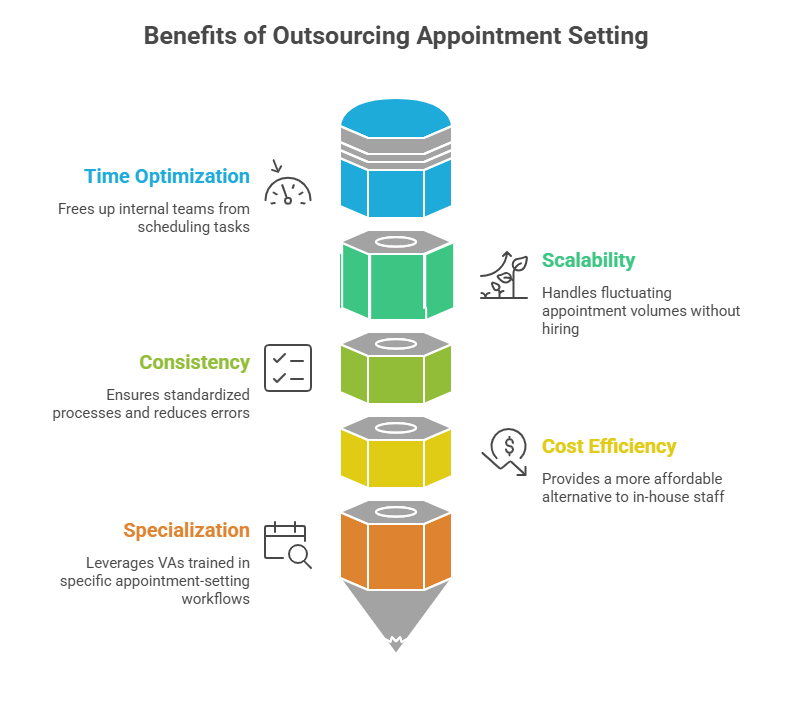
Companies outsource appointment setting to improve operational efficiency. This approach helps streamline scheduling processes and reduces the burden on internal teams. It also enables better cost control by eliminating the need for additional in-house administrative resources.
Key drivers include:
- Internal teams often spend significant time on back-and-forth scheduling, leading to inefficient time utilization.
- A remote appointment setter virtual assistant can handle increasing volumes efficiently without the need to hire additional full-time staff, enabling scalable operations.
- Standardized processes reduce missed or duplicate bookings, ensuring consistent and reliable scheduling operations..
- Hiring an affordable appointment-setting virtual assistant is typically more cost-effective than maintaining in-house administrative roles, improving overall efficiency.
- Many virtual assistants are trained in B2B appointment-setting workflows and CRM systems, ensuring specialized and efficient support.
Tasks Virtual Assistants Perform

A virtual assistant for appointment setting plays a critical role in managing scheduling operations. They handle a wide range of tasks that ensure smooth coordination between teams and clients. This support helps businesses maintain efficiency, consistency, and timely communication.
- The system manages calendars with real-time availability updates and enables seamless booking and rescheduling of meetings efficiently.
- The system sends appointment confirmations and reminders and coordinates meetings across time zones, especially for US and UK clients, efficiently.
- The system updates the CRM, tracks lead status and meeting logs, and qualifies leads before booking calls efficiently.
- Teams handle follow-up emails or messages and manage inbound and outbound scheduling requests efficiently.
- Teams schedule calls for sales teams and organize meetings for both internal coordination and client discussions efficiently.
Tools Professional Virtual Assistants Use
Effective scheduling depends heavily on the right tools. Professional VAs integrate multiple systems to streamline operations, especially as 74% of businesses report improved efficiency after adopting digital scheduling and automation tools.
| Tool Category | Examples | Purpose |
|---|---|---|
| Calendar Tools | Google Calendar, Outlook | Manage availability and bookings |
| Scheduling Software | Calendly, Acuity | Automate booking links and time slots |
| CRM Systems | HubSpot, Salesforce | Track leads and appointment status |
| Communication Tools | Slack, Zoom | Coordinate with teams and clients |
| Email Platforms | Gmail, Outlook | Send confirmations and follow-ups |
| Automation Tools | Zapier | Connect systems and reduce manual work |
These tools enable a virtual assistant for calendar scheduling to maintain a high level of accuracy. They support efficient handling of large volumes of appointments without compromising consistency. As a result, scheduling operations remain reliable, organized, and scalable.
Step-by-Step Workflow Used by Virtual Assistants
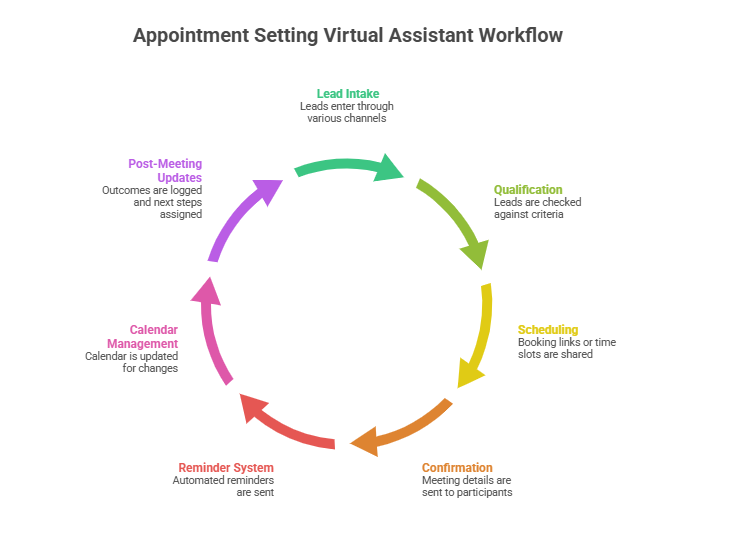
A dedicated appointment-setting virtual assistant follows a structured process to ensure consistency across all scheduling activities. This includes predefined workflows for booking, rescheduling, confirmations, and follow-ups to minimize errors and delays. As a result, businesses benefit from more organized operations, improved reliability, and a smoother experience for both teams and clients.
1. Lead Intake
Leads enter the system through multiple channels, such as forms, email, or CRM platforms. The virtual assistant ensures that all incoming information is captured accurately and organized properly. They then review the basic details to prepare the lead for the next stage of the process.
2. Qualification (if required)
The virtual assistant evaluates leads based on predefined criteria such as budget, location, and specific needs. This step helps filter out unqualified prospects and focus efforts on relevant opportunities. High-quality leads are then prioritized to maximize conversion potential.
3. Scheduling
The virtual assistant manages scheduling by sharing booking links or proposing suitable time slots. They coordinate availability across multiple calendars to avoid conflicts. This ensures that meetings are booked efficiently and at convenient times for all parties involved.
4. Confirmation
Once a meeting is scheduled, the virtual assistant sends confirmation details, including date, time, and platform. They also include any necessary documents or instructions required for the meeting. This step ensures that all participants are well-informed and prepared.
5. Reminder System
Automated reminders are sent at key intervals, such as 24 hours and 1 hour before the meeting. These reminders help reduce no-shows and keep schedules on track. If required, the virtual assistant also performs manual follow-ups for added assurance.
6. Calendar Management
The virtual assistant continuously updates the calendar to reflect any changes or cancellations. They ensure that all entries remain accurate and up to date. This process helps prevent scheduling overlaps and maintains a clear overview of availability.
7. Post-Meeting Updates
After the meeting, the virtual assistant logs outcomes and relevant details into the CRM system. They ensure that all interactions are properly documented for future reference. Based on the results, they assign next steps such as follow-ups, proposals, or further engagement.
Common Challenges Businesses Face

Before outsourcing, businesses often encounter several challenges in managing their scheduling processes effectively. These issues typically arise from manual coordination, inconsistent workflows, and limited internal resources handling appointments. As a result, inefficiencies and missed opportunities can impact overall productivity and customer experience:
- Structured scheduling systems and automated coordination minimize double bookings and missed appointments.
- Prompt scheduling and communication processes reduce delays in responding to leads.
- Automated systems and streamlined workflows eliminate manual scheduling inefficiencies.
- Accurate scheduling and coordinated time conversions prevent confusion between the US and UK time zones.
- Synchronized systems ensure seamless CRM integration with consistent data updates and tracking.
- Automated workflows and standardized processes maintain consistent follow-ups.
Benefits of Outsourcing to Virtual Assistants
Outsourcing to a virtual assistant for booking appointments provides measurable advantages across operational efficiency and resource management. It enables businesses to streamline scheduling processes, reduce manual workload, and maintain consistent communication with leads and clients. As a result, organizations can improve productivity, enhance customer experience, and achieve more scalable growth.
| Benefit | Impact |
|---|---|
| Time Savings | Frees up internal teams for high-value work |
| Cost Reduction | Lower overhead than in-house staff |
| Improved Lead Conversion | Faster scheduling increases engagement |
| Better organization | Structured calendar and CRM systems |
| Scalability | Easy to increase support as business grows |
| Global Coverage | Support across US and UK time zones |
Additional benefits include:
- Specialized virtual assistants with relevant expertise provide access to trained professionals.
- Structured processes and automated scheduling systems reduce administrative errors.
- Timely scheduling, clear communication, and consistent follow-ups improve customer experience.
How a Virtual Assistant Company Helps Businesses
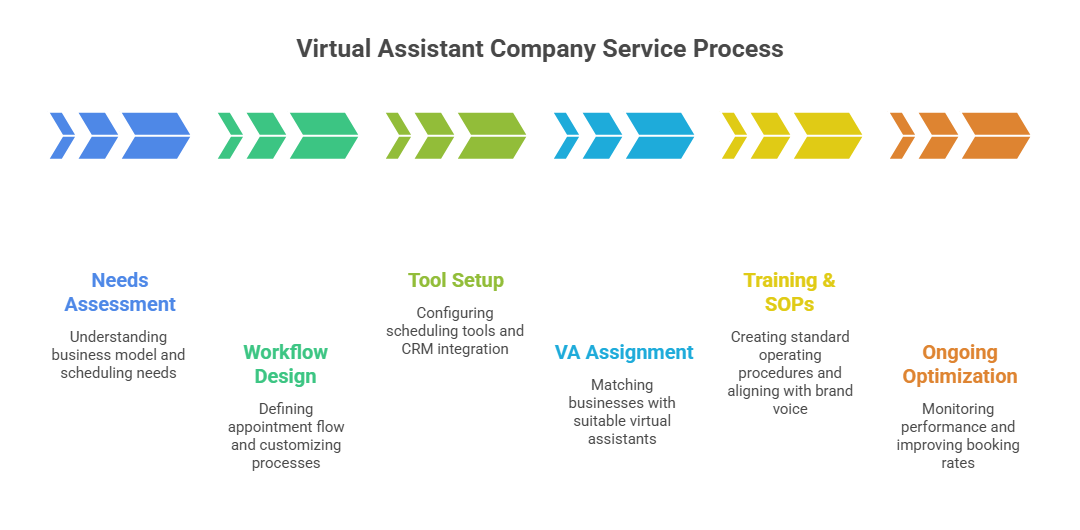
A professional VA company provides more than just manpower—they implement structured systems and optimized workflows. These systems are designed to improve scheduling accuracy, streamline communication, and ensure consistent execution of tasks. As a result, businesses benefit from greater efficiency, reduced errors, and more scalable operations.
1. Needs Assessment
The process begins with understanding the business model, whether it is sales-driven, service-based, or in industries like real estate. The virtual assistant provider evaluates the volume of appointments and the complexity of scheduling requirements. This helps establish a clear foundation for designing an efficient scheduling system.
2. Workflow Design
A structured appointment flow is defined, covering the entire journey from lead intake to booking and follow-up. Processes are tailored to align with the specific operational needs of the business. This ensures consistency and clarity in how appointments are managed.
3. Tool Setup
Scheduling tools and CRM systems are configured to support seamless operations. Integrations are implemented to ensure data flows accurately between platforms. Automation is set up to reduce manual effort and improve efficiency.
4. VA Assignment
Businesses are matched with a suitable virtual assistant based on their specific requirements. This may include a US-based appointment setting virtual assistant or offshore support, depending on preferences and workload. The goal is to ensure the right fit for both operational and communication needs.
5. Training & SOPs
Standard operating procedures are developed to guide the virtual assistant’s tasks and responsibilities. Training is provided to align the assistant with the company’s brand voice and communication style. This ensures consistency in customer interactions and service delivery.
6. Ongoing Optimization
Performance is continuously monitored to identify areas for improvement. Adjustments are made to enhance booking rates, response times, and overall efficiency. This ongoing process ensures that scheduling operations remain optimized as business needs evolve.
TaskVirtual: Your Partner in Appointment Setting Virtual Assistant Services

Managing appointment scheduling across sales pipelines, client communications, and internal calendars can quickly become complex as businesses grow. From handling inbound inquiries to coordinating across time zones, maintaining a consistent scheduling process requires both time and systemization. TaskVirtual supports businesses by providing structured appointment-setting services that ensure no opportunity is missed and every interaction is professionally managed.
1. Expert Consultation and Review
TaskVirtual’s virtual assistants analyze your current scheduling process, identify inefficiencies, and implement structured workflows. They assist in setting up booking systems, qualifying leads before scheduling, and ensuring that appointments align with your sales or service goals.
2. Affordable and Flexible Pricing
Building an in-house scheduling team can be costly. TaskVirtual offers a cost-effective alternative, with pricing plans starting from just $3.12/hour to $14.99/hour, making it accessible for startups, agencies, and growing businesses.
3. Comprehensive Appointment Management Solutions
From calendar coordination and CRM updates to automated reminders and follow-ups, TaskVirtual delivers end-to-end support. Whether you need a virtual assistant for meeting scheduling, call scheduling, or lead appointment setting, their services adapt to your operational needs.
4. Ongoing Support and Quality Assurance
TaskVirtual ensures continuous monitoring of scheduling workflows, providing updates, managing last-minute changes, and maintaining calendar accuracy. Their proactive approach reduces no-shows and improves overall scheduling efficiency.
5. Proven Track Record of Excellence
With 364 positive reviews and a 4.7-star rating on trusted VA platforms, TaskVirtual has established itself as a reliable partner for businesses worldwide. Their experience in appointment-setting virtual assistant services supports consistent and scalable business operations.
Conclusion
An appointment-setting virtual assistant is not just an administrative role—it is a critical function that directly supports sales, operations, and customer experience. Ensuring efficient scheduling, timely follow-ups, and accurate coordination, it contributes to smoother workflows and improved client interactions. As a result, businesses can enhance conversion rates, optimize team productivity, and maintain a more professional and reliable engagement process.
For businesses in the US and UK, outsourcing this task provides a practical way to:
- Efficiency is improved through streamlined scheduling and reduced manual work, enabling faster and more reliable operations.
- Costs are reduced by minimizing the need for in-house administrative staff and optimizing scheduling resources.
- Scheduling operations can be scaled efficiently by handling higher volumes without increasing internal workload.
By implementing structured workflows and using the right tools, companies can transform appointment management from a bottleneck into a streamlined system.
Key Takeaways
-
Appointment-setting virtual assistants handle scheduling, follow-ups, and calendar management.
-
Outsourcing improves efficiency and reduces operational costs.
-
Professional VAs use tools like CRMs and scheduling platforms to streamline workflows.
-
Structured processes ensure consistent lead handling and appointment booking.
-
VA companies help implement systems, not just provide personnel.
FAQ Section
1. What does an appointment-setting virtual assistant do?
They manage scheduling, coordinate calendars, confirm meetings, and handle follow-ups for clients or sales teams.
2. How much does an appointment-setting virtual assistant cost?
Costs vary by region and experience, but outsourcing is generally more affordable than hiring in-house staff.
3. Can virtual assistants handle US or UK time zones?
Yes, many remote VAs are trained to manage multiple time zones efficiently.
4. Are appointment-setting virtual assistants suitable for small businesses?
Yes, they are particularly useful for small businesses needing scalable support without full-time hires.
5. What industries use appointment-setting virtual assistants?
Common industries include sales, real estate, healthcare, consulting, and marketing agencies.
 Siddhartha Basu is a Technical Writer at Task Virtual. He loves online games, e-book reading, and Yoga.