

Contents
show
AI Virtual Assistant in Healthcare: Use Cases, Benefits and Challenges
American healthcare faces persistent strain from long wait times, heavy administrative loads, and clinician burnout. The AI virtual assistant in healthcare—conversational tools that schedule visits, triage symptoms, answer questions, and manage routine tasks around the clock—offers a practical response.
These systems, powered by large language models and integrated with electronic health records, have moved from pilots to everyday use in clinics and patient apps. With roughly one in three U.S. adults already turning to AI chatbots for health information, according to a 2026 KFF Tracking Poll, and only about 19% of medical group practices currently using them for patient communication per a 2025 MGMA Stat poll, both demand and opportunity are clear.
What Is an AI Virtual Assistant in Healthcare?
An AI virtual assistant in healthcare is software that uses natural language processing, machine learning, and often generative AI to interact with patients or staff through text, voice, or multimodal interfaces. Modern versions understand context, draw from clinical knowledge bases, integrate with EHRs, and escalate complex cases to humans. They operate in patient-facing roles such as symptom checkers and medication reminders, or provider-facing roles such as documentation support and clinical decision prompts, typically on HIPAA-compliant platforms.
1. Core Technologies Powering These Assistants
Large language models fine-tuned on medical literature form the foundation. Automatic speech recognition enables voice interactions, while multimodal systems process images or lab results alongside text. Integration layers connect to scheduling systems, pharmacy databases, and insurance eligibility tools. Ambient AI variants listen during visits and generate notes, reducing the documentation burden that contributes to burnout.
Security and compliance features—encryption, audit logs, and role-based access—are non-negotiable in the U.S. regulatory environment. Leading solutions undergo rigorous testing for accuracy and bias before clinical deployment.
2. How They Differ from General Consumer Chatbots
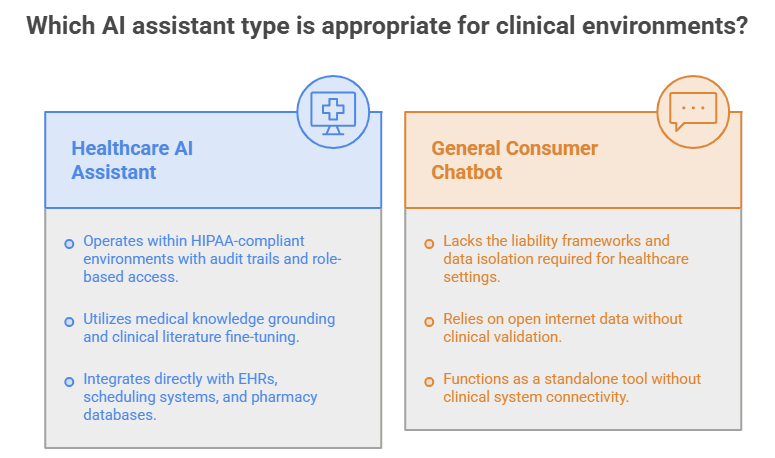
Consumer tools such as general-purpose ChatGPT lack the clinical validation, data isolation, and liability frameworks required for healthcare settings. Purpose-built AI virtual assistants include medical knowledge grounding, clear disclaimers that they do not replace professional care, and defined escalation paths to human clinicians. These safeguards are essential for patient safety and regulatory acceptance.
In addition, healthcare-specific assistants operate within HIPAA-compliant environments, maintain audit trails, and integrate directly with clinical systems rather than relying on open internet data. This controlled design reduces the risk of inaccurate or incomplete guidance and supports accountability when issues arise.
Key Use Cases of AI Virtual Assistants in Healthcare

AI virtual assistants support diverse clinical and administrative workflows across U.S. health systems. At Weill Cornell Medicine, a chatbot drove a 47% increase in digital appointment bookings, demonstrating gains from high-volume tasks.
1. Patient Symptom Triage and Initial Assessment
- Patients describe symptoms via chat or voice and receive clarifying questions based on validated protocols.
- The assistant recommends self-care, urgent care, or emergency services according to risk level.
- High-risk presentations such as chest pain or neurological changes are flagged for immediate human review.
- This approach expands access in rural and underserved areas while helping reduce unnecessary emergency department visits for low-acuity issues.
- Virtual assistants handle booking, rescheduling, and automated reminders to lower no-show rates.
- They check insurance eligibility in real time and explain basic coverage details.
- Patients are guided to the appropriate specialist or service line based on needs.
- Integration with EHR calendars keeps schedules synchronized and frees front-desk staff for complex inquiries.
3. Medication Management and Adherence Support
- Assistants send refill reminders and explain dosing instructions in plain language.
- They prompt patients to report side effects and can check for common interactions with appropriate disclaimers.
- For chronic conditions such as diabetes, hypertension, or heart failure, they support between-visit monitoring.
- Care teams receive alerts when adherence drops or symptoms worsen, enabling timely follow-up.
4. Administrative and Clinical Documentation Support
- Ambient listening tools capture conversations and draft notes, orders, and after-visit summaries.
- Staff-facing assistants answer protocol questions, retrieve lab results, or help complete prior-authorization forms.
- These functions directly reduce the documentation load that drives physician dissatisfaction.
- Clinicians regain time for complex decision-making and direct patient interaction.
- Systems offer structured mood tracking and guided exercises such as breathing techniques.
- They connect users to crisis resources and, when appropriate, licensed therapists.
- Assistants lower barriers to initial engagement and provide continuous support between appointments.
- Usage is growing especially among younger adults seeking convenient, nonjudgmental entry points to care.
Benefits of AI Virtual Assistants for Patients and Providers
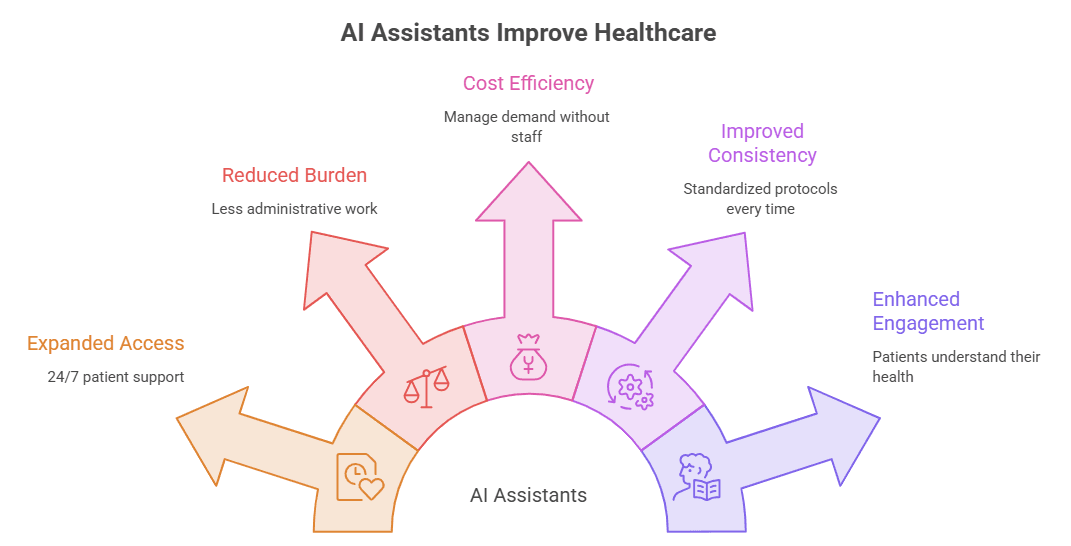
When thoughtfully implemented, AI virtual assistants deliver measurable improvements in access, efficiency, and experience across the care continuum. They address longstanding pain points for both patients seeking timely support and providers managing heavy workloads. The result is a more responsive system that scales without proportional increases in staffing.
1. Expanded Access and Convenience for Patients
Patients receive answers and support outside traditional office hours. This is especially valuable for working adults, caregivers, and those in areas with limited clinic availability. KFF data indicate that cost and lack of a regular provider rank among reasons people turn to AI tools for health information. Round-the-clock availability reduces friction and can encourage earlier engagement with the health system.
2. Reduced Administrative Burden and Burnout Relief
Physicians continue to report high rates of burnout—42% experienced at least one symptom in 2025, according to the American Medical Association, down from previous peaks but still substantial. AI assistants that automate scheduling, documentation, and routine queries free clinicians to focus on complex decision-making and direct patient interaction. Health systems report time savings that translate into higher job satisfaction and better work-life balance.
3. Cost Efficiency and Operational Scale
The global healthcare chatbot market was valued at approximately USD 1.49 billion in 2025 and is projected to grow significantly in the coming decade. Broader conversational AI in healthcare markets shows even larger trajectories. By handling high volumes of routine interactions, organizations can manage demand without proportional increases in staff. Reduced no-shows, fewer avoidable ED visits, and streamlined prior authorizations contribute to lower overall costs.
4. Improved Consistency and Data Capture
AI systems apply the same protocols every time, reducing variability in triage or information delivery. Interactions generate structured data that can feed population health programs, quality metrics, and continuous improvement cycles. For patients managing chronic conditions, consistent reminders and check-ins support better adherence and outcomes.
5. Enhanced Patient Engagement and Health Literacy
Plain-language explanations, personalized education, and proactive outreach help patients understand their conditions and treatment plans. Engaged patients are more likely to follow care plans and report concerns early, creating a positive feedback loop for both individuals and health systems.
Challenges and Limitations of AI Virtual Assistants in Healthcare
Despite clear benefits, significant hurdles remain around safety, trust, equity, and implementation. Responsible adoption requires addressing these issues systematically rather than treating them as secondary concerns.
1. Accuracy, Safety, and Clinical Liability
- AI can hallucinate or miss rare but critical presentations even when overall performance is strong.
- Human oversight remains essential for diagnosis and treatment decisions.
- Liability frameworks are still evolving, raising questions about responsibility when incomplete triage advice leads to harm.
2. Privacy, Security, and Regulatory Compliance
- Healthcare data is highly sensitive and requires strict HIPAA compliance, encryption, and access controls.
- Patients uploading personal medical information to consumer-grade tools introduce additional risk.
- Trust remains limited—two-thirds of U.S. adults say they trust AI tools “not too much” or “not at all” to provide reliable health information.
3. Bias, Equity, and Access Gaps
- Models trained on non-representative data can perpetuate or amplify existing disparities.
- Language barriers, digital literacy gaps, and uneven broadband access may leave some populations behind.
- Thoughtful design, diverse training data, and hybrid human-AI workflows are essential to avoid widening inequities.
4. Integration Complexity and Change Management
- Connecting assistants to legacy EHRs, scheduling systems, and insurance platforms is technically demanding and costly.
- Staff and clinicians need training and clear communication about the technology’s supportive role.
- Resistance often stems from fear of being replaced; successful programs emphasize the augmentation of human expertise.
5. Over-Reliance and Reduced Human Connection
- Increased automation risks diminishing the personal relationship central to healing for some patients and clinicians.
- Balancing efficiency with empathy requires deliberate design choices.
- AI should handle logistics while preserving face-to-face time for complex or emotionally significant conversations.
The Future of AI Virtual Assistants in US Healthcare
Looking ahead, several trends will shape adoption. Multimodal systems that combine voice, text, and image analysis will become more common. Tighter EHR integration and ambient documentation tools will further reduce administrative load. Regulatory clarity around liability, transparency, and bias auditing will accelerate or constrain deployment depending on the path chosen.
Value-based care models create natural incentives for tools that improve access, adherence, and efficiency. Health systems that pilot carefully, measure outcomes rigorously, and maintain strong human oversight will capture the greatest benefits. Patients, meanwhile, will increasingly expect seamless digital options alongside traditional care pathways.
Market projections underscore the momentum: digital assistants in healthcare are expected to grow from roughly USD 3 billion in the mid-2020s toward substantially higher figures by the early 2030s, driven by staffing shortages, generative AI advances, and reimbursement pathways that reward remote and automated support.
TaskVirtual: Your Partner in Healthcare Virtual Assistance

Even the most advanced AI virtual assistant in healthcare works best when supported by skilled human oversight for complex coordination, patient follow-up, and administrative exceptions. TaskVirtual supplies trained AI virtual assistant services that complement AI systems by handling the nuanced tasks that still require human judgment—such as detailed care navigation, prior-authorization follow-through, and personalized patient outreach—helping clinics and practices close the gap between automated efficiency and high-touch service.
1. Expert Healthcare Administrative Support
TaskVirtual’s virtual assistants specialize in healthcare workflows. They assist with appointment coordination across multiple providers, manage insurance verification details that fall outside automated systems, organize patient education materials, and ensure timely follow-up on referrals or test results so nothing slips through the cracks.
2. Affordable and Flexible Pricing
Hiring full-time administrative staff can strain practice budgets, but TaskVirtual offers a cost-effective alternative. With pricing plans starting from just $3.12/hour to $14.99/hour, their services remain accessible for independent practices, multi-location groups, and healthcare startups seeking scalable support.
3. Comprehensive Care Coordination Solutions
From managing complex scheduling across specialists and tracking prior-authorization status to coordinating medication refill requests and preparing visit summaries, TaskVirtual covers the full spectrum of administrative needs. Their services scale easily whether a practice requires occasional overflow help or consistent daily support alongside existing AI tools.
4. Ongoing Support and Quality Assurance
TaskVirtual provides continuous updates, status reports, and proactive reminders. Their assistants monitor open tasks, confirm patient communications, and escalate issues that require clinical attention, ensuring AI-driven processes and human workflows stay aligned and reliable.
5. Proven Track Record of Excellence
With 364 positive reviews and a 4.7-star rating on trusted VA platforms, TaskVirtual is recognized as a dependable partner. Healthcare clients rely on their expertise to reduce administrative friction, improve patient experience, and free clinicians to focus on care.
FAQ Section
1. What is an AI virtual assistant in healthcare?
It is conversational AI software that interacts with patients or staff via text or voice to handle scheduling, triage, education, documentation support, and routine questions while escalating complex issues to clinicians.
2. Are AI virtual assistants safe for medical advice?
They are tools for information and triage, not substitutes for professional care. Validated systems include disclaimers, human oversight, and escalation protocols. Patients should always consult licensed providers for diagnosis or treatment decisions.
3. How common is use of AI for health information in the US?
According to KFF’s 2026 Tracking Poll, about 32% of adults have turned to AI chatbots for health information or advice in the past year.
4. Can AI virtual assistants reduce physician burnout?
Yes, by automating documentation, scheduling, and routine inquiries. Burnout rates have declined but remain elevated at 41.9% of physicians reporting symptoms in 2025 (AMA data). Tools that free time for patient care contribute to improvement.
5. What about privacy concerns?
HIPAA-compliant platforms use encryption, access controls, and audit logs. Patients should verify that any tool they use meets healthcare privacy standards and avoid sharing sensitive data with unsecured consumer apps.
6. Will AI replace healthcare workers?
Evidence and industry consensus point to augmentation, not replacement. AI handles repetitive tasks so clinicians can focus on complex care, empathy, and judgment. Successful implementations emphasize partnership between technology and human expertise.
Conclusion + CTA
AI virtual assistants in healthcare already improve access, ease administrative burdens, support chronic disease management, and help address workforce strain. Market growth, rising patient use, and still-elevated burnout rates confirm the technology is here to stay.
Success depends on careful implementation: rigorous validation, strong privacy protections, bias mitigation, seamless integration, and clear boundaries between AI support and human clinical judgment. Organizations that treat these tools as partners will deliver better experiences for patients and more sustainable workloads for clinicians.
If you work in a health system or clinic, identify one high-volume process such as appointment management or after-hours triage and explore a controlled pilot with a HIPAA-compliant AI virtual assistant. Measure outcomes on time saved, satisfaction, and escalation rates, then share results so the broader community can advance responsibly. The goal remains better, more accessible, and more sustainable care for every American.
Sources
- KFF Tracking Poll on Health Information and Trust: Use of AI for Health Information and Advice (2026). https://www.kff.org/public-opinion/kff-tracking-poll-on-health-information-and-trust-use-of-ai-for-health-information-and-advice/
- MGMA Stat poll on chatbot/virtual assistant use in medical practices (2025). https://www.mgma.com/mgma-stat/sizing-up-the-market-for-ai-chatbots-virtual-assistants-in-medical-practices-in-2025
- American Medical Association physician burnout data (2025). https://www.ama-assn.org/practice-management/physician-health/physician-burnout-rate-continues-decline-falling-nearly-42
- Precedence Research Healthcare Chatbots Market. https://www.precedenceresearch.com/healthcare-chatbots-market
- Mordor Intelligence Digital Assistants in Healthcare Market. https://www.mordorintelligence.com/industry-reports/digital-assistants-in-healthcare-market
- Grand View Research Conversational AI in Healthcare Market. https://www.grandviewresearch.com/industry-analysis/conversational-ai-healthcare-market-report
- KFF analysis on growing use of AI in health care (2026). https://www.kff.org/racial-equity-and-health-policy/the-growing-use-of-artificial-intelligence-in-health-care-and-implications-for-disparities/
For more such content, visit our website.
 Siddhartha Basu is a Technical Writer at Task Virtual. He loves online games, e-book reading, and Yoga.