
Contents
show
How an Affiliate Marketing Virtual Assistant Can Scale Your Brand
Affiliate marketing remains one of the most performance-driven channels for American businesses. An affiliate marketing virtual assistant specializes in managing partner recruitment, content coordination, tracking, compliance, and optimization so you can focus on product and strategy.
In a market where U.S. affiliate spending continues climbing and remote talent is widely available, pairing your brand with a skilled affiliate marketing virtual assistant delivers measurable growth without the overhead of full-time hires. This guide explains exactly how these professionals expand revenue, improve efficiency, and strengthen long-term partner relationships for e-commerce, SaaS, and service businesses across the United States.
Understanding the Role of an Affiliate Marketing Virtual Assistant
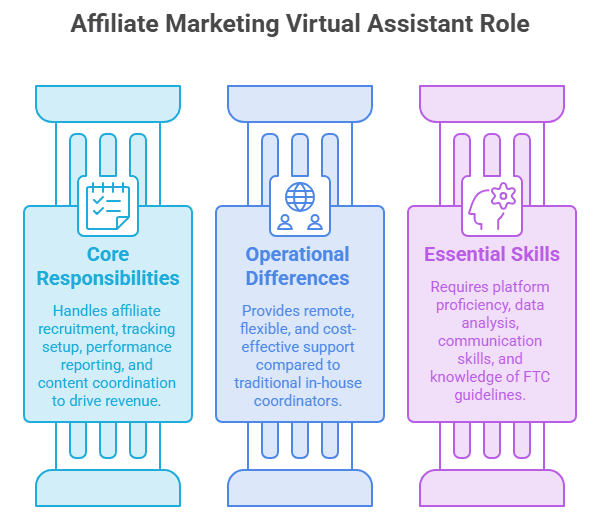
An affiliate marketing virtual assistant handles the day-to-day execution of performance partnerships. Unlike a general administrative VA, this role focuses on affiliate-specific workflows: researching potential partners, onboarding them into your program, creating or coordinating promotional assets, monitoring performance data, and maintaining compliance with FTC guidelines and network rules.
1. Core Responsibilities That Drive Results
Typical tasks include affiliate recruitment outreach via email or LinkedIn, setup of tracking links and unique promo codes, weekly performance reporting from platforms such as Impact, PartnerStack, or ShareASale, and content calendars for partner blogs or social posts. These activities directly support revenue attribution while reducing the time founders or marketing managers spend on repetitive outreach and administrative follow-ups.
The assistant also flags underperforming partners for optimization or removal and ensures promotional materials stay aligned with current brand guidelines. Consistent execution of these responsibilities keeps the program active and measurable without constant internal intervention.
2. How the Role Differs from In-House Coordinators
An in-house coordinator usually requires salary, benefits, and office infrastructure that add high fixed costs for U.S. companies. A virtual assistant works remotely, often on a part-time or project basis, and brings specialized experience across multiple programs at lower overhead.
This flexibility lets American businesses test affiliate expansion quickly while accessing talent already familiar with current network best practices and disclosure requirements. The model scales more easily than traditional full-time roles when partner volume fluctuates.
3. Skills That Separate Effective Assistants
Look for proficiency in major affiliate platforms, basic data analysis in Google Analytics or Looker Studio, and clear written communication for partner negotiations. Knowledge of FTC endorsement guidelines and cookie-window mechanics is equally important.
Strong candidates also understand last-click versus multi-touch attribution debates and seasonal campaign planning common in American retail calendars. These skills allow them to operate independently while protecting both brand reputation and accurate revenue tracking.
Why U.S. Businesses Need Specialized Affiliate Support in 2026
The affiliate channel has matured into a core performance marketing investment for many American brands. U.S. affiliate marketing spending stood at $9.56 billion in 2023 and was projected to rise steadily afterward, according to Statista data. Recent eMarketer forecasts place 2026 U.S. spending in the $13 billion range.
1. Market Growth Creates Opportunity and Complexity
- More brands launching or expanding programs intensify competition for quality affiliates.
- Managing hundreds of partners, accurate tracking, and compliant materials becomes increasingly time-intensive.
- A dedicated virtual assistant absorbs this operational load so internal teams can focus on strategy and high-value relationships.
2. Remote Work Trends Support Virtual Talent Models
- Bureau of Labor Statistics data show roughly 23 percent of people at work teleworked or worked from home for pay in early 2024 periods.
- Millions of Americans continue hybrid or fully remote arrangements, normalizing distributed teams.
- This acceptance makes it practical for U.S. companies to hire specialized remote support for affiliate operations without geographic limits.
3. Cost Efficiency Compared with Full-Time Hires
- Hiring a full-time affiliate manager in major U.S. markets often involves six-figure compensation plus benefits.
- A virtual assistant can cover core execution at a fraction of that cost while delivering comparable output for recruitment, reporting, and content coordination.
- Many businesses report that 77 percent of companies cite cost efficiency as a primary reason for using virtual assistants in general business functions.
How an Affiliate Marketing Virtual Assistant Directly Increases Revenue
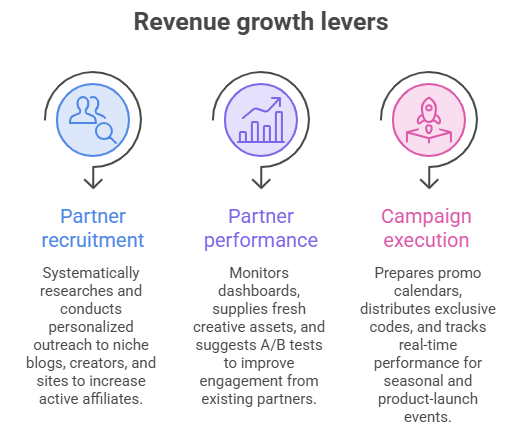
Revenue growth comes from three primary levers: expanding the partner base, improving partner performance, and accelerating campaign execution. A skilled affiliate marketing virtual assistant systematically works each lever so the program compounds results over time rather than remaining static.
1. Expanding High-Quality Partner Recruitment
Manual outreach is slow. A virtual assistant systematically researches niche blogs, YouTube creators, newsletter owners, and coupon sites, then personalizes outreach sequences. Consistent volume of qualified applications increases the number of active affiliates promoting your offers. Brands that maintain active recruitment pipelines typically see a larger share of total sales attributed to affiliates—often in the 5–25 percent range for major programs according to industry analyses.
2. Optimizing Existing Partner Performance
Many programs underperform simply because partners lack fresh creative, timely product updates, or clear commission incentives. The assistant monitors dashboards, identifies top and lagging partners, supplies new assets, and suggests A/B tests on landing pages or offer structures. Higher engagement from existing partners compounds revenue without additional acquisition cost.
3. Supporting Seasonal and Product-Launch Campaigns
U.S. retail peaks around back-to-school, Black Friday, Cyber Monday, and holiday periods demand rapid asset creation and partner activation. A virtual assistant prepares promo calendars, distributes exclusive codes, and tracks real-time performance, so campaigns launch on schedule and adjustments happen within days rather than weeks.
Key Tasks an Affiliate Marketing Virtual Assistant Handles Daily

Support spans the partner lifecycle, from first contact through ongoing optimization. Mature partnership programs average 28% of brand revenue, making clear daily ownership essential for consistent, scalable U.S. growth.
1. Recruitment and Onboarding Workflows
- Research target affiliates by niche, traffic estimates, and audience alignment.
- Draft personalized invitation emails and manage application reviews.
- Handle contract or terms acceptance, tracking-link generation, and delivery of welcome packets with brand guidelines and creative libraries.
2. Content and Creative Coordination
- Assemble product images, comparison tables, email swipe copy, and social templates.
- Coordinate with partners who need custom assets or exclusive deals.
- Ensure all materials include required disclosures to reduce friction and increase consistent promotion.
3. Performance Tracking and Reporting
- Pull weekly or monthly reports covering clicks, conversions, revenue, and earnings per click.
- Flag anomalies such as sudden traffic drops or unusually high refund rates.
- Prepare simple summaries for internal stakeholders so decisions rest on clear data.
4. Compliance and Relationship Maintenance
- Monitor for missing disclosures or policy violations and send timely reminders about FTC guidelines.
- Maintain ongoing communication with top partners through check-ins and exclusive offers.
- Use performance bonuses or priority treatment to reduce churn and encourage higher-priority promotions.
Measuring the Business Impact of Your Affiliate Marketing Virtual Assistant
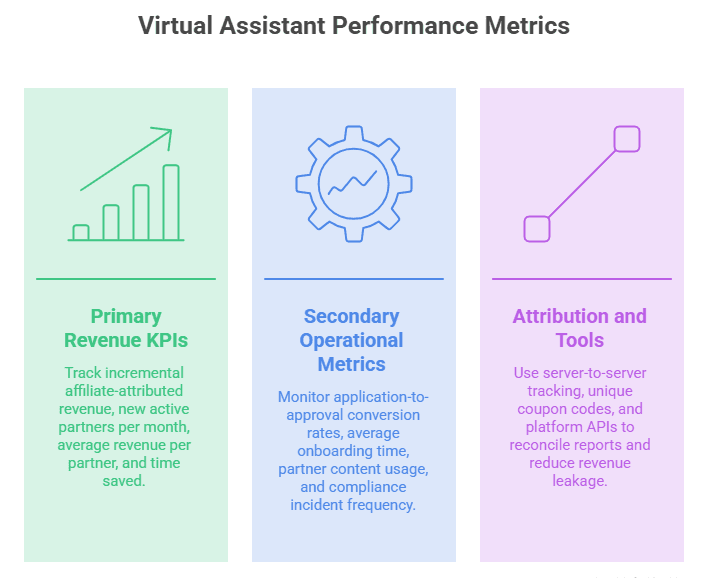
Clear metrics prove value and guide further investment in the channel. Tracking both revenue outcomes and operational improvements shows whether the virtual assistant is delivering measurable growth.
1. Primary Revenue and Efficiency KPIs
Track incremental affiliate-attributed revenue, number of new active partners per month, average revenue per active partner, and time saved by internal staff. Many programs aim for strong returns; industry sources frequently cite average returns in the range of several dollars for every dollar invested in the channel, though exact figures vary by vertical and execution quality.
2. Secondary Operational Metrics
Monitor application-to-approval conversion rates, average onboarding time, partner content usage rates, and compliance incident frequency. Improvements in these areas compound over quarters as the program matures.
3. Attribution and Tools That Support Accurate Measurement
Use server-to-server tracking, unique coupon codes, and platform APIs where available. A skilled assistant configures these systems correctly and reconciles discrepancies between network reports and internal analytics, reducing revenue leakage from incomplete tracking.
Best Practices for Hiring and Managing an Affiliate Marketing Virtual Assistant
Define weekly deliverables such as outreach volume, report timing, and creative requests before hiring begins. Set clear performance targets tied to partner growth after an initial ramp-up period. Provide tool access and brand assets from day one so the assistant can start productively.
Establish a shared project board, a dedicated communication channel, and a short weekly sync. Document processes in a living handbook for independent operation. Expand hours or add specialized support only after the program volume justifies the increase.
Common Challenges and How Virtual Assistants Help Overcome Them

Affiliate programs face predictable friction: 60% of marketers call affiliate activity their biggest challenge. A focused virtual assistant removes bottlenecks, helping the channel scale reliably for American businesses.
1. Time Constraints on Founders and Marketing Leads
- Leadership time spent on recruitment and reporting crowds out strategic work.
- Delegating execution frees calendar space for high-level partner negotiations and offer design.
- Internal teams gain capacity to integrate affiliate activity with email and paid social channels.
2. Inconsistent Partner Activity
- Affiliates often go quiet without regular communication and fresh materials.
- A virtual assistant maintains consistent touchpoints and asset refreshes.
- More partners stay active month over month, stabilizing revenue contribution.
3. Tracking and Attribution Gaps
- Misconfigured links or delayed cookie windows cause under-reporting.
- Experienced assistants audit setups regularly and coordinate with technical teams.
- Closing these gaps protects both brand revenue and long-term partner trust.
TaskVirtual: Your Partner in Affiliate Marketing Virtual Assistant Services

Growing an affiliate program requires consistent recruitment, accurate tracking, compliant content, and ongoing partner communication. TaskVirtual supplies skilled affiliate marketing virtual assistant services that handle these operational demands so U.S. businesses can scale performance partnerships without adding full-time headcount.
1. Expert Affiliate Program Support
TaskVirtual’s trained virtual assistants assist with partner research, personalized outreach, onboarding workflows, and tracking-link setup. They also coordinate creative assets, monitor performance dashboards, and maintain FTC-compliant disclosures to keep programs running smoothly.
2. Affordable and Flexible Pricing
Hiring a full-time affiliate manager can be expensive, but TaskVirtual makes specialized support cost-effective. With pricing plans starting from just $3.12/hour to $14.99/hour, their services remain budget-friendly and accessible to startups, small teams, and established brands alike.
3. Comprehensive Affiliate Management Solutions
From building recruitment pipelines and distributing seasonal promo materials to generating weekly performance reports and nurturing top partners, TaskVirtual covers the full partner lifecycle. Their scalable services adapt whether you need part-time execution support or broader program oversight.
4. Ongoing Optimization and Quality Assurance
TaskVirtual goes beyond basic task completion by providing regular updates, anomaly alerts, and process refinements. Their proactive approach helps improve partner activity rates, protect attribution accuracy, and keep campaigns aligned with brand standards.
5. Proven Track Record of Excellence
With 364 positive reviews and a 4.7-star rating on trusted VA platforms, TaskVirtual is recognised as a reliable partner worldwide. Clients count on their expertise to streamline affiliate operations and drive measurable program growth.
FAQ Section
1. What does an affiliate marketing virtual assistant actually do?
They manage partner recruitment, onboarding, creative distribution, performance reporting, and compliance support so the program runs smoothly without constant internal oversight.
2. How much does an affiliate marketing virtual assistant cost in the U.S.?
Rates vary by experience and hours, but part-time specialized support is typically far lower than a full-time salaried manager plus benefits, making it accessible for growing businesses.
3. Can a virtual assistant replace a full-time affiliate manager?
For early- to mid-stage programs, yes, for execution. Strategy, budget decisions, and major partner negotiations usually remain internal.
4. What tools should the assistant know?
Common platforms include Impact, PartnerStack, ShareASale, Google Analytics, and basic creative tools such as Canva, plus familiarity with FTC disclosure rules.
5. How quickly can results appear after hiring?
Recruitment pipelines and reporting improvements often show within 30–60 days; measurable revenue lifts typically require consistent activity over a full quarter.
6. Is an affiliate marketing virtual assistant suitable for small businesses?
Yes. Many solo founders and small teams use them precisely because they deliver specialized output without the commitment of a full-time hire.
Conclusion
An affiliate marketing virtual assistant turns a high-potential but operationally heavy channel into a scalable growth engine. By handling recruitment, content coordination, tracking, and partner communication, the role expands your active partner base and frees internal resources for higher-value work.
If you are ready to expand your affiliate program without expanding headcount, define the first 90-day scope and begin interviewing candidates who demonstrate both platform expertise and clear communication.
Sources
- Statista: Affiliate marketing spending in the United States
- eMarketer: U.S. affiliate marketing spending forecasts
- U.S. Bureau of Labor Statistics: Telework and work-at-home data
- Industry analyses referencing brand adoption rates and ROI ranges for the affiliate channel
For more such content, visit our website.
 Siddhartha Basu is a Technical Writer at Task Virtual. He loves online games, e-book reading, and Yoga.