Contents
show
HIPAA and Confidentiality: How Legal VAs Handle Sensitive Data
In an era where remote work powers healthcare efficiency, HIPAA and confidentiality remain non-negotiable pillars for protecting patient trust. Legal virtual assistants (VAs)—remote professionals supporting attorneys, counselors, medical practices, and health tech firms—frequently interact with sensitive data, including protected health information (PHI). As healthcare embraces virtual support to cut costs and boost productivity, ensuring these VAs uphold strict confidentiality standards is essential.
The Health Insurance Portability and Accountability Act (HIPAA) of 1996, enforced by the U.S. Department of Health and Human Services (HHS) Office for Civil Rights (OCR), sets national standards for safeguarding individually identifiable health information. With large breaches caused by hacking and ransomware increasing 89% since 2019, these threats continue posing massive risks, requiring legal VAs to navigate complex compliance landscapes.
This guide explores how professional, HIPAA-trained VAs maintain confidentiality while delivering high-value support. It covers legal frameworks, practical safeguards, common pitfalls, and actionable strategies optimized for covered entities and their business associates.
What Is HIPAA and Why Confidentiality Matters for Legal VAs
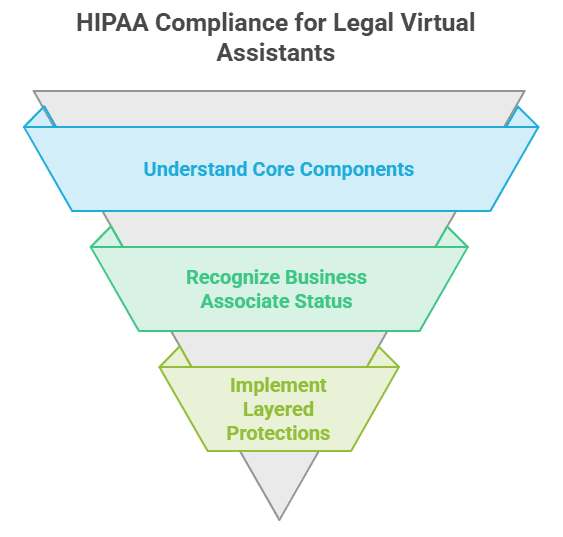
HIPAA establishes critical national standards designed to protect sensitive patient health information while enabling necessary data flows for quality care. For legal virtual assistants, understanding these rules is essential because they routinely handle protected health information in support of healthcare-related legal work. Maintaining confidentiality not only ensures regulatory adherence but also preserves client trust and professional integrity in remote environments.
1. Core Components of HIPAA Relevant to VAs
HIPAA and confidentiality requirements include the Privacy, Security, Breach Notification, and Enforcement Rules. The Privacy Rule controls PHI use and disclosure, while the Security Rule requires administrative, physical, and technical safeguards for all electronic PHI (ePHI).
For legal VAs handling tasks like medical records review in personal injury cases, insurance verification, or billing support, PHI includes names, addresses, medical histories, payment details, and biometric or genetic data. Confidentiality breaches erode client trust and invite severe penalties.
2. Business Associates and Virtual Assistants
When legal virtual assistants access PHI while performing services for covered entities, they are classified as business associates under HIPAA. This designation requires them to sign a Business Associate Agreement that clearly defines their obligations for protecting sensitive data and reporting any potential incidents promptly. Such agreements help bridge the gap between remote operations and full regulatory compliance.
3. Risks of Non-Compliance in Remote Settings
Non-compliance with HIPAA can lead to substantial financial penalties, legal repercussions, and irreversible damage to professional reputation. In remote environments, these risks are amplified by factors such as variable network security and shared living spaces.
VAs must therefore implement layered protections to mitigate threats like unauthorized access or accidental disclosures. Proactive measures, including regular training and technical safeguards, are vital to maintaining confidentiality standards across distributed teams.
Key Responsibilities of Legal VAs in Handling Sensitive Data
Legal VAs support healthcare and legal practices by managing sensitive records and administrative tasks. As 74% of 2021 breaches reported to OCR involved hacking/IT incidents, their responsibilities demand strict confidentiality protocols to prevent breaches while boosting efficiency.
1. Administrative Tasks Involving PHI
- Manage scheduling, insurance verification, prior authorizations, and billing processes while limiting exposure to only the minimum necessary PHI.
- Follow strict protocols for data handling to align with the minimum necessary standard required under HIPAA.
- Ensure all interactions comply with privacy rules to avoid unauthorized disclosures during routine support activities.
2. Documentation and Records Management
- Organize medical records, perform redactions of sensitive details, and prepare accurate summaries for legal cases.
- Utilize secure storage and transmission methods while adhering to retention, deletion, and de-identification guidelines.
- Maintain meticulous records to support compliance audits and legal requirements.
3. Client Communication and Coordination
- Utilize only HIPAA-compliant secure channels for any discussions involving health details.
- Avoid unencrypted email, SMS, or other insecure methods when transmitting PHI.
- Verify recipient identities and follow approved templates to minimize risks during coordination.
Best Practices for HIPAA-Compliant VA Operations
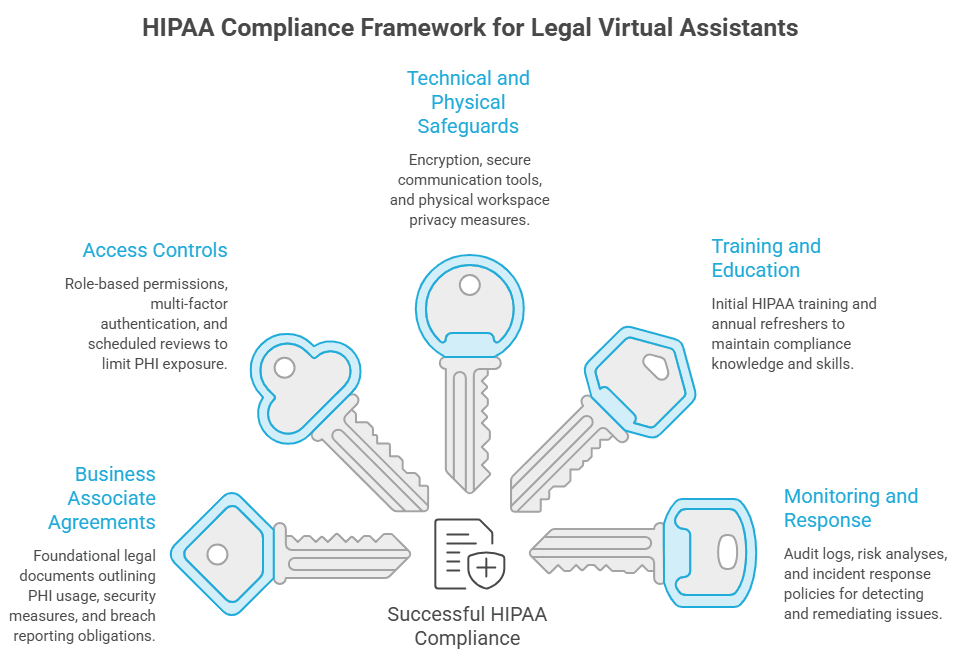
Successful HIPAA compliance for legal virtual assistants relies on structured policies, advanced technical measures, and continuous oversight. These practices enable remote professionals to deliver reliable support without compromising sensitive data security. Organizations that implement comprehensive frameworks see reduced risks and stronger operational resilience.
1. Implementing Business Associate Agreements (BAAs)
A robust BAA serves as the foundational legal document that outlines permitted uses of PHI, required security measures, and clear breach reporting obligations for virtual assistants. It should specify subcontractor responsibilities, data return or destruction procedures upon termination, and audit rights to ensure ongoing accountability. Regular reviews and updates to BAAs, often with legal counsel input, help adapt to evolving regulatory expectations and specific practice needs.
2. Role-Based Access Controls (RBAC) and Least Privilege
Role-based access controls ensure that legal VAs receive permissions strictly aligned with their assigned duties, preventing unnecessary exposure to broader PHI datasets. This approach incorporates unique user accounts, mandatory multi-factor authentication, and scheduled access reviews to maintain tight security. Immediate revocation of access for departing assistants further minimizes lingering vulnerabilities in remote support environments.
3. Encryption, Secure Tools, and Physical Safeguards
Encryption for data both in transit and at rest, combined with VPN requirements and HIPAA-approved communication platforms, forms the technical backbone of secure VA operations. Physical safeguards such as private workspaces, screen privacy filters, and clean-desk policies complement these measures in home-based settings. The use of dedicated devices, password managers, and endpoint protection software creates multiple layers of defense against potential threats.
4. Comprehensive Training and Ongoing Education
Initial HIPAA training for legal VAs must cover Privacy and Security Rules, phishing identification, and role-specific scenarios to build a strong compliance foundation. Annual refreshers, combined with documentation of participation and knowledge assessments, help keep skills current amid regulatory changes. This ongoing educational commitment reinforces a culture of confidentiality and equips VAs to handle emerging challenges effectively.
5. Audit Logs, Monitoring, and Incident Response
Maintaining comprehensive audit trails for all ePHI interactions allows for effective monitoring and quick detection of anomalies in VA activities. Regular risk analyses, security audits, and simulated breach exercises strengthen preparedness across remote teams. Well-defined incident response policies ensure prompt notification to covered entities and coordinated remediation when issues arise.
Challenges and Risks Specific to Legal VAs

Legal VAs face hurdles balancing productivity and stringent data protection in healthcare/legal settings. With ransomware attacks affecting 49% of organizational computers on average, targeted strategies are crucial for sustained compliance and risk reduction.
1. Remote Work Vulnerabilities
- Unsecured home networks and shared devices can expose PHI to unauthorized family members or local threats.
- Increased phishing susceptibility due to remote isolation and reliance on personal technology setups.
- Potential for physical breaches in non-professional home environments lacking controlled access.
2. Cross-Border and Subcontractor Issues
- Complex data transfer regulations when working with international VAs require appropriate safeguards like Standard Contractual Clauses.
- Ensuring all downstream subcontractors also maintain full BAA compliance to prevent chain-of-custody gaps.
- Managing jurisdictional differences that impact enforcement and data handling standards.
3. Integration with Legal and Ethical Obligations
- Aligning HIPAA requirements with attorney-client privilege and professional counseling ethics to avoid conflicts.
- Establishing clear policies that prevent any unauthorized case discussions or information sharing.
- Maintaining professional boundaries to uphold both regulatory and ethical standards in client interactions.
Selecting and Managing HIPAA-Compliant Legal VAs
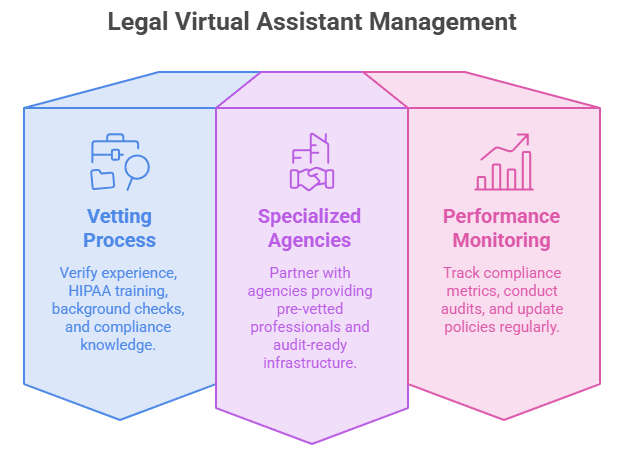
Selecting and managing legal virtual assistants requires carefully assessing their professional skills and HIPAA and confidentiality capabilities. A strategic approach enables healthcare practices to integrate dependable remote support, uphold the highest privacy standards, improve operational efficiency, and reduce potential liability exposure.
1. Vetting Process
The vetting process for legal VAs should begin with verification of relevant healthcare or legal experience and documented HIPAA training or certifications. Background checks and reference reviews provide additional assurance of reliability and respect for privacy protocols. Evaluating familiarity with BAAs, secure tools, and scenario-based compliance knowledge ensures candidates align with specific practice requirements.
2. Partnering with Specialized Agencies
Specialized VA agencies offer pre-vetted professionals who already operate under established compliance programs and infrastructure. These partners typically provide dedicated managers, audit-ready documentation, and proven track records in healthcare support services. Collaborating with such agencies streamlines onboarding while delivering scalable, secure solutions tailored to legal and medical needs.
3. Performance Monitoring and Continuous Improvement
Ongoing performance monitoring involves tracking key compliance metrics, conducting periodic audits, and reviewing access logs for adherence. Practices should update policies regularly in response to new regulations, technological developments, or identified risks. This iterative approach fosters continuous improvement, ensuring VAs remain effective partners in maintaining HIPAA and confidentiality standards over time.
How Virtual Assistants Support HIPAA-Compliant Services

HIPAA-compliant virtual assistants streamline operations for legal and healthcare practices by handling sensitive tasks securely while freeing professionals to focus on core responsibilities. Their specialized support ensures regulatory adherence without sacrificing efficiency or data protection.
- Conduct secure patient intake, scheduling, and insurance verification using only approved HIPAA-compliant platforms and minimum necessary PHI access.
- Organize and redact medical records for legal cases while maintaining encrypted storage and detailed audit trails for compliance.
- Facilitate safe client communications and care coordination through encrypted channels and verified protocols.
- Assist with prior authorizations, billing support, and claims processing under strict Business Associate Agreement guidelines.
- Perform routine compliance checks, support risk assessments, and help implement ongoing training to sustain high standards of confidentiality.
TaskVirtual: Your Partner in HIPAA-Compliant Virtual Assistant Services

Legal practices and healthcare providers often struggle with the complexities of managing sensitive patient data while maintaining operational efficiency in remote environments. TaskVirtual delivers specialized virtual legal assistants trained in HIPAA protocols, helping organizations securely handle protected health information without compromising productivity or compliance.
1. Expert Consultation and Review
TaskVirtual’s skilled virtual assistants provide expert guidance on implementing Business Associate Agreements, setting up role-based access controls, and selecting secure tools for PHI management. They review workflows to ensure alignment with Privacy and Security Rules while supporting tasks like medical records organization and compliant client coordination.
2. Affordable and Flexible Pricing
Hiring a full-time personal assistant can be expensive, but TaskVirtual makes it cost-effective. With pricing plans starting from just $3.12/hour to $14.99/hour, their services are budget-friendly and accessible to individuals, families, and businesses.
3. Comprehensive HIPAA Support Solutions
From ensuring encryption standards and conducting risk assessments to managing secure documentation and incident response planning, TaskVirtual covers essential compliance needs. Their scalable services adapt to whether you require occasional assistance or dedicated ongoing support for legal and healthcare data handling.
4. Ongoing Support and Quality Assurance
TaskVirtual delivers continuous monitoring, regular training updates, and proactive audit assistance to maintain full HIPAA adherence. Their dedicated support helps resolve compliance questions swiftly while keeping sensitive operations running smoothly and securely.
5. Proven Track Record of Excellence
With 364 positive reviews and a 4.7-star rating on trusted VA platforms, TaskVirtual is recognised as a reliable partner worldwide. Clients count on their expertise to simplify sensitive data management and strengthen confidentiality practices.
FAQ Section
1. What makes a legal VA a HIPAA business associate?
Any VA who creates, receives, maintains, or transmits PHI for a covered entity qualifies and requires a BAA.
2. Can VAs use personal devices for PHI?
Only with strong safeguards like full-disk encryption, MFA, MDM, and VPNs. Dedicated or managed devices are preferred.
3. How quickly must breaches be reported?
VAs must notify the covered entity without unreasonable delay; in most cases, entities have 60 days for affected individuals.
4. What training is required for VAs?
Initial comprehensive training plus annual refreshers on HIPAA rules, security awareness, and role-specific scenarios.
Yes—covered entities and business associates face fines up to $2+ million per year per violation category, plus potential criminal charges.
6. How do legal VAs support confidentiality beyond HIPAA?
Through NDAs, ethical guidelines, privilege protections, and policies limiting discussions of cases.
Conclusion
HIPAA and confidentiality form the foundation of trustworthy remote support in legal and healthcare settings. By partnering with well-trained, compliant legal VAs, practices achieve efficiency gains while minimizing risks—protecting patients, clients, and reputations in a high-stakes digital environment.
Remote legal support can involve confidential client records, financial information, health data, and privileged communications, so access and security controls need to be defined before work begins. A virtual assistant for lawyers should operate within limited permissions, approved systems, confidentiality procedures, and appropriate attorney supervision.
Prioritize BAAs, robust safeguards, ongoing training, and proactive risk management. The investment pays dividends in the form of compliance, trust, and operational resilience.
CTA: Ready to integrate secure virtual support? Contact a HIPAA-specialized VA agency today for a compliance consultation and discover how compliant VAs can transform your practice while safeguarding sensitive data.
Sources
- U.S. Department of Health and Human Services (HHS) HIPAA resources.
- Industry analyses from Cyrisma, VASforAgencies, Counseling Now, Accountable HQ, GMVA, and others are referenced.
- Breach and enforcement data from HIPAA Journal, IBM Cost of a Data Breach reports, OCR portals, and Statista summaries.
For more such content, visit our website.
 Siddhartha Basu is a Technical Writer at Task Virtual. He loves online games, e-book reading, and Yoga.