

Contents
show
Virtual Medical Assistant vs Medical Billing Service: Which Do You Need
Running a small to mid-sized medical practice in the US today means juggling patient care with mounting administrative headaches. Physicians spend nearly twice as much time on paperwork as on direct patient interaction, contributing to burnout and lost revenue. Enter remote support options: virtual medical assistant (VMAs) and dedicated medical billing services. Both leverage remote expertise, but they serve distinct needs for practices seeking efficiency without expanding overhead.
A virtual medical assistant provides broad administrative support like scheduling, patient communication, insurance verification, EMR updates, and basic billing coordination. In contrast, a medical billing service focuses on the revenue cycle through claims submission, coding, denial management, payment posting, and follow-ups. Understanding these differences helps, as admin costs consume up to 25-31% of expenditures, with billing driving much waste.
With rising claim denial rates around 15-20% nationally and billions lost to inefficiencies, the right support reclaims time for care and strengthens finances. This guide analyzes both using industry insights to help you decide.
What Is a Virtual Medical Assistant?
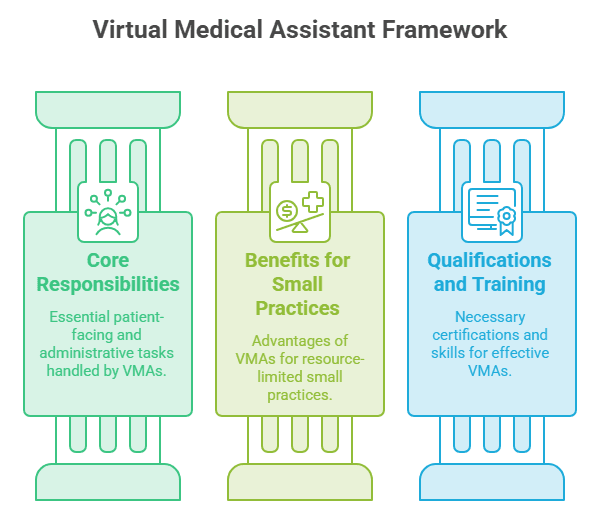
A virtual medical assistant is a trained remote professional who integrates into your practice’s workflows using secure, HIPAA-compliant tools. These experts extend your team without requiring physical office space or full-time employee benefits. Medical VAs help small practices manage daily operations efficiently while maintaining high standards of patient data protection and care coordination.
1. Core Responsibilities of VMAs
A virtual medical assistant handles essential patient-facing tasks such as appointment scheduling, sending reminders, making follow-up calls, and addressing basic inquiries to minimize no-shows and enhance satisfaction. They also manage administrative coordination, including EMR data entry, chart updates, insurance verification, prior authorizations, and referral processing.
Beyond these, they support operational efficiency through inbox management, telehealth setup assistance, and general front-office duties that keep the practice running smoothly. Their healthcare-specific training ensures all tasks align with industry regulations and practice needs.
2. Benefits for Small Practices
Small practices facing resource limitations gain significantly from a virtual medical assistant by reducing overhead expenses such as office space, equipment, and full benefits packages. These flexible solutions scale easily with hourly or part-time models suited to varying patient volumes and help reclaim 20-50+ admin hours weekly.
This shift allows providers to concentrate more on clinical care while improving overall practice flow and patient experiences through extended availability.
3. Qualifications and Training
Effective virtual medical assistant typically hold certifications like CMAA and complete HIPAA training while gaining hands-on experience with medical terminology and common EHR systems. Many service providers deliver pre-trained professionals as part of managed teams for quick integration.
Practices should verify these qualifications to ensure reliable support that meets compliance standards and operational requirements.
What Is a Medical Billing Service?
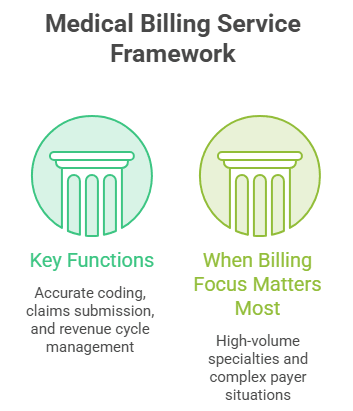
A medical billing service consists of specialized remote teams or companies focused exclusively on managing the financial aspects of patient encounters. These experts convert clinical documentation into timely reimbursements while navigating complex payer requirements and regulations. Their targeted approach helps practices optimize revenue without diverting internal staff from core clinical duties.
1. Key Functions
Medical billing services perform accurate coding using systems like ICD-10 and CPT, followed by efficient claims submission, tracking, and appeals processes for denied claims. They handle full revenue cycle elements, including insurance verification, payment posting, patient billing statements, accounts receivable follow-up, and comprehensive denial management to maximize collections.
Additionally, they maintain strict compliance through ongoing regulatory updates, conduct audits, and generate performance reports that provide valuable insights into financial health. This specialized focus minimizes errors and accelerates cash flow for sustainable practice operations.
2. When Billing Focus Matters Most
Practices in high-volume specialties or those dealing with complex payers benefit most when denial rates climb or reimbursements slow. Dedicated billing support addresses these challenges directly by improving first-pass claim acceptance rates and streamlining appeals.
The expertise proves especially valuable amid persistent billing complexities that contribute to significant annual losses across the industry. Specialized services ultimately strengthen financial stability while reducing administrative strain on in-house teams.
Virtual Medical Assistant vs Medical Billing Service: Side-by-Side Comparison

Virtual medical assistant and medical billing services deliver valuable remote support yet target distinct practice needs; with billing costs at 14.5% of primary care revenue, choosing requires matching strengths to your specific challenges and goals.
1. Scope
- VMAs deliver broad administrative support, including scheduling and patient communications.
- They often incorporate light billing tasks as part of daily operations.
- Billing services concentrate exclusively on the full revenue cycle.
- Their focus remains narrow and highly specialized in financial processes.
2. Cost Structure
- In-house medical assistants typically cost $50k–$65k+ annually, including benefits and overhead.
- VMAs offer more affordable equivalents around $12k–$30k per year with scalable hourly options.
- Full billing services provide variable pricing that often delivers strong ROI.
- Savings come through reduced denials and faster payment cycles.
3. Control and Integration
- Both options operate remotely with strong integration potential.
- VMAs tend to embed more holistically into everyday practice workflows.
- Billing services supply dedicated experts with advanced coding depth.
- Regular reporting helps maintain oversight in either model.
4. Best For
- VMAs suit practices seeking general efficiency and patient experience improvements.
- They provide versatile admin relief for smaller operations.
- Billing services excel where high denial rates or revenue issues persist.
- Many practices benefit from combining elements of both approaches.
Key Benefits of Virtual Medical Assistant
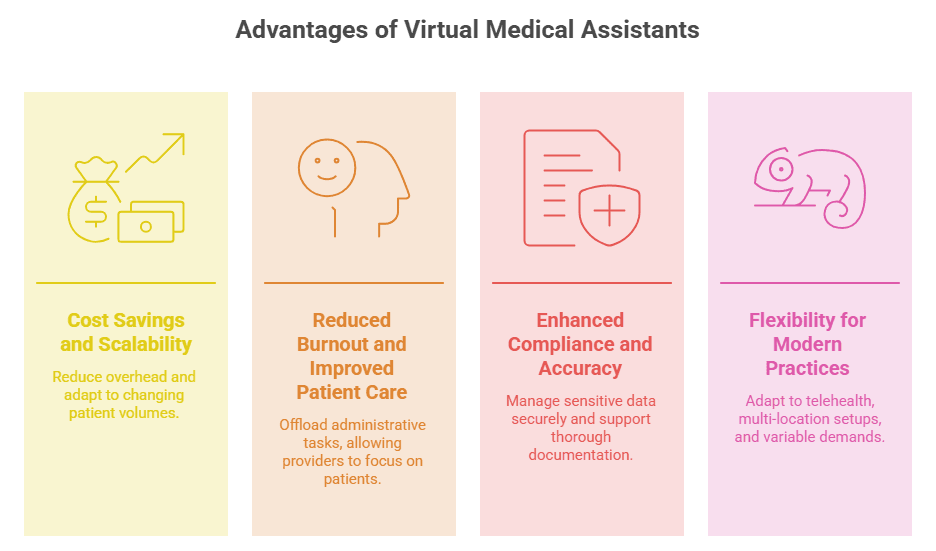
A virtual medical assistant delivers transformative advantages by addressing multiple administrative challenges simultaneously in busy healthcare settings. They help practices achieve better work-life balance for providers while maintaining or improving service quality. Their flexible, cost-effective model supports long-term sustainability amid ongoing industry pressures.
1. Cost Savings and Scalability
Virtual medical assistants significantly reduce overhead by eliminating expenses for office space, equipment, and full employee benefits packages compared to traditional hires. Practices often achieve 40-60% savings while enjoying flexible hourly or part-time arrangements that adapt to changing patient volumes without hiring delays. This scalable approach allows support to grow alongside the practice, providing excellent value and predictable budgeting for small to mid-sized operations.
2. Reduced Burnout and Improved Patient Care
By offloading substantial administrative workloads that consume roughly half a primary care physician’s day, VMAs enable providers to dedicate more time to meaningful clinical work and patient relationships. This shift decreases burnout rates and minimizes errors that occur during rushed documentation or multitasking. Practices frequently report higher staff satisfaction and enhanced patient experiences as a result of more attentive care delivery.
3. Enhanced Compliance and Accuracy
HIPAA-trained virtual medical assistants manage sensitive patient data through secure protocols and support thorough documentation practices that lower audit risks. Their specialized knowledge helps maintain regulatory adherence across various tasks without burdening in-house teams. This professional handling contributes to fewer compliance issues and greater overall accuracy in records and processes.
4. Flexibility for Modern Practices
Virtual medical assistants adapt well to telehealth, multi-location setups, and variable daily demands that characterize contemporary healthcare delivery. Many teams provide bilingual capabilities and extended hours coverage beyond standard business times. This versatility ensures consistent support that aligns with evolving patient expectations and practice models.
When to Choose a Dedicated Medical Billing Service

Dedicated medical billing services become the preferred choice when revenue cycle management represents a primary challenge for the practice. These specialized solutions deliver targeted expertise that addresses complex financial workflows more effectively than general support.
1. Handling Complex Revenue Cycles
- Specialized billing services excel when denial rates exceed 10-15% or days in A/R stay high.
- They significantly improve first-pass claim acceptance rates.
- They manage appeals efficiently to protect and enhance cash flow.
2. Expertise in Coding and Regulations
- Certified billers maintain up-to-date knowledge of payer requirements and coding changes.
- This helps practices avoid expensive mistakes and compliance issues.
- Their specialized focus is essential amid rising administrative complexity and regulations.
3. Data-Driven Insights
- Billing services typically provide comprehensive analytics that identify revenue leaks.
- They also highlight opportunities for improvement in the revenue cycle.
- These insights support informed strategic decisions for long-term financial strength.
How to Decide: Factors for Your Practice
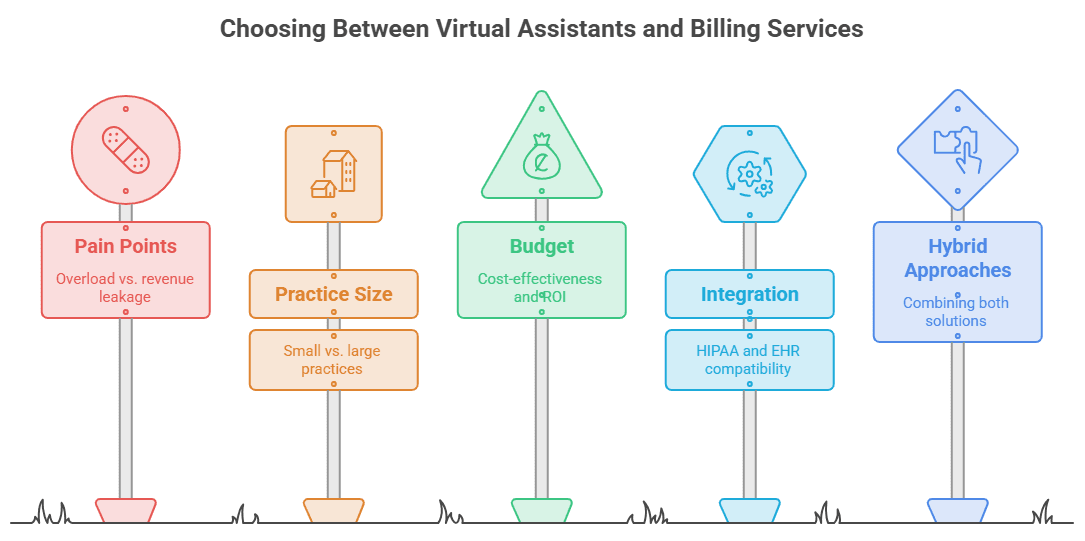
Making the right choice between virtual medical assistants and medical billing services requires careful evaluation of your practice’s unique situation. Several key factors should guide your decision-making process to ensure the selected solution delivers maximum value. Proper assessment helps align support with both immediate needs and future growth objectives.
1. Assess Your Pain Points
If your practice struggles primarily with broad administrative overload or patient flow challenges, beginning with a virtual medical assistant often provides the most comprehensive relief. Practices experiencing significant revenue leakage, persistently high denial rates, or difficult coding issues should prioritize dedicated billing services or a VMA with strong billing capabilities. This targeted assessment ensures the chosen solution directly addresses your most pressing operational bottlenecks for faster results.
2. Practice Size and Specialty
Smaller or solo practices typically benefit most from the versatile support offered by virtual medical assistants that can handle multiple administrative areas efficiently. Larger practices or those in procedural specialties may require the deeper expertise provided by dedicated billing services to manage complex financial requirements effectively. The decision should reflect both the current operational scale and the specific demands of your medical specialty for optimal fit.
3. Budget and ROI
Careful calculation of total costs, including often-overlooked expenses like errors and rework, helps determine the most cost-effective option for your situation. Virtual medical assistants frequently achieve quicker breakeven through immediate efficiency improvements, while billing services generate strong returns by recovering previously lost revenue. Considering both short-term expenses and long-term financial impact leads to more sustainable support decisions.
4. Integration and Vendor Selection
Successful implementation depends heavily on ensuring full HIPAA compliance, seamless compatibility with your existing EHR systems, and clearly defined service level agreements. Always request trial periods, thoroughly check references, and evaluate the depth of specialized training offered by potential providers. These steps help establish reliable partnerships that integrate smoothly with your current workflows and team.
5. Hybrid Approaches
Many thriving practices achieve excellent results by combining a virtual medical assistant for general administrative support with outsourced expertise for particularly complex billing tasks. This layered strategy allows practices to address multiple operational areas without overextending any single solution. Hybrid models often provide the most balanced and comprehensive support for growing healthcare practices.
Implementation Best Practices
Successful adoption of virtual medical assistants or billing services requires thoughtful planning and ongoing management to maximize benefits. Following proven implementation strategies helps ensure smooth integration and sustainable results for your practice.
- Define your specific needs by auditing current workflows and identifying key bottlenecks before selecting a provider.
- Secure proper onboarding with system access and detailed training on your practice protocols.
- Establish effective communication using tools like shared calendars and regular check-in meetings.
- Monitor key performance indicators such as claim acceptance rates, no-show reductions, and hours saved.
- Scale support gradually, starting part-time and expanding based on results and practice needs.
TaskVirtual: Your Partner in Virtual Medical Assistant Services

Managing daily administrative demands in a medical practice—from patient scheduling and insurance verification to EMR updates and billing coordination—can quickly overwhelm busy providers. Virtual medical assistants from TaskVirtual help practices reclaim valuable time by handling these tasks remotely with full HIPAA compliance and seamless system integration. TaskVirtual delivers expert virtual medical assistant services that simplify operations so you can focus on exceptional patient care.
1. Expert Consultation and Review
TaskVirtual’s skilled virtual medical assistants support comprehensive administrative needs, including appointment management, patient communication, insurance verification, prior authorizations, and EMR documentation. They work closely with your team to ensure smooth workflows and accurate handling of sensitive healthcare information.
2. Affordable and Flexible Pricing
Hiring a full-time personal assistant can be expensive, but TaskVirtual makes it cost-effective. With pricing plans starting from just $3.12/hour to $14.99/hour, their services are budget-friendly and accessible to individuals, families, and businesses.
3. Comprehensive Virtual Medical Support Solutions
From patient scheduling and follow-up coordination to insurance processes, basic billing support, and telehealth assistance, TaskVirtual covers the full spectrum of practice administrative needs. Their scalable services adapt to whether you need occasional help or consistent daily support for growing practices.
4. Ongoing Support and Quality Assurance
TaskVirtual goes beyond basic task handling by offering continuous updates, performance reporting, and proactive adjustments to meet your practice’s evolving requirements. Their dedicated support ensures reliable operations and reduces administrative stress for the entire team.
5. Proven Track Record of Excellence
With 364 positive reviews and a 4.7-star rating on trusted VA platforms, TaskVirtual is recognised as a reliable partner worldwide. Clients count on their expertise to simplify medical practice operations and streamline everyday administrative tasks.
FAQ Section
1. What is the main difference between a virtual medical assistant and a medical billing service?
A VMA handles broad administrative tasks like scheduling and patient support, while a medical billing service specializes in claims, coding, and revenue recovery.
2. How much can a virtual medical assistant save my practice?
Potentially $20k–$50k+ annually versus in-house staff by eliminating benefits, space, and fixed salaries, plus efficiency gains.
3. Are virtual medical assistants HIPAA compliant?
Yes, reputable providers ensure training, secure platforms, and protocols. Always verify BAA agreements.
4. Can a VMA handle medical billing tasks?
Many handle basic billing (verification, simple claims), but complex coding/denials often require specialized billing services or certified billers within a VMA team.
5. What’s the typical cost for these services?
VMAs: $15–$30/hour or monthly retainers. Billing services vary, but often include a percentage of collections or flat fees. Compare to in-house costs.
6. How do I choose between them?
Evaluate your biggest challenges—admin volume vs. revenue cycle performance—and consider starting with a versatile VMA.
Conclusion
Virtual medical assistants and medical billing services both address critical pain points in modern healthcare practices, but the right choice depends on your specific needs. VMAs excel at holistic efficiency and patient support, ideal for most small practices seeking broad relief. Dedicated billing services shine when revenue optimization and coding accuracy are paramount.
Choosing between specialized billing support and broader administrative assistance depends on your practice’s needs. Explore the full scope of virtual medical assistant services to understand which type of support may be right for your practice.
Many practices thrive with a hybrid or comprehensive VMA solution that covers both. By reducing the administrative burden that plagues US healthcare, you can lower costs, combat burnout, improve patient experiences, and strengthen your bottom line.
Sources
- LinkedIn posts and industry blogs on medical VAs (e.g., Amarachi Esiaba, Medical Staff Relief, Virtual Medical Assistant US).
- AMA resources on virtual assistants in practices.
- Hunter Business School and Stepful comparisons of roles.
- Wing Assistant, MedEdge Billing, Care VMA Health Insights.
- Authoritative stats from AMA, BLS, Health Affairs, Premier, MassHPC, and related reports.
For more such content, visit our website.
 Siddhartha Basu is a Technical Writer at Task Virtual. He loves online games, e-book reading, and Yoga.