

Contents
show
How a Virtual Website Assistant Improves Website Conversions
American shoppers expect instant answers. When they land on a site and hit a question—shipping cost, sizing, product fit, return policy—they either get help right away or they leave. That friction is expensive. Average e-commerce conversion rates in the United States hover in the low single digits, and cart abandonment remains stubbornly high.
A virtual website assistant, a remote assistant that changes the equation. It greets visitors, answers questions in natural language, guides them through decisions, and captures intent before they bounce. With 70.22% of online shopping carts abandoned on average, businesses need tools that can engage visitors and remove friction at critical moments. In 2026, as generative AI becomes mainstream shopping infrastructure, these assistants are no longer experimental add-ons; they are conversion infrastructure.
This post examines exactly how a virtual website assistant improves website conversions, drawing on recent data from Adobe Digital Insights, Pew Research Center, Baymard Institute, and Statista. You will see the mechanisms, the metrics, and practical ways U.S. businesses are deploying them for measurable gains.
What Is a Virtual Website Assistant and Why It Matters Now
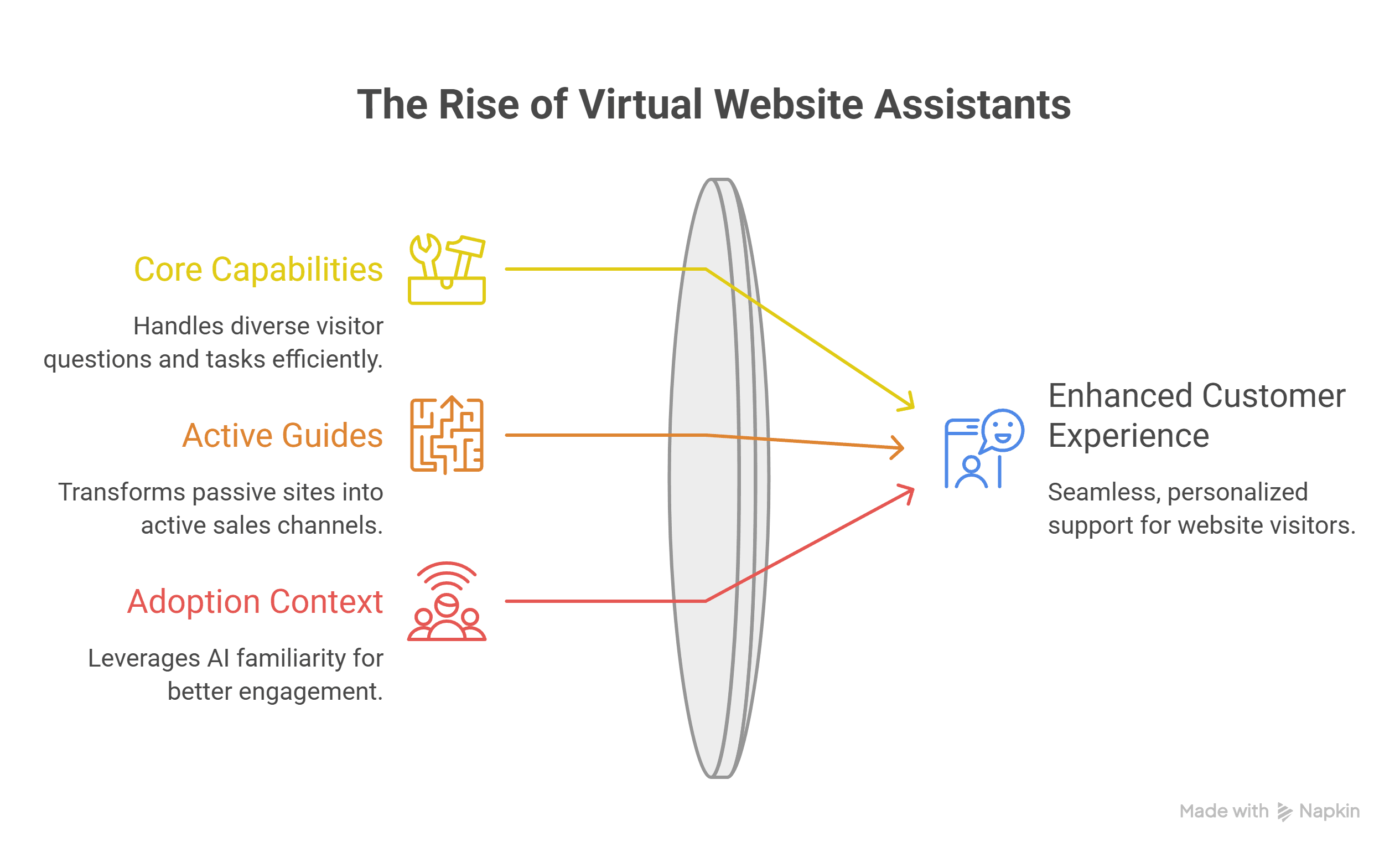
A virtual website assistant is a remote, trained professional that understands visitor questions, pulls from your product catalog, FAQs, policies, and inventory data, and responds in real time. Unlike rigid rule-based chatbots of the past, modern versions use large language models to handle multi-turn conversations, personalize recommendations, and hand off to AI agents when needed.
1. Core Capabilities That Drive Results
These assistants handle product discovery (“Which running shoe is best for wide feet under $120?”), pre-purchase objections, shipping and returns questions, and lead qualification for service businesses. They operate 24/7, including nights and weekends when many U.S. shoppers research and buy. Beyond simple answers, advanced versions can check real-time inventory, calculate shipping estimates based on the visitor’s location, recommend complementary items, and even initiate checkout flows or schedule demos without forcing the user to leave the conversation.
This combination of instant information and guided action removes the most common barriers that cause visitors to abandon their journey. For American retailers and service providers facing intense competition, the ability to resolve doubt in the moment of highest intent turns browsers into buyers more reliably than static content alone.
2. The Shift From Passive Sites to Active Guides
Traditional websites present information and hope visitors self-serve. A virtual website assistant turns the site into an active sales and support channel. This matters because visitor intent is highest at the moment of arrival; delayed answers kill momentum. Instead of relying on users to dig through menus, FAQs, or product listing pages, the assistant anticipates needs and delivers relevant help proactively or on demand.
The result is a more fluid experience that mirrors the helpfulness of a knowledgeable in-store associate. In an era when shoppers compare multiple options quickly, sites that guide rather than merely display information capture a larger share of available demand and reduce the leakage that occurs between interest and action.
3. Adoption Context in the United States
According to Pew Research Center, 34% of U.S. adults have used ChatGPT, with usage roughly doubling since 2023 and reaching 58% among adults under 30. Consumers are already comfortable conversing with AI for recommendations and decisions. Sites that meet them with a capable on-site assistant capture that readiness.
This growing familiarity means resistance to conversational interfaces continues to decline. Younger shoppers in particular treat AI assistance as a natural part of the buying process, while older cohorts increasingly appreciate the convenience of quick answers without waiting for email or phone support. Businesses that align their websites with these evolving expectations gain an edge in both engagement and conversion.
How a Virtual Website Assistant Raises Engagement and Intent

Higher engagement is a reliable predictor of conversion. When visitors receive timely, relevant help, they explore more of the site, form stronger intent, and move further down the funnel. A virtual website assistant systematically increases the depth and quality of those interactions.
1. Longer Sessions and Deeper Exploration
- Visitors who receive immediate answers to product or policy questions stay on the site longer because their next decision is easier to make.
- Adobe Digital Insights data on AI-related traffic patterns shows meaningfully extended session durations and higher page views when questions are resolved in real time.
- An on-site assistant produces similar gains by preventing the early exits that occur when shoppers cannot find sizing details, compatibility information, or shipping timelines.
- Longer sessions create more opportunities for cross-sell and upsell recommendations that feel natural rather than forced.
- Deeper exploration also improves the quality of behavioral data available for future personalization and retargeting.
2. Proactive Outreach Versus Waiting for Clicks
- The strongest assistants initiate context-aware conversations based on page type, time spent, scroll depth, or exit-intent signals.
- A shopper lingering on a product page can receive a timely offer of help with sizing or comparisons instead of a generic greeting.
- Page-specific prompts consistently outperform one-size-fits-all messages and raise the percentage of visitors who begin a productive dialogue.
- Proactive engagement through digital content captures attention while purchase intent is still high, rather than waiting for the visitor to hunt for a chat icon.
- This approach converts passive browsing into guided decision-making and reduces the number of high-intent visitors who leave unanswered questions behind.
3. Qualifying and Warming Leads in Real Time
- For lead-generation and B2B sites, the assistant asks progressive clarifying questions that surface budget, timeline, and fit without requiring a form fill first.
- High-intent visitors can be routed immediately to sales or calendar booking while lower-intent visitors receive educational content that nurtures them.
- Conversation data enriches the lead record, giving sales teams fuller context and improving follow-up conversion rates.
- Real-time qualification filters out unqualified inquiries early, protecting human team capacity.
- The process feels helpful rather than interrogative, increasing the likelihood that serious prospects complete the interaction and move forward.
Reducing Friction and Recovering Abandoned Carts
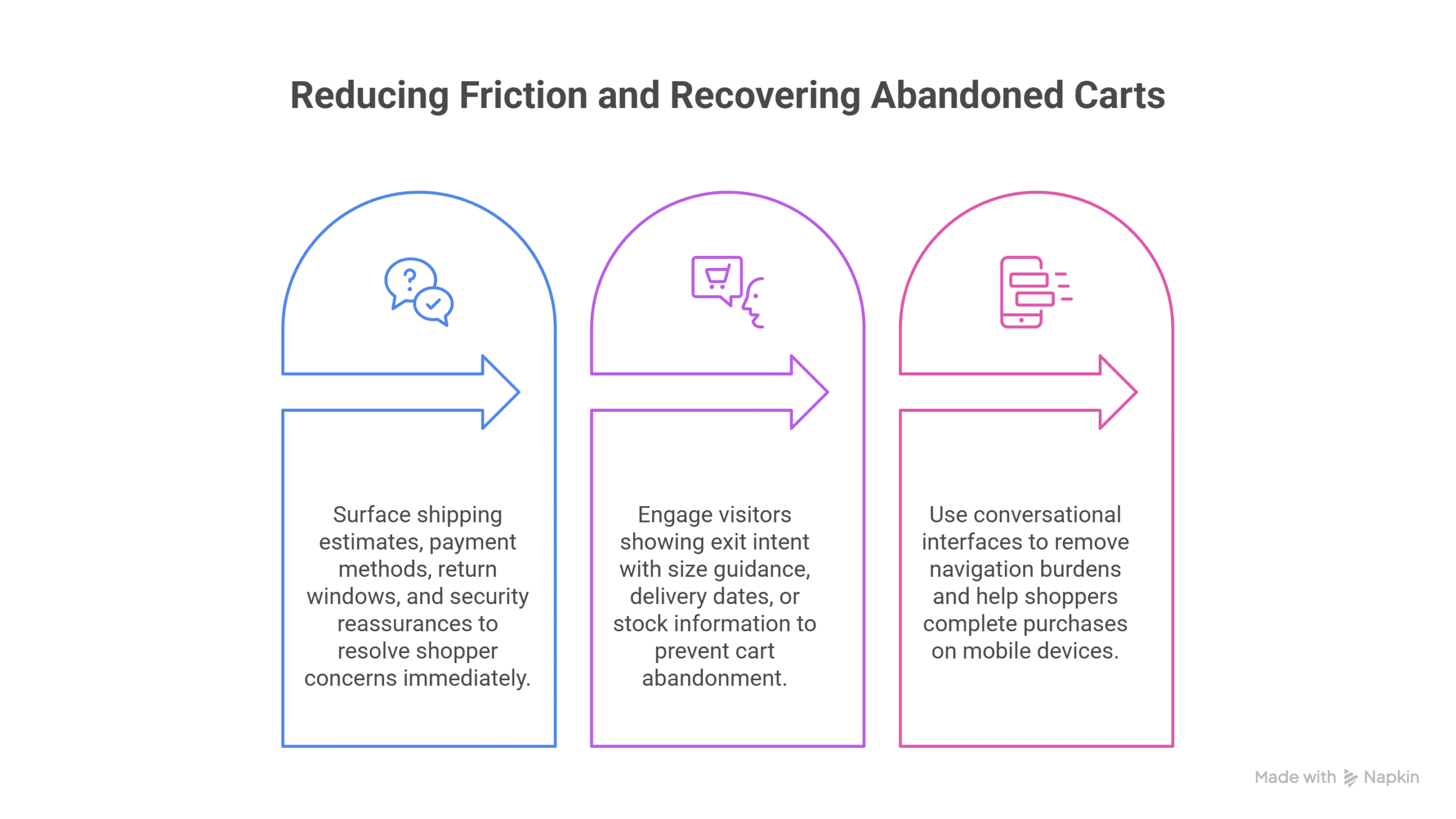
Cart abandonment remains one of the costliest conversion leaks for U.S. e-commerce businesses. By addressing the precise moments of doubt and hesitation, a virtual website assistant recovers revenue that would otherwise disappear. The following mechanisms target the highest-impact friction points.
1. Instant Answers to the Top Abandonment Triggers
Baymard Institute research places average cart abandonment near 70 percent. Leading reasons include unexpected costs, complicated checkout steps, uncertainty about delivery or returns, and lack of trust. A virtual website assistant surfaces accurate shipping estimates, available payment methods, return windows, and security reassurances at the exact moment the shopper needs them.
By resolving these questions inside the conversation rather than forcing the visitor to search static pages or abandon the cart, the assistant keeps momentum alive. Shoppers who would have left because of a single unanswered concern are more likely to complete the purchase when help arrives instantly and in context.
2. Proactive Cart Recovery Conversations
When a visitor adds items and then slows or shows exit intent, the assistant can open a relevant dialogue—offering size guidance, clarifying delivery dates, or highlighting limited stock. These interventions occur while the shopper is still on the site, giving them a higher chance of success than later email recovery sequences.
Well-timed conversational recovery consistently outperforms passive methods because it addresses hesitation in the moment of highest consideration. Combined with transparent total-cost visibility and simple next steps, proactive outreach converts a meaningful share of otherwise lost carts into completed orders.
3. Mobile Experience Advantages
Mobile traffic accounts for a large and growing share of U.S. retail visits, yet conversion rates on phones typically lag desktop because forms, multi-page navigation, and small screens create friction. Conversational interfaces remove much of that burden by letting shoppers ask questions and receive answers without typing into tiny fields or switching screens.
The natural flow of dialogue works especially well on mobile devices, helping close the conversion gap between phone and desktop users. Sites that equip mobile visitors with an effective virtual website assistant capture more of the high-volume mobile audience that would otherwise bounce.
Personalization, Trust, and 24/7 Availability

American consumers shop across time zones and schedules. A virtual website assistant delivers consistent, personalized support around the clock while building the trust required for conversion. These three elements work together to raise both the volume and quality of completed transactions.
1. Context-Aware Recommendations
- The assistant combines current page context, browsing behavior, and available product data to suggest relevant options rather than generic bestsellers.
- Recommendations feel helpful because they respond to the specific question or hesitation the visitor just expressed.
- Personalized guidance increases average order value by surfacing complementary or upgraded items at the right moment.
- When inventory or promotional data is current, the assistant can highlight limited-time offers or low-stock alerts that create appropriate urgency.
- Over time, conversation history (when consented) further refines suggestions, making subsequent visits even more efficient.
2. Building Trust Through Transparency and Escalation
- Modern assistants clearly identify themselves and ground answers in the site’s own product and policy data.
- Providing source transparency and easy access to full details reduces the skepticism some shoppers still feel toward automated help.
- Seamless human handoff with complete conversation context ensures complex or sensitive issues receive personal attention without forcing the visitor to repeat information.
- Consistent, accurate responses across sessions build familiarity and confidence in the brand.
- Trust signals delivered inside the conversation—secure payment mentions, return guarantees, customer reviews—reinforce credibility at the decision point.
3. After-Hours Capture
- Many high-intent visits occur outside standard business hours when human support is unavailable.
- The assistant remains fully operational, answering questions, managing CRM leads, and guiding purchases at night, on weekends, and during holidays.
- After-hours interactions that would otherwise end in a static form or abandoned cart are converted into completed actions or warm leads for the next business day.
- Continuous availability expands the effective selling window without increasing headcount.
- Captured conversations provide valuable insight into after-hours demand patterns that can inform inventory, staffing, and marketing decisions.
Impact on Key Conversion Metrics
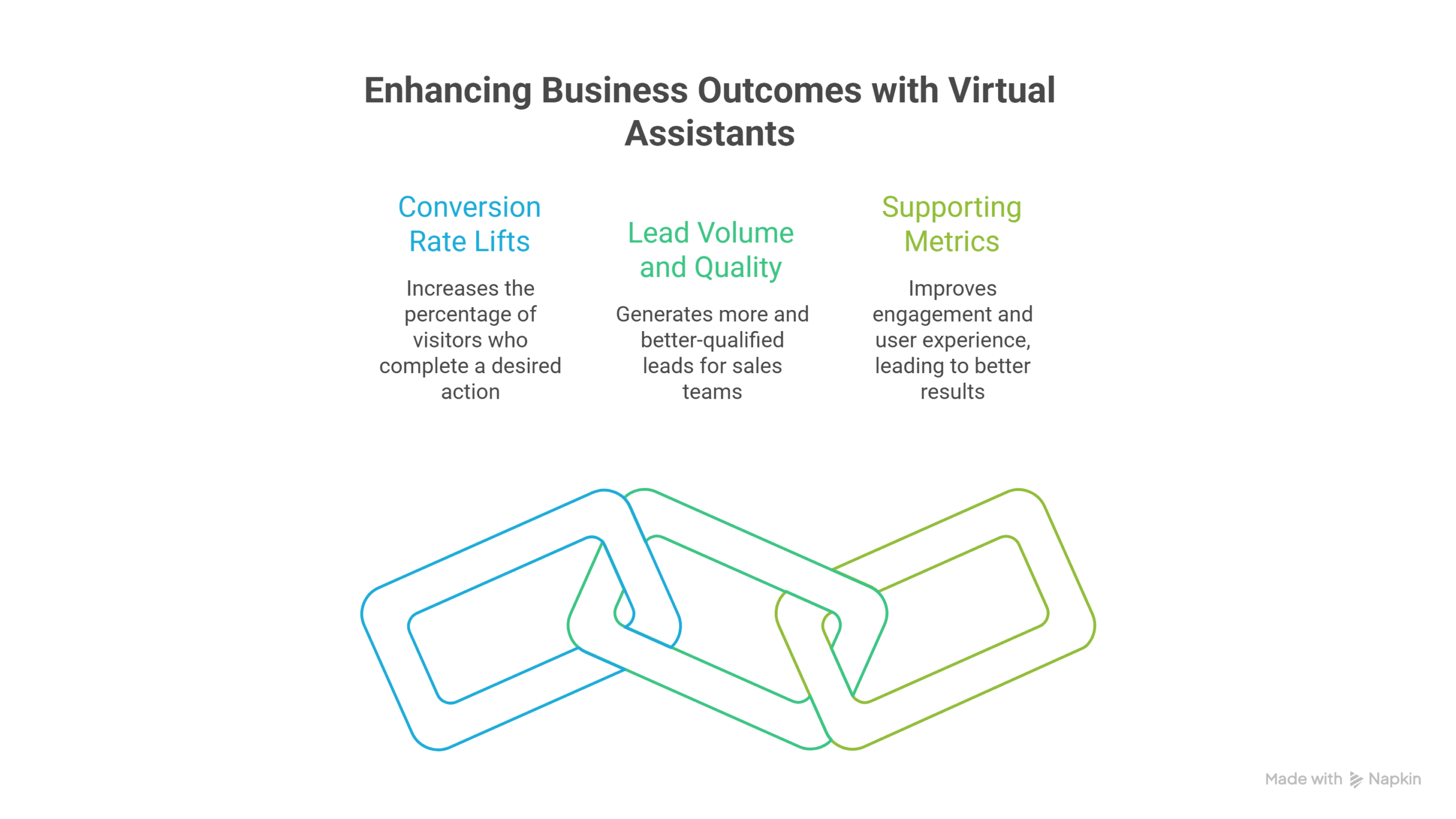
The value of a virtual website assistant ultimately appears in the numbers that matter most to U.S. businesses: conversion rate, lead volume, revenue per visit, and supporting engagement metrics. Clear measurement links conversational activity directly to business outcomes.
1. Conversion Rate Lifts
Adobe Digital Insights data shows AI-referred traffic converting substantially higher than non-AI traffic—reports of 42 percent better performance in March 2026 and later figures in the 54–60 percent range—along with elevated revenue per visit. On-site virtual website assistants generate parallel lifts by performing the same high-intent question-answering and guidance function for all visitors. Sites that previously converted in the low single digits frequently move toward the stronger end of their category benchmarks once friction is removed and assistance is available in real time.
2. Lead Volume and Quality for Non-E-Commerce Sites
Service, SaaS, and B2B organizations typically see higher lead capture rates when a conversational assistant replaces or supplements static forms. Progressive questioning qualifies prospects during the interaction, resulting in better-fit leads and richer context for sales teams. The combination of higher volume and improved quality reduces cost per qualified lead while increasing downstream close rates.
3. Supporting Metrics That Compound Results
Lower bounce rates, longer sessions, higher pages per visit, improved add-to-cart rates, and stronger mobile conversion all contribute to the overall conversion lift. These intermediate gains compound: more engaged visitors generate more opportunities for the assistant to help, which further improves conversion probability and average order value. Tracking the full set of metrics provides a complete picture of how the assistant influences the entire funnel.
Best Practices for Implementing a Virtual Website Assistant
Successful results depend on careful design, accurate data, and ongoing refinement rather than simple installation. The following practices help U.S. businesses maximize conversion impact while protecting trust and compliance.
- Ground the assistant in accurate, current product catalogs, inventory status, shipping rules, return policies, and brand voice guidelines so answers remain reliable and hallucination risk stays low.
- Design for progressive disclosure by starting with high-impact use cases such as shipping questions, product fit, and cart recovery, then expand once performance is proven and always define the specific conversion events the assistant should influence.
- Measure assisted conversion funnel rate, attributed revenue or leads, cart recovery performance, and overall site conversion changes; iterate based on conversation logs and provide seamless human escalation paths that preserve full context.
- Ensure compliance with U.S. privacy expectations, disclose AI use appropriately, respect consent for personalization, and maintain accessibility for screen readers and keyboard navigation.
TaskVirtual: Your Partner in Website Conversion Assistance

Running a high-converting website requires constant attention to visitor questions, cart recovery, lead qualification, and after-hours engagement. Managing these demands in-house can stretch internal teams thin and leave conversion opportunities untapped. TaskVirtual delivers specialized virtual website assistant services that help businesses implement, monitor, and optimize conversational tools so more visitors turn into customers.
1. Expert Setup and Conversion Optimization
TaskVirtual’s experienced virtual assistants guide the selection and configuration of website assistants tailored to your catalog, policies, and conversion goals. They help fine-tune prompts, integrate inventory and shipping data, and structure conversations that address the exact friction points slowing down your sales funnel.
2. Affordable and Flexible Pricing
Hiring a full-time specialist can be costly, but TaskVirtual keeps support accessible. With pricing plans starting from just $3.12/hour to $14.99/hour, their services fit the budgets of growing e-commerce brands, service businesses, and marketing teams seeking measurable conversion gains without heavy overhead.
3. Comprehensive Conversion Support Solutions
From configuring proactive cart-recovery dialogues and mobile-friendly flows to setting up lead-qualification sequences and personalized research for product recommendations, TaskVirtual covers the full spectrum of website assistant needs. Their scalable approach works whether you require occasional optimization or ongoing management of your conversational conversion channel.
4. Ongoing Monitoring and Performance Assurance
TaskVirtual provides continuous oversight, conversation review, and performance reporting so your virtual website assistant stays accurate and effective. Proactive adjustments keep responses current with inventory, promotions, and policy changes while protecting the visitor experience that drives higher conversion rates.
5. Proven Track Record of Excellence
With 364 positive reviews and a 4.7-star rating on trusted VA platforms, TaskVirtual is recognised as a reliable partner worldwide. Clients rely on their expertise to strengthen website engagement, reduce abandonment, and improve conversion outcomes through skilled virtual assistance.
FAQ
1. What is the difference between a virtual website assistant and an old-style chatbot?
A virtual website assistant works like a trained digital team member who understands visitor needs, answers questions naturally, and guides customers through their decisions. Unlike old-style chatbots that depended on fixed responses and limited question paths, a modern virtual website assistant can have meaningful conversations, provide personalized support, and assist visitors throughout their journey.
2. How much can a virtual website assistant realistically improve conversion rates?
The impact depends on the business, website traffic, customer needs, and how well the assistant is trained. A well-prepared virtual website assistant can improve conversions by helping visitors overcome doubts, providing instant guidance, recovering potential lost sales, and creating smoother customer experiences.
3. Will visitors prefer talking to a virtual website assistant or a human representative?
Many visitors appreciate having immediate support when they need answers quickly. A virtual website assistant acts as the first point of contact, helping with common questions and guiding customers. When a situation requires personal expertise or a human touch, the assistant can connect visitors with the appropriate team member.
4. Does a virtual website assistant help improve mobile conversions?
Yes. A virtual website assistant makes mobile shopping easier by allowing visitors to ask questions and receive guidance without navigating through multiple pages or completing lengthy forms. This creates a smoother experience for customers using smaller screens.
5. How do I measure the success of a virtual website assistant?
Success should be measured by how effectively the assistant helps visitors and supports business goals. Important metrics include customer engagement, assisted conversions, recovered carts, qualified leads, response quality, and improvements in overall customer satisfaction.
6. Is a virtual website assistant only useful for e-commerce websites?
No. A virtual website assistant can support many types of businesses, including SaaS companies, professional services, healthcare providers, education platforms, and lead-generation websites. It can welcome visitors, answer questions, schedule appointments, collect information, and guide potential customers toward the right next step.
Conclusion and Call to Action
A virtual website assistant improves website conversions by answering questions instantly, reducing the friction that drives abandonment, delivering personalized guidance, and remaining available around the clock. In an environment where average conversion rates stay modest and cart abandonment hovers near 70 percent, turning passive browsing into guided action is a practical competitive advantage for U.S. businesses.
If current conversion performance leaves revenue on the table, audit the top questions and drop-off points on your site, then pilot a well-grounded virtual website assistant on high-traffic pages. Measure the impact, refine the experience, and expand. The organizations that treat conversational assistance as core conversion infrastructure will convert a higher share of their existing traffic in 2026 and beyond.
Sources
- Pew Research Center: “ChatGPT use among Americans roughly doubled since 2023” (2025).
- Adobe Digital Insights / Adobe Analytics reports on AI-referred traffic to U.S. retailers (2026 snapshots via TechCrunch, Chief Marketer, Digital Commerce 360, WWD, and Adobe business blogs).
- Baymard Institute: Cart abandonment rate compilations (approximately 70.19–70.22% average).
- Statista: Online shopping conversion rates by country/region and related e-commerce benchmarks (2025–2026 data).
For more such content, visit our website.
 Siddhartha Basu is a Technical Writer at Task Virtual. He loves online games, e-book reading, and Yoga.