Contents
show
How a Virtual Operations Assistant Identifies Process Bottlenecks
In today’s fast-paced American business environment, operational friction quietly drains productivity, profits, and employee focus. A virtual operations assistant has emerged as a practical solution for identifying and resolving process bottlenecks before they cascade into missed deadlines, higher costs, or stalled growth. With hybrid and remote work now standard for many U.S. teams, these specialized remote professionals combine process mapping expertise, data analysis, and proactive monitoring to surface hidden delays that internal staff often overlook amid daily demands.
This approach aligns with 2026 priorities around efficiency, AI-augmented workflows, and lean operations. Businesses no longer treat virtual support as simple task delegation; instead, a skilled virtual operations assistant functions as an external operations analyst who systematically uncovers where work slows, stalls, or breaks. The result is clearer visibility into cycle times, handoff failures, and resource misallocation—insights that free leadership to focus on strategy rather than firefighting.
Understanding Process Bottlenecks in Modern Operations
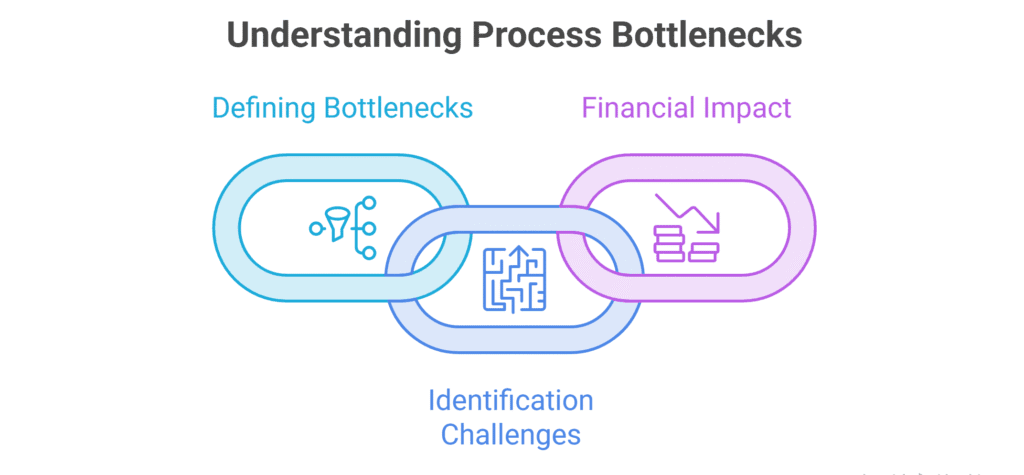
Process bottlenecks remain one of the most persistent drains on organizational performance across U.S. companies of every size. They form wherever capacity, information, or decision flow falls short of demand. Understanding their true nature is the essential first step before any virtual operations assistant can diagnose and resolve them effectively.
1. Defining Bottlenecks Beyond Simple Delays
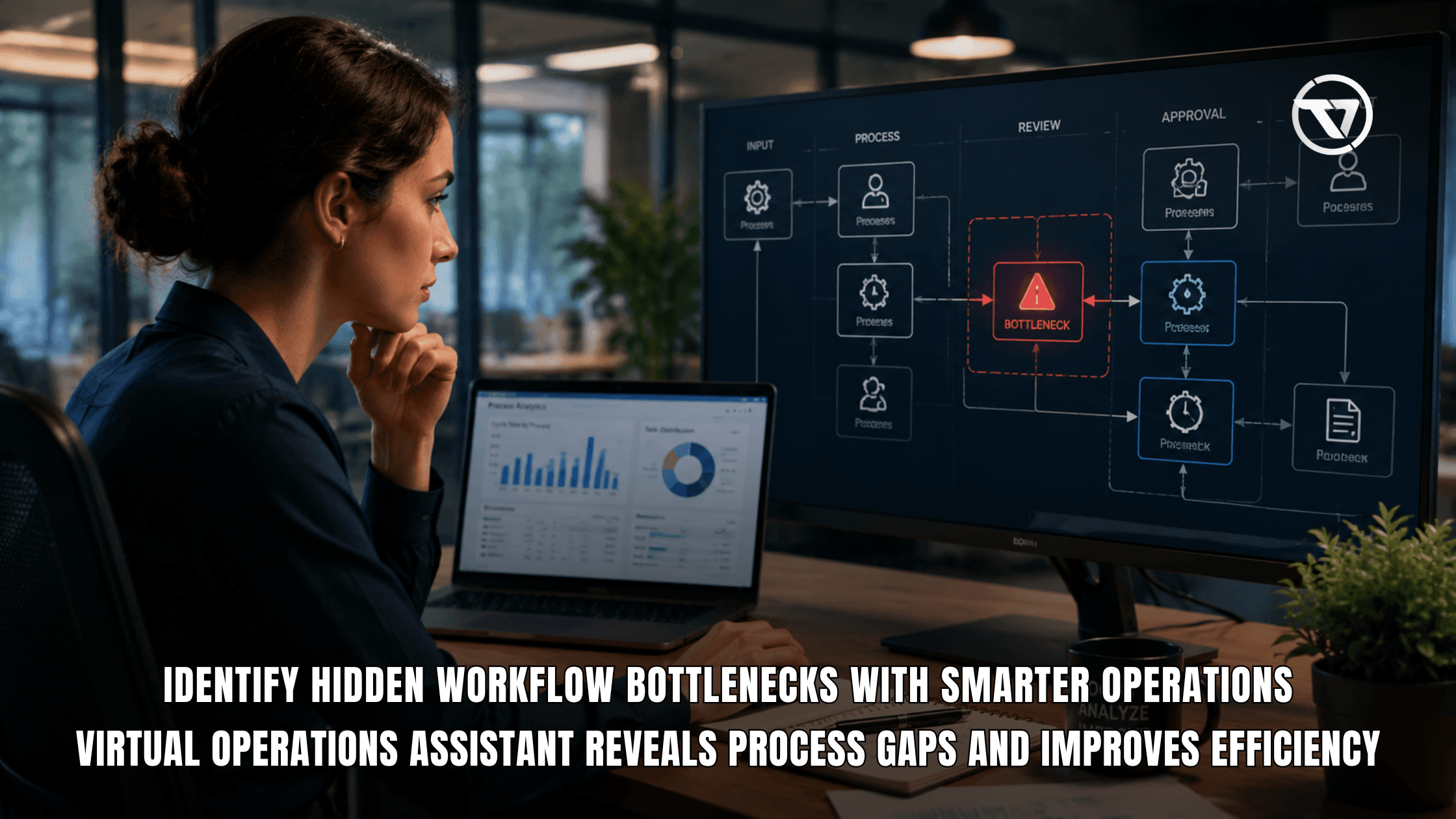
A process bottleneck is any point in a workflow where capacity constraints, sequential dependencies, or information gaps cause work to accumulate faster than it can be completed. Common examples include approval queues that sit for days, data that must be re-entered across disconnected systems, or status updates that rely on manual email chains. These points create queues, increase cycle time, and raise the risk of errors.
Unlike isolated delays, true bottlenecks compound: one stalled invoice review can delay vendor payments, which then slows inventory replenishment, which then affects order fulfillment. A virtual operations assistant begins by distinguishing symptoms (late deliveries) from root constraints (the specific handoff or decision gate that consistently lags).
2. Why Traditional Identification Methods Fall Short
Internal teams frequently miss bottlenecks because the people closest to the work adapt around them. Employees develop informal workarounds, managers accept longer lead times as “normal,” and leadership sees only aggregated results rather than the intermediate friction. Research shows that knowledge workers spend a substantial portion of their time simply searching for information or reconciling data across tools, a cost that rarely appears on standard performance dashboards.
A virtual operations assistant approaches the same processes with fresh eyes and structured diagnostic frameworks, free from internal politics or habitual acceptance of inefficiency.
3. The Cost of Unaddressed Bottlenecks for U.S. Companies
Unexamined friction carries quantifiable financial impact. One analysis of hundreds of processes across multiple companies found that organizations lose 26% of working time to wasted effort concentrated in areas such as reporting, onboarding, invoicing, approvals, and CRM cleanup. Another widely cited finding indicates employees spend roughly 19% of their workweek searching for and gathering information.
Poor data quality, often driven by silos that force manual reconciliation, costs organizations an average of $12.9 million annually according to Gartner estimates. Middle managers lose more than six working weeks—or about 33 days—per year to unnecessary tasks such as duplicated data entry and administrative busywork, translating to an estimated $59.9 billion in wasted salaries and productivity across the United States. These figures underscore why systematic bottleneck identification delivers rapid ROI.
How a Virtual Operations Assistant Maps and Analyzes Workflows

Accurate diagnosis begins with clear visibility into how work actually moves. A virtual operations assistant builds that visibility through structured mapping and objective data rather than assumptions. The resulting picture reveals constraints that internal teams have normalized over time.
1. Process Mapping and Value-Stream Analysis
- The assistant interviews process owners and reviews system logs to construct an accurate current-state map of every step, decision point, and responsible party.
- Value-stream mapping overlays processing time versus wait time to separate value-adding from non-value-adding activity.
- Bottlenecks typically appear as long wait times or steps with low first-pass yield.
- Cross-client pattern recognition helps the assistant quickly flag recurring constraints such as approval chains or system transfers.
- The completed map becomes the shared reference for prioritizing which constraints to address first.
2. Data Collection from Existing Tools and Logs
- Objective data is pulled from project-management platforms, email timestamps, CRM activity logs, and ERP transaction histories.
- Cycle-time distributions and aging reports reveal where queues form and how long items remain idle.
- Volume-by-stage metrics show accumulation points that self-reported estimates often miss.
- This evidence-based method prevents the common error of optimizing the wrong step in the chain.
- Measured lead times and queue lengths expose the true constraint rather than the most visible symptom.
3. Identifying Capacity Constraints and Demand Patterns
- Throughput rates are compared against arrival rates of new work to quantify mismatches.
- Seasonal and weekly peaks are noted so capacity planning accounts for real demand variation.
- Single points of failure—one approver, one specialized role, or one legacy system—are identified and measured.
- Theoretical capacity is calculated against actual output to show how much additional throughput becomes possible once the constraint is relieved.
- The analysis directly supports prioritization so the highest-impact constraint is fixed first.
Key Techniques Virtual Operations Assistants Use to Surface Hidden Friction
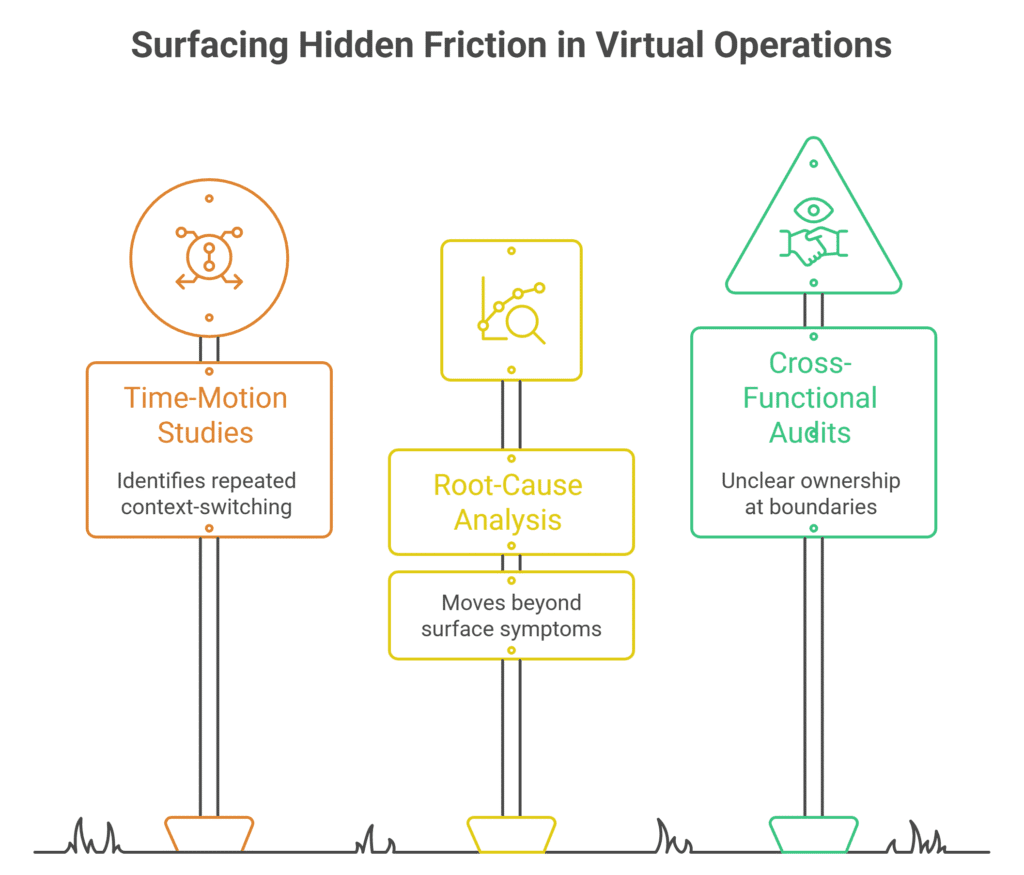
Once the map and data are in place, targeted diagnostic techniques convert observations into actionable insight. These methods move beyond surface delays to the underlying causes that keep work from flowing. A virtual operations assistant applies them systematically so findings remain objective and repeatable.
1. Time-Motion and Cycle-Time Studies
Even in knowledge work, time studies remain powerful. The virtual operations assistant samples administrative tasks, records start-to-finish durations, and breaks them into discrete steps. Patterns emerge: repeated context-switching between tools, excessive status-checking, or multi-person reviews that add little value.
Studies of workplace software usage show that the median organization employs dozens of tools, with processes frequently touching multiple applications and nearly half of handoffs requiring a person to move work between platforms. These friction points become measurable targets for redesign or automation.
2. Root-Cause Analysis Frameworks
Once a bottleneck is located, the assistant applies structured root-cause techniques such as the 5 Whys, fishbone diagrams, or failure-mode analysis to move beyond surface symptoms. For example, slow invoice processing may stem from incomplete documentation upstream rather than slow reviewers. Addressing the documentation standard removes the downstream queue more effectively than simply adding review capacity.
These frameworks force a disciplined examination of contributing factors—people, process, technology, and information quality—so solutions target the true origin rather than the most visible pain point. The result is sustainable improvement instead of temporary relief that shifts the constraint elsewhere in the system.
3. Cross-Functional Handoff Audits
Many bottlenecks live at departmental boundaries where ownership and accountability become unclear. A virtual operations assistant audits handoffs between sales and operations, marketing and finance, or customer support and fulfillment by examining information completeness at transfer, time to acknowledge receipt, and rework rates caused by missing or inconsistent data.
These audits frequently reveal duplicated effort or conflicting data versions that internal teams have normalized over time. By quantifying the cost of each incomplete handoff, the assistant creates a clear business case for standardization, shared definitions, or system integrations that reduce friction at the boundary.
Metrics and KPIs a Virtual Operations Assistant Tracks

Measurement turns diagnosis into management. A virtual operations assistant establishes a focused set of indicators that reveal both current constraints and early warning signs of new ones. Consistent tracking allows leadership to see progress and adjust priorities with confidence.
1. Leading Indicators of Emerging Bottlenecks
- Rising work-in-process for AI inventory signals management that accumulates before deadlines are missed.
- Increasing age of open items highlights queues that are lengthening over time.
- Declining first-pass yield points to quality or clarity problems that create rework.
- Growing variance in cycle times indicates instability that precedes larger capacity shortfalls.
2. Throughput, Cycle Time, and Utilization Ratios
- Process cycle efficiency is calculated as value-adding time divided by total lead time.
- Throughput rate measures completed units or transactions per period.
- Resource utilization shows whether a constrained step operates above sustainable levels.
- Low cycle efficiency almost always points to wait-time bottlenecks that can be targeted for reduction.
3. Error Rates and Rework Volume
- Error rates are tracked by specific process step to locate where standards or systems fall short.
- Rework volume is measured both as an absolute count and as a percentage of total throughput.
- High rework at a given stage directs improvement effort precisely where it reduces total system load.
- Trends in these key performance metrics serve as both diagnostic signals and proof of improvement after changes are made.
Practical Steps for Integrating a Virtual Operations Assistant
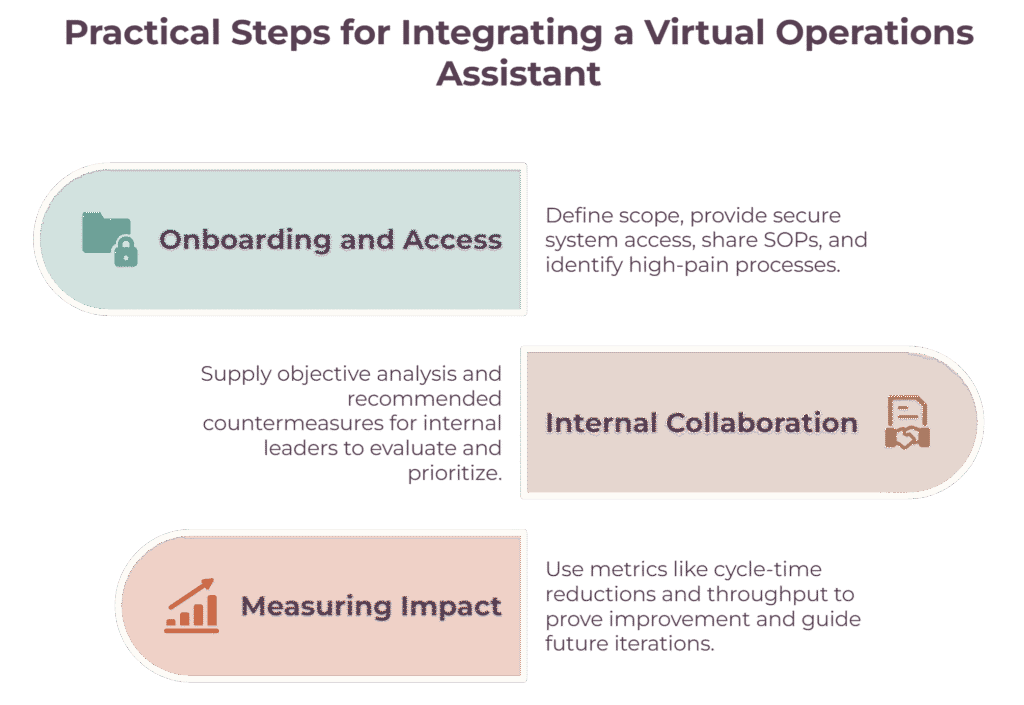
Successful engagement depends on clear scope, secure access, and ongoing collaboration. A virtual operations assistant integrates most effectively when treated as an extension of the operations function rather than an external vendor. The following steps create the conditions for rapid insight and lasting results.
1. Onboarding and Access Protocols
Successful engagements begin with clear scope definition, secure access to relevant systems (preferably read-only where possible), any existing documented SOPs, and an agreed set of initial high-volume or high-pain processes to examine. Since 64% of organizations report that productivity is impacted daily or weekly due to access issues, establishing proper system access protocols early prevents avoidable delays and allows the virtual operations assistant to focus on workflow analysis. The assistant typically starts with processes that already generate visible friction, so early findings deliver quick, credible wins and build internal confidence in the approach.
2. Collaboration with Internal Teams
The assistant does not replace managers; it supplies objective analysis and recommended countermeasures that internal leaders can evaluate and prioritize. Regular review sessions translate findings into concrete action plans that may include standardization of handoffs, identification of automation candidates, capacity adjustments, or policy changes, ensuring ownership remains with the team while benefiting from external clarity.
3. Measuring Impact and Iterating
After implementing changes, the same metrics used for diagnosis become the proof of improvement. Cycle-time reductions, lower queue lengths, and higher throughput provide clear before-and-after comparisons that justify continued investment and guide the next round of process examination.
Real-World Outcomes and Business Impact
U.S. organizations that systematically address bottlenecks through external process support report faster cycle times, reduced administrative load on high-value staff, and improved capacity without proportional headcount growth. Managers regain time previously consumed by low-value coordination, with research indicating that up to 30% of managerial time can be spent on administrative coordination and operational tasks that could be streamlined. Teams experience fewer last-minute escalations, while clearer process visibility and targeted constraint relief consistently improve operational reliability and employee focus.
Bureau of Labor Statistics data on administrative and support occupations illustrate the scale of related employment and compensation, underscoring both the cost of internal capacity constraints and the relative flexibility of specialized remote support. When bottleneck identification becomes an ongoing discipline rather than a one-time project, companies create more sustainable growth trajectories and free leadership attention for strategic priorities instead of daily firefighting.
TaskVirtual: Specialized Support for Process Bottleneck Resolution

Identifying and clearing operational bottlenecks requires more than occasional task help—it demands consistent process analysis, data review, and structured follow-through. TaskVirtual delivers virtual operations assistants that are tailored to the exact challenges outlined in this guide, helping U.S. businesses map workflows, surface constraints, and implement lasting improvements without the overhead of full-time internal capacity.
1. Dedicated Process Mapping and Diagnostic Expertise
TaskVirtual’s virtual operations assistants specialize in building accurate current-state maps, applying value-stream techniques, and extracting cycle-time data from existing tools. They isolate capacity constraints, audit cross-functional handoffs, and deliver clear root-cause findings so leadership can act on the highest-impact bottlenecks first.
2. Affordable and Flexible Pricing
Hiring a full-time operations analyst can be expensive, but TaskVirtual makes it cost-effective. With pricing plans starting from just $3.12/hour to $14.99/hour, their services are budget-friendly and accessible to individuals, families, and businesses.
3. Full-Spectrum Bottleneck Identification Services
From collecting objective data across CRM, ERP, and project platforms to tracking leading indicators such as rising work-in-process and declining first-pass yield, TaskVirtual covers the complete diagnostic cycle. Their scalable support adapts whether a company needs a focused review of one critical workflow or ongoing monitoring across multiple processes.
4. Continuous Monitoring and Performance Assurance
TaskVirtual extends beyond initial diagnosis by providing regular metric updates, variance alerts, and iterative improvement recommendations. This proactive layer ensures that once a bottleneck is cleared, new constraints are spotted early and cycle-time gains are sustained.
5. Proven Track Record of Excellence
With 364 positive reviews and a 4.7-star rating on trusted VA platforms, TaskVirtual is recognised as a reliable partner worldwide. Clients count on their expertise to simplify process analysis and streamline operational workflows.
FAQ
1. What is a virtual operations assistant?
A virtual operations assistant is a remote professional who focuses on process analysis, workflow optimization, and operational support rather than purely administrative task execution.
2. How does a virtual operations assistant differ from a regular virtual assistant?
While a general virtual assistant handles calendar, email, and task support, a virtual operations assistant specializes in mapping processes, identifying constraints, tracking operational metrics, and recommending structural improvements.
3. How long does it take to identify major bottlenecks?
Initial mapping and data collection often surface primary constraints within two to four weeks, depending on process complexity and data accessibility.
4. What tools does a virtual operations assistant typically use?
Common tools include process-mapping software, project-management platforms, spreadsheet analysis, CRM and ERP reporting features, and time-tracking or workflow analytics applications.
5. Can small businesses benefit, or is this only for larger companies?
Small and mid-sized businesses often see the highest relative impact because owner and manager time is the primary constraint; removing even one major bottleneck can free substantial capacity.
6. How is success measured after bottlenecks are addressed?
Success is measured by reductions in cycle time, decreases in work-in-process or queue length, lower rework rates, and increased throughput or on-time performance against baseline metrics.
Conclusion and Call to Action
Process bottlenecks remain one of the most persistent yet addressable drains on American business performance. A virtual operations assistant brings structured diagnosis, objective data, and cross-industry pattern recognition that internal teams rarely maintain amid day-to-day pressure. By mapping workflows, quantifying constraints, applying root-cause analysis, and tracking leading indicators, these professionals turn hidden friction into clear improvement opportunities.
The organizations that treat bottleneck identification as an ongoing operational discipline—not a one-time project—consistently free capacity, reduce waste, and create more sustainable growth trajectories. If your team spends excessive time searching for information, waiting on approvals, or reworking incomplete handoffs, the next step is straightforward: engage a virtual operations assistant to map your highest-volume processes and surface the true constraints. Start with one critical workflow, measure the baseline, implement targeted changes, and expand from proven results. The data shows the cost of inaction is already measurable; the opportunity cost of delay only grows.
Sources
- Ace Workflow research on wasted effort across processes (itbrief.news reporting)
- McKinsey and related analyses on information-search time and organizational complexity
- Gartner estimates on the annual cost of poor data quality
- SafetyCulture Feedback from the Field report on middle-manager time loss
- U.S. Bureau of Labor Statistics occupational and industry employment data for administrative and support services
- Additional supporting research from ActivTrak workforce utilization benchmarks and related operational studies
For more such content, visit our website.
 Siddhartha Basu is a Technical Writer at Task Virtual. He loves online games, e-book reading, and Yoga.