Contents
show
How a Mental Health Virtual Assistant Saves Therapists’ Hours Every Week
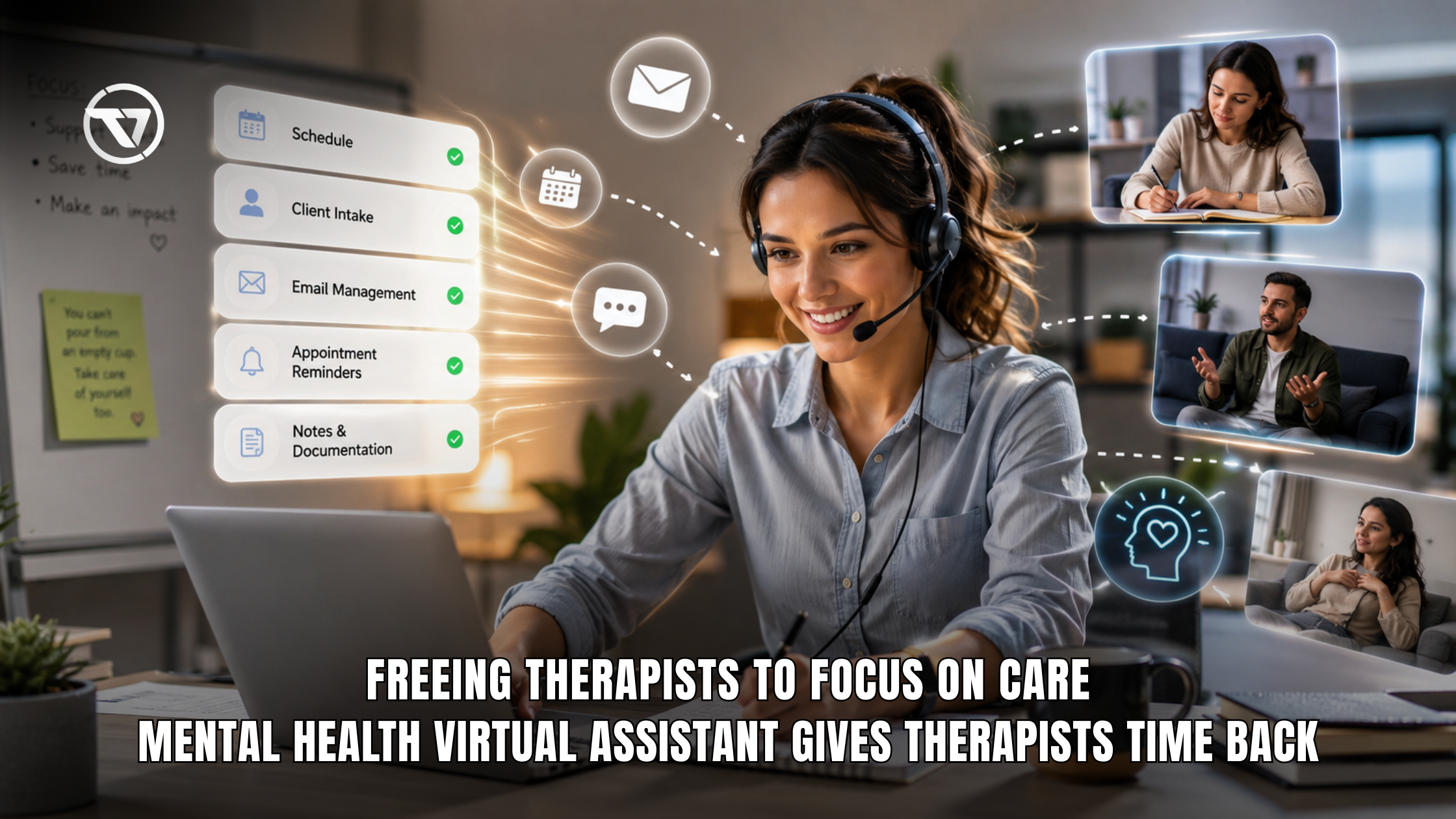
America’s mental health crisis is straining therapists like never before. With demand surging and administrative burdens mounting, many practitioners spend nearly as much time on paperwork as on client sessions. A mental health virtual assistant changes this equation by reclaiming precious clinical hours every week.
Powered by AI and specialised support, these tools automate routine tasks while ensuring HIPAA compliance. This allows licensed professionals to focus on delivering high-quality care. The approach addresses therapist burnout, workforce shortages, and the need for accessible mental health services across the U.S.
The Mental Health Crisis Facing U.S. Therapists
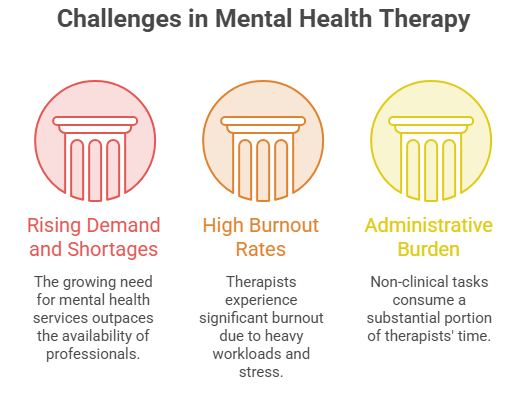
America’s therapists are facing unprecedented pressure as mental health needs continue to rise sharply. Provider shortages and heavy workloads have left many practitioners overextended, struggling to meet demand while maintaining work-life balance. A mental health virtual assistant offers a practical solution by streamlining operations and freeing up valuable time.
1. Rising Demand and Provider Shortages
The U.S. faces a severe shortage of mental health professionals, with approximately 137 million Americans living in designated Mental Health Professional Shortage Areas. BLS projections show employment for mental health counsellors rising 18% from 2022 to 2032, much faster than average, yet supply continues to lag behind growing needs. This gap leaves existing therapists handling increasingly heavy caseloads.
2. High Burnout Rates Among Practitioners
Burnout affects a large portion of the mental health workforce, with APA surveys indicating around 45% of psychologists report burnout in recent years. Other studies show that up to 52% of therapists experienced burnout in the past year, with many describing symptoms as severe. CDC data reveals that nearly half of health workers reported frequent burnout, highlighting the widespread impact on practitioners.
3. The Administrative Burden Eating into Clinical Time
Therapists often lose significant time to non-clinical work, spending 20.3% of their hours on administrative tasks such as notes, scheduling, billing, and insurance. Documentation alone can consume 35% of a provider’s time in related fields, with many dedicating 8-10+ hours weekly to paperwork. This administrative overload directly reduces clinical availability and contributes heavily to exhaustion and burnout.
What Is a Mental Health Virtual Assistant?
A mental health virtual assistant combines AI technology with specialised support to manage the operational side of therapy practices. These tools are designed specifically for mental health workflows, ensuring HIPAA compliance and seamless integration with existing systems.
- Automate appointment scheduling, client intake, and reminder systems.
- Provide AI-assisted documentation, note summarisation, and billing support.
- Handle communications, follow-ups, and basic client queries confidentially.
- Integrate with EHR and telehealth platforms used in U.S. practices.
- Understand therapy-specific nuances and ethical requirements.
- Deliver data analytics to track trends and optimise operations.
How Mental Health Virtual Assistants Save Hours Weekly
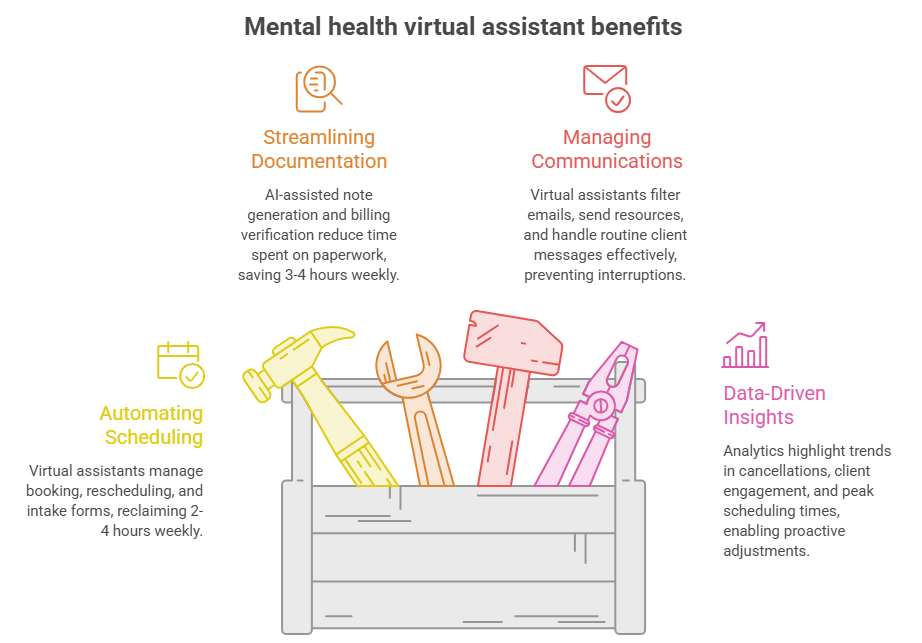
Mental health virtual assistants are transforming how therapists manage their practices by handling time-consuming administrative duties. These tools reduce daily workloads, allowing practitioners to focus more on client care and less on paperwork. With nearly 45% of psychologists reporting burnout, much of it linked to administrative pressures, virtual assistants help ease the burden by automating repetitive tasks and saving valuable time each week.
1. Automating Scheduling and Client Intake
Mental health virtual assistants efficiently manage booking, rescheduling, reminders, and intake forms. This automation cuts down back-and-forth emails and calls, often reclaiming 2-4 hours weekly. Reducing no-shows through timely reminders further optimises therapists’ calendars and improves practice flow.
2. Streamlining Documentation and Billing
AI-assisted note generation and billing verification significantly reduce time spent on paperwork. Therapists can review and finalise notes instead of creating them from scratch, saving 3-4 hours weekly on documentation alone. Insurance tasks and claims follow-up become faster and more accurate with dedicated virtual support.
3. Managing Communications and Follow-Ups
Virtual assistants filter emails, send resources, and handle routine client messages effectively. This prevents the constant email interruptions that typically consume 1-2 hours weekly. Therapists gain mental space for focused clinical work and better session preparation.
4. Data-Driven Practice Insights
Analytics from virtual assistants highlight trends in cancellations, client engagement, and peak scheduling times. These insights enable proactive adjustments without manual data tracking and medical record management through a virtual assistant service. Practices can optimise operations based on real patterns for better efficiency.
Reducing Burnout and Enhancing Therapist Well-Being

Mental health virtual assistants play a key role in combating practitioner burnout by providing remote patient monitoring support. This shift helps therapists restore balance and sustain their passion for clinical work. The result is improved personal well-being and professional longevity.
- Reclaim evenings and weekends by reducing after-hours paperwork.
- Lower emotional fatigue through fewer administrative stressors.
- Decrease compassion fatigue with more focus on client work.
- Increase job satisfaction through meaningful clinical time.
- Support retention in a high-turnover field.
- Promote long-term career health amid provider shortages.
Boosting Patient Care Quality and Practice Revenue
Mental health virtual assistants reduce physical burnout through a medical scribe virtual assistant services. With less time lost to admin work, practitioners can deliver more attentive and effective sessions. This operational efficiency also supports stronger financial health for practices nationwide.
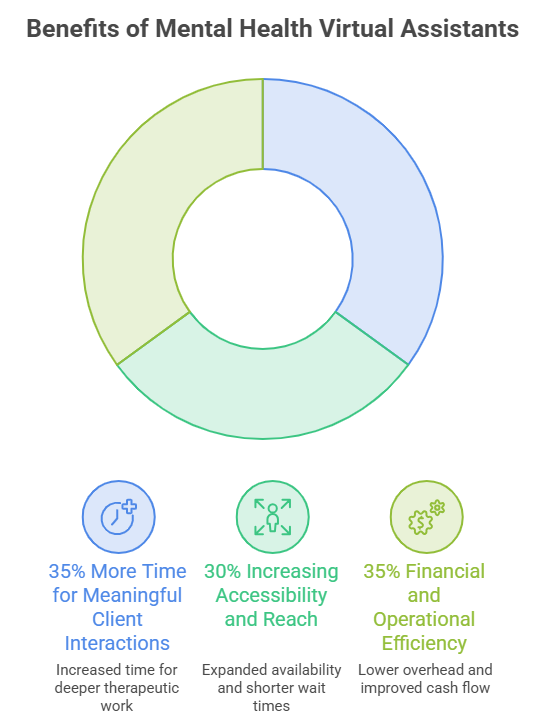
1. More Time for Meaningful Client Interactions
Extra hours gained through virtual assistance translate into additional sessions or deeper therapeutic work per client. Therapists can be more present and responsive during appointments without the pressure of looming paperwork. This leads to improved client outcomes and higher satisfaction levels.
2. Increasing Accessibility and Reach
Efficient operations allow practices to accept more clients and shorten wait times significantly. Many Americans with mental health needs still go untreated due to access barriers. Virtual assistants help expand availability while maintaining high standards of care.
3. Financial and Operational Efficiency
Lower overhead from reduced need for full-time administrative staff improves profitability. Higher billable hours, fewer no-shows, and faster billing cycles enhance cash flow. Practices achieve better overall efficiency and long-term financial stability.
The Future Outlook for Mental Health Virtual Assistants
AI advancements will continue to enhance mental health virtual assistants with more sophisticated features like predictive analytics and personalised client support. These tools will better integrate with evolving telehealth platforms and help bridge access gaps across the U.S. Ethical guidelines and regulations will evolve alongside technology to ensure responsible implementation.
Hybrid models combining AI efficiency with human oversight will likely become the standard in therapy practices. As shortages persist, virtual assistants will play a growing role in sustaining the mental health workforce. The focus will remain on augmenting human expertise rather than replacing it, ultimately benefiting both therapists and clients.
How Virtual Assistants Help with Mental Health

Virtual assistants specialised in mental health support both therapists and clients by boosting hidden ROI through medical transcriptionist service. They contribute to improved mental health outcomes by reducing administrative pressure and enabling more focused therapeutic care.
- Streamline scheduling and intake to increase session availability for clients.
- Assist with secure documentation and note management for better care continuity.
- Handle client communications and follow-ups while protecting confidentiality.
- Reduce therapist workload to prevent burnout and sustain care quality.
- Provide practice insights that enhance treatment planning and accessibility.
- Support overall system efficiency for broader mental health service reach.
TaskVirtual: Your Partner in Mental Health Virtual Assistance
Managing the daily administrative demands of a therapy practice—from scheduling and documentation to client communications—can quickly become overwhelming for busy mental health professionals. Constant paperwork and coordination tasks pull focus away from meaningful client sessions and contribute to burnout. TaskVirtual provides expert mental health virtual assistant services tailored specifically for therapists, simplifying operations so practitioners can reclaim valuable clinical time each week.
1. Expert Support for Therapy Practices
TaskVirtual’s trained virtual assistants specialise in mental health workflows, helping with client intake, progress note assistance, billing coordination, and secure communications while strictly maintaining HIPAA standards and ethical guidelines.
2. Affordable and Flexible Pricing
Hiring a full-time personal assistant can be expensive, but TaskVirtual makes it cost-effective. With pricing plans starting from just $3.12/hour to $14.99/hour, their services are budget-friendly and accessible to solo practitioners, group practices, and larger clinics.
3. Comprehensive Mental Health Practice Solutions
From automated scheduling and AI-supported documentation to insurance follow-ups and client follow-up management, TaskVirtual covers the full spectrum of assistance in administrative tasks. Their scalable services adapt to whether you need occasional support or full-time practice management assistance.
4. Ongoing Support and Quality Assurance
TaskVirtual delivers continuous monitoring, proactive updates, and reliable assistance throughout the week. Their dedicated support ensures all tasks are completed accurately and on time, giving therapists peace of mind and more focus on patient care.
5. Proven Track Record of Excellence
With 364 positive reviews and a 4.7-star rating on trusted VA platforms, TaskVirtual is recognised as a reliable partner worldwide. Therapists and practices count on their expertise to reduce administrative burden and enhance overall practice efficiency.
FAQ Section
1. How many hours can a mental health virtual assistant save per week?
Typically 5-15+ hours, depending on the tasks automated. Many reclaim time from scheduling, notes, and billing for clinical work.
2. Are mental health virtual assistants HIPAA-compliant?
Reputable ones are designed for full compliance. Always verify BAA agreements and security features.
3. Can AI virtual assistants replace therapists?
No. They handle admin and basic support to augment human care, not replace licensed professionals’ expertise and empathy.
4. What is the cost of hiring a mental health virtual assistant?
Varies; hourly human VAs often $15-30+, while AI platforms offer subscription models. ROI comes quickly via time savings and added sessions.
5. How does this help with therapist burnout?
Reducing admin overload—the top driver alongside low pay—lowers stress, improves balance, and sustains long-term practice.
6. Is a virtual assistant suitable for solo practitioners?
Yes. Scalable options exist for small practices, often providing the biggest relative impact on workload.
Conclusion
A mental health virtual assistant offers a powerful, practical way for therapists to reclaim hours weekly, combat burnout, and deliver better care amid U.S. challenges. By automating the mundane, it empowers professionals to thrive personally and professionally while expanding access for those in need.
Ready to transform your practice? Explore HIPAA-compliant mental health virtual assistant solutions today, start with a pilot on scheduling or documentation, and measure the difference. Your time—and your clients—deserve it. Contact specialists or trial tools aligned with your workflow for sustainable growth.
Sources
- HRSA Bureau of Health Workforce reports and HPSA data.
- APA Practitioner Pulse Surveys and related studies.
- CDC Vital Signs on health worker mental health.
- BLS employment projections.
- Various practice efficiency reports and surveys (e.g., SimplePractice, Neolytix).
- PubMed and related administrative burden studies.
For more such content, visit our website.
 Siddhartha Basu is a Technical Writer at Task Virtual. He loves online games, e-book reading, and Yoga.