Contents
show
How a Chiropractor Virtual Assistant Boosts Efficiency & Patient Care
Chiropractor Virtual Assistants are transforming today’s fast-paced healthcare landscape as chiropractors face rising administrative pressures while delivering top-notch patient care. These remote experts act as a game-changer by managing patient intake forms and medical records. They use digital tools to efficiently digitize, organize, and secure patient data.
With over 70,000 licensed chiropractors serving more than 35 million U.S. patients annually, streamlined management is essential. As telehealth and AI tools rise in 2026, virtual assistants support hybrid care models. Practices gain major time savings and lower costs than in-house staff.
The Growing Role of Chiropractor Virtual Assistants in Modern Practices
A chiropractic virtual assistant plays a pivotal role in transforming administrative workflows through medical scribe virtual assistants for chiropractic practices across the United States. These specialists handle critical tasks remotely using secure, HIPAA-compliant systems, allowing chiropractors to prioritize patient adjustments and wellness plans. Their expertise in patient intake and records management supports both solo practitioners and larger clinics in an increasingly digital healthcare environment.
1. Why Chiropractic Practices Need Virtual Support Now
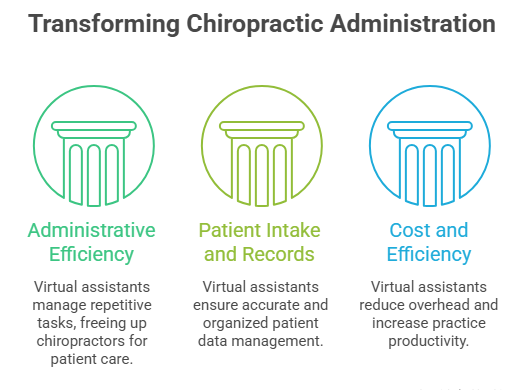
The U.S. chiropractic industry generates around $24 billion in revenue, with employment projected to grow 10% from 2024 to 2034—faster than average. Yet administrative burdens persist as chiropractors spend nearly half their workweek on non-clinical tasks, contributing to burnout and reduced patient throughput. A chiropractic virtual assistant addresses this by managing repetitive duties remotely through integrated EHR platforms like ChiroTouch or PracticeQ.
2. Key Responsibilities in Patient Intake and Records
Virtual assistants manage the full lifecycle of patient data, from pre-appointment forms to ongoing record updates. They verify insurance, send digital intake packets, flag incomplete submissions, and ensure records remain audit-ready. This proactive approach minimizes errors common in paper-based systems while maintaining seamless integration with practice software.
3. Cost and Efficiency Benefits
Beyond substantial time savings of up to 17 hours per week on admin tasks, virtual assistants significantly lower overhead costs. Practices save on office space, benefits, and recruitment while gaining flexible scaling options. Many report 25% higher visit frequency and improved care plan acceptance through enhanced follow-up processes.
Mastering Patient Intake Forms with a Chiropractor Virtual Assistant

A chiropractic virtual assistant streamlines the entire patient intake process, making it faster, more accurate, and fully compliant. Since 81% of patients now prefer digital intake forms over paper, customizing digital workflows reduces in‑office paperwork and improves the overall patient experience from the first interaction.
- Designs customized HIPAA-compliant digital intake forms using tools like Jotform or IntakeQ.
- Sends secure pre-appointment links and follows up on incomplete submissions.
- Integrates forms directly into EHR systems to eliminate manual entry errors.
- Enforces encryption, access controls, and BAAs for full HIPAA compliance.
- Handles insurance verification and informed consent efficiently.
- Uses automated reminders to reduce no-shows and boost satisfaction.
Efficient Management of Patient Records and Documentation
Chiropractor virtual assistants ensure patient records remain accurate, accessible, and secure throughout the care journey. Their systematic approach supports compliance while enabling chiropractors to deliver evidence-based treatments without administrative delays. This expertise becomes especially valuable as practices transition fully to digital systems.
1. Transitioning to Electronic Health Records (EHR)
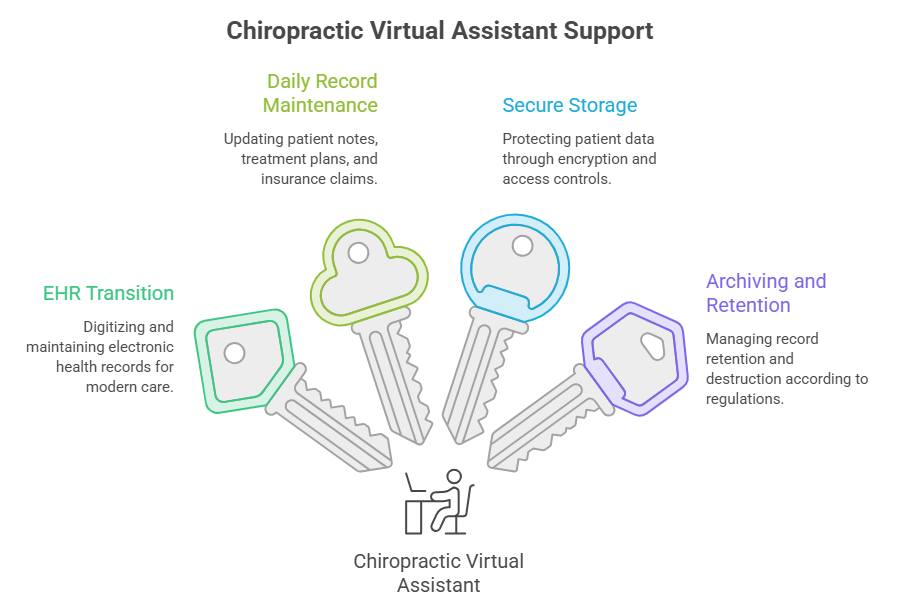
A chiropractic virtual assistant excels at digitizing legacy paper records through medical records virtual assistant support and maintaining EHR accuracy by scanning, indexing, and uploading historical files efficiently. They work with popular chiropractic software to implement customizable templates that support real-time updates during patient visits. This smooth transition reduces errors, improves data accessibility, and aligns practices with modern standards of care while minimizing disruption.
2. Daily Record Maintenance and Updates
Post-adjustment, a chiropractic virtual assistant updates SOAP notes, treatment plans, and progress metrics with precision. They handle imaging results and outcome tracking to support evidence-based chiropractic care while managing routine insurance claims and report generation. Quality checks and exception handling ensure all documentation meets regulatory requirements.
3. Secure Storage, Retrieval, and Sharing
Patient records stay protected through role-based access controls, encryption, and detailed audit logs managed by the virtual assistant. They facilitate secure sharing with specialists or insurers only under proper authorizations while maintaining complete chain-of-custody documentation. Quick retrieval capabilities support audits, patient requests, and practice analytics for better decision-making.
4. Handling Archiving and Retention Policies
Virtual assistants maintain compliance with state and federal record retention requirements, typically seven years or more for adult patients. They establish secure archiving protocols and manage destruction procedures when records reach the end of their retention period. This careful oversight reduces long-term liability, keeps storage systems organized, and ensures efficient retrieval when needed.
Advanced Tools and Technologies for Chiropractor Virtual Assistants
Chiropractor virtual assistants rely on specialized technology to deliver secure and efficient support. With 56% of healthcare organizations adopting organization‑managed AI tools to protect data over personal apps, these tools enable seamless collaboration while upholding the highest standards of patient data protection in 2026.
- Uses HIPAA-compliant EHR platforms like ChiroTouch and PracticeQ.
- Employs secure form builders with auto-population features.
- Leverages automation for reminders, claims, and reports.
- Applies AI for form pre-filling and anomaly detection.
- Utilizes cloud systems for real-time secure collaboration.
- Relies on tools like Asana for smooth team coordination.
Overcoming Common Challenges in Intake and Records Management
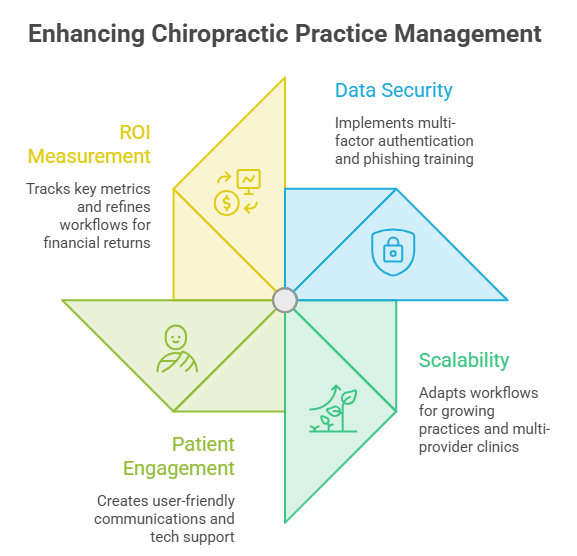
Chiropractor virtual assistants help practices navigate common hurdles in remote patient monitoring. Their proactive strategies enhance security, scalability, and patient engagement while delivering measurable results. This support allows chiropractic offices to focus on growth and quality care.
1. Data Security and Breach Prevention
With healthcare breaches exposing millions of records annually, virtual assistants implement multi-factor authentication and regular phishing training for the team. They develop and maintain incident response plans while conducting routine risk assessments to strengthen defenses. Strict adherence to HIPAA protocols and audit logs provides robust protection against potential threats.
2. Scaling for Multi-Provider or Growing Practices
Virtual assistants adapt workflows to support multi-provider clinics and expanding practices with shared yet private access controls. They manage increased patient volumes and integration with wellness programs or telehealth services effectively. This flexibility allows seamless scaling while preserving compliance and operational efficiency.
3. Patient Engagement and Adoption
A chiropractic virtual assistant creates user-friendly communications and provides tech support to diverse patient demographics. They improve digital form completion rates through clear instructions and follow-up assistance. Personalized engagement strategies enhance satisfaction and encourage better participation in the intake process.
4. Measuring ROI and Continuous Improvement
Practices track key metrics such as time saved, error reduction, and patient satisfaction scores with virtual assistant support. Data-driven insights help refine workflows and demonstrate clear financial returns, including lower overhead. Regular performance reviews ensure ongoing alignment with practice goals and continuous optimization.
How a Chiropractor Virtual Assistant Helps With Management

A chiropractic virtual assistant delivers broad support that enhances overall practice management while focusing on intake and records through project management consulting services. They take ownership of repetitive tasks, allowing chiropractors to concentrate on clinical care and business growth. This comprehensive assistance leads to smoother daily operations and improved practice performance.
- Coordinates appointment scheduling and sends timely patient reminders.
- Manages insurance verification and claims submission processes efficiently.
- Maintains organized digital filing systems for quick document access.
- Supports billing follow-ups and accounts receivable tracking.
- Prepares reports and analytics for informed practice decisions.
- Ensures ongoing compliance with regulatory and HIPAA requirements.
TaskVirtual: Your Partner in Chiropractic Virtual Assistance

Managing patient intake forms, medical records, and daily administrative workflows can overwhelm chiropractic practices. From digitizing legacy documents to ensuring real-time HIPAA-compliant updates, these tasks consume valuable time that could be spent on patient care. TaskVirtual provides expert chiropractic virtual assistant services that simplify intake processes, secure records, and streamline operations with precision and care.
1. Expert Consultation and Review
TaskVirtual’s skilled virtual assistants specialize in customizing digital intake forms, integrating data into EHR systems, and maintaining accurate patient records. They handle insurance verification, consent management, and compliance checks to support seamless daily operations for U.S. chiropractic practices.
2. Affordable and Flexible Pricing
Hiring a full-time personal assistant can be expensive, but TaskVirtual makes it cost-effective. With pricing plans starting from just $3.12/hour to $14.99/hour, their services are budget-friendly and accessible to individuals, families, and businesses.
3. Comprehensive Patient Intake and Records Solutions
From designing HIPAA-compliant forms and automating reminders to managing secure archiving and real-time updates, TaskVirtual covers the full spectrum of chiropractic administrative needs through a general administrative virtual assistant. Their scalable services adapt to whether you need occasional support or full-time records management.
4. Ongoing Support and Quality Assurance
TaskVirtual goes beyond basic tasks by offering continuous monitoring, proactive follow-ups, and quality audits. Their dedicated support ensures all patient data remains accurate, compliant, and readily accessible without disrupting your practice flow.
5. Proven Track Record of Excellence
With 364 positive reviews and a 4.7-star rating on trusted VA platforms, TaskVirtual is recognised as a reliable partner worldwide. Clients count on their expertise to simplify patient intake and records management while boosting practice efficiency.
FAQ Section
1. What does a chiropractic virtual assistant do with patient intake forms?
They create, send, review, and integrate digital HIPAA-compliant forms into EHR systems, ensuring completeness and compliance before appointments.
2. How much can a chiropractic practice save with a virtual assistant?
Practices often save $28,000–$46,000 per year per assistant through reduced payroll and overhead, plus productivity gains.
3. Is it safe to use a virtual assistant for medical records?
Yes, when using HIPAA-compliant tools, BAAs, and trained professionals who follow strict security protocols.
4. How do virtual assistants help reduce no-shows?
Through automated reminders, pre-appointment form collection, and personalized follow-ups, lowering rates significantly.
5. What software do chiropractic VAs typically use?
Tools like ChiroTouch, Jotform (HIPAA version), PracticeQ, and secure cloud EHR platforms.
6. Can a virtual assistant handle insurance and billing too?
Absolutely—many manage verification, claims submission, and follow-up, improving cash flow.
Conclusion
A skilled chiropractic virtual assistant revolutionizes how practices manage patient intake forms and records, delivering efficiency, compliance, and superior patient experiences. By embracing this model, U.S. chiropractors can combat admin overload, reduce costs, and focus on what matters: helping patients achieve better health.
Ready to optimize your practice? Contact a reputable virtual assistant service today or audit your current intake process for quick wins. Schedule a consultation to see the difference a dedicated VA can make.
Sources
- American Chiropractic Association and related industry reports
- U.S. Bureau of Labor Statistics (BLS)
- HIPAA Journal breach statistics
- IBISWorld and market research on the chiropractic industry
- Various peer-reviewed and official healthcare efficiency studies (linked inline where applicable)
For more such content, visit our website.
 Siddhartha Basu is a Technical Writer at Task Virtual. He loves online games, e-book reading, and Yoga.