
Contents
show
Guide to Social Media VA Services
Social media management has become too complex for most business owners, founders, consultants, creators, and small teams to handle casually. In 2026, a brand may need short-form video, LinkedIn thought leadership, TikTok creative testing, paid social ads, community engagement, inbox monitoring, social listening, analytics, content repurposing, brand-safe design, and a consistent publishing calendar.
That is why social media management virtual assistant services are becoming a practical support model. A social media VA helps manage the execution layer: planning and scheduling posts, organizing assets, formatting captions, preparing graphics, tracking engagement, monitoring comments, and keeping campaigns consistent.
The audience opportunity remains substantial. Pew Research Center’s 2025 social media report found that 84% of U.S. adults use YouTube, 71% use Facebook, 50% use Instagram, and 37% use TikTok. For American businesses, the challenge is not deciding whether social media matters. It is building a dependable system that can maintain visibility, serve audiences, and produce useful performance data without relying entirely on the owner’s availability.
What Are Social Media Management VA Services?

Social media management VA services are remote support services that help businesses manage the recurring work behind social platforms. These services are especially useful for brands that already know they need social media but struggle to maintain consistency, organize content, respond to audiences, or turn ideas into scheduled posts. A social media VA can support day-to-day execution while business owners, marketers, or agencies focus on strategy, offers, creative direction, and revenue goals.
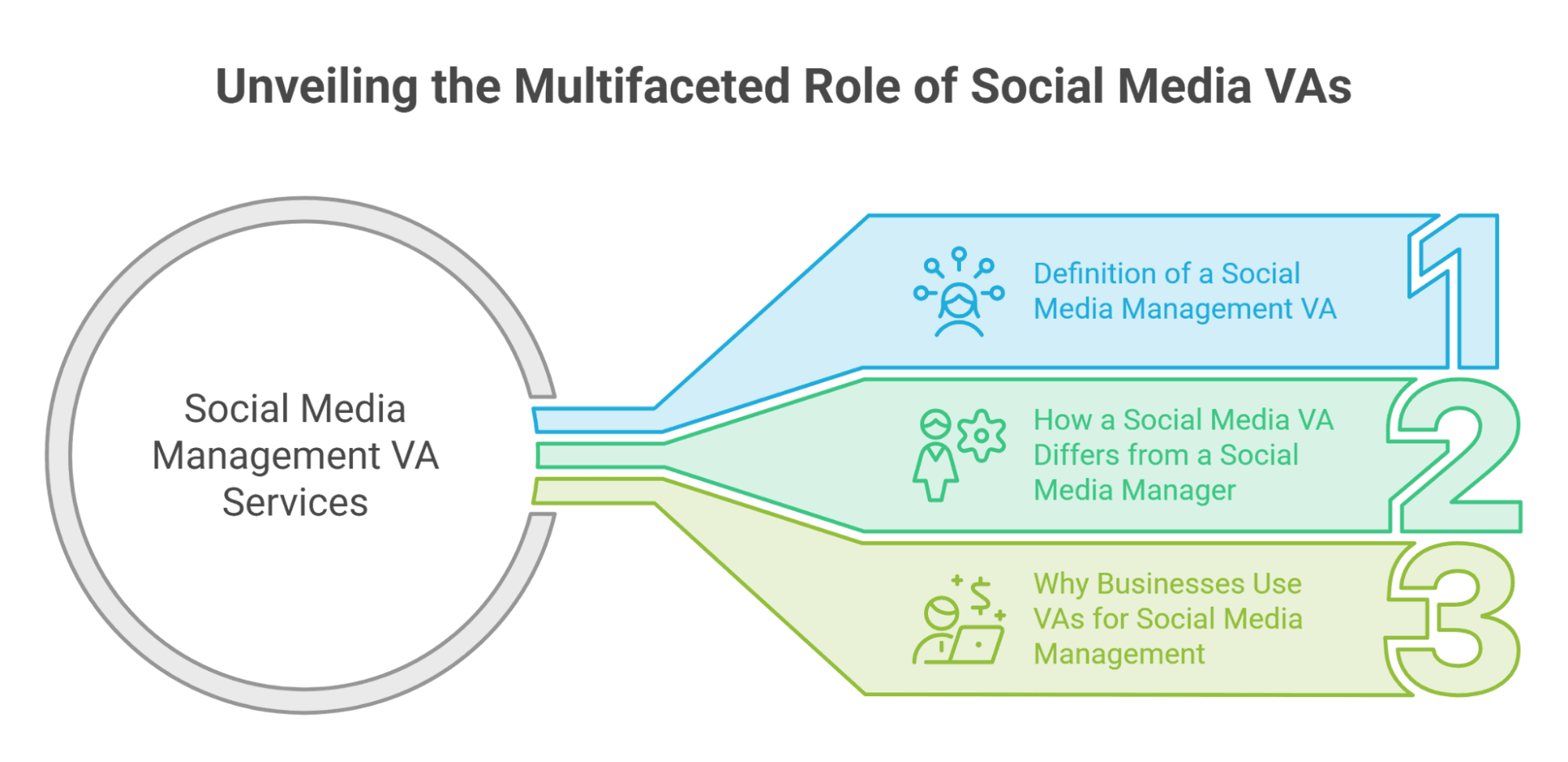
1. Definition of a Social Media Management VA
A social media management virtual assistant is a remote professional who helps plan, organize, schedule, publish, monitor, and report on social media activity. Their work may include building content calendars, preparing post drafts, formatting captions, creating basic graphics, repurposing long-form content, scheduling posts, tracking engagement, monitoring comments, organizing hashtags, updating asset folders, and preparing performance reports.
The role can be general or specialized. A general social media VA may support multiple platforms and routine tasks. A specialized VA may focus on LinkedIn outreach, TikTok content coordination, Instagram Reels creation, Facebook ad design, social media monitoring, or content calendar management. The best choice depends on the business’s goals, platform mix, posting frequency, and internal marketing capacity.
A strong social media VA does more than “post content.” They help keep the content system organized. They know where approved assets are stored, which posts are scheduled, what still needs approval, which comments need a response, what analytics should be pulled, and which tasks are overdue. This makes social media management less reactive and more dependable.
2. How a Social Media VA Differs from a Social Media Manager
A social media manager often owns strategy, campaign planning, audience positioning, voice development, performance interpretation, and cross-channel direction. A social media VA usually supports execution: scheduling, formatting, organizing, monitoring, and reporting. Some experienced VAs can contribute ideas and basic strategy, but the business should be clear about the level of ownership expected.
For example, a social media manager may decide that the brand should focus on founder-led LinkedIn content, short-form Instagram videos, and retargeting ads. A VA may then turn that strategy into a weekly calendar, prepare captions, schedule posts, organize creative assets, pull engagement numbers, and flag comments that need a reply.
This difference matters because mismatched expectations can create poor results. A VA can be a powerful support role, but they should not be expected to replace a senior strategist, paid media buyer, video producer, designer, and community manager all at once. The best results come from matching the role to the actual workflow.
3. Why Businesses Use VAs for Social Media Management
Businesses use social media VAs because social media work is repetitive, time-sensitive, and easy to neglect when client work or operations get busy. Even a simple weekly posting plan can involve topic selection, caption writing, image sourcing, design formatting, scheduling, hashtag organization, approval reminders, and performance tracking.
The need for structured marketing support is also reflected in labor-market trends. The U.S. Bureau of Labor Statistics projects employment of advertising, promotions, and marketing managers to grow 6% from 2024 to 2034, with about 36,400 openings each year on average. BLS also projects employment of market research analysts and marketing specialists to grow 7% from 2024 to 2034, faster than the average for all occupations. These trends show that marketing execution, audience analysis, and campaign support remain important business functions.
A social media VA gives smaller businesses access to marketing support without necessarily hiring a full-time social media employee. This is especially useful for consultants, agencies, ecommerce brands, local businesses, real estate professionals, healthcare practices, coaches, and B2B service providers that need consistent visibility but do not have a large internal marketing team.
Key Benefits of Social Media Management VA Services
The biggest advantage of hiring a social media VA is operational consistency. Social media results rarely come from one post or one campaign. They come from repeated visibility, audience learning, creative testing, timely engagement, and clear reporting. A VA helps maintain that rhythm.
1. More Consistent Posting and Content Calendars
- Replace stop-start posting. A VA maintains a steady publishing rhythm that strengthens brand recall and supports meaningful performance comparisons over time.
- Build a visible calendar. Weekly themes, formats, platforms, publishing dates, and calls to action remain organized in one shared working plan.
- Prepare posts early. Captions, links, hashtags, and creative requests are assembled well before deadlines become urgent.
- Coordinate approvals. The VA flags missing assets, reminds reviewers, and prevents unapproved or incomplete posts from entering the publishing schedule.
- Balance content formats. Educational posts, testimonials, promotions, founder content, community updates, and videos receive deliberate calendar space.
- Support business priorities. Launches, events, holidays, seasonal campaigns, customer stories, and evergreen topics stay closely connected to everyday publishing.
2. Better Engagement and Community Responsiveness
- Monitor post-publication activity. A VA consistently tracks comments, messages, tags, reactions, questions, and mentions instead of focusing only on publishing.
- Check channels reliably. Scheduled reviews catch customer questions, sales inquiries, partnership opportunities, and complaints while they remain timely and relevant.
- Route messages correctly. Routine questions receive approved answers; sales, service, billing, technical, or sensitive issues reach the appropriate internal owner.
- Capture audience intelligence. Questions, objections, testimonials, and recurring topics can inform future content, sales materials, and ongoing service improvements.
- Meet audience expectations. Pew found that 52% use Facebook daily, 48% use YouTube daily, and 24% use TikTok every day.
- Keep engagement human. Timely acknowledgment shows attentiveness, while clear escalation rules reserve complex or sensitive conversations for qualified team members.
3. Lower Execution Burden on Founders and Teams
- Give execution a clear owner. Clearly defined responsibilities prevent social media from becoming everyone’s job but no one’s priority.
- Turn ideas into drafts. The VA records expert insights, prepares briefs, formats copy, and moves useful concepts into production.
- Coordinate contributors. Designers, writers, editors, marketers, and reviewers stay fully aligned on assets, feedback, approvals, and dates.
- Reduce context switching. Scheduling, file organization, caption formatting, reminders, and routine reporting no longer repeatedly interrupt leaders throughout the week.
- Preserve strategic control. Leaders retain final authority over positioning, offers, sensitive claims, and campaign direction while delegating repeatable execution.
- Scale support gradually. Businesses can start part-time, stabilize operations, and later add specialists, an agency, or an internal employee.
Social Media VA Tasks: What You Can Delegate

A social media VA can handle many recurring tasks, but the best delegation plan starts with work that is repeatable, explainable, and easy to review. Businesses should separate strategy from execution so the VA knows what they own and what needs approval.
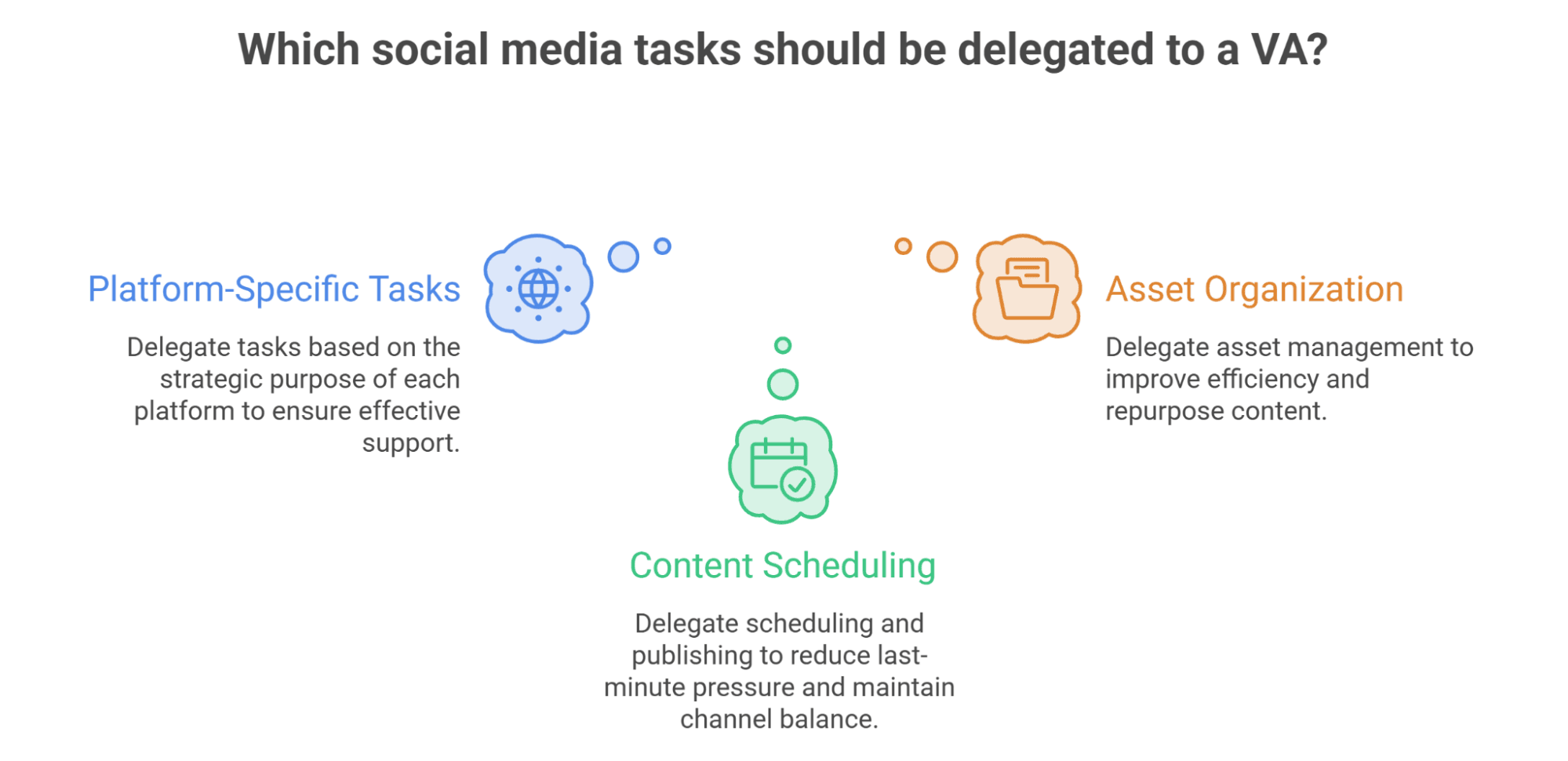
1. Platform-by-Platform Social Media Tasks
Different platforms require different support. Facebook may involve community posts, event updates, page management, reviews, and group engagement. Instagram may require Reels coordination, captions, Stories, carousels, image formatting, and comment monitoring. TikTok may require trend tracking, short-form video ideas, publishing support, and creator coordination. LinkedIn may require profile updates, thought leadership posts, connection support, company page updates, and B2B campaign tracking.
A VA can manage these tasks more effectively when the platform strategy is clear. For example, Instagram may be used for brand trust and visual storytelling, LinkedIn for B2B authority, TikTok for awareness, and Facebook for community and retargeting. The VA can then organize tasks by platform rather than treating every channel the same.
A detailed platform-by-platform list can help businesses decide which work should be delegated first. The key is to focus on the platforms where the business already has audience potential or strategic intent.
2. Content Scheduling and Publishing Support
Scheduling and publishing are core VA tasks. A social media VA can upload posts into scheduling tools, check captions, add hashtags, attach creative assets, set publishing times, organize approval statuses, and confirm that content went live correctly. They can also maintain a weekly or monthly view of planned posts.
This support reduces last-minute pressure. Instead of asking the owner to remember what needs to go out on Tuesday, the VA keeps the calendar visible and organized. If a post needs approval, the VA can flag it early. If a creative asset is missing, the VA can request it before the publishing deadline.
Scheduling support also helps businesses maintain channel balance. A VA can make sure the calendar includes educational posts, testimonials, promotional posts, founder content, product updates, community engagement, video content, and campaign-specific posts instead of repeating the same format too often.
3. Creative Asset Organization and Repurposing
Social media depends on assets: images, videos, captions, testimonials, product shots, founder clips, podcast snippets, webinars, blog posts, case studies, and customer questions. Without an organized asset library, teams waste time searching for files or recreating content that already exists.
A social media VA can organize assets into folders, rename files, create content banks, track usage rights, prepare caption variations, and repurpose long-form content into short posts. For example, a blog post can become a LinkedIn carousel, three Instagram captions, a short video script, a Facebook post, and a newsletter snippet.
This is where social media management becomes more efficient. The business does not need completely new ideas every day. It needs a system for turning existing expertise into consistent platform-ready content.
Platform-Specific Social Media VA Support
A social media VA can support multiple platforms, but platform-specific knowledge matters. Each channel has its own content norms, audience behavior, creative format, and business use case. The more clearly a company defines each platform’s role, the easier it is for a VA to execute well.
1. Instagram, Reels, and Visual Content
- Support visual storytelling. Instagram can effectively showcase products, people, customer stories, behind-the-scenes moments, education, and lifestyle context.
- Prepare feed content. A VA formats captions, hashtags, images, and carousels, then schedules approved posts correctly and consistently.
- Maintain a Reels pipeline. Relevant ideas, hooks, scripts, required clips, owners, and approvals remain organized and visible.
- Coordinate production. The VA collects footage, briefs editors, uploads drafts, prepares captions, and tracks all missing items.
- Support Stories and engagement. Story slides, reposts, mentions, testimonials, and comments follow the brand’s established publishing and response rules.
- Standardize video work. An Instagram Reels creation process supports consistent branded content without requiring the VA to replace a specialist editor.
2. TikTok Creative Assistant Support
- Monitor creative patterns. A TikTok VA tracks hooks, formats, sounds, editing styles, and audience conversations directly relevant to the brand.
- Build a swipe file. Examples organized by topic, format, audience, hook, or campaign make future content planning faster.
- Manage production. The VA organizes ideas, captions, hashtags, clips, collaborators, reviews, and overall publishing status.
- Filter trends carefully. Brand voice, audience relevance, compliance, capacity, and platform purpose determine which trends deserve serious attention.
- Understand the opportunity. Pew found 37% of U.S. adults use TikTok, while roughly half of 18- to 29-year-olds use it every day.
- Reduce monitoring time. A TikTok creative assistant surfaces useful opportunities while leaders focus on expertise and creative delivery.
3. LinkedIn Virtual Assistant Support
- Support B2B authority. LinkedIn suits organizations that sell through expertise, credibility, professional networks, and valuable long-term relationships.
- Maintain profiles and pages. A VA coordinates updates, schedules posts, formats thought leadership, and keeps approved brand information current.
- Organize expert content. Founder insights, client questions, case studies, and industry observations become drafts in a consistent publishing calendar.
- Track engagement. The VA monitors comments, conversations, lead lists, connection activity, and replies that need timely personal attention.
- Keep relationships human-led. Executives or sellers should personally handle valuable prospect conversations, personal replies, sensitive outreach, and strategic networking.
- Connect campaign execution. A LinkedIn virtual assistant supports LinkedIn marketing campaigns across thought leadership, distribution, outreach, and performance reporting.
Paid Social Media Support and Ad Creative

Social media management is not only organic posting. Many businesses also use paid social to drive traffic, leads, sales, retargeting, and brand awareness. A social media VA can support the admin and creative workflow around paid campaigns, but paid strategy and budget decisions should be handled by experienced marketers or media buyers.
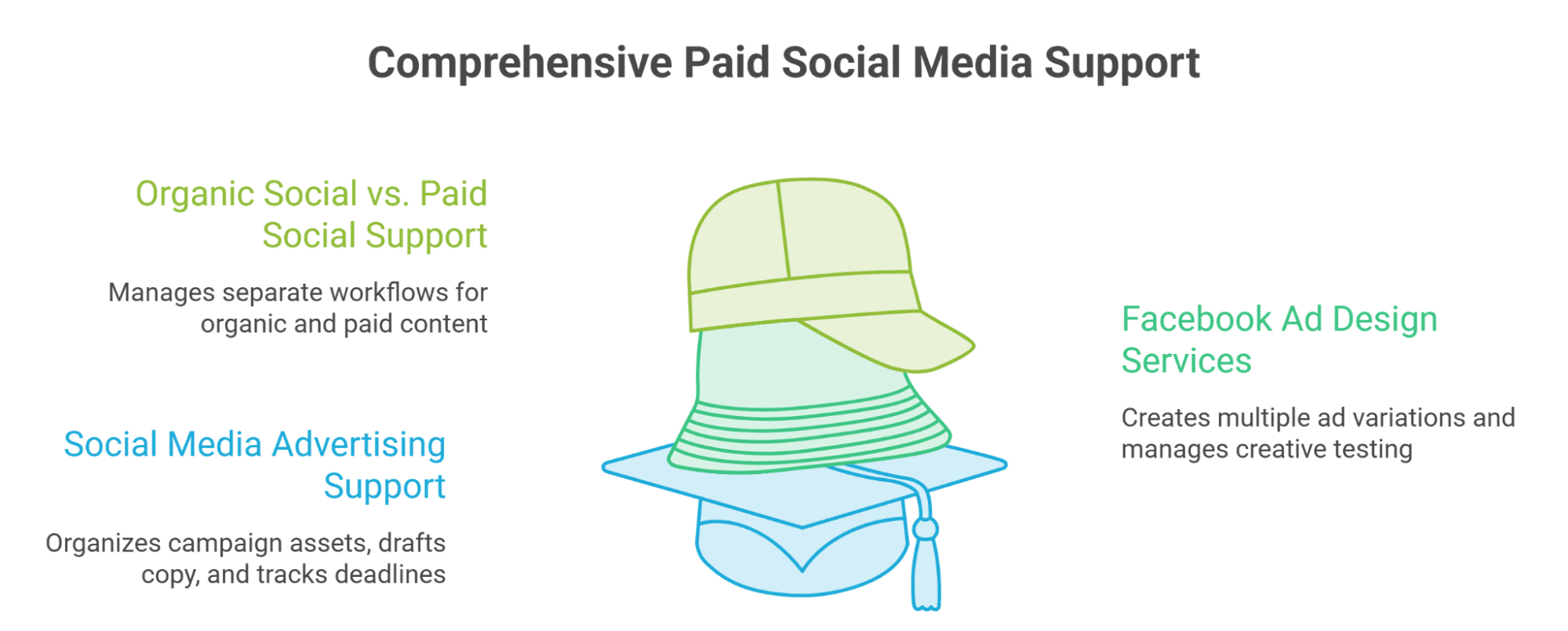
1. Social Media Advertising Support
A VA can support social media advertising by organizing campaign assets, preparing ad copy drafts, collecting landing page links, checking UTMs, uploading creative for review, tracking deadlines, and pulling basic performance reports. They can also help coordinate between the business owner, designer, copywriter, and media buyer.
Paid social requires accuracy. A wrong link, incorrect audience note, outdated creative file, or missing approval can affect campaign performance. A VA can help reduce these operational errors by maintaining checklists and campaign folders.
Businesses exploring social media advertising services should separate strategic tasks from support tasks. Budget allocation, audience strategy, conversion tracking, and optimization decisions need specialized expertise. Asset organization, reporting, and coordination are strong VA support areas.
2. Facebook Ad Design Services and Creative Testing
Facebook and Instagram ads often require multiple creative variations. A business may need different headlines, images, calls to action, video cuts, carousel formats, and landing page angles. A VA can help organize creative versions, name files correctly, track what has been tested, and coordinate feedback.
A trained VA may also create basic ad graphics using approved templates. However, advanced ad design should involve a designer or brand creative lead. The VA’s role is often to keep the creative production system organized and make sure approved assets move into the campaign workflow.
A specialized Facebook ad design process can help businesses improve creative quality and testing discipline. The goal is to avoid random ad creation and instead build a repeatable system for producing and reviewing campaign assets.
3. Organic Social vs. Paid Social Support
Organic and paid social work together, but they are not the same. The first one builds trust, community, education, and ongoing visibility, whereas the second one amplifies offers, retargets audiences, tests messages, and drives measurable campaign goals. A VA can support both, but the workflows should be separate.
For organic social, the VA may manage the calendar, captions, community monitoring, and engagement reports. For paid social, the VA may manage creative folders, ad copy drafts, approvals, reporting exports, and campaign coordination. Combining both without structure can create confusion.
A good social media management system shows which posts are organic, which assets are for ads, which campaigns are active, and which metrics matter for each. This helps the business avoid judging organic content by paid metrics or paid campaigns by vanity engagement alone.
Social Media Monitoring, Analytics, and Reporting
Social media management should not be based only on what the team feels is working. A VA can help collect performance data, monitor audience behavior, identify recurring questions, and turn platform activity into useful reporting. This creates a feedback loop between content and business goals.
1. Social Media Monitoring and Listening
- Track brand activity. Comments, mentions, tags, reviews, and messages are monitored for timely responses or internal follow-up.
- Watch external conversations. Competitor activity, customer discussions, industry topics, and market questions provide useful strategic context without unstructured scrolling.
- Follow a routine. Inbox checks, saved searches, alerts, and comment triage make ongoing monitoring more dependable.
- Apply escalation rules. Complaints, misinformation, sensitive requests, and valuable opportunities quickly reach the appropriate team member.
- Capture business intelligence. Questions, objections, testimonials, requests, and competitor examples inform content, service, sales, and future product decisions.
- Turn data into action. A social media monitoring service reveals customer priorities, content opportunities, and possible brand experience improvements.
2. Social Media KPIs a VA Can Track
- Measure visibility. Reach, impressions, follower growth, video views, and profile visits show how audience exposure changes over time.
- Track engagement. Comments, shares, saves, reactions, engagement rate, and messages reveal which content prompts meaningful audience action.
- Connect traffic and leads. Clicks, visits, inquiries, submissions, and qualified conversations relate social activity to measurable business outcomes.
- Support paid reporting. A VA can accurately pull click-through rate, cost per click, leads, conversions, and cost per lead.
- Match metrics to goals. Awareness, B2B, and ecommerce programs require different measures of useful campaign performance.
- Organize decision inputs. BLS notes that analysts use social comments and online reviews to understand broader consumer behavior.
3. Reporting Cadence and Performance Reviews
- Choose a useful cadence. Weekly reports support active campaigns; monthly reports reveal broader content and audience performance patterns.
- Document output. Reports show post volume, platform distribution, campaign activity, content formats, and calendar completion.
- Compare performance meaningfully. Evaluate posts by topic, format, hook, call to action, timing, and their intended objective.
- Include qualitative signals. Questions, comments, message themes, complaints, testimonials, and follow-ups add valuable context to numeric results.
- Separate data from decisions. The VA assembles accurate evidence; the owner or strategist interprets it and chooses appropriate changes.
- Show operational impact. Reports can track consistency, response time, output, approval speed, asset readiness, and emerging creative test ideas.
Social Media Graphic Design, Video, and Content Production

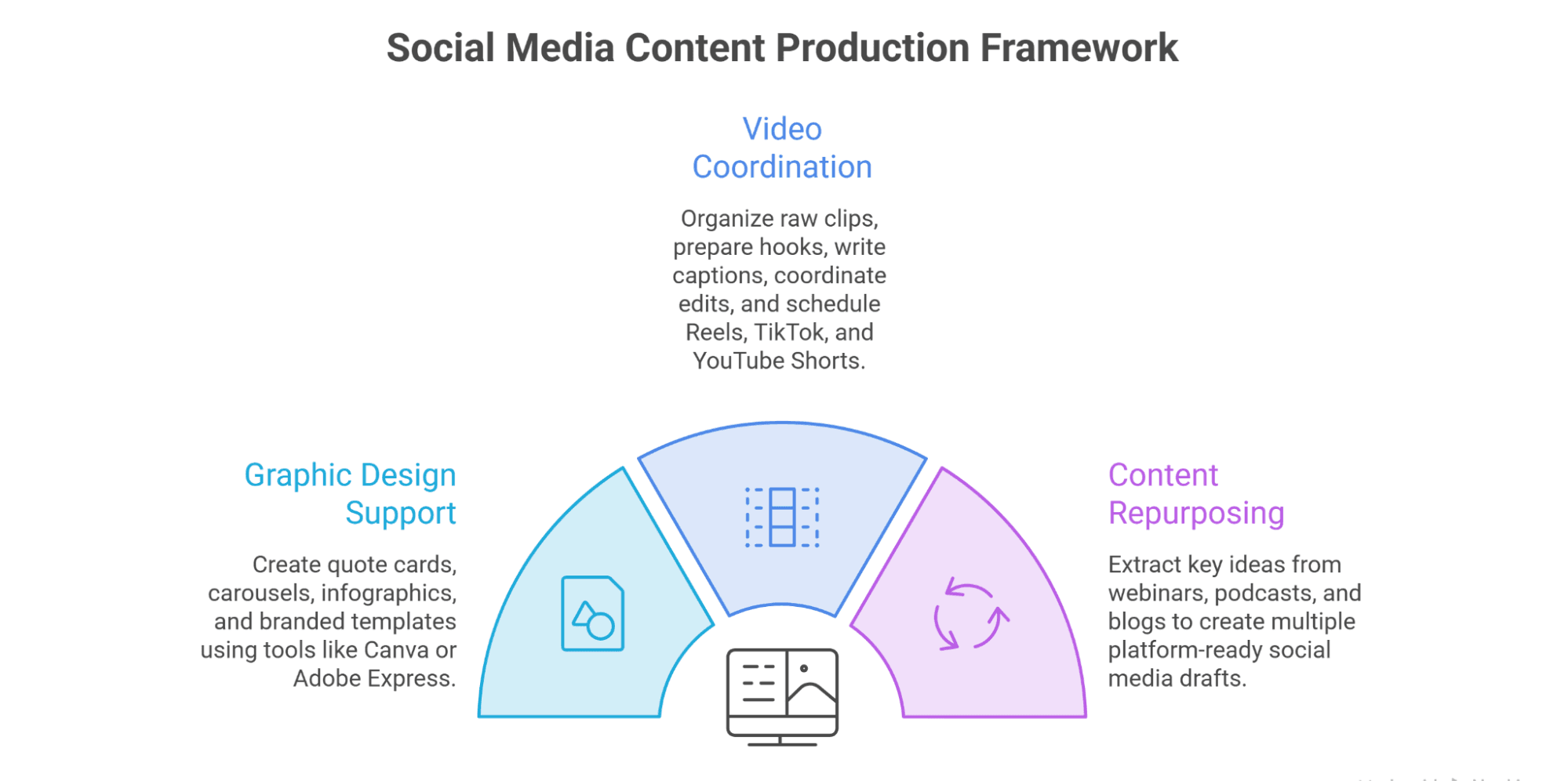
Content production is one of the most time-consuming parts of social media management. Even a simple post may require a caption, visual, hashtag set, approval, scheduling, and tracking. A social media VA can help coordinate production and, in some cases, create basic assets from templates.
1. Social Media Graphic Design Support
Social media graphic design includes quote cards, carousels, infographics, promotional posts, announcement graphics, story slides, thumbnails, ad images, and branded templates. A VA can help create simple graphics using approved brand guidelines and tools such as Canva, Adobe Express, or platform-native design tools.
For stronger brand consistency, the business should provide fonts, colors, logos, image rules, spacing examples, and approved templates. The VA can then produce routine graphics without reinventing the design style every time.
A business that needs more polished visuals can use social media graphic design support to maintain quality across platforms. The key is to define which graphics a VA can create independently and which require designer review.
2. Short-Form Video Coordination
Short-form video can be valuable, but it is operationally demanding. A VA can help collect video ideas, organize raw clips, prepare hooks, write captions, coordinate edits, upload drafts, track approval status, and schedule final posts. They can also maintain a library of reusable clips and b-roll.
The VA does not always need to edit complex videos. Their strongest contribution may be workflow coordination: making sure the right clips exist, the editor has instructions, the caption is ready, the post is approved, and the publishing date is clear.
This is especially helpful for brands that want to use Reels, TikTok, YouTube Shorts, and LinkedIn video but struggle to keep video production organized. A repeatable system turns video from an occasional effort into a manageable content format.
3. Repurposing Long-Form Content
Many businesses already have useful content but fail to repurpose it. Webinars, podcasts, blog posts, newsletters, sales calls, FAQs, case studies, and customer questions can become multiple social posts. A VA can help extract key ideas and turn them into platform-ready drafts.
For example, one webinar can become a LinkedIn post, three quote graphics, two Reels scripts, one carousel, one email snippet, and several short captions. This reduces the pressure to create from scratch.
Repurposing also supports topical authority. When a business repeatedly explains its expertise across formats and platforms, audiences have more chances to understand the brand’s point of view.
How Much Does a Social Media VA Cost?
Social media VA pricing depends on scope, experience, platform mix, posting frequency, creative requirements, reporting needs, and whether the assistant is independent, agency-managed, domestic, offshore, part-time, or full-time. Businesses should evaluate cost based on workflow value, not hourly rate alone.
1. What Affects Social Media VA Pricing?
- Number of platforms. Multiple active channels require separate content, publishing, monitoring, and reporting workflows, increasing coordination time.
- Posting volume and complexity. Frequent posts, research-heavy captions, platform variations, and rapid campaign turnarounds can raise pricing.
- Creative requirements. Original design, advanced video, motion graphics, and high-volume ad creative require more specialized production skills.
- Community and reporting scope. Inbox coverage, moderation, listening, escalations, dashboards, and detailed reports add substantial recurring work.
- Experience and specialization. Proven expertise in LinkedIn, TikTok, paid ads, analytics, design, or systems may command higher rates.
- Engagement model. A social media VA cost guide should compare rates with task scope, supervision, and quality expectations.
2. Social Media VA vs. Social Media Agency
- Choose a VA for execution. Calendar maintenance, scheduling, formatting, routine engagement, reporting, and coordination fit clearly defined ongoing VA support.
- Choose an agency for strategy. Positioning, campaign planning, creative direction, paid media, advanced analytics, and team production need broader strategic expertise.
- Assess strategic maturity. Clear audiences, messages, offers, and brand voices favor execution support; unresolved fundamentals require experienced senior guidance.
- Compare oversight needs. VAs work inside company processes, while agencies bring established systems but still require timely stakeholder feedback.
- Use a hybrid model. Strategists set direction and manage specialties; VAs maintain assets, publishing, daily coordination, and reports.
- Address the actual gap. A VA-versus-agency comparison clarifies whether execution, leadership, or both are currently needed.
3. ROI of Social Media Management Support
- Measure consistency. Track on-time posts, active priority platforms, fully supported campaigns, and avoided publishing gaps.
- Measure efficiency. Owner hours saved, fewer missed deadlines, faster approvals, organized assets, and reduced internal rework demonstrate value.
- Measure audience service. Response time, handled comments, routed questions, captured testimonials, and escalated messages show consistent brand responsiveness.
- Measure content leverage. Published posts, repurposed assets, coordinated variations, and organized ideas reveal improved use of existing expertise.
- Connect activity to goals. Launches, nurturing, recruiting, education, community, retargeting, and sales conversations give publishing a clear business purpose.
- Attribute value accurately. A VA maintains execution; strategy, offers, conversion performance, and paid optimization remain important shared responsibilities.
How to Hire and Onboard a Social Media VA

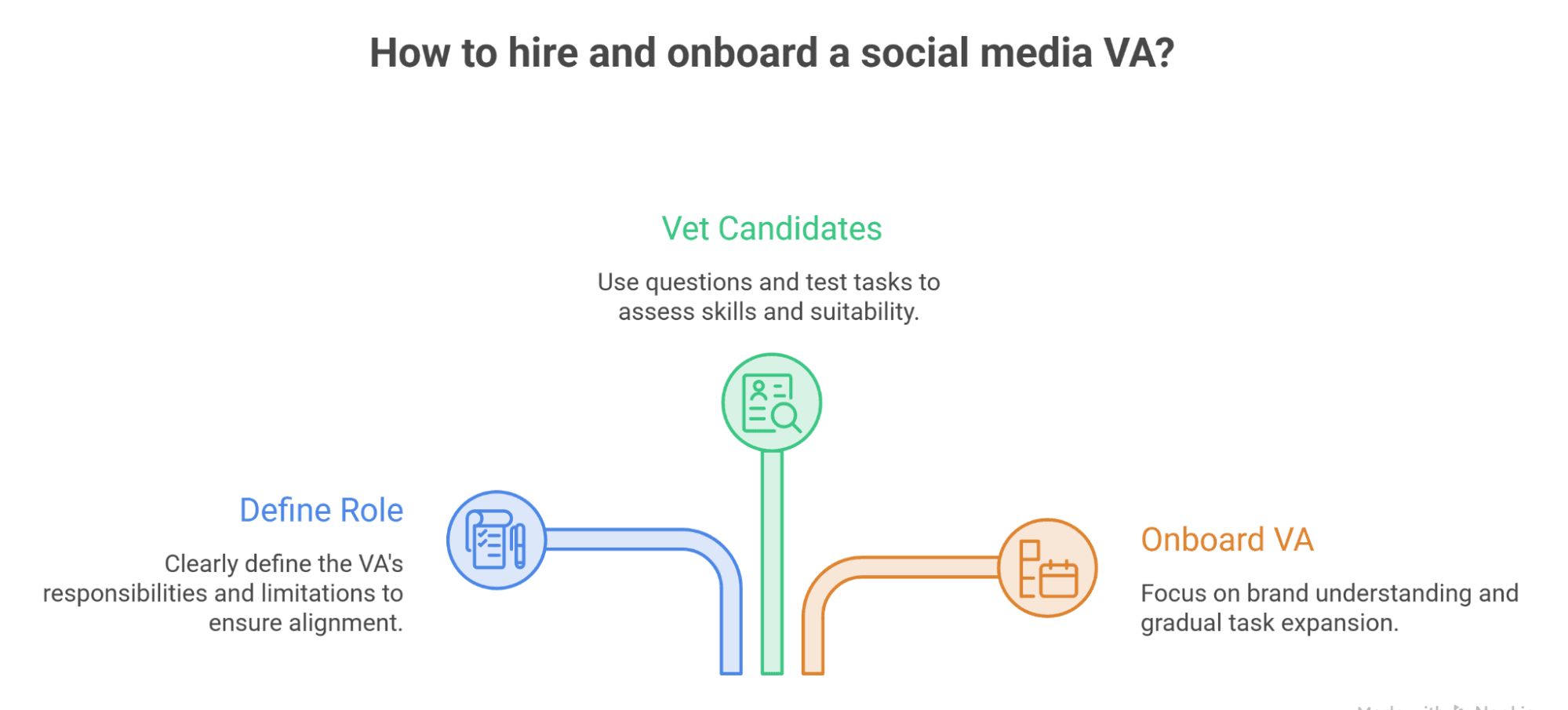
Hiring a social media VA should start with clarity. Before searching for candidates, the business should define platforms, tasks, brand voice, posting frequency, approval process, tools, reporting expectations, and performance metrics. This reduces confusion and helps the VA succeed faster.
1. Define the Role Before Hiring
Start by deciding what the VA will own. Will they schedule posts, draft captions, create graphics, monitor comments, pull analytics, organize the calendar, support ads, or manage platform-specific tasks? The answer determines the skills you need.
Next, define the platform mix. A LinkedIn-heavy B2B company needs different support than a TikTok-focused consumer brand or an Instagram-led ecommerce business. The VA should match the platforms that matter most to the business.
Finally, define what the VA cannot do without approval. This may include posting sensitive announcements, replying to complaints, changing ad budgets, making brand claims, using customer testimonials, or responding to legal or compliance issues.
2. Vetting Questions and Test Tasks
Vetting should test writing ability, attention to detail, tool fluency, platform familiarity, judgment, and organization. Ask candidates what platforms they have supported, which scheduling tools they have used, how they organize content calendars, and how they handle unclear feedback.
Useful questions include: “How would you turn one blog post into five social posts?” “How do you organize a monthly content calendar?” “What would you do if a customer leaves a negative comment?” “How do you track post approvals?” “What metrics would you include in a monthly report?”
A paid test task can be helpful. Ask the candidate to draft three captions from a provided blog post, organize a one-week content calendar, create a simple graphic from an approved template, or summarize basic analytics from a sample report. Keep the task realistic and limited.
3. First 30 Days of Onboarding
The first 30 days should focus on brand understanding, workflow setup, and low-risk execution. Give the VA access to brand guidelines, approved examples, content pillars, customer personas, platform logins through secure systems, scheduling tools, and asset folders.
Start with simple tasks such as organizing content assets, scheduling approved posts, preparing draft captions, tracking engagement, and pulling weekly metrics. Once quality is consistent, expand into more complex tasks such as content repurposing, monitoring, and campaign support.
Set a weekly review cadence. Discuss what was published, what needs approval, what performed well, what was unclear, and what should be improved. This feedback loop helps the VA learn the brand faster and prevents repeated mistakes.
Social Media Management Governance and Brand Safety

Social media management requires speed, but speed should not come at the cost of accuracy, privacy, or brand trust. A VA should have clear rules for access, approvals, customer interaction, and escalation. Governance protects both the business and the assistant.
1. Brand Voice and Approval Rules
- Document the voice. Clearly define tone, vocabulary, audience, value proposition, calls to action, and strong on-brand examples.
- Set content boundaries. List prohibited phrases, unsupported claims, sensitive topics, privacy limits, and relevant legal or compliance restrictions.
- Classify content risk. Evergreen posts may proceed independently, while promotions, customer stories, ads, announcements, and new claims need formal review.
- Assign reviewers. Every content approval should have an owner, deadline, and backup decision-maker.
- Use visible statuses. Draft, review, revision, approved, scheduled, published, and paused labels clearly show each asset’s position.
- Make feedback reusable. Explain what changed and why, then add recurring editorial decisions to the brand guide.
2. Access, Security, and Account Protection
- Manage credentials securely. Store and share passwords through an approved password manager, not email, informal chat, or project comments.
- Strengthen authentication. Two-factor authentication, recovery methods, alerts, and documented account ownership protect social and advertising accounts.
- Use role-based permissions. Give the VA a separate user account or assigned business role whenever platforms permit it.
- Apply least privilege. Scheduling organic posts rarely requires billing, user management, ad administration, or critical settings access.
- Review access regularly. Update permissions with changing responsibilities and remove them promptly when the working relationship ends.
- Protect connected systems. Ad accounts, inboxes, schedulers, asset libraries, analytics tools, and payment-linked services need deliberate security controls.
3. Comment, Crisis, and Escalation Rules
- Define routine responses. Authorize appropriate thanks, approved FAQ answers, resource links, feedback acknowledgment, and obvious spam removal.
- List escalation triggers. Refund disputes, legal complaints, threats, safety issues, harassment, misinformation, and sensitive questions need qualified internal owners.
- Provide adaptable templates. Response examples establish tone and required information without forcing robotic replies.
- Set urgency levels. Clearly define what can wait, what needs immediate attention, and who serves as backup.
- Prepare crisis actions. Explain when to pause scheduled posts, preserve evidence, avoid speculation, document steps, and await authorization.
- Review recurring patterns. Repeated complaints and confusion should improve FAQs, content, service processes, moderation rules, and training.
Building a Social Media Management Workflow

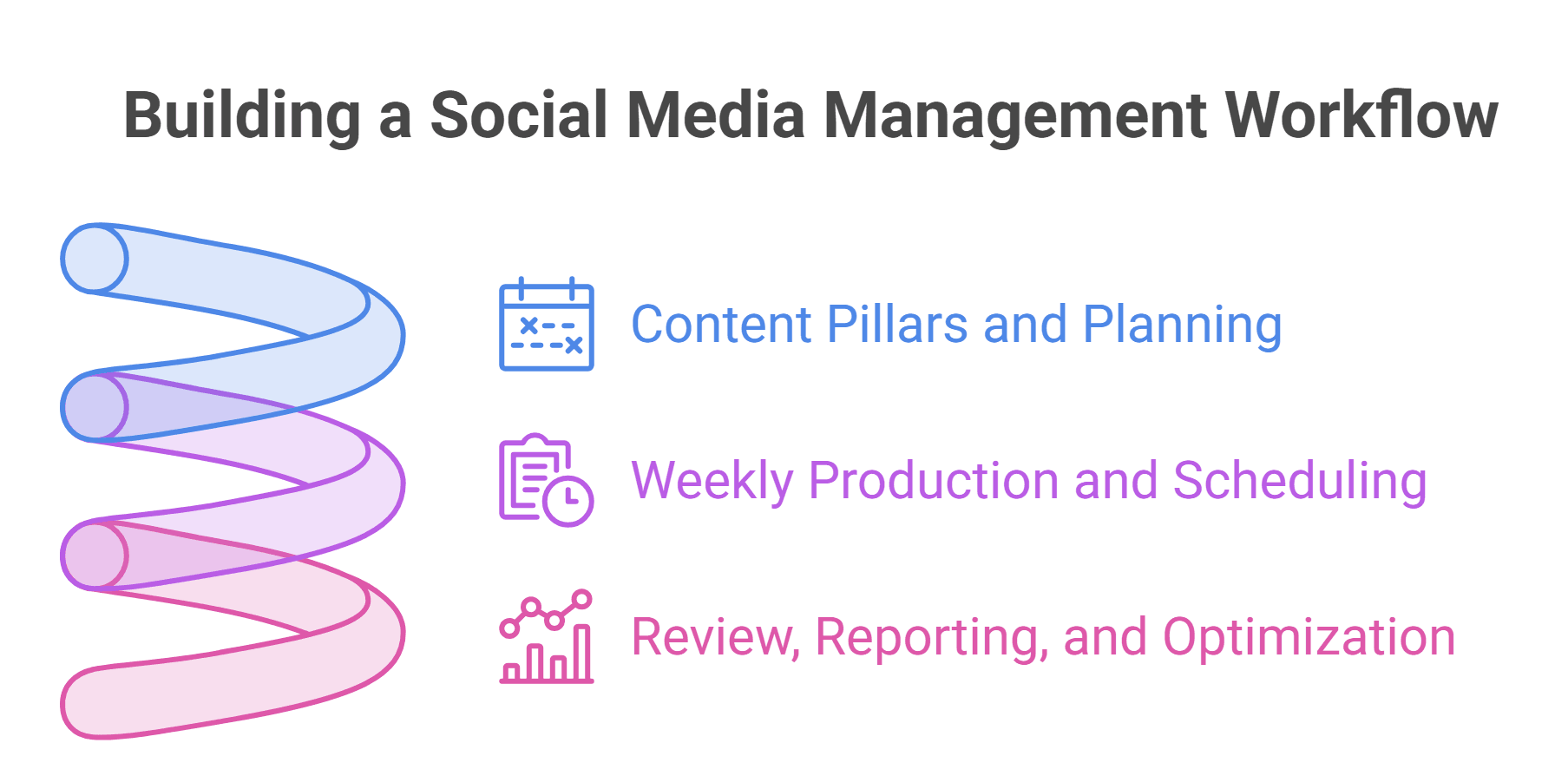
A strong workflow turns social media from scattered activity into an operating system. The goal is to make planning, production, approval, scheduling, engagement, and reporting visible and repeatable.
1. Content Pillars and Monthly Planning
Content pillars are the recurring themes a brand posts about. Examples include education, product use cases, customer stories, behind-the-scenes content, thought leadership, industry trends, FAQs, promotions, and community posts. A VA can help organize these pillars into a monthly plan.
Monthly planning prevents random posting. The business can decide which campaigns, launches, holidays, offers, or seasonal topics matter. The VA can then build a calendar that supports those priorities.
A clear monthly plan should include platform, topic, format, owner, asset status, approval status, publish date, and CTA. This helps everyone see what is happening before deadlines become urgent.
2. Weekly Production and Scheduling
Weekly production turns the monthly plan into actual posts. The VA can prepare captions, request assets, create simple graphics, schedule approved posts, organize links, and confirm that content is ready.
A weekly workflow may include Monday planning, Tuesday drafting, Wednesday approvals, Thursday scheduling, and Friday reporting. The exact cadence can vary, but the process should be predictable.
This rhythm keeps social media management from becoming a daily scramble. It also gives the business room to add timely posts without losing the planned calendar.
3. Review, Reporting, and Optimization
At the end of each week or month, the VA can prepare a report showing what was posted, what performed best, what comments appeared, what questions came up, and what should be tested next. The business owner or strategist can then decide how to adjust.
Optimization should be practical. If educational carousels get saves, create more. Test more hooks when short videos drive profile visits. When promotional posts underperform, adjust the offer or creative. In case of repeated questions, turn them into content.
A social media VA supports optimization by making the data visible. The strategic decision still belongs to the business.

FAQ
A social media management VA supports tasks such as content calendars, post scheduling, caption drafting, graphic formatting, engagement monitoring, inbox organization, analytics reporting, asset management, and platform-specific social media workflows.
No. A social media manager usually owns strategy, positioning, campaign direction, and performance interpretation. A social media VA usually supports execution, scheduling, monitoring, reporting, and workflow coordination.
Start with repeatable tasks such as scheduling approved posts, organizing content calendars, formatting captions, preparing basic graphics, tracking engagement, pulling reports, and organizing creative assets.
Yes, a social media VA can support paid ads by organizing assets, preparing copy drafts, tracking approvals, uploading creative for review, and pulling reports. Strategy, budget decisions, and optimization should be handled by an experienced paid media specialist.
Cost depends on experience, platform mix, posting volume, design needs, reporting scope, video involvement, paid ad support, and whether the VA is independent or agency-managed.
Hire a VA if you need execution support and consistent workflow management. Hire an agency if you need strategy, creative direction, paid media management, advanced analytics, or a full campaign team.
Conclusion: Build a Social Media System That Runs Consistently
Social media management is no longer a casual side task. For many businesses, it is part of brand visibility, customer communication, lead generation, recruiting, community building, and sales support. But without a system, social media becomes inconsistent, reactive, and difficult to measure.
A social media management VA helps solve that execution problem. The right assistant can organize content calendars, schedule posts, prepare captions, coordinate graphics, monitor engagement, support paid campaigns, pull reports, and keep the workflow moving. This allows business owners and marketing leaders to focus on strategy while the VA maintains the operational rhythm.
The best results come from clear roles, documented workflows, brand guidelines, secure access, approval rules, and measurable outcomes. Whether your business needs Instagram Reels, LinkedIn thought leadership, TikTok creative support, Facebook ad design, social monitoring, or platform-by-platform task execution, a social media VA can help turn scattered marketing activity into a repeatable system.
CTA: Ready to improve your social media management? Start by listing the platforms you use, the tasks you repeat every week, and the content gaps that slow you down. Then decide which tasks can be delegated to a trained social media VA.
Sources List
- Pew Research Center — Americans’ Social Media Use 2025, including U.S. adult usage of YouTube, Facebook, Instagram, TikTok, and daily platform use.
- U.S. Bureau of Labor Statistics — Advertising, Promotions, and Marketing Managers: projected growth, openings, and marketing management labor-market data.
- U.S. Bureau of Labor Statistics — Market Research Analysts and Marketing Specialists: projected growth and use of social media comments and online reviews in consumer analysis.
- U.S. Bureau of Labor Statistics — Public Relations Specialists: projected growth and social media communication responsibilities.
- U.S. Bureau of Labor Statistics — Graphic Designers: projected growth and design occupation context.
- DataReportal — Digital 2026: The United States of America, including U.S. social media user identities and platform ad-reach context.
- Google Search Central — AI features and your website, with guidance for AI Overviews and AI Mode.
- Google Search Central — Creating helpful, reliable, people-first content.
 Siddhartha Basu is a Technical Writer at Task Virtual. He loves online games, e-book reading, and Yoga.