

Contents
show
Digital marketing VA pricing: what it costs to outsource
American business owners and marketing leads constantly balance the need for consistent digital output with limited budgets and time. Social media calendars, email sequences, SEO tasks, content creation, and campaign reporting rarely stop, yet adding a full-time specialist quickly inflates payroll and creates long-term employment obligations that many growing companies prefer to avoid. Digital marketing VA pricing has emerged as a practical solution that delivers reliable execution across channels without the full expense of local hires or large agency retainers.
Understanding current rates, package structures, and the true cost of outsourcing helps founders make clearer decisions and avoid under- or over-spending. This guide examines real-world digital marketing VA cost ranges by location, skill level, and hiring model. It covers hourly rates, monthly retainers, comparisons to in-house and agency options, the factors that move prices up or down, and practical steps for calculating value so you can hire with confidence in 2026.
Understanding Digital Marketing VA Pricing Basics
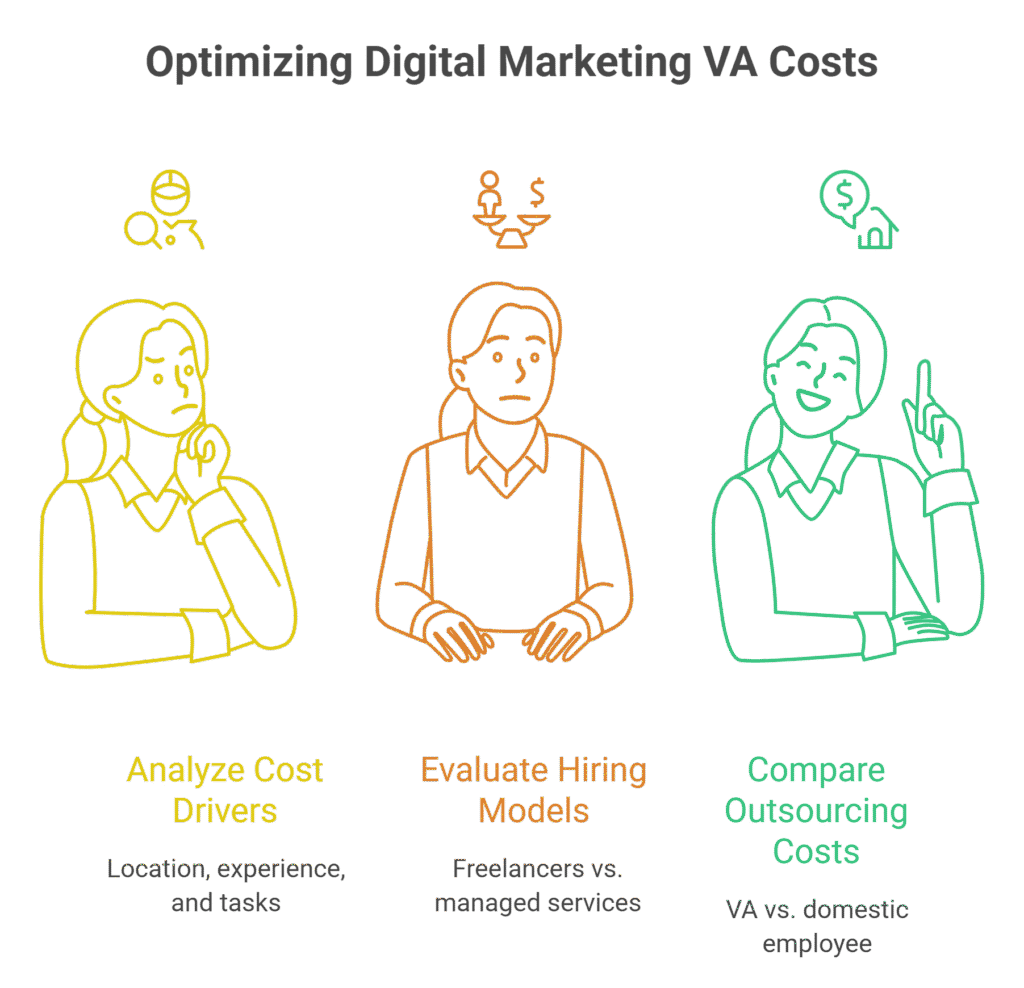
Digital marketing VA pricing varies based on geography, experience, and the exact mix of tasks required. Companies that understand these basics can set realistic budgets and select the right support level. Clear knowledge of what drives cost also helps avoid mismatches between expectations and actual deliverables.
1. What a Digital Marketing VA Actually Does
A digital marketing virtual assistant handles the day-to-day execution work that keeps channels active and consistent. Typical responsibilities include scheduling social posts, creating simple graphics in Canva, drafting or uploading blog content, managing email sequences in tools such as ActiveCampaign or Mailchimp, tracking basic analytics, updating CRM records, and assisting with paid campaign monitoring.
More advanced marketing VAs may run keyword research, design and optimize landing pages, manage Google or Meta ads at a tactical level, or produce performance reports. The role focuses on consistent delivery rather than high-level strategy, which is why many US companies pair a VA with an internal strategist or founder for direction and oversight.
2. Key Cost Drivers in 2026
Location remains the strongest influence on digital marketing VA pricing. Talent in the Philippines or India generally costs less than professionals in Latin America or the United States because of differences in living costs and local wage levels. Experience level and specialization come next and create clear pricing tiers across the market.
A VA limited to content scheduling sits at the lower end of the range, while someone proficient in paid media, SEO tools, or marketing automation commands higher rates. The hiring model also matters. Direct freelancers often quote lower hourly figures, while managed service providers include screening, training, backup coverage, and account management, which raises the effective rate but reduces client oversight time.
3. Why Outsourcing Appeals to US Businesses
According to the U.S. Bureau of Labor Statistics, the median annual wage for secretaries and administrative assistants reached $48,310, or $23.23 per hour, in May 2025. When employer-paid benefits are added—averaging about 30 percent of total compensation for private-industry workers—the fully loaded cost of a comparable domestic role rises well above the base wage.
Digital marketing VAs that perform execution tasks deliver similar output volume at a lower overall cost while allowing companies to scale hours up or down without long-term employment obligations. This flexibility is especially attractive for small and mid-sized businesses that need consistent marketing activity but cannot justify a full-time specialist year-round.
Average Hourly Rates for Digital Marketing VAs

Hourly rates for digital marketing VAs form the foundation of most pricing discussions. These rates shift according to location, experience, and the complexity of required skills. Understanding the typical bands helps businesses set accurate budgets and compare options effectively.
1. Offshore and Nearshore Hourly Rates
- Offshore digital marketing VAs based primarily in the Philippines and India commonly charge between $5 and $15 per hour for generalist work such as social scheduling, basic content uploading, and simple reporting.
- Mid-level talent with experience in email marketing, light SEO, or multi-platform content creation often falls in the $10–$25 range.
- Nearshore options from Latin America typically sit between $10 and $25 per hour.
- These rates reflect published ranges from multiple providers and platforms in the 2025–2026 period.
- Actual quotes can vary with exact skill requirements and English proficiency levels.
2. US-Based Marketing VA Rates
- US-based virtual marketing assistants and those working through domestic agencies usually start at $25–$50 per hour for solid execution support.
- Senior or highly specialized marketing VAs who handle paid advertising optimization, advanced analytics, or multi-channel coordination can exceed $50–$75 per hour.
- The premium covers native-level English and cultural familiarity with American audiences.
- Higher rates also support the ability to collaborate in real time during standard US working hours.
- Businesses that require frequent live calls or industry-specific knowledge often find the higher rate justified.
3. How Specialization Affects Hourly Pricing
- Specialization creates clear pricing tiers across the market.
- A VA focused only on scheduling pre-approved content remains at the lower end of available rates.
- Adding graphic design, caption writing, or basic analytics moves the rate upward.
- Skills in Google Ads, Meta Ads Manager, HubSpot, SEMrush, or similar platforms push rates higher still because they reduce training time and increase the value of each hour worked.
- Certifications and a proven track record with US clients further support higher quotes.
Monthly Packages and Retainer Costs
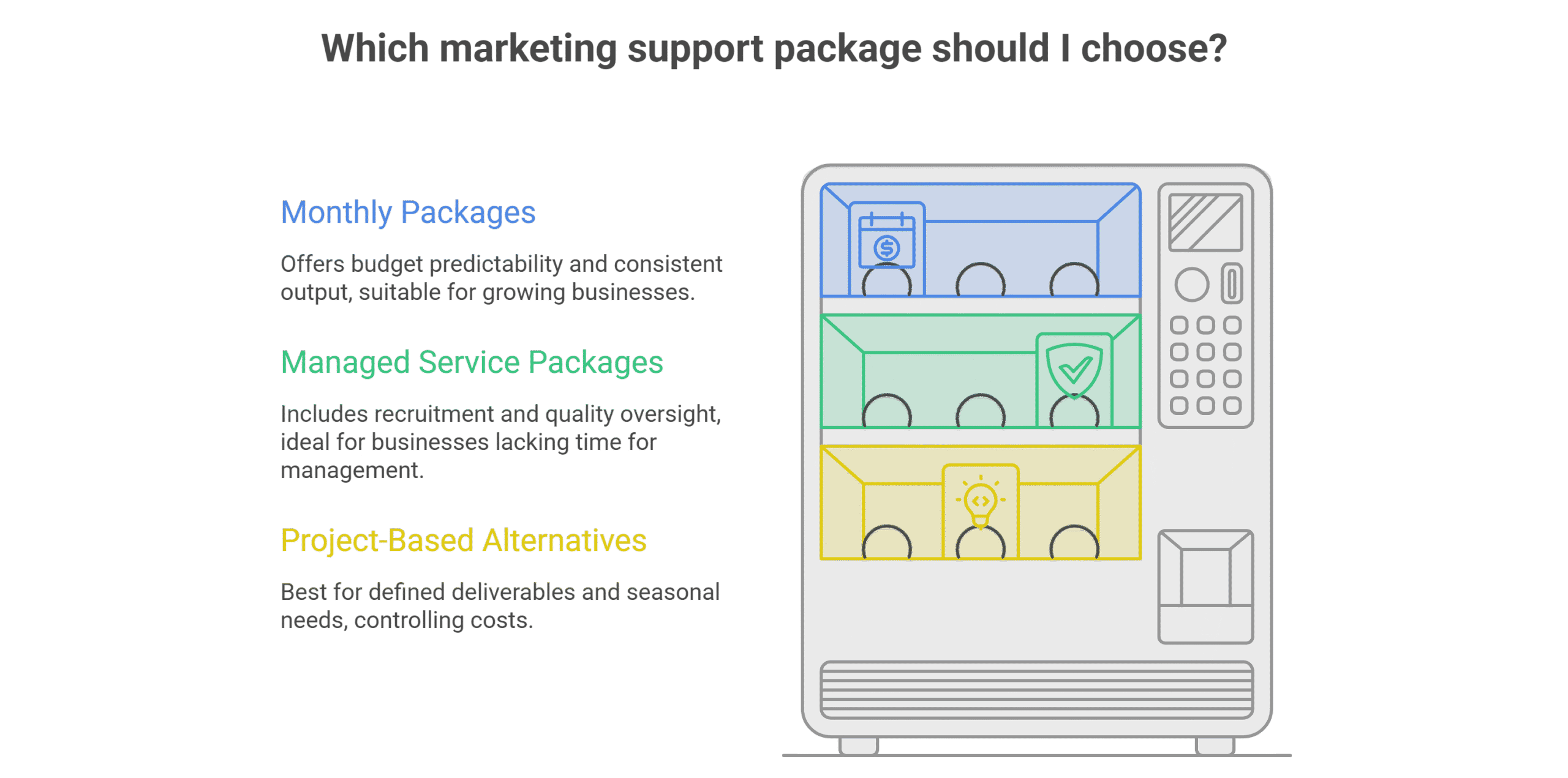
Monthly packages offer predictability that many growing businesses prefer over pure hourly billing. These structures help with budgeting and encourage consistent output across marketing channels. Understanding the common ranges allows owners to match support levels to actual workload.
1. Part-Time vs Full-Time Monthly Pricing
Many companies prefer monthly packages for budget predictability. Part-time support of 10–20 hours per week often costs $400–$1,800 for offshore talent and $1,500–$4,000 for US-based help. Full-time dedicated digital marketing VAs (roughly 160 hours per month) commonly range from $1,000–$3,000 monthly when sourced offshore or nearshore. US-based or agency-managed full-time arrangements frequently start around $3,500 and can reach $6,000–$8,000 or more depending on specialization and service level. These figures assume consistent weekly hours and do not include optional add-ons such as premium software licenses.
2. Managed Service Packages
Managed VA companies package rates that include recruitment, onboarding support, quality oversight, and replacement guarantees. Entry-level full-time plans from several providers begin near $1,200–$2,000 per month, while more specialized marketing support sits higher. The management fee covers the administrative burden that would otherwise fall on the client. For businesses that lack time to screen freelancers or manage multiple part-time contractors, the higher package price often proves more economical once internal management hours are considered.
3. Project-Based Alternatives
Project-based pricing appears less frequently for ongoing marketing work but suits defined deliverables such as a content calendar build-out, website audit, or ad account setup. These engagements are usually quoted as fixed fees rather than pure hourly rates. Clients who need continuous support generally find retainers more efficient, while those with seasonal or one-off needs can use project pricing to control costs and avoid idle hours.
Comparing Costs: VA vs Agency vs In-House

Choosing between a digital marketing VA, an agency, or an in-house hire requires looking beyond headline rates. Each option carries different total costs, flexibility levels, and management demands. A clear side-by-side view helps businesses select the model that fits both budget and operational needs.
1. In-House Marketing Hire Full Cost
- An in-house marketing assistant or coordinator with a $45,000–$60,000 base salary quickly exceeds $60,000–$80,000 once benefits, payroll taxes, equipment, software, recruiting, and management time are included.
- The U.S. Bureau of Labor Statistics data on administrative roles and employer compensation costs illustrate why the fully loaded figure is substantially higher than the advertised wage.
- In addition to cash costs, the business assumes employment obligations and paid leave.
- The company also carries the risk of underutilization during slower periods.
2. Agency Retainers vs Dedicated VA
- Digital marketing agencies typically charge higher effective rates because they maintain strategy teams, creative staff, account managers, and overhead.
- Monthly retainers for small-business packages often start at $1,500–$5,000 and rise quickly for multi-channel work.
- A dedicated marketing VA provides more focused hours of execution for a comparable or lower monthly outlay.
- The VA model works best when the client supplies clear direction and processes, while agencies supply more strategy and creative development at a higher cost per hour of actual delivery.
3. Calculating True ROI
- The most useful comparison looks beyond headline rates to total cost of ownership and output.
- Calculate the founder or team hours currently spent on routine marketing tasks.
- If a digital marketing VA frees 10–15 hours per week for higher-value work, the return often exceeds the cash expense within the first quarter.
- Track concrete metrics such as content volume produced, posting consistency, engagement trends, lead quality, or ad efficiency improvements to determine whether the arrangement is delivering measurable value.
Factors That Influence Your Final Digital Marketing VA Cost
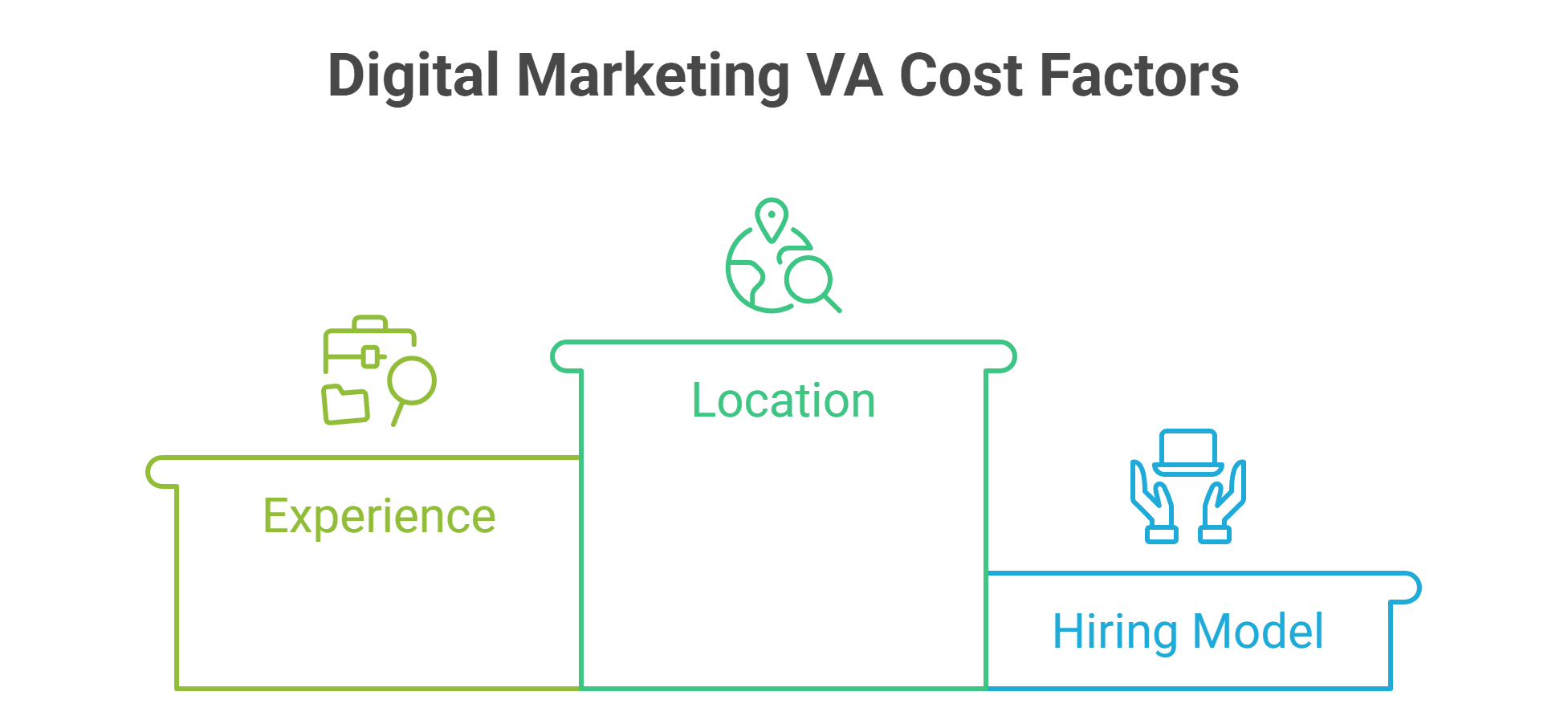
Several practical elements shape the final price beyond basic location and experience. Understanding these factors helps businesses request accurate quotes and negotiate effectively. Aligning requirements with the right talent pool also prevents overpaying for unused capabilities.
1. Location and Time Zone Considerations
Geography drives the largest price differences. Philippines- and India-based talent offers the lowest rates and a large English-speaking pool. Latin American VAs cost more but align better with US time zones, enabling same-day collaboration. US-based talent carries the highest rates and the fewest communication or cultural friction points. Companies that can work asynchronously often capture the greatest savings; those needing frequent live interaction may prefer nearshore or domestic options despite the higher price.
2. Experience, Tools, and Skills
Years of relevant experience, tool proficiency, and specialization directly affect quotes. A VA comfortable with Meta Business Suite, Google Analytics 4, Canva, and basic email platforms sits in the mid-range. Expertise in paid media platforms, marketing automation, or advanced SEO tools moves the rate higher. Strong written English and a history of working with American clients also support premium pricing because they reduce revision cycles and miscommunication.
3. Hiring Model: Freelance vs Managed
Direct freelance platforms can produce lower per-hour rates but shift screening, interviewing, onboarding, and ongoing management onto the client. Managed service providers charge more yet absorb those responsibilities and usually provide faster replacements if performance issues arise. Volume commitments sometimes unlock discounts; clients guaranteeing consistent weekly hours often negotiate better effective rates than those seeking only occasional support.
Tips for Hiring and Getting Value from a Marketing VA
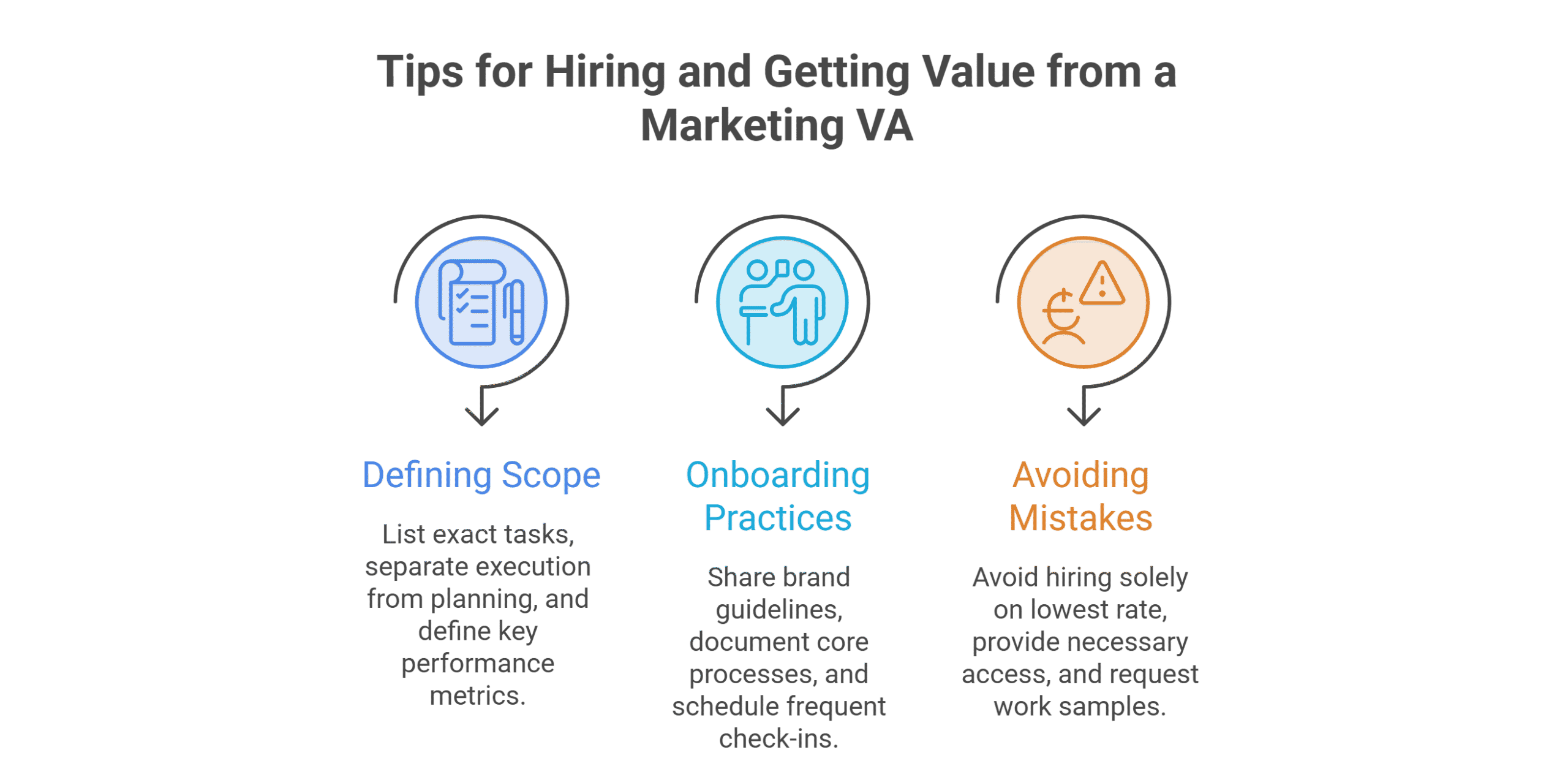
Successful hiring depends on clear preparation and realistic expectations. Businesses that invest time upfront in scope definition and onboarding typically see faster results and higher satisfaction. Following proven practices reduces the risk of mismatched hires and wasted budget.
1. Defining Scope and Success Metrics
- Start by listing the exact tasks to offload and the outcomes expected.
- Separate pure execution work from any tactical planning or optimization.
- Clear scope prevents scope creep and helps match candidates to the correct rate tier.
- Define simple key performance metrics such as number of posts published, email sequences launched, or reports delivered on schedule to improve both hiring accuracy and later performance evaluation.
2. Onboarding Best Practices
- Invest time in structured onboarding by sharing brand voice guidelines, visual identity assets, tool logins, preferred communication cadence, and examples of good versus poor output.
- Document core processes in short written or video form so the VA can operate independently.
- Schedule frequent check-ins during the first 30 days.
- Transition to weekly or bi-weekly reviews as reliability is established so the VA becomes a productive team member within 30–60 days.
3. Avoiding Common Costly Mistakes
- Choosing solely on the lowest hourly rate frequently increases total cost through higher supervision needs or rework.
- Failing to provide brand guidelines or account access creates delays.
- Under-scoping the role or changing requirements mid-engagement leads to frustration on both sides.
- Request work samples, run a short paid trial when possible, and clarify ownership of created assets and data access in the agreement while treating the relationship as a long-term partnership.
TaskVirtual: Your Partner in Digital Marketing Virtual Assistance

Keeping up with social media schedules, email campaigns, content uploads, and basic analytics can quickly overwhelm business owners. TaskVirtual supplies skilled digital marketing virtual assistants who handle these execution tasks so you can focus on strategy and growth while maintaining a consistent online presence.
1. Expert Digital Marketing Support
TaskVirtual’s trained virtual assistants help manage social media posting, content scheduling, email sequence setup, simple graphic creation, and performance tracking. They work within your brand guidelines and preferred tools to deliver reliable day-to-day marketing execution.
2. Affordable and Flexible Pricing
Hiring a full-time marketing specialist can be expensive, but TaskVirtual makes dedicated support more accessible. With pricing plans starting from just $3.12/hour to $14.99/hour, their digital marketing VA services remain budget-friendly for startups, small businesses, and growing teams.
3. Comprehensive Marketing Execution Solutions
From social content calendars and email management to basic SEO updates and campaign reporting, TaskVirtual covers the core execution needs most businesses face. Their scalable approach works whether you require a few hours each week or ongoing full-time support.
4. Ongoing Support and Quality Assurance
TaskVirtual provides regular progress updates and clear communication so marketing tasks stay on track. Their proactive approach helps maintain consistency across channels and reduces the need for constant client oversight.
5. Proven Track Record of Excellence
With 364 positive reviews and a 4.7-star rating on trusted VA platforms, TaskVirtual is recognised as a reliable partner worldwide. Clients count on their expertise to streamline digital marketing execution and free up valuable time.
Frequently Asked Questions
1. How much does a digital marketing VA cost per hour?
Rates typically range from $5–$15 for offshore generalists, $10–$25 for mid-level marketing support, and $25–$75 or higher for US-based or specialized talent.
2. What is the average monthly cost for a marketing virtual assistant?
Part-time arrangements often fall between $400 and $2,000. Full-time dedicated support commonly runs $1,000–$3,500 offshore or nearshore, and higher for domestic or managed options.
3. Is outsourcing cheaper than hiring in-house?
Yes, for most execution-focused roles. Fully loaded in-house costs, including benefits and overhead, frequently exceed $60,000–$80,000 annually, while capable VA support delivers comparable hours at a substantially lower expense.
4. Do marketing VAs handle strategy or only execution?
Most focus on execution and reporting. Some experienced specialists contribute tactical recommendations and optimization, but high-level strategy usually remains with the business owner or a senior marketer.
5. What skills should I look for in a digital marketing VA?
Strong written communication, familiarity with major platforms (Meta, Google, email tools), basic design ability, comfort with analytics, and a reliable track record with US clients.
6. How do I avoid overpaying or under-hiring?
Define tasks clearly, compare total cost of ownership rather than headline rates alone, run a short paid trial when feasible, and prioritize candidates with relevant portfolio examples over the absolute lowest price.
Conclusion and Next Steps
Digital marketing VA pricing in 2026 gives American businesses a flexible, cost-effective way to maintain consistent execution across social, email, content, and campaign channels. Hourly rates and monthly packages vary widely by location, skill level, and service model, yet the savings compared with fully loaded in-house hires or full-service agencies remain meaningful for most small and mid-sized companies. Success depends on matching the right talent level and support structure to actual needs, investing in clear processes, and measuring results against business goals.
If routine marketing tasks are consuming hours that could be spent on growth or strategy, calculate those hours and compare them against the pricing ranges in this guide. Begin with a clearly scoped trial engagement to test fit and output quality. The right digital marketing virtual assistant can free significant time, improve consistency, and support measurable growth at a cost structure that works for most US businesses ready to outsource strategically.
Sources
- U.S. Bureau of Labor Statistics, Occupational Outlook Handbook: Secretaries and Administrative Assistants (2025 median pay data)
- U.S. Bureau of Labor Statistics, Employer Costs for Employee Compensation (benefits as share of total compensation)
- Aggregated 2025–2026 market rate data from multiple virtual assistant providers and industry analyses referenced for current pricing ranges
For more such content, visit our website.
 Siddhartha Basu is a Technical Writer at Task Virtual. He loves online games, e-book reading, and Yoga.