Contents
show
How to Improve Brand Visibility in AI Search Engines with GEO
Brand visibility in AI search engines is reshaping how Americans discover brands, products, and services. Traditional Google blue links are giving way to conversational answers that synthesize information from across the web. As of 2026, optimizing for AI citations is essential for brand success.
Improving brand visibility in AI search engines requires Generative Engine Optimization (GEO). This blends traditional SEO with structured content and strong authority signals. American businesses that adapt gain major advantages in awareness, trust, and conversions, as AI-driven referrals convert 42% better than non-AI traffic.
Understanding the AI Search Landscape in 2026
AI search engines now heavily influence consumer discovery and purchase decisions across the United States. Tools like ChatGPT Search, Perplexity, and Google AI Overviews are rapidly changing traditional search behavior in 2026, with AI-powered tools capturing 12-15% of the global search market share. Brands must optimize specifically for citation in AI-generated answers to stay visible and competitive.
1. The Shift from Traditional Search to AI Answers
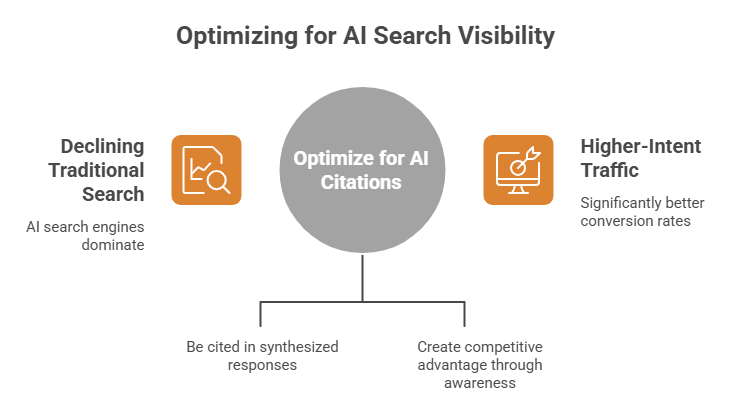
AI search engines like ChatGPT, Perplexity, and Google AI Overviews handle a growing share of queries in 2026. Traditional search volume is declining as users prefer fast, conversational AI tools for research and buying decisions. Brands need to focus on being cited in synthesized responses rather than relying only on ranking.
2. Why Brand Visibility Matters More Than Ever
AI-driven referrals deliver higher-intent traffic and significantly better conversion rates. Only a limited number of brands consistently appear in AI answers. Strong visibility creates a competitive advantage through increased awareness, trust, and long-term market share.
Core Strategies for Generative Engine Optimization (GEO)
Effective GEO combines high-quality digital content development service, technical optimization, and authority building. These strategies help AI systems retrieve, understand, and cite your brand accurately. Consistent application delivers better visibility across major AI platforms.
- Create deep, clear, scannable content optimized for conversational queries.
- Use structured data and schema markup for better entity understanding.
- Maintain content freshness with regular updates and new data.
- Demonstrate E-E-A-T through expert authors and transparent sourcing.
- Build third-party mentions via PR, reviews, and co-citations.
- Ensure fast, accessible site architecture for AI crawlers.
Advanced Tactics to Stand Out in AI Responses
Advanced tactics build on core GEO strategies to significantly increase citation frequency in AI answers. These methods expand your brand’s presence across multiple platforms while improving tracking and measurement. Proper implementation can boost visibility by up to 40%, helping secure stronger, more consistent positions in AI-generated responses.
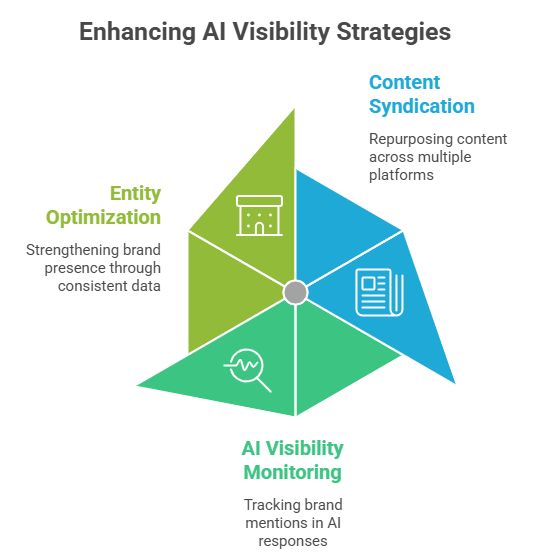
1. Content Syndication and Multi-Platform Presence
Repurpose core content across LinkedIn, Medium, and relevant industry sites while using proper canonical tags. This increases retrieval opportunities and generates valuable co-citations from trusted sources. Optimize video transcripts, engage genuinely in communities, and maintain active profiles for broader AI visibility.
2. Monitoring and Measuring AI Visibility
Use specialized tools to track citations across ChatGPT, Perplexity, and Google AI Overviews. Regularly audit your brand’s appearance in relevant industry queries and monitor performance. Iterate based on data to improve citation rates and drive higher AI referral traffic.
3. Entity Optimization and Knowledge Graph Signals
Strengthen your brand entity through consistent mentions, structured profiles, and clear data across the web. Secure a Wikipedia presence when eligible and interlink all assets effectively. This helps AI systems accurately associate your brand with relevant topics, attributes, and expertise.
Building AI-Ready Content Assets for Better Brand Citations
Best AI search engines prefer content that is easy to understand, verify, and cite. Brands need more than standard blog posts to improve their chances of appearing in AI-generated answers. Creating structured, answer-focused content assets helps AI platforms recognize brand authority and cite the business more accurately.
- Create resource pages that directly answer specific customer questions in a clear and structured format.
- Include FAQs, concise summaries, comparison points, and supporting data to make content easier for AI systems to extract.
- Publish original insights such as surveys, case studies, benchmarks, expert opinions, or industry data.
- Use unique information to strengthen E-E-A-T signals and give AI engines stronger reasons to cite the brand.
- Keep brand facts consistent across service pages, author bios, social profiles, directories, and third-party mentions.
- Align details such as services, pricing, target audience, locations, credentials, and expertise across all content assets.
Common Pitfalls to Avoid
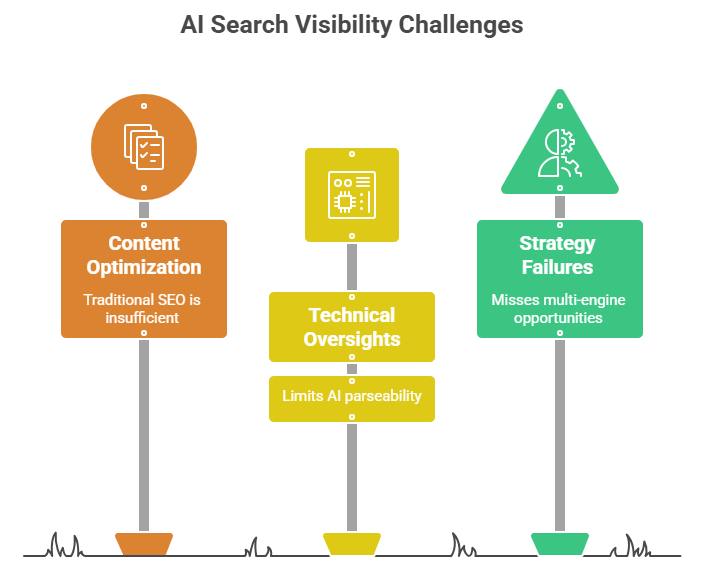
Many brands fail to adapt properly to AI search requirements, resulting in poor visibility. Avoiding these mistakes accelerates successful Generative Engine Optimization and delivers sustainable results. Focus on proven practices to maintain strong performance across AI platforms.
1. Content Optimization Mistakes
Relying solely on traditional SEO keywords without conversational optimization leads to invisibility in AI answers. Publishing thin or generic content gets ignored by AI systems that prioritize depth and clarity. Failing to create scannable, authoritative, and regularly updated content prevents effective citation.
2. Technical and Authority Oversights
Neglecting schema markup, structured data mining service, and fast site architecture limits AI parseability. Ignoring E-E-A-T signals and third-party mentions weakens brand trust in AI responses. Skipping entity optimization and consistent profiles stops AI from accurately recognizing and associating your brand.
3. Strategy and Measurement Failures
Optimizing only for traditional search or a single AI platform misses multi-engine opportunities. Failing to track citations and monitor performance leaves brands flying blind in a fast-evolving space. Not managing reviews and ongoing adjustments results in declining visibility over time.
How virtual assistants help in improving brand visibility in AI search engines
Virtual assistants streamline GEO efforts by handling time-consuming tasks that boost AI citations. They support consistent execution of content strategies, technical optimizations, and monitoring across AI platforms. Businesses can focus on growth while experts manage the details for better results.
- Audit websites and optimize AI-generated content for conversational queries and scannable structure.
- Implement schema markup, entity signals, and regular content freshness updates.
- Manage content syndication, PR outreach, and third-party mention building.
- Track AI citations, perform audits, and analyze performance across platforms.
- Strengthen E-E-A-T signals through author profiles and review management.
- Handle ongoing monitoring and adjustments to avoid common GEO pitfalls.
TaskVirtual: Your Partner in AI Search Visibility

Implementing Generative Engine Optimization strategies while managing daily business operations can feel overwhelming. From creating AI-ready content and technical setups to tracking citations across platforms, the process demands consistent effort and specialized knowledge. TaskVirtual provides dedicated AI virtual assistants who handle your GEO tasks so you can focus on core business growth.
1. Expert Consultation and Review
TaskVirtual’s skilled virtual assistants help in website auditing through website hosting service, optimize content for conversational queries, implement structured data, and build strong E-E-A-T signals. They manage content updates, syndication, entity optimization, and citation tracking to improve your brand’s visibility in AI search engines.
2. Affordable and Flexible Pricing
Hiring a full-time specialist can be expensive, but TaskVirtual makes it cost-effective. With pricing plans starting from just $3.12/hour to $14.99/hour, their services are budget-friendly and accessible to individuals, families, and businesses.
3. Comprehensive GEO Support Solutions
From content optimization and schema implementation to monitoring AI citations and building third-party mentions, TaskVirtual covers it all. Their scalable services adapt to whether you need occasional help or full ongoing GEO management.
4. Ongoing Support and Quality Assurance
TaskVirtual goes beyond one-time tasks by providing continuous updates, performance reports, and proactive adjustments. Their support ensures your brand maintains strong visibility and adapts quickly to changes in AI search engines.
5. Proven Track Record of Excellence
With 364 positive reviews and a 4.7-star rating on trusted VA platforms, TaskVirtual is recognised as a reliable partner worldwide. Clients rely on their expertise to streamline GEO efforts and deliver better AI search results.
FAQ Section
1. What is Generative Engine Optimization (GEO)?
GEO involves optimizing content, structure, and authority signals specifically for AI systems to retrieve, understand, and cite your brand in generated answers, beyond traditional rankings.
2. How quickly can I see results in AI search visibility?
Results vary, but consistent efforts in content updates, schema, and authority building can yield citation improvements within weeks to months, with compounding benefits over time.
3. Does traditional SEO still matter for AI search?
Yes—strong backlinks, topical authority, and technical SEO form the foundation. AI systems build on reliable web signals.
4. Should I create a separate strategy for each AI engine?
Core principles overlap (clarity, authority, structure), but tailor for preferences—e.g., Perplexity loves citations and recency; ChatGPT values depth.
5. How important are reviews for AI visibility?
Highly important. AI factors in review volume, recency, and sentiment as trust signals, especially for local and consumer brands.
6. What role does schema markup play?
It provides explicit structure that helps AI parse facts, entities, and relationships accurately, increasing citation likelihood.
Conclusion
Improving brand visibility in AI search engines in 2026 demands a proactive, multifaceted approach centered on creating exceptional, machine-readable content backed by real authority. By implementing GEO strategies—technical optimization, authoritative content, consistent monitoring, and multi-platform presence—American businesses can secure prime positions in the answers shaping consumer decisions.
Sources
- Statcounter Global Stats (Search Engine Market Share)
- Adobe Digital Insights (AI Traffic Reports)
- Gartner Research (Search Volume Predictions)
- Yext Research (AI Citations Study)
- Various industry reports from Forbes, SE Ranking, Ahrefs, and official platform data (2025-2026)
For more such content, visit our website.
 Siddhartha Basu is a Technical Writer at Task Virtual. He loves online games, e-book reading, and Yoga.