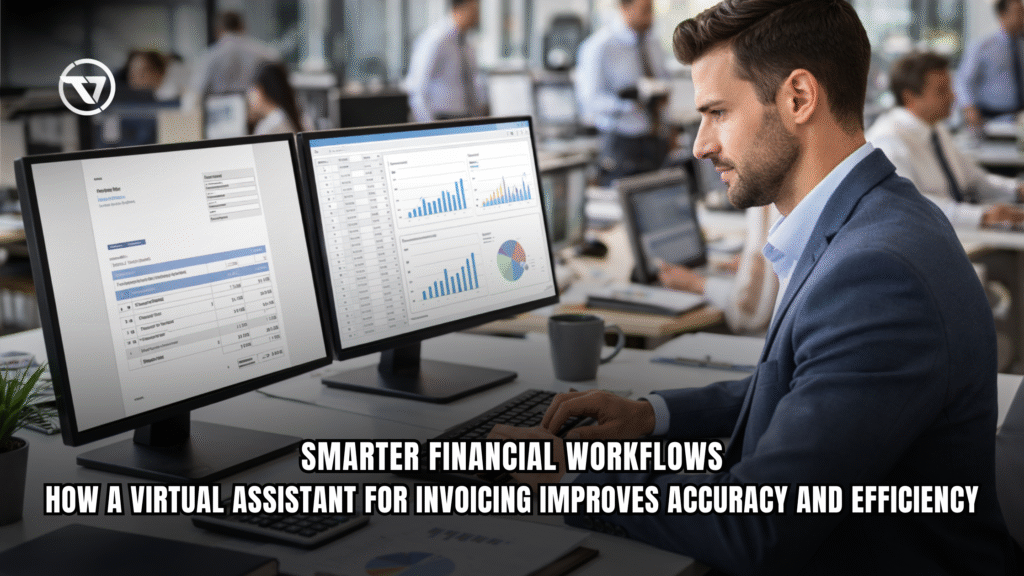
A virtual assistant for invoicing is a remote professional who manages billing, invoice creation, payment tracking, and related financial admin tasks on behalf of a business. These assistants use accounting tools and standardized workflows to ensure invoices are accurate, timely, and properly tracked.
What This Means for Businesses
Hiring a virtual assistant for billing and invoicing helps businesses bring structure to their financial processes. It ensures invoicing tasks are handled consistently and accurately. At the same time, it allows companies to avoid increasing fixed overhead costs.
For small businesses and startups, this typically results in:
- More consistent invoicing cycles ensure bills are generated and sent on time. This helps improve cash flow and financial stability.
- Faster payment collection ensures receivables are cleared in less time. This helps improve cash flow and liquidity.
- Reduced administrative workload decreases the burden of routine tasks. This allows teams to focus on more strategic activities.
- Better visibility into accounts receivable provides clearer insight into pending payments. This helps improve cash flow management and decision-making.
For agencies and accountants, a dedicated invoicing virtual assistant acts as an operational extension of the finance function.
Why Companies Outsource This Task
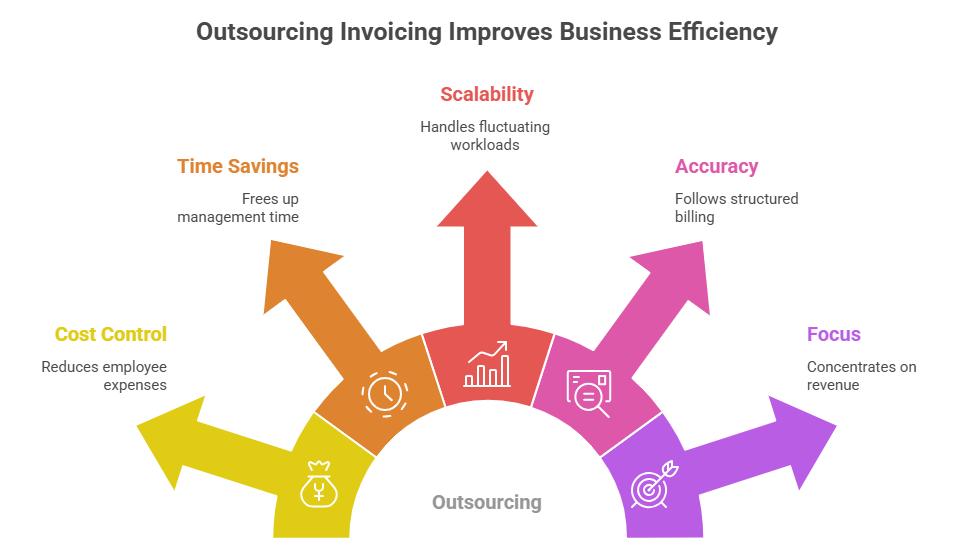
Businesses in the US and UK often outsource invoicing to improve operational efficiency. In fact, around 64% of small businesses report facing cash flow issues due to late payments, which makes efficient invoicing processes critical. Cost pressures and limited internal resources make in-house handling less practical. As a result, companies turn to outsourcing due to a combination of cost and efficiency factors:
1. Cost control
Hiring a full-time accounts receivable employee is expensive. As a result, businesses face higher fixed costs and reduced financial flexibility.
2. Time savings
Founders and managers avoid repetitive administrative work by delegating these tasks. In addition, this allows them to focus on strategic decision-making and growth initiatives. As a result, overall productivity and operational efficiency improve.
3. Scalability
4. Accuracy
Experienced assistants follow structured billing processes to ensure accuracy and consistency. In addition, they apply standardized workflows to minimize errors and delays. As a result, businesses maintain reliable and efficient invoicing operations.
5. Focus
Tasks Virtual Assistants Perform
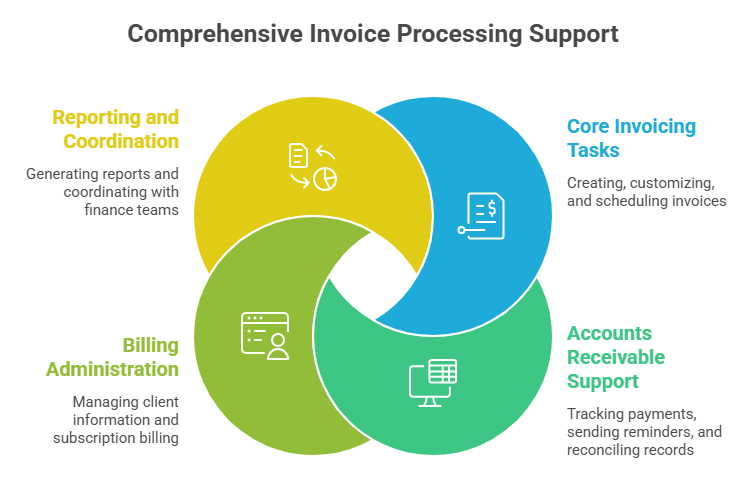
A professional invoice processing virtual assistant supports day-to-day billing operations. They ensure invoices are created, tracked, and managed accurately. Their responsibilities typically include a range of financial admin tasks:
1. Core Invoicing Tasks
A virtual assistant handles the creation and distribution of invoices while ensuring templates are customized to match business requirements. They also manage recurring invoices and maintain structured billing cycles to ensure consistency. This approach ensures that invoicing is timely, standardized, and aligned with operational workflows.
2. Accounts Receivable Support
Virtual assistants actively track outstanding payments and monitor due dates to maintain accurate receivables records. They send timely payment reminders and update records as payments are received. This ensures that businesses maintain clear visibility into cash flow and reduce overdue balances.
3. Billing Administration
They manage client billing information and ensure all subscription-based or recurring billing processes are accurately maintained. Virtual assistants also update pricing details and contract terms as required. This helps maintain consistency and prevents discrepancies in billing data.
4. Reporting and Coordination
Virtual assistants generate detailed invoice reports to provide insights into billing performance and outstanding payments. They coordinate closely with accountants or finance teams to ensure data alignment. Additionally, they maintain organized, audit-ready records for compliance and financial review purposes.
Tools Professional Virtual Assistants Use

A skilled virtual assistant for invoice management relies on a combination of accounting, payment, and automation tools to maintain accuracy and consistency in invoicing workflows. In fact, 91% of finance leaders say automation improves visibility into financial processes, making tool-driven workflows essential for effective invoicing management. These tools help standardize processes, reduce manual errors, and provide real-time visibility into billing and payments.
Common tools used in professional invoicing workflows include:
1. Accounting software (e.g., QuickBooks, Xero)
Teams use these tools for invoice creation, tracking receivables, and generating financial reports. In addition, they ensure accurate financial data management across processes. As a result, businesses maintain better visibility and control over their finances.
2. Payment platforms (e.g., Stripe, PayPal)
They enable seamless payment collection and provide real-time status updates. In addition, they streamline transaction tracking across systems. As a result, businesses improve cash flow visibility and payment efficiency.
4. Spreadsheets (e.g., Google Sheets, Excel)
5. CRM systems (e.g., HubSpot, Zoho)
They store client billing details and ensure accurate invoicing data. In addition, they maintain organized and up-to-date records across systems. As a result, businesses reduce errors and improve billing accuracy.
6. Automation tools (e.g., Zapier)
They connect systems and automate repetitive tasks like invoice sending and reminders. In addition, they streamline workflows to reduce manual effort. As a result, businesses improve efficiency and maintain consistent billing processes.
A virtual assistant for QuickBooks invoicing typically manages invoice generation, reconciles incoming payments, and prepares financial summaries. By integrating these tools, virtual assistants ensure that invoicing processes are efficient, repeatable, and audit-ready.
Step-by-Step Workflow Used by Virtual Assistants
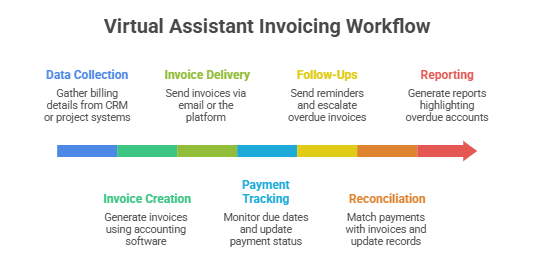
A professional remote invoicing assistant works within a defined operational process. This ensures consistency, accuracy, and timely execution of invoicing tasks. Their approach is typically organized into a structured workflow:
1. Data Collection
The process begins with gathering billing details from CRM systems or project management tools. All client information and pricing terms are carefully verified for accuracy. This ensures that the invoicing process starts with complete and correct data.
2. Invoice Creation
Invoices are generated using accounting software based on verified data inputs. Correct tax rates, payment terms, and pricing structures are applied during this stage. This ensures that invoices are compliant, accurate, and ready for immediate delivery.
3. Invoice Delivery
Once created, invoices are sent through email or relevant invoicing platforms to clients. Each invoice is logged into tracking systems for record-keeping and monitoring. This ensures that all sent invoices are documented and traceable.
4. Payment Tracking
Virtual assistants continuously monitor invoice due dates and payment timelines. Payment statuses are updated regularly within accounting systems. This enables businesses to maintain real-time visibility into receivables.
5. Follow-Ups
Automated or manual reminders are sent to clients for pending payments. Overdue invoices are escalated when necessary to ensure timely collection. This structured follow-up process minimizes delays and improves cash flow.
6. Reconciliation
Payments received are matched against corresponding invoices to ensure accuracy. Accounting records are updated to reflect completed transactions. This ensures financial data remains consistent and error-free.
7. Reporting
Regular reports are generated on a weekly or monthly basis to track invoicing performance. These reports highlight overdue accounts and payment trends. This provides businesses with actionable insights to improve financial operations.
Common Challenges Businesses Face

- Delayed invoicing – This leads to a slower cash inflow, meaning payments are received after a longer period. As a result, it may affect the availability of funds for regular expenses.
- Missed payments – Lack of follow-up can lead to revenue leakage, as potential payments or opportunities may be missed. This results in a loss of income that could have been collected with proper tracking.
- Inconsistent records – This creates issues during audits, as incomplete or unclear records can raise concerns. It may lead to delays or complications in the auditing process.
- Manual errors – Incorrect amounts or duplicate invoices can lead to billing errors and confusion. This may result in disputes or delays in receiving payments.
- Poor visibility – Limited insight into outstanding receivables reduces visibility into pending payments. This can make it harder to manage cash flow effectively.
A virtual assistant for payment tracking addresses these issues through consistent monitoring.
Benefits of Outsourcing to Virtual Assistants
Hiring an invoicing virtual assistant provides clear operational benefits for small businesses. It helps streamline billing processes and improves overall efficiency. These advantages can be summarized as follows:
1. Key Benefits Comparison
| Area | In-House Staff | Virtual Assistant |
|---|---|---|
| Cost | High (salary + benefits) | Lower, flexible pricing |
| Availability | Fixed hours | Scalable, on-demand |
| Setup Time | Long hiring process | Quick onboarding |
| Expertise | May require training | Pre-trained professionals |
| Flexibility | Limited | Highly adaptable |
2. Additional Benefits
- Improved cash flow management ensures better control over incoming and outgoing funds. This helps maintain financial stability and support smooth operations.
- Reduced administrative burden lowers the effort required for routine tasks. This allows teams to focus on more important activities.
- Access to specialized tools and workflows improves efficiency in handling tasks. This helps streamline processes and enhance overall performance.
- Easier scaling during growth periods allows operations to expand without major disruptions. This helps maintain efficiency as demand increases.
A US-based invoicing virtual assistant may also offer timezone alignment and familiarity with local billing practices.
How a Virtual Assistant Company Helps Businesses
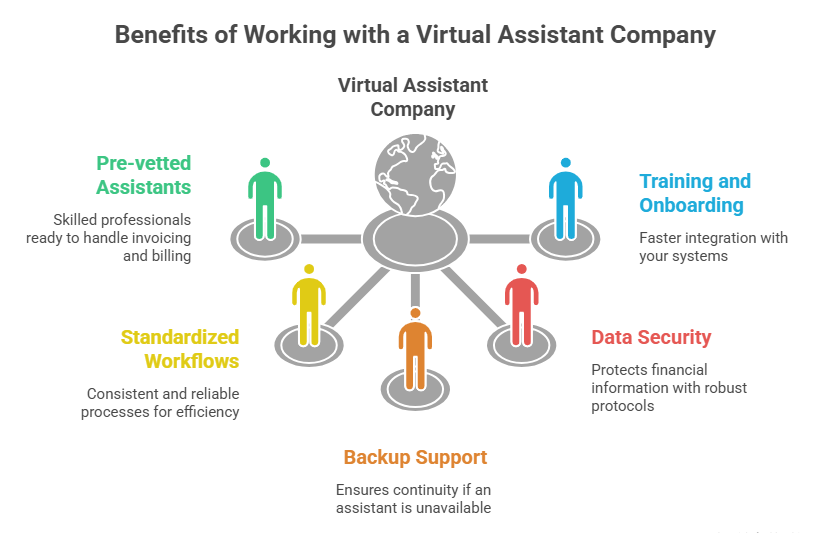
Working with a virtual assistant company provides a more structured approach to outsourcing. It reduces the risks associated with hiring independently and improves reliability. This model offers several operational advantages:
What Companies Provide
- Pre-vetted assistants are skilled in invoicing and billing processes, ensuring accuracy in tasks. This helps reduce errors and maintain smooth operations.
- Standardized workflows use proven systems to ensure consistency in processes. This helps maintain accuracy and improves overall efficiency.
- Backup support ensures continuity of work if an assistant is unavailable. This helps prevent disruptions and keeps operations running smoothly.
- Data security protocols ensure the protection of financial information. This helps safeguard sensitive data and reduce the risk of breaches.
- Training and onboarding enable faster integration with your systems. This helps new team members become productive more quickly.
TaskVirtual: Your Partner for Invoicing Virtual Assistant Services

Managing invoicing internally can quickly become complex as businesses scale—especially when dealing with multiple clients, recurring billing, and payment follow-ups. TaskVirtual provides specialized invoicing virtual assistant services designed to streamline billing operations, improve cash flow, and reduce administrative strain.
1. Expert Consultation and Review
TaskVirtual’s invoicing assistants begin by assessing your current billing workflow. They help structure invoice cycles, standardize templates, and ensure alignment with your accounting tools. This reduces inconsistencies and creates a reliable invoicing system from the outset.
2. Affordable and Flexible Pricing
Hiring in-house billing staff increases fixed costs. TaskVirtual offers a more efficient model, with pricing plans starting from $3.12/hour to $14.99/hour, allowing businesses to scale invoicing support based on workload without long-term commitments.
3. Comprehensive Invoicing Support Solutions
From invoice generation and recurring billing setup to payment tracking and follow-ups, TaskVirtual covers the full invoicing lifecycle. Whether you need a virtual assistant for accounts receivable or ongoing billing support, services are tailored to your operational needs.
4. Ongoing Support and Process Optimization
TaskVirtual assistants continuously monitor invoicing activities, send reminders, and update payment records. They also refine workflows over time to improve turnaround speed and reduce overdue invoices.
5. Proven Track Record of Excellence
With 364 positive reviews and a 4.7-star rating on trusted VA platforms, TaskVirtual has established credibility in delivering reliable virtual assistant services. Businesses rely on their structured approach to maintain accurate and timely invoicing operations.
Conclusion
Invoicing is not just an administrative task—it directly impacts cash flow, client relationships, and financial visibility. For many businesses, managing it internally leads to inefficiencies and lost revenue.
A virtual assistant for invoicing provides a structured, cost-effective solution. By outsourcing billing, payment tracking, and invoice management, businesses can maintain financial discipline without expanding internal teams. For startups, agencies, and small businesses, this approach offers a practical path to operational efficiency and scalability.
Key Takeaways
- A virtual assistant for invoicing manages billing, payment tracking, and accounts receivable tasks remotely.
- Outsourcing reduces costs while improving consistency and accuracy. This supports more efficient and reliable operations.
- Professional assistants use tools like QuickBooks, Xero, and Stripe. This helps ensure efficient financial management and processing.
- Structured workflows ensure invoices are sent, tracked, and reconciled properly. This maintains accuracy and consistency.
- Virtual assistant companies provide trained professionals and reliable systems. This ensures consistent and dependable support.
FAQ Section
1. What does an invoicing virtual assistant do?
They create invoices, track payments, send reminders, and manage accounts receivable processes.
2. How much does an invoicing virtual assistant cost?
Costs vary by region and experience but are typically lower than hiring full-time staff, making them an affordable invoicing virtual assistant option.
3. Can a virtual assistant handle QuickBooks invoicing?
Yes, many assistants specialize in QuickBooks and can manage invoicing, reconciliation, and reporting.
4. Is outsourcing invoicing secure?
Reputable virtual assistant companies implement data security protocols and confidentiality agreements.
5. Who should hire an invoicing virtual assistant?
Small businesses, agencies, startups, and accountants who want to streamline billing and improve cash flow.
 Siddhartha Basu is a Technical Writer at Task Virtual. He loves online games, e-book reading, and Yoga.