
Contents
show
Virtual Assistant vs Chatbot for Real Estate: Key Differences 2026
In the fast-paced U.S. real estate market, buyers expect quick responses while agents handle growing administrative demands. The Virtual Assistant vs Chatbot choice can shape how effectively real estate professionals compete in 2026. Chatbots are useful for answering FAQs and capturing leads, while intelligent virtual assistants can manage personalized client interactions and complex backend tasks.
The virtual assistant vs chatbot debate focuses on matching solutions to business needs. With 28% of real estate businesses already using live chat technology—the highest adoption rate across industries—understanding these differences drives success. This guide covers definitions, capabilities, costs, use cases, and hybrid strategies for agents and brokerages. It delivers actionable insights to generate more deals with less effort.
What Is a Chatbot in Real Estate
Chatbots are automated software programs designed for text-based conversations on websites, messaging apps, and social platforms. In real estate, they use natural language processing to answer common queries about properties, pricing, and neighborhoods. These tools operate continuously without human intervention for basic interactions. They integrate easily into existing digital channels for immediate engagement.
Real estate chatbots qualify prospects quickly and capture contact information during initial visits. They maintain consistent responses across high volumes of inquiries from potential buyers. Advanced versions sync with scheduling tools to book appointments automatically. Their scalability makes them ideal for handling market traffic spikes efficiently.
Core Features of Real Estate Chatbots
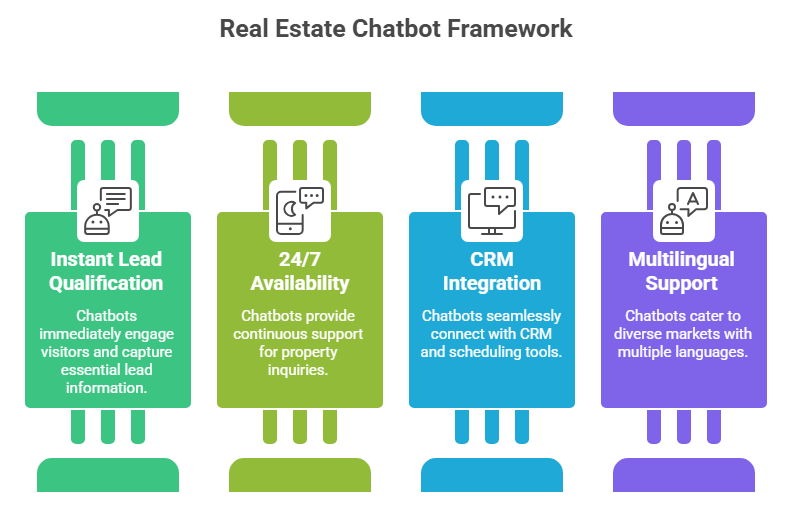
Chatbots serve as essential front-line tools for real estate websites and listings. They engage visitors instantly and guide them through initial property exploration stages. These systems reduce response lag that often causes lost opportunities, with 82% of consumers preferring to interact with a chatbot rather than wait for a live representative.
1. Instant Lead Qualification and Capture
Modern AI chatbots greet website visitors right away and ask qualifying questions about budget, timeline, and location preferences. This immediate engagement addresses speed-to-lead challenges where quick responses dramatically improve conversion rates. They capture contact details seamlessly while providing relevant property suggestions based on user inputs. Agents responding within minutes become far more likely to secure qualified leads compared to slower competitors.
2. 24/7 Availability for Property Inquiries
Chatbots deliver round-the-clock support for property questions without any downtime or fatigue. In real estate, most buyers contact the first agent who responds promptly, regardless of time or day. These tools prevent lost opportunities during evenings, weekends, and holidays. They maintain professional brand messaging consistently across all interactions.
3. Integration with CRM and Scheduling Tools
Leading chatbots connect smoothly with platforms like Follow Up Boss and KVCore for automatic lead routing. They book virtual tours and appointments directly into agent calendars without manual entry. This integration streamlines workflows and reduces administrative errors significantly. Real-time data synchronization keeps all team members updated on prospect status.
4. Multilingual Support and Scalability
Chatbots handle multiple languages to serve diverse U.S. real estate markets effectively. They scale effortlessly during open houses or sudden market shifts without additional staffing costs. These systems manage high traffic volumes while maintaining response quality and speed. Their flexibility supports both small agencies and large brokerages equally well.
Limitations in Complex Real Estate Scenarios

Basic chatbots often struggle with nuanced conversations and multi-step real estate processes that require deeper judgment. They may fail to address emotional buyer concerns or complex negotiation scenarios effectively, with nearly 75% of consumers agreeing that chatbots are unable to handle complex questions.
- They frequently hand off complex queries to human agents without full context.
- Rule-based systems can loop endlessly or provide generic answers on detailed matters.
- Emotional intelligence remains limited compared to human or advanced AI interactions.
- They risk frustrating users during high-stakes decisions like contract reviews.
- Accuracy drops significantly in unique property or financing situations.
What Is a Virtual Assistant in Real Estate
A virtual assistant, especially AI-powered versions, functions as a remote team member handling both customer-facing and backend operations. Human VAs are trained professionals, while AI VAs combine generative intelligence with workflow automation for broader support. These tools go beyond conversation to execute complete tasks independently. They adapt to specific brokerage needs through ongoing learning and customization.
Real estate virtual assistants manage administrative burdens that consume significant portions of agent time. They nurture client relationships through personalized communications and market updates. These solutions coordinate transactions while maintaining compliance with industry standards. Their comprehensive capabilities free agents to focus on closings and relationship building.
Key Capabilities of Real Estate Virtual Assistants
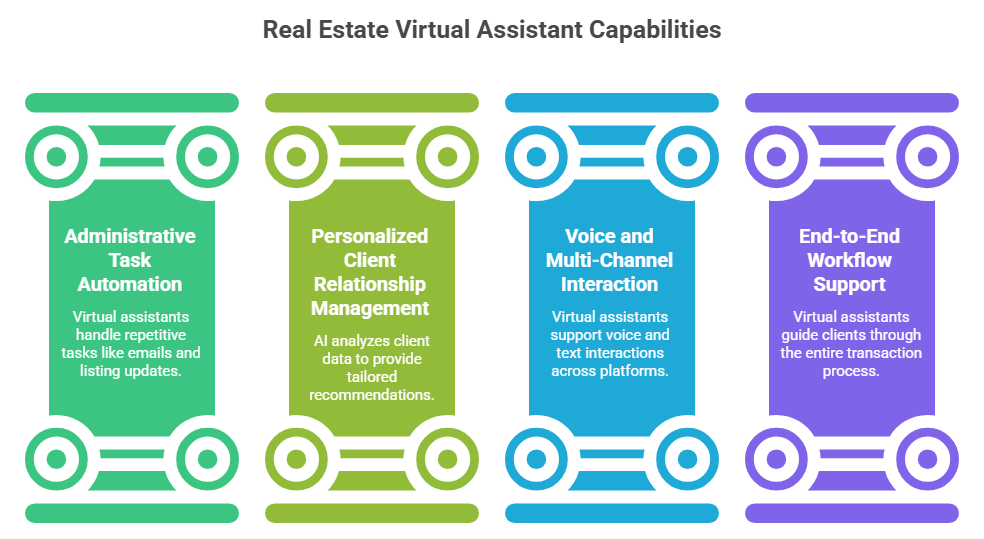
Intelligent virtual assistants provide deeper support than basic automation tools in real estate operations. They combine conversational abilities with task execution across multiple business areas. These systems learn from interactions to improve performance over time.
1. Administrative Task Automation
Virtual assistants handle emails, transaction coordination, listing updates, and MLS entries efficiently. NAR reports indicate agents spend substantial hours weekly on these repetitive administrative duties. They reduce workload by managing follow-ups and document preparation automatically. This delegation allows professionals to reclaim 10-15 hours or more per week for revenue-generating activities.
2. Personalized Client Relationship Management
AI virtual assistants analyze client data to deliver tailored property recommendations and market reports. They maintain long-term nurturing sequences based on individual preferences and behavior. These tools track client journeys and send timely updates throughout the buying or selling process. Personalized engagement builds stronger trust and increases referral potential significantly.
3. Voice and Multi-Channel Interaction
Unlike text-only chatbots, intelligent virtual assistants support voice interactions across phones and smart devices. They maintain seamless conversations across email, SMS, and messaging platforms simultaneously. This multi-channel approach ensures consistent client experiences regardless of contact method. Advanced systems switch channels naturally while preserving conversation context.
4. End-to-End Workflow Support
Virtual assistants guide clients from the initial lead generation from Facebook through the full transaction closing processes. They track deadlines, coordinate with inspectors and appraisers, and prepare necessary documentation. These tools monitor compliance requirements and flag potential issues proactively. Comprehensive support minimizes errors and accelerates overall deal completion times.
Comparison Between Virtual Assistant And Chatbot
The virtual assistant vs chatbot decision depends on specific business priorities, budget, and operational complexity in real estate. Both tools offer distinct advantages that can complement each other when implemented strategically.
- Chatbots offer lower costs, often free or under $100 monthly, with fast ROI.
- Virtual assistants cost more but provide broader automation and personalization.
- Chatbots deliver instant responses while virtual assistants add deeper follow-through.
- Virtual assistants provide superior emotional intelligence for complex situations.
- Virtual assistants manage wider ecosystems beyond basic CRM integration.
- Hybrid models combine both for maximum front-end and back-end efficiency.
Real Estate Use Cases: When to Choose a Chatbot vs. a Virtual Assistant
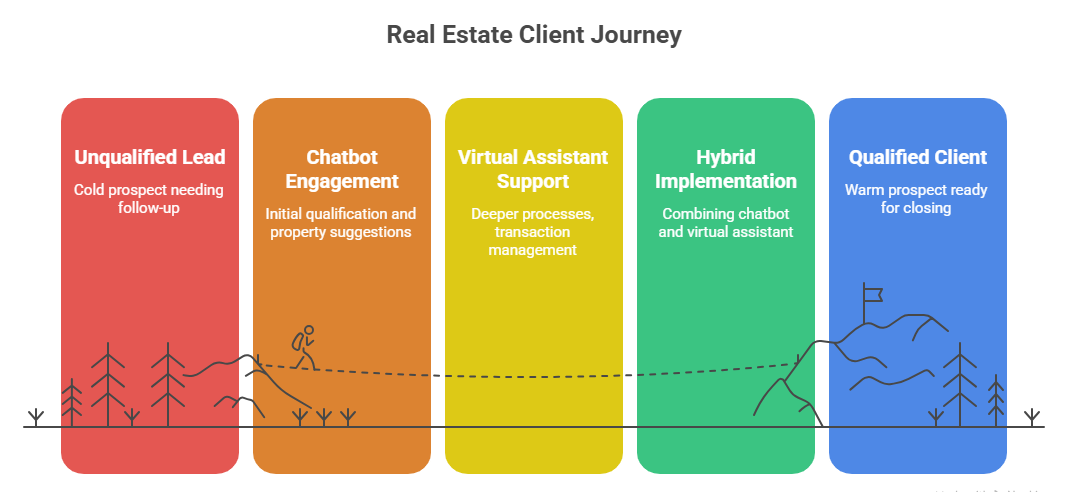
Real estate professionals benefit from selecting the right tool for each stage of the client journey and business operation. Chatbots suit high-volume initial interactions while virtual assistants handle deeper ongoing processes. Hybrid implementations often produce the best overall results for growth.
1. Lead Generation and Qualification
Chatbots engage website visitors immediately and qualify leads through targeted qualification questions. They capture essential contact information while suggesting matching properties based on stated preferences. This front-end automation feeds warm prospects directly into agent pipelines efficiently. Quick qualification prevents valuable leads from going cold before human follow-up occurs.
2. Property Search and Virtual Tours
Chatbots guide users through search filters and schedule self-guided or agent-led property tours automatically. They provide instant details on listings, amenities, and neighborhood information during exploration. Virtual assistants follow up after tours with personalized comparison reports for serious prospects. This combination streamlines the property discovery process from initial search to detailed evaluation.
3. Client Onboarding and Transaction Management
Intelligent virtual assistants collect required documents and track transaction deadlines effectively throughout the process. They coordinate with inspectors, appraisers, and other vendors while maintaining clear communication. These tools reduce errors by monitoring compliance and flagging potential issues early. Comprehensive management accelerates closings and improves overall client satisfaction levels.
4. Marketing and Follow-Up Campaigns
Chatbots handle initial drip email sequences and basic nurturing for new leads automatically. Real estate marketing virtual assistants create optimized personalized content based on client behavior and preferences. They adjust campaign strategies according to engagement metrics and market changes. Targeted follow-up maintains momentum and converts more prospects into closed transactions.
5. After-Hours and Crisis Response
Chatbots deliver immediate answers to routine inquiries during evenings, weekends, and holidays. Virtual assistants manage urgent maintenance requests and client emergencies with appropriate escalation. These tools ensure continuous support without requiring constant human availability. Reliable response systems build client confidence and protect property management operations.
Pros and Cons for Real Estate Businesses
Real estate businesses must weigh the strengths and limitations of chatbots and virtual assistants against their specific operational needs and growth goals. Strategic selection or hybrid use maximizes benefits while minimizing drawbacks.
- Chatbots offer cost-effective scalability and instant 24/7 availability for routine inquiries.
- Virtual assistants excel at complex tasks and significant administrative burden reduction.
- Chatbots provide consistent messaging but lack depth for nuanced client situations.
- Virtual assistants build stronger relationships, though they require higher investment.
- Hybrid models combine chatbot speed with virtual assistant capabilities for optimal results.
- Both tools improve lead conversion and productivity when implemented with proper training and oversight.
Implementation Guide for 2026 Success
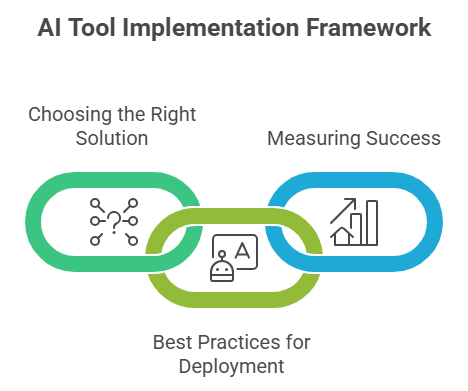
Successful AI tool adoption in real estate requires careful planning, clear objectives, and ongoing performance monitoring. Brokerages and agents should align technology choices with current pain points and future scaling needs. Proper implementation turns these tools into powerful competitive advantages.
1. Choosing the Right Solution
High-traffic website businesses should begin with robust chatbots for quick lead capture wins. Heavy administrative workloads benefit more from virtual assistant support for task delegation. Budgets under $200 monthly work best with chatbot-first approaches initially. Growing operations can layer virtual assistants as volume and complexity increase over time.
2. Best Practices for Deployment
Train all AI tools for real estate thoroughly on specific listings, local market data, and unique brand voice for accurate performance. Ensure smooth human handoff protocols that include full conversation context for seamless experiences. Maintain strict compliance with data privacy regulations and real estate legal requirements throughout operations. Monitor key metrics regularly, including conversion rates, response times, and customer satisfaction scores.
3. Measuring Success
Track ROI through increases in closed deals, reduced administrative hours, and improved client retention rates over time. Monitor lead conversion improvements and time savings achieved across different business functions. Analyze customer satisfaction scores and feedback from both clients and internal team members regularly. Adjust strategies based on performance data to optimize results continuously as the market evolves.
How Virtual Assistants Empower Businesses With Chatbots
Virtual assistants and chatbots work together to create powerful systems that enhance real estate operations like real estate administrative assistants beyond individual capabilities. Intelligent VAs oversee chatbot performance, refine responses, and handle escalated interactions for better outcomes.
- Chatbots capture initial leads while virtual assistants provide personalized follow-up and nurturing.
- VAs analyze chatbot data to improve qualification questions and conversation flows.
- Virtual assistants manage complex backend tasks after chatbots handle front-end engagement.
- They ensure consistent brand voice across chatbot interactions and human-like escalations.
- VAs monitor performance metrics and optimize chatbot scripts for higher conversion rates.
- This combination delivers 24/7 availability with deeper relationship building and efficiency.
TaskVirtual: Your Partner in Real Estate Virtual Assistance

Managing leads, transactions, listings, and client communications can overwhelm real estate agents and brokerages. From following up with prospects to coordinating closings and updating MLS entries, these tasks consume valuable time that could be spent on high-value deals. TaskVirtual provides expert real estate virtual assistants that simplify operations, boost lead conversion, and help scale your business efficiently.
1. Expert Real Estate Consultation and Support
TaskVirtual’s skilled virtual assistants help select the right tools, qualify leads, manage listings, and coordinate transactions. They handle personalized client nurturing, market report creation, and follow-up sequences tailored to your brokerage needs.
2. Affordable and Flexible Pricing
Hiring a full-time personal assistant can be expensive, but TaskVirtual makes it cost-effective. With pricing plans starting from just $3.12/hour to $14.99/hour, their services are budget-friendly and accessible to solo agents, small teams, and large brokerages.
3. Comprehensive Real Estate Support Solutions
From lead qualification and appointment scheduling to transaction management, document formatting by virtual assistants, and marketing follow-ups, TaskVirtual covers it all. Their scalable services adapt to whether you need occasional help or full-time operational support.
4. Ongoing Support and Quality Assurance
TaskVirtual goes beyond basic tasks by offering proactive updates, deadline tracking, and consistent client communication. Their dedicated support ensures smooth operations and timely responses without added stress.
5. Proven Track Record of Excellence
With 364 positive reviews and a 4.7-star rating on trusted VA platforms, TaskVirtual is recognised as a reliable partner worldwide. Clients count on their expertise to streamline real estate operations and drive business growth.
FAQ Section
1. What’s the main difference between a virtual assistant and a chatbot?
Chatbots focus on automated text conversations for simple queries and lead capture. Virtual assistants (especially AI ones) handle broader tasks, including complex workflows, personalization, and administrative support.
2. Can chatbots replace real estate agents?
No. Chatbots augment by handling routine inquiries (up to 80% of questions), freeing agents for relationship-building and closings.
3. How much do real estate chatbots or VAs cost?
Chatbots: Often $0–$500/month. Human VAs: $500–$2,000+/month part/full-time. AI VAs: Mid-range hybrid pricing. ROI typically comes via more leads and time savings.
4. Which is better for small brokerages or solo agents?
Start with an AI chatbot for quick wins on leads and availability. Add VA support as you scale admin needs.
5. Do clients prefer chatbots or human virtual assistants?
Most appreciate instant chatbot responses for basics but want human escalation for important decisions. 87% of consumers prefer bots for quick issues.
6. How do I ensure AI tools comply with real estate laws?
Use platforms with built-in compliance features, disclose AI use when required, and maintain human oversight for advice/contracts. Consult legal experts for disclosures.
Conclusion
The virtual assistant vs chatbot decision for real estate comes down to your goals: chatbots deliver speed and scale for front-end engagement, while virtual assistants provide depth and efficiency for operations and relationships. The smartest approach in 2026 is often a hybrid—leveraging both to create a responsive, client-centric machine that wins more listings and closes more deals.
Don’t let competitors capture your leads with faster tech. Evaluate your current pain points (response times, admin overload, lead nurturing), pilot a solution aligned with your budget, and measure results. The agents and brokerages embracing these tools today are the ones dominating tomorrow’s market.
Sources
- Master of Code Chatbot Statistics (various industry reports)
- Business Research Insights: Real Estate VA Market
- National Association of Realtors (NAR) reports and profiles
- McKinsey Global Institute AI productivity studies
- JLL Research on real estate tech
- LocaliQ and other aggregated industry analyses
- Statista and Grand View Research market forecasts
- Harvard Business Review and InsideSales lead response studies
For more such content, visit our website.
 Siddhartha Basu is a Technical Writer at Task Virtual. He loves online games, e-book reading, and Yoga.





Great analysis. Chatbots are excellent for that first line of defense, but handling complex backend tasks like MLS updates and transaction coordination still really requires a human eye. Thanks for the insights!