
An online business virtual assistant becomes valuable. Instead of hiring full-time in-house staff, companies can outsource operational tasks to a remote virtual assistant for online business operations. These professionals provide structured support across administrative, marketing, and technical workflows. For startups, agencies, e-commerce stores, and digital entrepreneurs, this approach provides a practical way to maintain efficiency without increasing overhead.
What This Means for Businesses
An online business support virtual assistant becomes an integral part of a company’s operational workflow by managing recurring tasks that keep daily activities running smoothly. Businesses rely on a virtual assistant for online business management to handle essential functions across administrative, e-commerce, marketing, and customer communication areas. As a result, companies commonly hire virtual assistants to assist with:
- Administrative processes ensure smooth and organized day-to-day business operations.
- E-commerce operations manage online store activities and order workflows.
- Website updates keep content accurate and functionality up to date.
- Marketing support assists with campaigns and promotional activities.
- Customer communication handles inquiries and maintains client interactions.
For example:
- A virtual assistant for Shopify business operations may manage product uploads, monitor orders, update inventory, and respond to customer inquiries.
- Similarly, a virtual assistant for digital business operations may help manage email campaigns, update landing pages, or coordinate project management systems.
Why Companies Outsource This Task
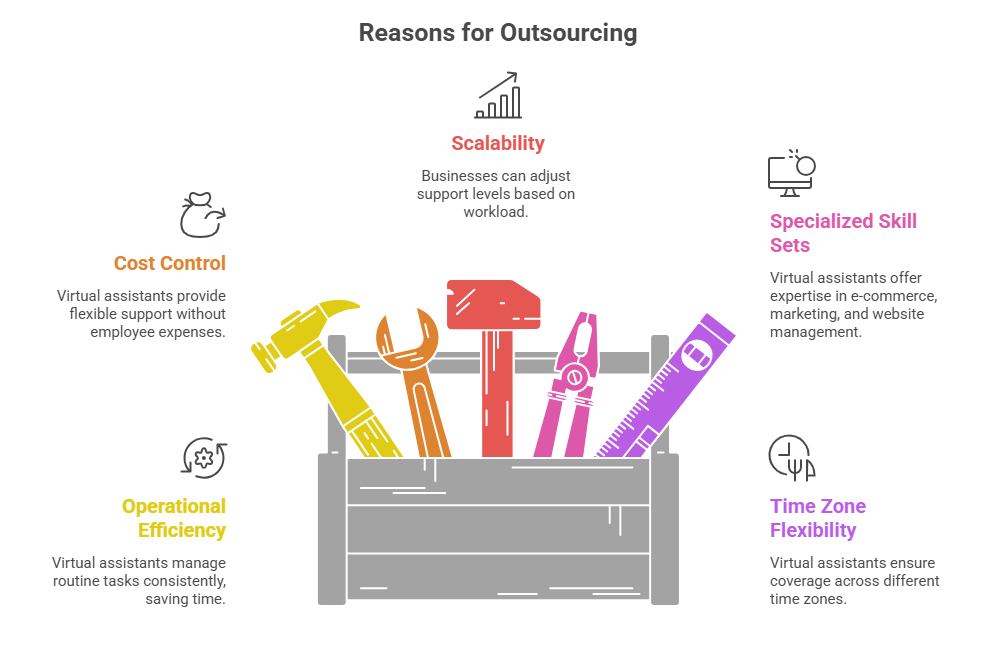
Businesses outsource operational tasks for several practical reasons to improve efficiency and maintain smoother day-to-day operations. By delegating routine and time-consuming work, companies can focus more on strategic priorities such as growth, product development, and client relationships. This approach also enables organizations to optimize resources while maintaining flexibility in managing workloads.
1. Operational Efficiency
Routine tasks consume significant time and can slow down productivity if not managed consistently. A virtual assistant for online marketing or administrative work can handle these tasks efficiently, ensuring smooth daily operations. This allows teams to focus more on strategic and growth-related activities.
2. Cost Control
Hiring full-time employees involves costs such as salaries, benefits, and infrastructure. An affordable virtual assistant for an online business provides flexible support without these long-term expenses. This helps businesses manage budgets more effectively while maintaining operations.
3. Scalability
Workloads often fluctuate based on business needs, campaigns, or growth stages. Virtual assistants allow businesses to scale support up or down as required. This flexibility helps manage operations without overcommitting to permanent staff.
4. Specialized Skill Sets
Professional online virtual assistant services include specialists in areas like e-commerce, marketing, and website management. Businesses can access these skills without additional hiring or training. This ensures tasks are completed efficiently and accurately.
5. Time Zone Flexibility
Businesses operating globally need support beyond standard working hours. Many companies use US-based virtual assistants or global teams to ensure continuous coverage. This helps maintain consistent customer support and operational flow across time zones.
Tasks Virtual Assistants Perform
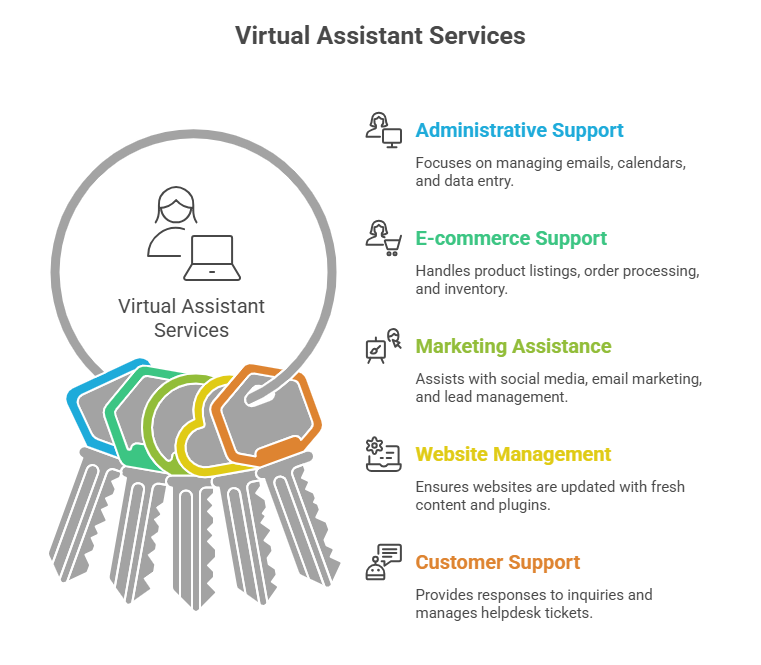
A virtual assistant for internet business operations handles a wide range of tasks depending on the business model. From administrative support and e-commerce management to marketing assistance and customer service, virtual assistants help businesses manage routine operations efficiently. According to industry research, 37% of small businesses outsource at least one business process to improve efficiency and reduce operational workload.
1. Administrative Support
An online business administrative virtual assistant manages essential tasks such as email inbox handling, calendar scheduling, data entry and CRM updates, document formatting, and report preparation. These activities help maintain organized workflows and ensure that daily operations run efficiently without delays.
2. E-commerce Support
A virtual assistant for e-commerce business operations handles product listing updates, order processing, inventory monitoring, and supplier coordination. This support ensures that online store operations remain accurate, up to date, and capable of handling customer demand effectively.
3. Marketing Assistance
Many businesses hire a virtual assistant for online marketing tasks to support activities like social media scheduling, email marketing setup, basic graphic creation, and lead list management. This assistance helps maintain consistent marketing efforts and supports overall campaign execution.
4. Website Management
A virtual assistant for website management is responsible for content uploads, blog formatting, image optimization, and plugin updates. These tasks ensure the website remains updated, functional, and aligned with current business content and marketing needs.
5. Customer Support
Virtual assistants handle customer support tasks such as responding to inquiries, managing helpdesk tickets, and processing refunds or returns. This ensures timely communication with customers and helps maintain a reliable and professional service experience.
Tools Professional Virtual Assistants Use
| Tool Category | Common Tools | Purpose |
|---|---|---|
| Project Management | Trello, Asana, ClickUp | Task tracking and workflow organization |
| Communication | Slack, Microsoft Teams | Team collaboration |
| E-commerce Platforms | Shopify, WooCommerce | Store management |
| CRM Systems | HubSpot, Zoho CRM | Customer relationship management |
| Marketing Tools | Mailchimp, HubSpot Marketing | Email campaigns |
| Website Platforms | WordPress, Webflow | Website content management |
| File Sharing | Google Drive, Dropbox | Document management |
These tools enable a dedicated online business virtual assistant to integrate seamlessly into a company’s existing operational structure and workflows. By using standardized platforms for communication, task management, and data handling, assistants can align with internal processes efficiently. This structured integration helps maintain consistency, improves collaboration, and ensure operational continuity across teams.
Step-by-Step Workflow Used by Virtual Assistants

Professional virtual assistants typically follow structured workflows to manage online business tasks efficiently. These workflows help organize task assignments, track progress, and maintain consistency across administrative, marketing, and ecommerce operations. Studies show that teams using formal project management and workflow systems complete projects successfully 2.5 times more often than those without structured processes.
Step 1: Task Intake
Businesses assign tasks through project management tools or shared task boards, ensuring clear visibility and structured allocation of responsibilities. These tasks may include updating product listings, scheduling marketing campaigns, and managing customer queries, allowing the assistant to clearly understand operational requirements and expectations.
Step 2: Task Prioritization
The assistant categorizes tasks based on urgency and importance to maintain an organized and efficient workflow. Daily priorities often include handling customer support tickets, coordinating order fulfillment, and responding to emails, ensuring that critical and time-sensitive activities are addressed without delays.
Step 3: Execution
The assistant completes assigned tasks using the company’s operational tools and established systems. This may involve uploading blog content to WordPress, updating product descriptions in Shopify, and scheduling social media posts, ensuring consistency and accuracy across business operations.
Step 4: Progress Reporting
Assistants regularly update task statuses within project management systems and communicate progress to managers or team members. This helps maintain transparency, keeps workflows aligned, and allows businesses to monitor performance and make adjustments when needed.
Step 5: Optimization
Over time, virtual assistants streamline repetitive workflows by implementing templates, automation, and standardized procedures. This continuous improvement process enhances efficiency, reduces manual workload, and supports long-term operational stability.
Common Challenges Businesses Face
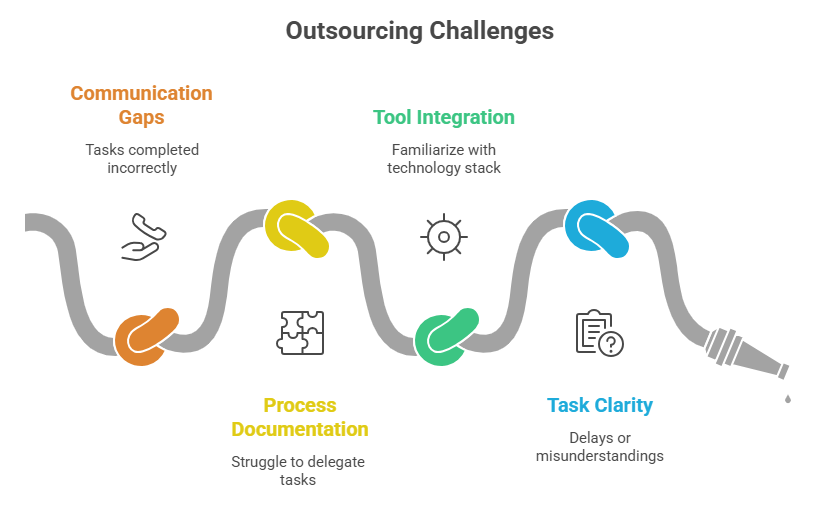
While outsourcing offers several operational and cost advantages, companies may still encounter certain challenges during implementation. These challenges often arise from communication gaps, unclear processes, or difficulties in adapting to remote collaboration. Addressing these factors with proper planning and structured workflows helps ensure smoother and more effective outsourcing outcomes.
1. Communication Gaps
Clear instructions and well-documented workflows are essential to ensure tasks are completed accurately and consistently. Without proper communication, misunderstandings can arise, leading to delays, errors, or misaligned expectations between teams and virtual assistants.
2. Process Documentation
Businesses without clearly defined processes may initially find it difficult to delegate tasks effectively. Proper documentation provides step-by-step guidance, helping virtual assistants understand requirements and perform tasks with greater consistency and efficiency.
3. Tool Integration
New assistants need time to become familiar with the company’s technology stack, including project management, communication, and operational tools. With proper onboarding and access to guidelines, they can integrate more smoothly into existing workflows and improve productivity.
4. Task Clarity
Ambiguous or unclear task assignments can result in confusion, delays, or repeated work. Providing detailed instructions, clear objectives, and expected outcomes helps virtual assistants complete tasks more accurately and with fewer revisions. Companies that maintain clear documentation, structured communication, and defined workflows typically experience smoother collaboration and more effective outsourcing results.
Benefits of Outsourcing to Virtual Assistants
| Business Area | Without Virtual Assistant | With Virtual Assistant |
|---|---|---|
| Task Management | The owner handles everything | Tasks delegated and organized |
| Operational Efficiency | Slower execution | Consistent task completion |
| Cost Structure | Full-time staff expenses | Flexible service cost |
| Growth Focus | Limited time for strategy | Leadership focuses on growth |
| Scalability | Difficult to scale the team | Support increases with demand |
Another major factor influencing the decision to outsource is cost, particularly for businesses aiming to manage expenses effectively. The cost of an online business virtual assistant typically varies based on experience level, specialization, and working hours required. For small companies, outsourcing serves as a cost-efficient alternative to hiring and maintaining full-time in-house employees.
How a Virtual Assistant Company Helps Businesses

A professional virtual assistant company simplifies the outsourcing process by providing structured onboarding and clearly defined workflows. It helps businesses identify their requirements and matches them with assistants who have relevant skills and experience. This organized approach ensures smoother integration, better task management, and more efficient operational support.
1. Structured Onboarding
Virtual assistant companies provide structured onboarding processes that help businesses clearly define tasks, workflows, and expectations from the beginning. This ensures that assistants understand operational requirements and can start contributing effectively with minimal disruption.
2. Skill Matching
They match businesses with assistants who have relevant expertise in areas such as e-commerce operations, marketing support, and administrative management. This targeted matching ensures that tasks are handled by individuals with the appropriate skills and experience.
3. Workflow Integration
Assistants are trained to integrate into the company’s existing systems, tools, and processes with minimal disruption. They follow established workflows and adapt to internal procedures, ensuring consistency across operational functions and smoother overall operations.
4. Performance Monitoring
Many virtual assistant providers track productivity, work quality, and task completion through structured systems to ensure consistent performance. This allows businesses to maintain accountability, monitor progress effectively, and uphold operational standards across tasks.
5. Scalability Support
Businesses can increase support hours or add specialized assistants as their operational needs evolve. For example, a virtual assistant for small online business operations may initially handle administrative tasks but later expand into marketing and customer support roles as the business grows.
TaskVirtual: Your Partner in Online Business Support

Managing an online business often involves handling multiple operational tasks simultaneously. From managing e-commerce stores and customer communication to updating websites and supporting marketing campaigns, these responsibilities can quickly become overwhelming for small teams and entrepreneurs. TaskVirtual provides professional online business virtual assistant services that help companies streamline operations, maintain productivity, and focus on business growth.
1. Expert Online Business Support
TaskVirtual’s experienced virtual assistants help businesses manage daily operational workflows efficiently. They assist with tasks such as e-commerce product updates, email management, customer support, website content uploads, and marketing coordination. Their structured approach ensures that online business operations run smoothly without requiring constant oversight.
2. Affordable and Flexible Pricing
Hiring in-house operational staff can be costly, especially for startups and small online businesses. TaskVirtual offers cost-effective solutions with pricing plans starting from $3.12/hour to $14.99/hour, allowing businesses to access professional support without long-term hiring commitments.
3. Comprehensive Online Business Assistance
TaskVirtual provides support across multiple operational areas. Their virtual assistants help with administrative management, Shopify and ecommerce store updates, CRM data management, marketing support tasks, and website maintenance. These services can scale depending on business needs, whether companies require occasional assistance or a dedicated online business virtual assistant.
4. Consistent Operational Support
TaskVirtual focuses on maintaining workflow consistency by integrating with the client’s existing tools and processes. Their assistants coordinate through project management systems, provide task progress updates, and ensure deadlines are met. This structured approach helps businesses maintain operational continuity.
5. Trusted Virtual Assistant Provider
TaskVirtual has established itself as a reliable outsourcing partner for online businesses worldwide. With 364 positive reviews and a 4.7-star rating on trusted VA platforms, the company is recognized for delivering dependable and scalable virtual assistant support to entrepreneurs, agencies, and growing digital businesses.
Conclusion
An online business virtual assistant provides structured operational support for digital businesses, e-commerce stores, and agencies. By outsourcing administrative tasks, website management, customer service, and marketing assistance, companies can maintain efficient workflows without expanding internal teams. For many startups and growing businesses, hiring a remote virtual assistant for online business operations is a practical step toward improving productivity while controlling operational costs. As online businesses continue to grow, virtual assistants have become a key component of modern remote operational teams.
Key Takeaways
-
An online business virtual assistant supports administrative, marketing, ecommerce, and operational tasks remotely.
-
Businesses outsource to improve efficiency, reduce costs, and scale operations.
-
Virtual assistants commonly use tools like Trello, Slack, Shopify, and WordPress.
-
Structured workflows help virtual assistants manage tasks effectively.
-
Outsourcing operational tasks allows businesses to focus on strategy and growth.
FAQ Section
1. What does an online business virtual assistant do?
An online business virtual assistant handles administrative work, marketing support, customer service, website updates, and e-commerce management tasks for digital businesses.
2. How much does an online business virtual assistant cost?
Costs vary depending on experience and service scope. Businesses typically pay hourly or through monthly service packages.
3. Can virtual assistants manage e-commerce stores?
Yes. A virtual assistant for an e-commerce business can manage product listings, inventory updates, customer inquiries, and order coordination.
4. Are virtual assistants suitable for small online businesses?
Yes. A virtual assistant for small online business operations helps entrepreneurs manage tasks without hiring full-time employees.
5. What tools do virtual assistants use?
Common tools include project management platforms (Trello, Asana), communication tools (Slack), CRM systems, and e-commerce platforms such as Shopify.
 Siddhartha Basu is a Technical Writer at Task Virtual. He loves online games, e-book reading, and Yoga.