Contents
show
Why Dental Virtual Assistants Are The Key to Efficient Dental Workflows
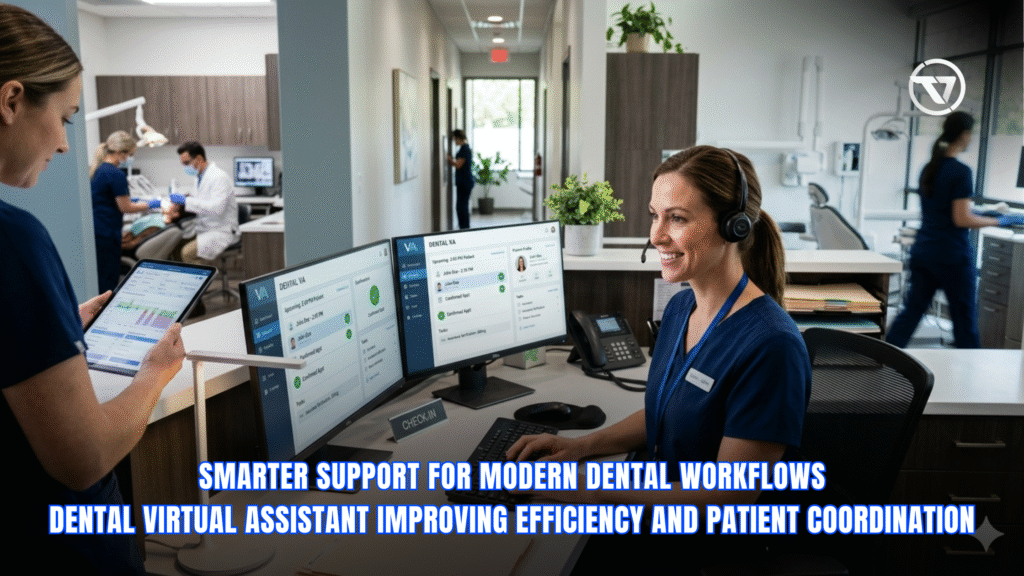
A dental virtual assistant is a remote professional who handles administrative, operational, and patient communication tasks for dental practices. They support clinics by managing workflows such as scheduling, billing coordination, and patient follow-ups without being physically present in the office.
Dental practices in the US and UK face increasing operational pressure—staff shortages, rising labor costs, and growing patient expectations for responsiveness. In fact, nearly 95% of dentists report difficulty recruiting staff, highlighting how widespread the workforce challenge has become. Front desk teams often become overwhelmed with calls, appointment management, and insurance coordination, which can directly impact patient experience and revenue. To address these challenges, many clinics are turning to a virtual assistant for dental office operations. By outsourcing repetitive and time-consuming tasks, practices can streamline workflows while maintaining consistent service levels.
What This Means for Businesses
A dental office virtual assistant introduces a hybrid operational model where front-office responsibilities are shared between in-house staff and remote professionals, allowing practices to operate more flexibly. This approach reduces dependency on physical staffing, improves appointment handling capacity, extends service hours without increasing overhead, and enables teams to focus more on patient care rather than administrative tasks. It is particularly beneficial for multi-location dental practices, startup clinics with limited staff, and high-volume practices that manage frequent patient interactions.
Why Companies Outsource This Task
Outsourcing to a remote dental virtual assistant is primarily driven by the need to improve operational efficiency. It also helps dental practices manage and reduce overall administrative costs without compromising service quality, making it a practical solution for growing clinics. By combining efficiency with cost optimization, practices can maintain consistent workflows while scaling their operations more effectively, and those considering this approach can easily get in touch with a service provider to explore how it fits their needs.
Key reasons include:
- Staffing shortages make it increasingly difficult to hire trained dental front desk staff.
- Managing costs becomes challenging as salaries, benefits, and office space expenses continue to rise.
- Remote assistants allow practices to scale operations up or down based on workload demands.
- Standardized processes help maintain operational consistency and reduce the risk of human error.
- Time zone differences enable practices to offer extended support hours and improve availability.
Tasks Virtual Assistants Perform
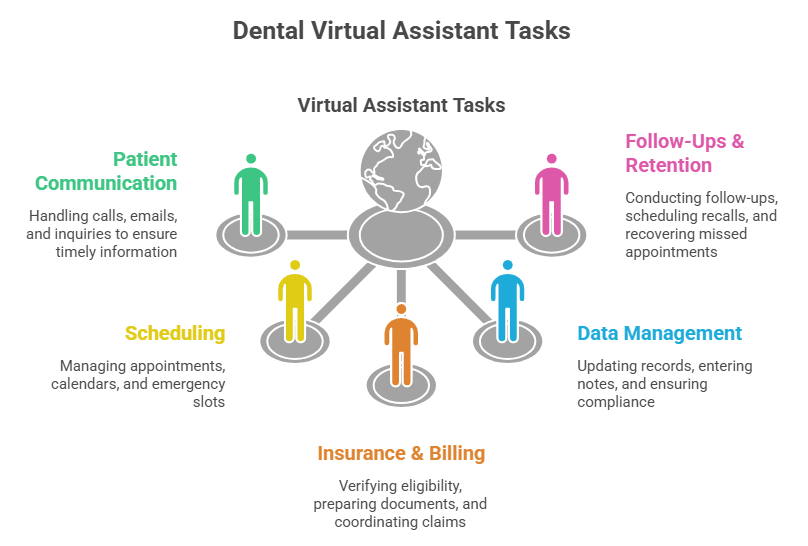
A dental administrative virtual assistant supports the day-to-day operations of a dental practice by handling essential non-clinical tasks that keep workflows running smoothly. Studies show that administrative tasks can consume up to 30% of a healthcare professional’s time, limiting their ability to focus on patient care. They act as an extension of the front desk, managing patient communication, scheduling, and coordination with insurance providers to ensure consistent service delivery. By taking over repetitive administrative responsibilities, they allow in-house teams to focus more on patient care and clinical efficiency.
1. Patient Communication
Dental virtual assistants manage patient communication by handling inbound calls, responding to emails, and addressing online inquiries promptly. They ensure that patients receive timely and accurate information, improving overall responsiveness. They also send appointment reminders via SMS or email to reduce no-shows and maintain schedule consistency.
2. Scheduling & Calendar Management
Virtual assistants handle scheduling by booking, rescheduling, and canceling appointments based on patient needs and provider availability. They coordinate calendars efficiently to avoid overlaps and optimize daily schedules. They also manage emergency appointment slots to ensure urgent cases are accommodated without disrupting operations.
3. Insurance & Billing Support
A dental virtual assistant assists with insurance and billing tasks by verifying patient eligibility before appointments. They prepare necessary billing documentation to ensure accuracy and compliance. They also coordinate with insurance providers to streamline claims and reduce administrative delays.
4. Data Management
Virtual assistants maintain accurate patient records by regularly updating information in practice management systems. They enter treatment notes and ensure all data is properly documented for future reference. They also manage administrative tasks to help practices meet regulatory requirements.
5. Follow-Ups & Retention
Dental virtual assistants support patient retention by conducting post-treatment follow-ups to ensure satisfaction. They schedule recall appointments to maintain long-term patient relationships. They also manage missed appointment recovery by reaching out to patients and rescheduling visits efficiently.
Tools Professional Virtual Assistants Use

Dental virtual assistants rely on a combination of practice management systems, communication tools, and workflow platforms to perform their tasks efficiently. In fact, 89.9% of healthcare organizations use digital tools to improve operational efficiency and patient coordination, highlighting the importance of a strong tech stack. These tools enable seamless coordination with in-house teams, real-time access to patient data, and consistent handling of scheduling, billing, and communication processes. By using an integrated tech stack, virtual assistants ensure accuracy, maintain compliance, and deliver a smooth operational workflow for dental practices.
1. Practice Management Software
Dental virtual assistants use tools like Dentrix, Eaglesoft, and Open Dental to handle core administrative functions within a practice. These systems allow them to manage patient records, appointments, and billing remotely with accuracy and efficiency.
2. Communication Tools
Virtual assistants rely on VoIP systems such as RingCentral and Dialpad, along with email platforms like Outlook and Gmail, to manage patient interactions. They also use live chat tools to ensure consistent and timely communication with both patients and in-house staff.
3. Scheduling Tools
Scheduling tools include integrated calendar systems within practice management software and platforms like Google Calendar for internal coordination. These tools help assistants organize appointments, manage availability, and maintain a structured daily schedule.
4. Documentation & Workflow Tools
Dental virtual assistants use CRM systems, task management tools like Trello and Asana, and SOP documentation platforms to manage workflows. These tools help standardize processes, track tasks efficiently, and reduce operational errors.
Step-by-Step Workflow Used by Virtual Assistants
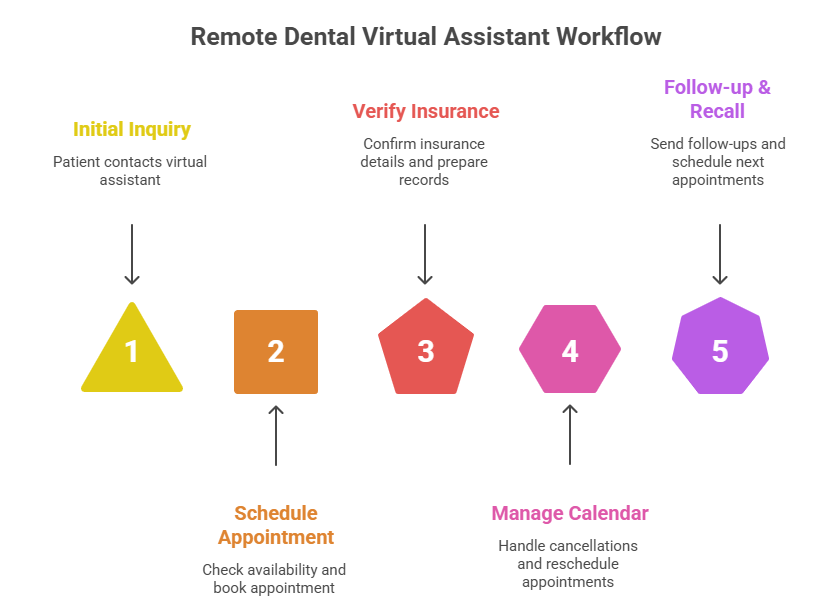
A remote dental virtual assistant works within a clearly defined workflow to maintain consistency across daily operations. This structured approach helps ensure that tasks such as scheduling, communication, and administrative updates are handled efficiently. By following standardized processes, virtual assistants reduce errors and support smooth practice operations.
- Capture patient inquiries from phone, website, or email, and record details in the system
- Check availability, schedule appointments, and send confirmations
- Verify insurance, prepare records, and send reminders before visits
- Manage cancellations, reschedule, and fill gaps in the calendar
- Send follow-ups and schedule recall or next appointments
- Update records, log interactions, and flag billing or insurance issues
Common Challenges Businesses Face
While adopting a dental virtual assistant, whether US-based or offshore, businesses often face several operational challenges during the transition. These challenges typically arise from differences in systems, processes, and communication structures. Identifying these issues early helps ensure smoother implementation and long-term success:
- Integration issues can arise when aligning remote staff with existing systems and workflows.
- Data security concerns require careful handling of sensitive patient information.
- Communication gaps may occur due to time zone differences or unclear processes.
- Training requirements are essential to ensure assistants understand dental terminology and workflows.
- Process inconsistency can result from the lack of standardized procedures.
Benefits of Outsourcing to Virtual Assistants
| Area | In-House Staff | Dental Virtual Assistant |
|---|---|---|
| Cost | High (salary + overhead) | Lower, predictable monthly cost |
| Scalability | Limited | Easily adjustable |
| Availability | Fixed office hours | Extended or flexible hours |
| Training Time | Long onboarding | Pre-trained professionals |
| Efficiency | Varies by workload | Process-driven consistency |
- An affordable dental virtual assistant helps reduce overhead costs without compromising the quality of work.
- Faster response times and efficient scheduling contribute to an improved patient experience.
- Outsourcing medical billing services allows staff to focus more on clinical responsibilities.
- Standardized workflows ensure consistency and reduce variability in daily operations.
How a Virtual Assistant Company Helps Businesses
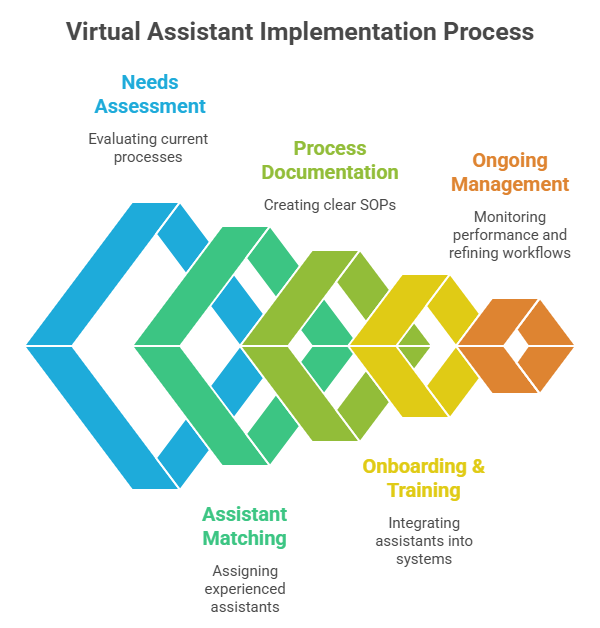
A professional provider of dental virtual assistant services plays a critical role in fulfilling the high demand for virtual office assistants in healthcare by ensuring the right processes are in place from the start. They help align virtual assistant tasks with the specific operational needs of a dental practice. This structured support ensures smooth integration, consistent performance, and long-term efficiency.
1. Needs Assessment
A virtual assistant company begins by evaluating current workflow bottlenecks within the dental practice. They identify repetitive and time-consuming tasks that can be effectively outsourced. This step ensures that outsourcing decisions are aligned with operational priorities.
2. Assistant Matching
The provider assigns virtual assistants who have relevant dental industry experience. They ensure that assistants are familiar with commonly used dental software and tools. This alignment helps maintain accuracy and efficiency from the start.
3. Process Documentation
Clear SOPs are created for scheduling, communication, and billing workflows. These documents define how tasks should be executed consistently. Escalation protocols are also established to handle exceptions and issues effectively.
4. Onboarding & Training
Virtual assistants are integrated into the practice’s existing systems and tools. They are trained to follow specific workflows and communication standards, including a medical call answering service. This ensures a smooth transition and minimal disruption to operations.
5. Ongoing Management
The company continuously monitors assistant performance to maintain service quality. Feedback is used to refine workflows and improve efficiency over time. This ongoing optimization ensures long-term operational success.
TaskVirtual: Your Partner in Dental Virtual Assistant Services

Managing patient communication, appointment scheduling, and administrative workflows in a dental practice can quickly become overwhelming, especially as patient volumes increase. TaskVirtual provides expert dental virtual assistant services that help clinics streamline operations, maintain consistent patient engagement, and improve overall efficiency without expanding in-house teams.
1. Expert Consultation and Workflow Optimization
TaskVirtual’s experienced virtual assistants understand dental office operations, including scheduling workflows through virtual scheduling assistants, insurance coordination, and patient communication. They help structure appointment systems, reduce scheduling gaps, and ensure smooth front-desk operations aligned with your practice goals.
2. Affordable and Flexible Pricing
Hiring in-house administrative staff can significantly increase operational costs. TaskVirtual offers flexible pricing plans starting from $3.12/hour to $14.99/hour, allowing dental practices to scale support based on demand while maintaining cost efficiency.
3. Comprehensive Dental Administrative Support
From managing patient inquiries and appointment scheduling to handling follow-ups and maintaining accurate records, TaskVirtual delivers end-to-end administrative support. Their services are adaptable, whether you need assistance with daily scheduling tasks or full-scale front-office operations.
4. Ongoing Support and Process Consistency
TaskVirtual ensures consistent service delivery through structured workflows and continuous monitoring. Their assistants provide regular updates, maintain documentation accuracy, and follow standardized procedures to minimize errors and improve patient experience.
5. Proven Track Record of Excellence
With 364 positive reviews and a 4.7-star rating on trusted VA platforms, TaskVirtual is recognized for reliability and quality service. Dental practices can confidently outsource critical administrative tasks knowing they are supported by experienced professionals.
Conclusion
A dental virtual assistant is no longer just a cost-saving option—it is a strategic operational solution for modern dental practices. By outsourcing administrative workloads, clinics can improve efficiency, enhance patient experience, and scale operations without increasing internal complexity. For businesses evaluating whether to hire a dental virtual assistant, the key is not just delegation—but building a structured, repeatable workflow that integrates seamlessly with existing operations.
Dental practices can reduce administrative pressure by delegating routine tasks to remote professionals. Learn how virtual medical assistant services can support specialized healthcare and practice management needs.
Key Takeaways
- Dental virtual assistants handle essential non-clinical tasks remotely
- They improve scheduling efficiency and patient communication
- Outsourcing reduces costs while increasing scalability
- Structured workflows are critical for success
- Professional VA companies streamline onboarding and management
FAQ Section
1. What does a dental virtual assistant do daily?
They manage scheduling, patient communication, insurance verification, and administrative updates.
2. Is a remote dental virtual assistant secure for patient data?
Yes, when proper HIPAA-compliant systems and protocols are used.
3. How much does it cost to hire a dental virtual assistant?
Costs vary but are typically lower than hiring full-time in-house staff.
4. Can virtual assistants handle dental-specific software?
Yes, most trained assistants are experienced with tools like Dentrix and Eaglesoft.
5. How quickly can a dental practice implement this model?
With a structured provider, implementation can take 1–3 weeks.
For more queries, visit our website.
 Siddhartha Basu is a Technical Writer at Task Virtual. He loves online games, e-book reading, and Yoga.