

Contents
show
How a Virtual Assistant for Financial Advisors Boosts Compliance & Records
Financial advisors in the United States face mounting regulatory pressures, rising client expectations, and administrative overload in an era of complex fiduciary standards and digital recordkeeping. A virtual assistant for financial advisors offers a practical solution, handling routine tasks while ensuring meticulous compliance and documentation. As regulatory scrutiny intensifies, smart advisors turn to specialized virtual assistant services for financial advisors to maintain focus on client relationships and growth.
This approach blends cost-efficiency with expertise, especially for independent RIAs and small practices. With AI-enhanced tools and remote talent, virtual assistants for financial advisors help navigate everything from client onboarding to audit-ready records. According to McKinsey, AI-powered virtual assistants can deliver 30-40% time savings for advisors, and this guide explores their impact while incorporating the best virtual assistants for financial advisors and virtual assistant solutions for financial advisors.
The Growing Compliance Burden on Financial Advisors
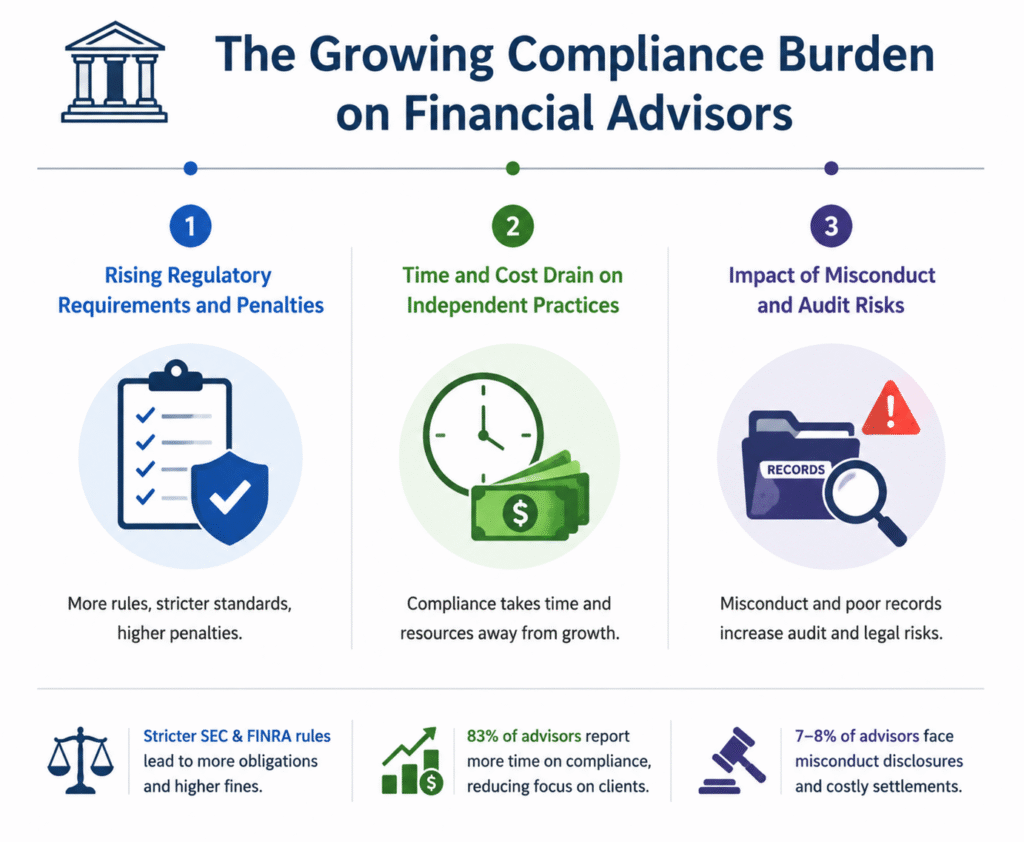
Financial advisors operate in one of the most heavily regulated professions in America, where strict rules from the SEC and FINRA demand constant attention to documentation and procedures. The increasing complexity of these requirements, combined with frequent audits and high penalties for non-compliance, creates significant operational challenges for both solo practitioners and small firms.
1. Rising Regulatory Requirements and Penalties
The SEC and FINRA continue to strengthen rules such as Regulation Best Interest and fiduciary standards, requiring detailed client disclosures, suitability analyses, and ongoing monitoring. In fiscal year 2023, the SEC imposed $4.9 billion in penalties and disgorgement, with recordkeeping failures alone resulting in over $63 million in fines for multiple firms in early 2025. Virtual assistant solutions for financial advisors help mitigate these risks by systematically tracking obligations and supporting consistent adherence to evolving regulations.
2. Time and Cost Drain on Independent Practices
Compliance tasks now consume a growing share of advisors’ time, with 83% reporting increased hours dedicated to regulatory programs compared to previous years. For the many solo and small RIAs managing under $1 billion in assets, this diverts valuable focus from revenue-generating client work and business development. Best virtual assistants for financial advisors provide scalable support that reduces this burden at a fraction of the cost of full-time staff.
3. Impact of Misconduct and Audit Risks
Industry data shows that roughly 7-8% of financial advisers have misconduct-related disclosures, often leading to median settlements around $40,000 and substantial industry-wide costs. Poor documentation significantly heightens risks during SEC examinations and client disputes. A reliable virtual assistant for financial advisors maintains organized, searchable records that strengthen defensibility and reduce potential liabilities.
How Virtual Assistants Enhance Compliance Management
Virtual assistants for financial advisors play a vital role in supporting regulatory adherence by managing repetitive tasks and maintaining detailed records under the advisor’s supervision. Virtual financial assistants help firms stay current with changing rules while reducing the administrative pressure that often leads to compliance gaps.
- Virtual assistants monitor updates from the SEC, FINRA, and state regulators.
- They manage client onboarding with complete KYC and risk profile documentation.
- They handle ongoing monitoring and flag potential conflicts of interest.
- Virtual assistants prepare compliance reports for regulatory standards.
- They integrate with CRM platforms for accurate record updates.
- They ensure secure handling of sensitive client data.
Streamlining Documentation with Virtual Assistants
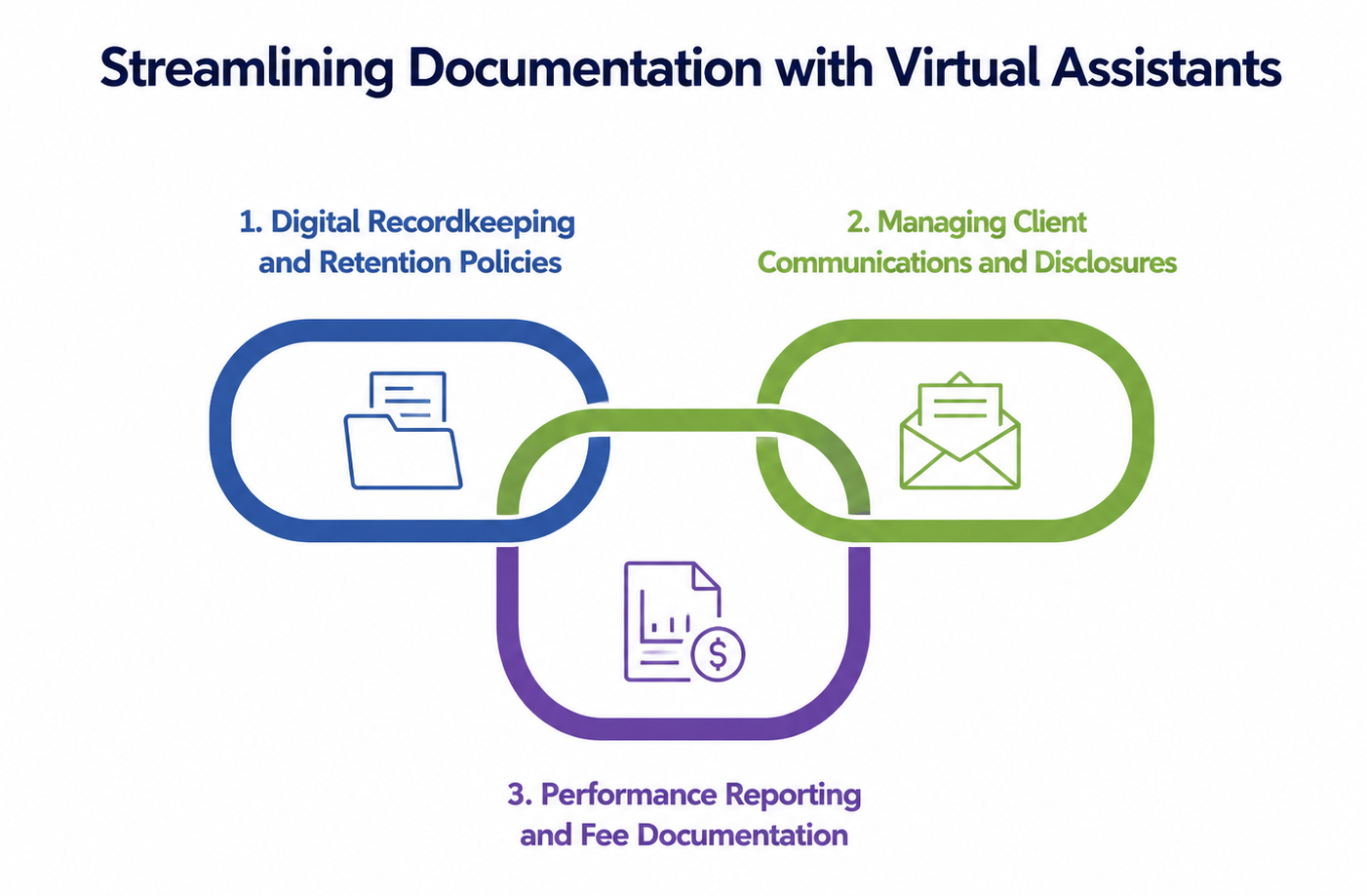
Virtual assistants for financial advisors significantly improve documentation quality and accessibility, which forms the foundation of regulatory compliance under rules such as SEC Rule 204-2. Their systematic approach helps create consistent, organized records that protect the firm during audits and client reviews.
1. Digital Recordkeeping and Retention Policies
Virtual assistants organize electronic files according to strict retention schedules, typically five to six years, using non-rewriteable formats that meet FINRA and Exchange Act standards. They carefully index communications, trade confirmations, performance reports, and other essential documents, making retrieval fast and efficient during regulatory examinations. This organized system reduces errors and ensures complete compliance with recordkeeping obligations.
2. Managing Client Communications and Disclosures
Virtual assistants for financial advisors carefully draft, review, and archive all client communications, including emails, newsletters, and required disclosures like Form CRS. They ensure language remains fair, balanced, and compliant with FINRA guidelines while tracking delivery and acknowledgment records. This comprehensive archiving creates a clear compliance trail that supports the firm’s regulatory position.
3. Performance Reporting and Fee Documentation
Virtual assistants compile accurate performance data, calculate fees transparently, and document all soft-dollar arrangements or referral agreements. They help maintain detailed records that clearly substantiate best-interest recommendations and fee structures. This meticulous documentation strengthens the firm’s ability to demonstrate compliance during reviews.
Technology Integration for Virtual Assistant Effectiveness

Modern virtual assistant solutions for financial advisors rely heavily on secure, specialized technology to maximize efficiency and maintain compliance standards. These tools allow remote professionals to work seamlessly within the advisor’s existing systems while upholding strict data protection protocols.
- They are proficient with CRM platforms like Wealthbox and Redtail.
- Virtual assistants use compliance software such as ComplianceAlpha.
- They apply encrypted channels and multi-factor authentication for security.
- AI tools assist with transcription and note summarization.
- They manage vendor due diligence documentation efficiently.
- Cloud storage helps meet all regulatory retention requirements.
Operational Efficiency and Cost Benefits
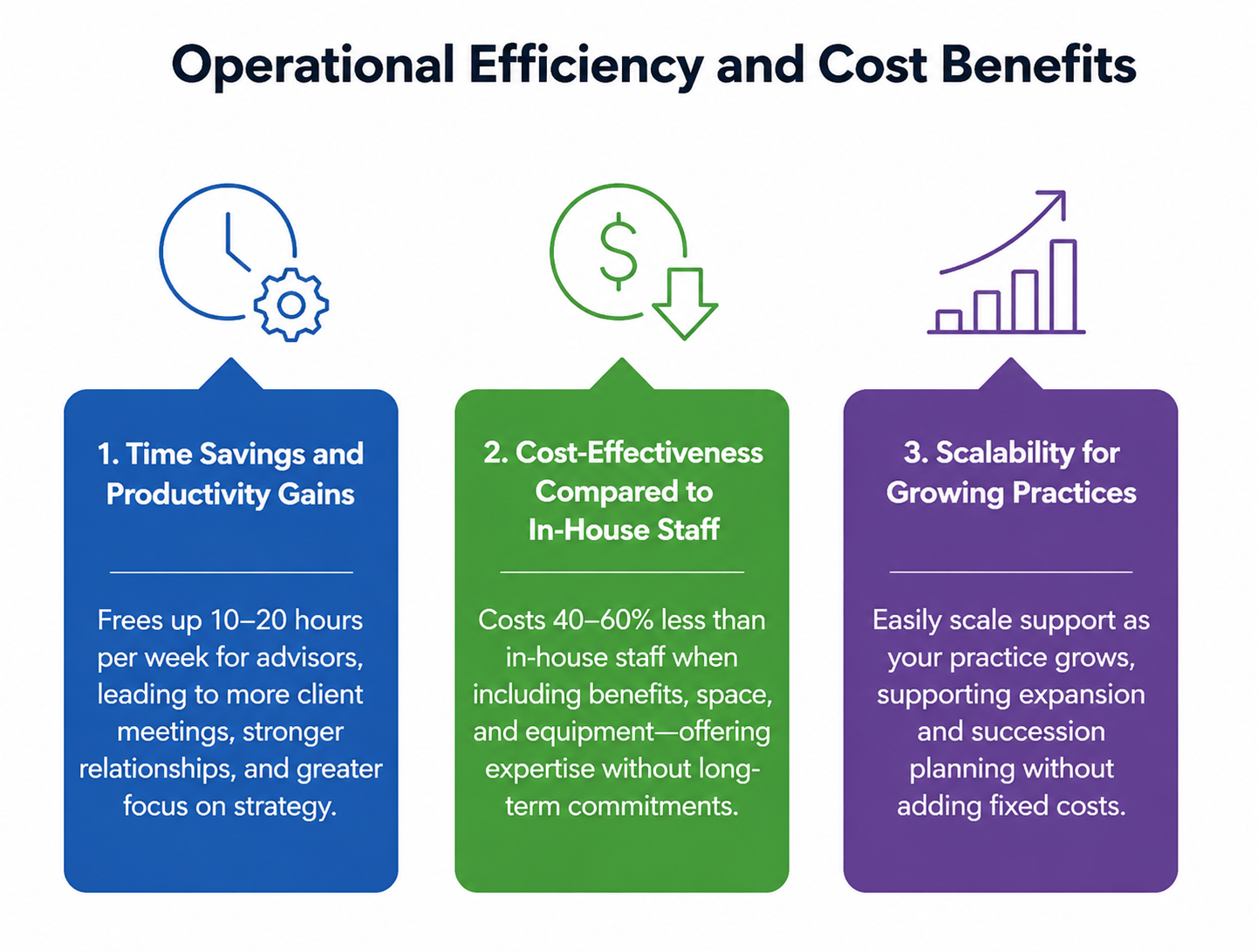
Virtual assistants for financial advisors deliver substantial improvements in daily operations while helping firms control expenses in a competitive industry. Their support allows advisors to focus more on high-value client relationships and strategic growth initiatives.
1. Time Savings and Productivity Gains
Delegating administrative and documentation tasks through accounting virtual assistant support to virtual assistants typically frees up 10-20 hours per week for financial advisors. This additional time translates into more client meetings, deeper relationship building, and increased focus on investment strategy. Many practices report 20-40% gains in client-facing activities after implementing virtual assistant services for financial advisors.
2. Cost-Effectiveness Compared to In-House Staff
Hiring virtual assistants generally costs 40-60% less than employing full-time in-house staff when factoring in benefits, office space, and equipment. This approach provides specialized expertise without the long-term financial commitments of traditional hiring. Small and mid-sized RIA firms particularly benefit from this flexible cost structure.
3. Scalability for Growing Practices
Virtual assistant solutions for financial advisors can easily adjust hours and responsibilities as client numbers or assets under management increase. This scalability supports smooth business expansion and succession planning without adding fixed payroll expenses. Firms can grow confidently while maintaining strong compliance and documentation standards.
Best Practices for Hiring and Managing Virtual Assistants
Selecting and working with the best virtual assistants for financial advisors requires careful planning and clear communication through a business email writing service to ensure alignment with firm standards and regulatory expectations. A thoughtful approach helps maximize the value of this support while maintaining control over critical compliance areas.
- Create detailed standard operating procedures for tasks and security.
- Choose assistants with financial services and regulatory experience.
- Require NDAs and conduct thorough background checks.
- Start with a trial period on documentation tasks.
- Schedule regular check-ins and performance reviews.
- Track metrics like error reduction and time saved.
Addressing Common Challenges and Risks

Working with a virtual assistant for financial advisors introduces several important considerations that firms must address proactively. Proper planning helps minimize potential issues while preserving the many benefits these professionals provide. According to recent industry data, 68% of RIAs lack formal governance policies for outsourced support, so understanding common challenges allows advisors to implement effective safeguards from the beginning of the relationship.
1. Data Security and Confidentiality
Strong security measures, including encrypted tools, strict access controls, and regular security audits, help protect sensitive client information when working with virtual assistants. Reputable providers typically carry appropriate insurance and sign detailed confidentiality agreements. Following firm cybersecurity policies ensures compliance with expanding regulatory expectations in this area.
2. Maintaining Advisor Oversight
Virtual assistants support operations but should never make investment recommendations or final compliance decisions. Clear boundaries and regular review protocols help preserve the advisor’s ultimate responsibility and authority. This structured oversight maintains regulatory compliance while leveraging the assistant’s administrative expertise.
3. Integration and Training Curves
Initial training and system integration require dedicated time and effort to establish smooth workflows with virtual assistants. Creating standardized processes helps reduce the learning curve over time and improves long-term efficiency. Patience during the early stages typically leads to significant productivity gains once systems are fully operational.
How Virtual Assistants Help with Financial Advice

Virtual assistants for financial advisors provide valuable support that enables advisors to deliver higher-quality financial guidance without getting overwhelmed by the administrative duties of a virtual assistant. By handling background tasks efficiently, they free up time for advisors to focus on personalized client strategies and recommendations.
- They prepare detailed client profiles and meeting summaries for more informed advice discussions.
- Virtual assistants organize market research and data for advisor review.
- They schedule client review meetings and send timely reminders.
- They maintain investment policy statements and track portfolio changes.
- Virtual assistants compile performance reports to support advice conversations.
- They help document client goals and risk preferences accurately.
TaskVirtual: Your Partner in Financial Advisor Assistance Services

Financial advisors juggle complex regulatory demands, extensive documentation, and client relationship management, often leaving little time for strategic growth. From tracking SEC updates to maintaining audit-ready records, these responsibilities can create significant operational strain. TaskVirtual provides expert virtual assistants for financial advice that simplify compliance, documentation, and daily operations while helping you stay focused on client success.
1. Expert Compliance and Documentation Support
TaskVirtual’s skilled virtual assistants help monitor regulatory changes, manage client onboarding with proper KYC documentation, and maintain organized records that meet SEC and FINRA standards. They ensure all processes align with best practices for risk management and fiduciary responsibility.
2. Affordable and Flexible Pricing
Hiring a full-time personal assistant can be expensive, but TaskVirtual makes it cost-effective. With pricing plans starting from just $3.12/hour to $14.99/hour, their services are budget-friendly and accessible to individuals, families, and businesses.
3. Comprehensive Virtual Assistant Solutions for Advisors
From streamlining CRM updates and performance reporting through CRM virtual assistant service to handling secure client communications and retention policies, TaskVirtual covers essential tasks. Their scalable services adapt whether you need occasional support or consistent assistance with compliance and operations.
4. Ongoing Regulatory Support and Quality Assurance
TaskVirtual offers continuous monitoring of deadlines, proactive updates on regulatory shifts, and quality checks on all documentation. Their dedicated support helps reduce compliance risks and ensures smooth daily workflows for financial advisory practices.
5. Proven Track Record of Excellence
With 364 positive reviews and a 4.7-star rating on trusted VA platforms, TaskVirtual is recognised as a reliable partner worldwide. Clients count on their expertise to simplify compliance tasks and streamline operations for financial advisors.
FAQ Section
1. What is a virtual assistant for financial advisors?
A remote professional who handles administrative, compliance, and documentation tasks, allowing advisors to focus on client service and strategy while maintaining regulatory standards.
2. How do virtual assistants help with SEC and FINRA compliance?
They manage recordkeeping, track regulatory updates, organize client files, and prepare reports, ensuring adherence to rules like Books and Records requirements and Reg BI.
3. What tasks can virtual assistant services for financial advisors cover?
Common tasks include client onboarding, scheduling, CRM updates, communication archiving, performance reporting, and basic research—always under advisor supervision.
4. Are virtual assistants cost-effective for small RIA firms?
Yes. They reduce overhead compared to full-time staff while delivering specialized support, often saving practices significant time and compliance-related expenses.
5. What qualifications should the best virtual assistants for financial advisors have?
Look for financial services experience, proficiency in relevant software, strong organizational skills, and a track record with confidentiality and regulatory processes.
6. How do I ensure data security when working with a virtual assistant?
Use secure platforms, require NDAs and background checks, implement access protocols, and conduct periodic security reviews aligned with your firm’s cybersecurity policy.
Conclusion
A virtual assistant for financial advisors is no longer a luxury but a strategic necessity for maintaining compliance, perfecting documentation, and driving sustainable growth amid regulatory complexity. By leveraging expert remote support, advisors reduce risks, cut costs, and deliver higher-value client experiences.
Ready to transform your practice? Explore reputable virtual assistant solutions for financial advisors today and reclaim time for what matters most—building client prosperity. Contact a specialized provider for a consultation tailored to your firm’s needs.
Sources
- Investment Adviser Association surveys and reports
- SEC enforcement releases and penalty data
- FINRA Rulebook and guidance
- Stanford and academic studies on advisor misconduct
- Industry analyses from Statista, Deloitte, and market research firms (via aggregated reports)
- Official .gov resources on Reg BI and recordkeeping rules
For more such content, visit our website.
 Siddhartha Basu is a Technical Writer at Task Virtual. He loves online games, e-book reading, and Yoga.