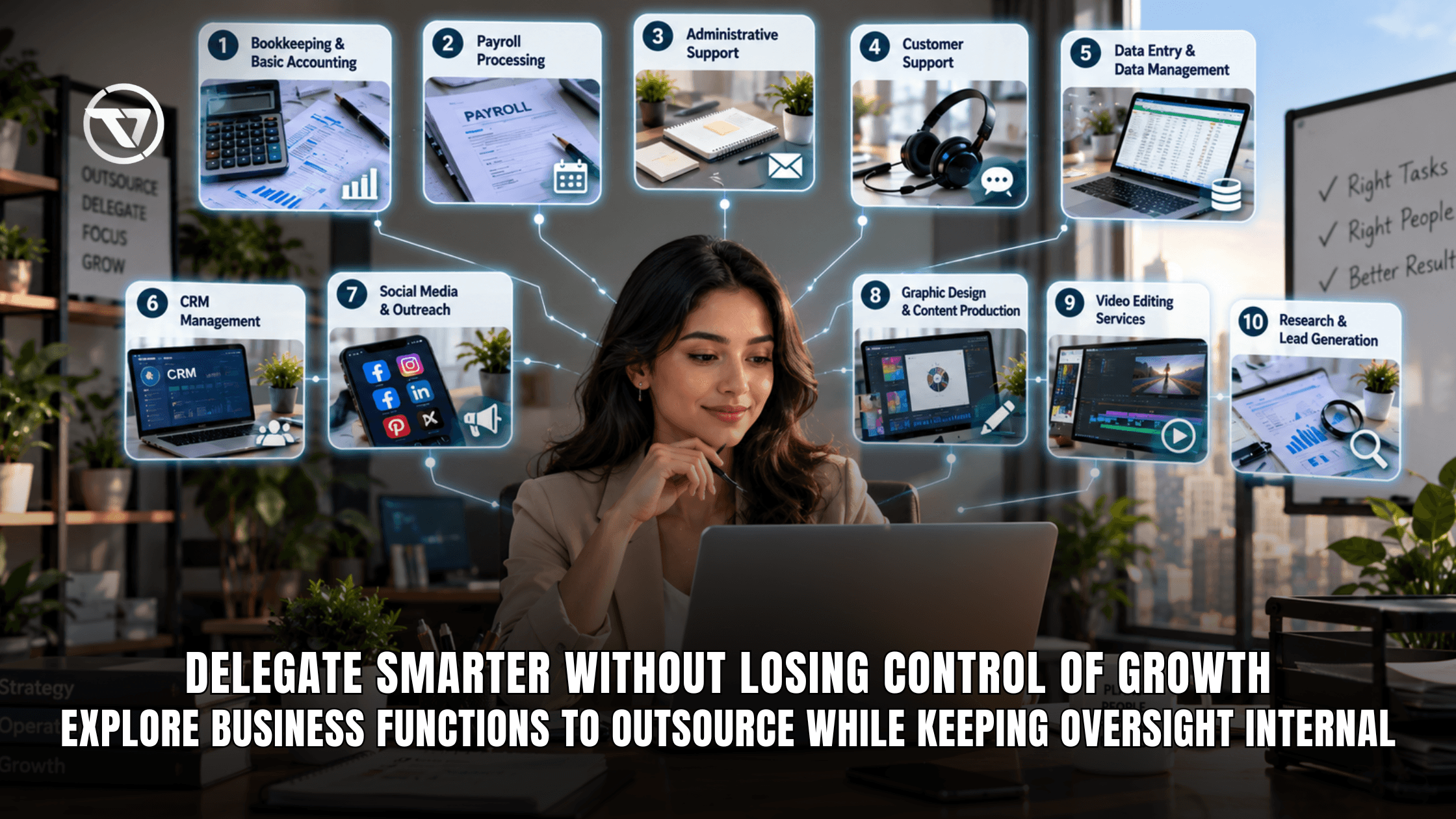
How a BPO Virtual Assistant Supports Roles, Tasks, and Business Growth
A BPO virtual assistant is a remote professional who supports businesses through outsourcing by handling administrative work, customer support, data processing, sales assistance, and back-office operations. These professionals operate through virtual assistant BPO services and help organizations manage routine tasks efficiently without expanding internal teams. In fact, outsourcing has become a widespread business strategy, with around 82% of companies worldwide leveraging outsourcing to streamline operations and improve efficiency. Companies often hire BPO VA support to reduce overhead, improve productivity, and maintain smooth operations while focusing on core business goals.
What Is a BPO Virtual Assistant?
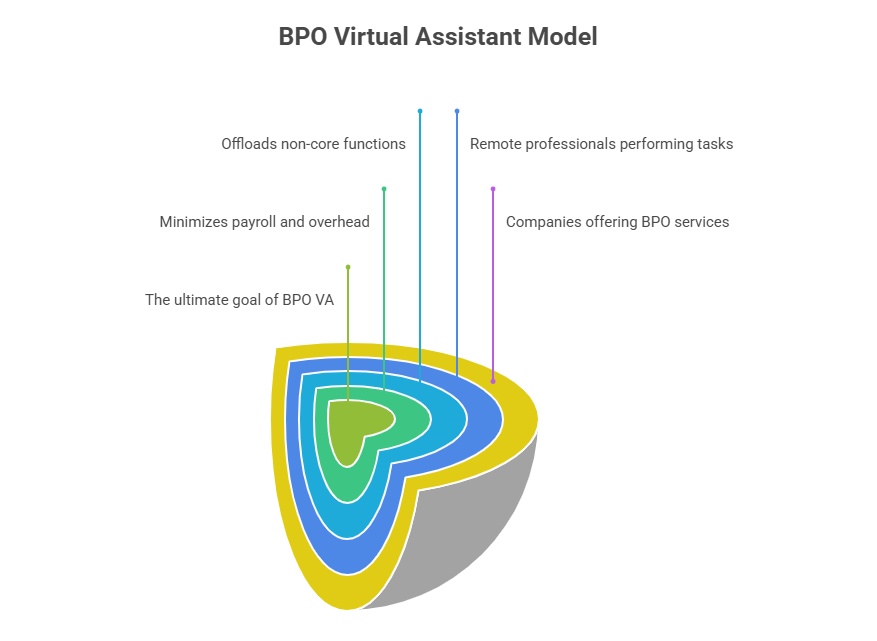
A Business Process Outsourcing Virtual Assistant is a remote professional who performs operational business tasks through outsourced service providers or distributed teams. Organizations often rely on a remote BPO VA to handle routine functions that do not require on-site staff or internal management involvement. This approach enables companies to maintain operational efficiency while delegating non-core work.
Through BPO VA services, businesses can outsource administrative, technical, and customer-related tasks to trained professionals working remotely or from outsourcing centers. Many startups and growing companies use outsourcing virtual assistant BPO solutions to improve efficiency without increasing full-time payroll costs, especially as outsourcing continues to grow globally. In fact, about 37% of small businesses outsource at least one business process to improve efficiency and reduce operational workload, making this model increasingly popular among e-commerce brands, agencies, customer support teams, and technology companies.
What Does BPO Mean in Virtual Assistance?
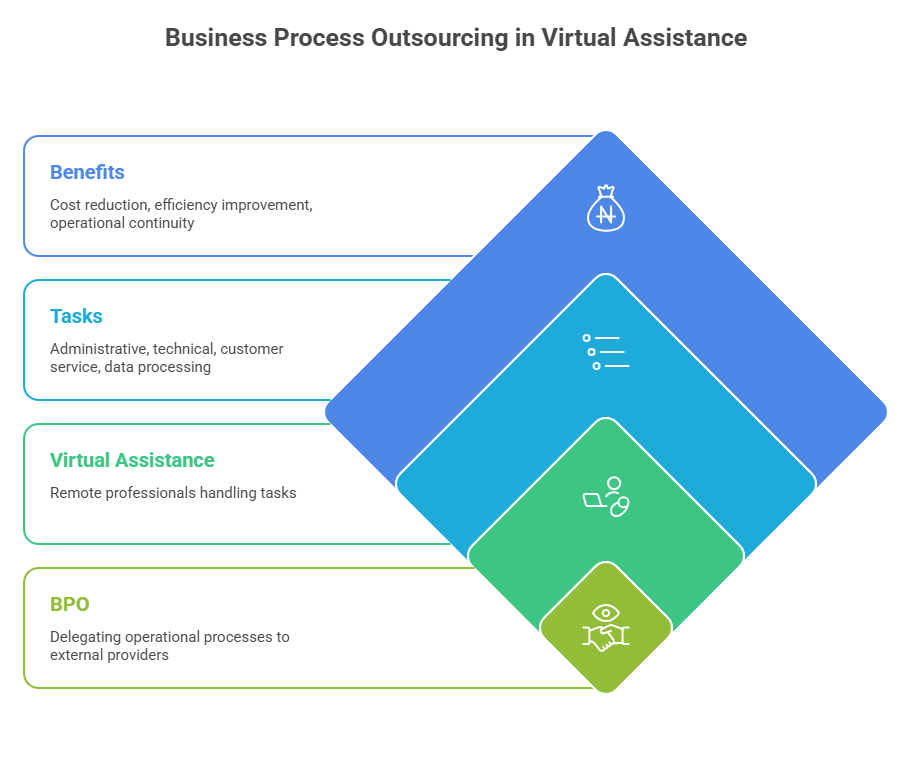
Business Process Outsourcing refers to delegating certain operational processes to external service providers instead of handling them internally. In virtual assistance, outsourcing enables companies to assign structured tasks to trained remote professionals who operate under predefined workflows and service standards. This system allows businesses to maintain operational continuity while reducing internal workload.
Within virtual assistance, outsourcing commonly includes administrative management, technical help desk support, customer communication, and data processing functions. Many organizations adopt BPO support virtual assistant solutions to streamline repetitive work and ensure consistent service delivery, particularly as outsourcing continues to expand globally. In fact, 59% of businesses outsource primarily to reduce operational costs and improve efficiency, making virtual assistance a practical solution for companies aiming to maintain productivity without expanding internal staff.
What Does a BPO Virtual Assistant Do?
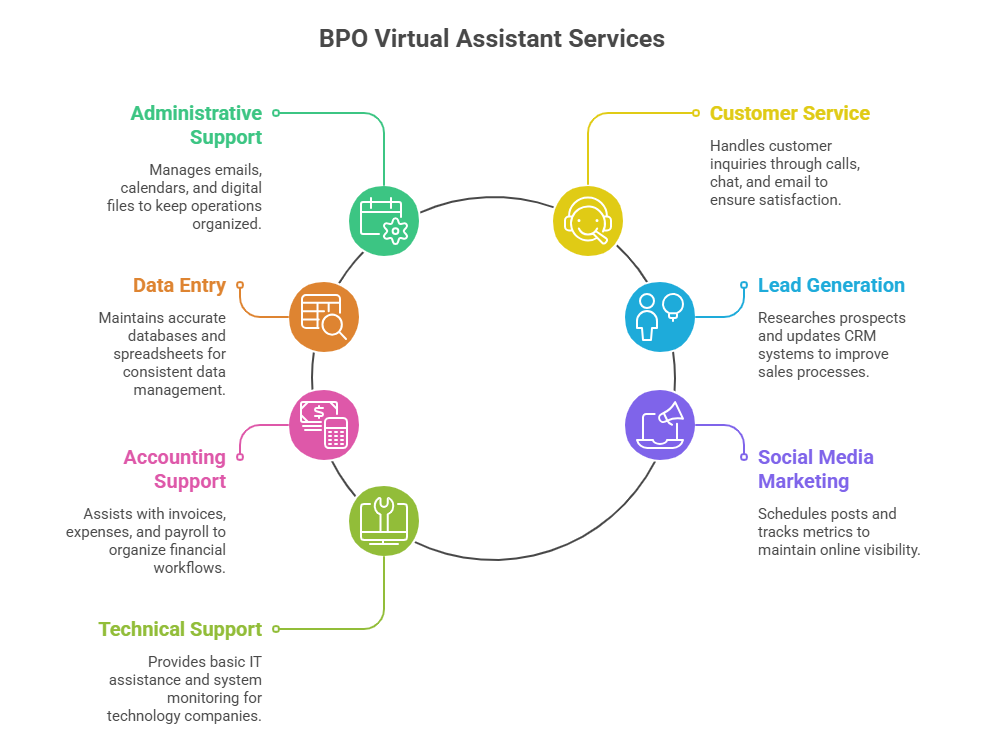
A BPO virtual assistant performs a wide range of operational tasks depending on the requirements of a company. These professionals support internal teams by managing routine processes that require organization, communication, and system management. Understanding the services you can outsource to a BPO VA helps businesses identify areas where outsourcing improves efficiency.
1. Administrative Support
A BPO administrative virtual assistant typically manages essential daily business tasks that keep operations organized. This includes managing emails, scheduling calendars, formatting documents, and maintaining digital file systems across company platforms. By outsourcing administrative work to a dedicated BPO VA, businesses can focus their internal teams on strategic activities.
2. Customer Service and Call Support
A BPO customer support virtual assistant handles customer communication through calls, live chat, and email support systems. These professionals answer inquiries, manage support tickets, resolve complaints, and process service requests efficiently. Many companies rely on this model because it represents one of the best ways to use a BPO virtual assistant for customer support while maintaining fast response times.
3. Data Entry and Back-Office Work
Many organizations hire a BPO virtual assistant for data entry to manage databases, spreadsheets, and CRM records. These professionals maintain accurate information by updating business records, processing orders, and organizing internal data systems. Companies that require operational support often use a BPO VA for back-office tasks to ensure consistent data management.
4. Lead Generation and Sales Support
Sales teams frequently work with outsourcing assistants who research prospects, update CRM systems, and track sales pipelines. These professionals also help schedule meetings, send follow-up emails, and organize lead databases for sales representatives. With this support, businesses can maintain structured sales processes while improving lead tracking and conversion management.
5. Accounting and Payroll Support
Some outsourcing assistants assist finance teams with administrative accounting tasks. Responsibilities may include invoice preparation, expense tracking, payroll data entry, and billing coordination. While they typically operate under supervision, this support significantly improves financial workflow organization.
6. Social Media and Marketing Tasks
Many organizations also use outsourced professionals for digital marketing operations. These assistants schedule social media posts, assist with email marketing campaigns, track performance metrics, and manage content calendars. This support allows businesses to maintain consistent online visibility without dedicating internal resources.
7. Technical and IT Support Tasks
Certain outsourcing assistants also provide basic technical support and help desk services. Their responsibilities may include software setup assistance, website content updates, system monitoring, and responding to user support requests. Technology companies often integrate these services into their outsourced operational workflow.
Skills Required for a BPO Virtual Assistant

A skilled BPO VA must possess strong communication abilities and professional discipline when working with distributed teams. These professionals frequently interact with customers, internal departments, and management systems across digital platforms. As a result, clear communication and organization are essential capabilities.
Technical proficiency is also critical for managing data, CRM platforms, scheduling systems, and support tools. A reliable remote BPO VA must demonstrate accuracy, attention to detail, and strong time management skills. In specialized roles such as customer support or technical help desk operations, additional training and software expertise may be required.
Benefits of Hiring a BPO Virtual Assistant
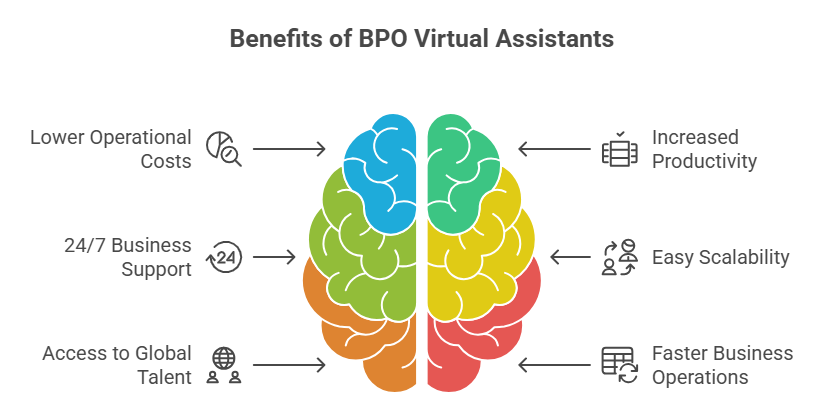
Businesses adopt outsourcing solutions because they significantly improve operational efficiency while reducing administrative burden. Understanding how a virtual assistant for BPO can improve business operations efficiency helps companies design more scalable workflows. The benefits of outsourcing are particularly visible in growing companies that need operational support but want to maintain lean internal teams.
1. Lower Operational Costs
One of the biggest advantages is cost reduction, especially for companies evaluating the BPO VA cost compared with in-house salaries. Hiring an affordable virtual assistant for BPO eliminates expenses related to office space, equipment, training, and employee benefits. This explains how a BPO VA helps reduce operational costs for startups and established companies alike.
2. Increased Productivity
Outsourcing repetitive work allows internal teams to concentrate on strategic and revenue-generating activities. Businesses often notice improved productivity because operational tasks are handled by specialized remote professionals. This structure also demonstrates how a BPO VA helps manage daily business tasks efficiently.
3. 24/7 Business Support
Many outsourcing providers operate across multiple time zones, allowing companies to maintain round-the-clock operations. A remote virtual assistant can support customer service, order processing, and data updates even outside standard business hours. This continuous availability improves response times and customer satisfaction.
4. Easy Scalability
Companies can increase or decrease outsourced staff based on workload demands. This flexibility allows businesses to expand support teams quickly during growth periods or seasonal demand spikes. For this reason, outsourcing solutions are popular among startups and rapidly growing organizations.
5. Access to Global Talent
Outsourcing provides access to highly skilled professionals from different regions around the world. Many organizations collaborate with an offshore BPO virtual assistant to leverage specialized expertise while maintaining cost efficiency. Businesses targeting international markets may also work with a US-based BPO VA or a BPO VA USA service provider for region-specific support.
6. Faster Business Operations
Dedicated remote professionals help companies streamline internal workflows and task management processes. By delegating routine work, organizations can accelerate decision-making and operational execution. This efficiency improvement is one of the primary benefits of hiring a BPO VA for small businesses in the USA.
BPO Virtual Assistant vs In-House Employee
| Aspect | BPO Virtual Assistant | In-House Employee |
|---|---|---|
| Cost | Lower | Higher |
| Location | Remote | Office |
| Flexibility | High | Limited |
| Scalability | Easy | Difficult |
| Overhead | Minimal | High |
Many companies evaluate a BPO virtual assistant vs. an in-house employee, which is better for business when optimizing operational costs and workforce flexibility.
Who Should Hire a BPO Virtual Assistant?

A BPO virtual assistant for small businesses is particularly valuable for startups and growing companies that need operational support without expanding internal teams. E-commerce businesses, digital agencies, and SaaS companies frequently rely on virtual assistant BPO services to manage routine tasks efficiently. These solutions allow companies to maintain productivity while focusing on core strategic activities.
Organizations that manage large customer volumes, such as a BPO VA for a call center environment, also benefit from outsourcing operational support roles. Businesses handling large amounts of administrative work or customer communication often hire BPO VA professionals to streamline operations. This outsourcing approach explains why companies outsource tasks to a BPO VA when scaling business operations.
TaskVirtual: Professional BPO Virtual Assistant Services for Modern Businesses

Managing business operations, customer communication, administrative tasks, and data processes can quickly become overwhelming as organizations grow. Many companies struggle to maintain efficiency while handling routine responsibilities alongside strategic business priorities. TaskVirtual helps businesses overcome these challenges by providing reliable BPO-based virtual assistant services that streamline operations and improve productivity.
1. Professional Outsourcing Expertise
TaskVirtual provides skilled professionals who support businesses with administrative management, customer support operations, data entry, and back-office processes. Their trained assistants integrate seamlessly into existing workflows and follow structured operational procedures to ensure accuracy and consistency. This allows companies to delegate routine tasks confidently while focusing on strategic growth.
2. Affordable and Flexible Pricing
Building an internal operations team can be costly, but TaskVirtual offers a cost-efficient alternative through professional outsourcing services. Pricing plans start from just $3.12/hour to $14.99/hour, making it accessible for startups, small businesses, and growing organizations. This flexible pricing structure allows companies to scale support services based on operational needs.
3. Comprehensive Business Support Services
TaskVirtual delivers a wide range of services, including administrative assistance, customer service management, lead research, CRM data updates, and marketing support. Their assistants help businesses maintain organized systems, efficient workflows, and consistent communication with clients and customers. Whether a company needs occasional operational help or full-time assistance, TaskVirtual offers scalable solutions.
4. Reliable Operational Support
Beyond basic task management, TaskVirtual ensures consistent service delivery through structured processes and ongoing performance monitoring. Businesses receive dependable assistance for scheduling, communication management, data handling, and other operational tasks. This reliability allows companies to maintain smooth daily operations without increasing internal workload.
5. Proven Performance and Client Satisfaction
TaskVirtual has established a strong reputation in the virtual assistance industry with 364 positive reviews and a 4.7-star rating across trusted platforms. Businesses worldwide rely on their expertise to manage operational tasks efficiently and maintain organized workflows. Their commitment to quality service makes them a trusted partner for companies seeking reliable outsourcing solutions.
Final Answer: What Is a BPO Virtual Assistant?
A BPO virtual assistant is a remote professional who supports businesses by handling administrative tasks, customer communication, data entry, sales assistance, and back-office processes through outsourcing. Companies use these professionals as part of structured BPO VA services for startups and growing businesses to improve productivity, reduce operational costs, and maintain efficient workflows without expanding internal staff. By integrating outsourcing into daily operations, organizations gain access to specialized remote talent, flexible workforce scalability, and streamlined operational support that allows internal teams to focus on high-value strategic work.
FAQ: BPO Virtual Assistant
1. What is a BPO Virtual Assistant?
A BPO VA is a remote professional who performs outsourced business tasks such as administration, customer support, and data management.
2. How Does a BPO Virtual Assistant Help Businesses Outsource Tasks?
They handle routine operational work remotely so companies can focus on core business activities.
3. What Services Can a BPO Virtual Assistant Provide?
Common services include administrative support, customer service, data entry, back-office management, and sales support.
4. What Is the Difference Between a BPO Virtual Assistant and a Regular Virtual Assistant?
A BPO VA typically works through structured outsourcing systems with standardized processes and service workflows.
5. How Much Does a BPO Virtual Assistant Cost for U.S. Businesses?
Costs vary depending on experience, workload, and location, but are usually significantly lower than hiring full-time staff.
6. Why Do Companies in the USA Hire BPO Virtual Assistants?
U.S. businesses hire them to reduce operational expenses, increase productivity, and maintain flexible staffing.
7. Can a BPO Virtual Assistant Handle Customer Support and Back-Office Work?
Yes, many professionals specialize in customer service, ticket handling, and administrative back-office tasks.
8. Is It Safe to Outsource Business Tasks to a BPO Virtual Assistant?
Yes, when companies use secure systems, access controls, and professional outsourcing providers.
9. What Industries Commonly Use BPO Virtual Assistants?
Industries such as e-commerce, technology, customer service, digital marketing, and finance frequently use them.
10. How Do I Hire a Reliable BPO Virtual Assistant for My Business?
Companies should evaluate experience, communication skills, technical knowledge, and service provider reliability.
11. What Tools and Software Do BPO Virtual Assistants Use?
They typically use CRM systems, project management tools, communication platforms, and customer support software.
12. Can a BPO Virtual Assistant Work Full-Time for My Company?
Yes, many businesses work with a dedicated BPO VA on a full-time or long-term contract basis.
13. How Can a BPO Virtual Assistant Reduce Business Costs?
By eliminating office expenses, reducing payroll overhead, and allowing businesses to outsource routine tasks.
14. What Are the Advantages of Hiring a BPO Virtual Assistant Instead of In-House Staff?
Advantages include lower costs, flexible staffing, remote access to global talent, and improved scalability.
15. When Should a Business Consider Hiring a BPO Virtual Assistant?
Businesses should consider outsourcing when administrative tasks, customer inquiries, or data processing begin consuming significant internal resources.
Siddhartha Basu
 Siddhartha Basu is a Technical Writer at Task Virtual. He loves online games, e-book reading, and Yoga.