

Contents
show
Virtual Transaction Coordinator: What They Do And Cost
In the fast-paced world of real estate, closing deals involves far more than negotiating offers and showing properties. Agents often spend countless hours on administrative tasks that can lead to burnout and limit growth. A virtual transaction coordinator steps in as the behind-the-scenes expert who manages the contract-to-close process, allowing agents to focus on revenue-generating activities. who specializes in overseeing the administrative and compliance aspects of real estate transactions from contract acceptance through
With U.S. existing-home sales, 88% of buyers use agents, and median prices are elevated; transaction volume stays robust. Virtual TCs offer a flexible, cost-effective solution tailored for today’s remote-first real estate landscape at scale globally for teams. This guide explores their roles, benefits, pricing, and how to choose the right one to optimize your business.
What Is a Virtual Transaction Coordinator?
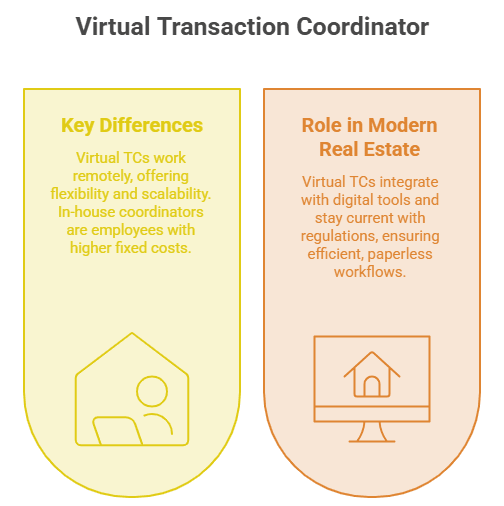
A virtual transaction coordinator is a remote professional who specializes in overseeing the administrative and compliance aspects of real estate transactions from contract acceptance through closing. Unlike licensed agents, they focus on operational details rather than negotiations or advice.
1. Key Differences from In-House Coordinators
Virtual TCs work remotely, often from specialized agencies or as independent contractors, providing scalability without office overhead. In-house coordinators are full-time employees physically present, which suits high-volume teams but comes with higher fixed costs. Virtual options excel in flexibility, especially for solo agents or growing teams.
2. Role in Modern Real Estate
Virtual transaction coordinators integrate seamlessly with digital tools like Dotloop, SkySlope, DocuSign, and popular CRMs such as Follow Up Boss or kvCore. 47% of real estate firms now rely on cloud-based transaction management systems. They stay current with state-specific regulations and market requirements across the U.S., making them highly adaptable for agents operating in multiple regions or remotely. This tech-forward approach ensures efficient, paperless workflows that align with the industry’s shift toward remote and hybrid operations.
What Does a Virtual Transaction Coordinator Do?
Virtual real estate transaction coordinators serve as the operational backbone of every deal, expertly managing the complex administrative pipeline so agents can concentrate on high-value activities. They bring structure, precision, and proactive oversight to ensure transactions close smoothly and on time.
- Create detailed timelines and track milestones, including earnest money, contingencies, and inspections.
- Collect, organize, review, and verify key documents like purchase agreements, disclosures, and appraisals.
- Ensure compliance with brokerage and state rules while preparing audit-ready files.
- Act as a central hub coordinating with lenders, title companies, inspectors, and all parties.
- Send regular status updates to keep everyone aligned and prevent surprises.
- Handle closing preparations, including final walkthroughs and document delivery.
- Provide post-closing support with file organization and follow-up tasks.
- Often operate under a no-close, no-fee model to align with successful outcomes.
Benefits of Hiring a Virtual Transaction Coordinator for Real Estate Agents
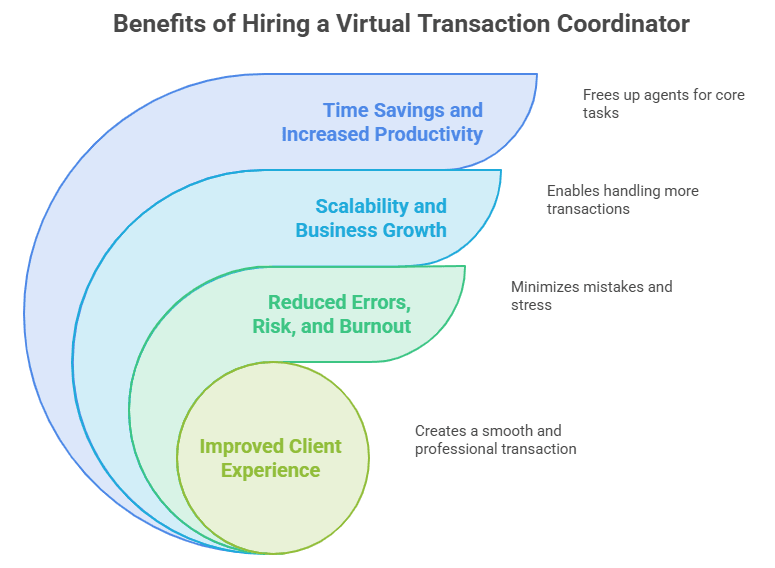
Hiring a virtual transaction coordinator, a real estate professional, delivers measurable advantages by streamlining operations and supporting sustainable business growth. These specialists handle the heavy administrative lift, allowing agents to reclaim valuable time and reduce daily stress. As the real estate market evolves, this support has become essential for maintaining competitiveness and achieving long-term success.
1. Time Savings and Increased Productivity
Agents typically invest 10-20+ hours per transaction on administrative tasks alone. A skilled virtual TC can reclaim 15 or more hours per file by managing timelines, documents, and coordination efficiently. This reclaimed time compounds significantly for agents closing multiple deals monthly, translating directly into more opportunities for prospecting and client engagement.
2. Scalability and Business Growth
Virtual support removes artificial volume ceilings that many solo agents and small teams face. With reliable transaction management in place, agents can confidently take on more listings and closings without proportional increases in workload. Many report doubling or further expanding their transaction volume after consistent delegation.
3. Reduced Errors, Risk, and Burnout
Missed deadlines and incomplete documentation frequently cause deal fallout or compliance issues. Dedicated virtual TCs catch potential problems early through systematic oversight and checklists. This proactive approach lowers risk and helps combat high burnout rates common in real estate.
4. Improved Client Experience
Consistent communication and smooth processes create a professional, stress-free experience for buyers and sellers. Clients receive timely updates and reliable support throughout the transaction. This leads to higher satisfaction, better reviews, and increased referrals.
Virtual Transaction Coordinator Costs in 2026

Pricing for virtual transaction coordinators varies based on experience level, service scope, transaction volume, and geographic sourcing options, making the model accessible for agents at different business stages. 38% of real estate brokerages report outsourcing administrative operations to improve efficiency. Understanding these options helps agents select solutions that deliver a strong return on investment.
- Per-transaction fees typically range from $250 to $600, averaging $350–$450 per closed file.
- Offshore or LATAM options often start at $150–$300 while maintaining quality.
- Premium U.S.-based services may reach $500+ for specialized support.
- Monthly subscriptions for high volume range from $1,500 to $2,500+.
- Many providers offer no-close, no-fee structures to reduce agent risk.
- In-house TCs cost $40,000–$65,000 annually, plus benefits and overhead.
- For 4–5 deals monthly, virtual costs often stay under $20k yearly.
- ROI is strong, as one extra deal per month typically covers costs multiple times.
How to Hire the Right Virtual Transaction Coordinator
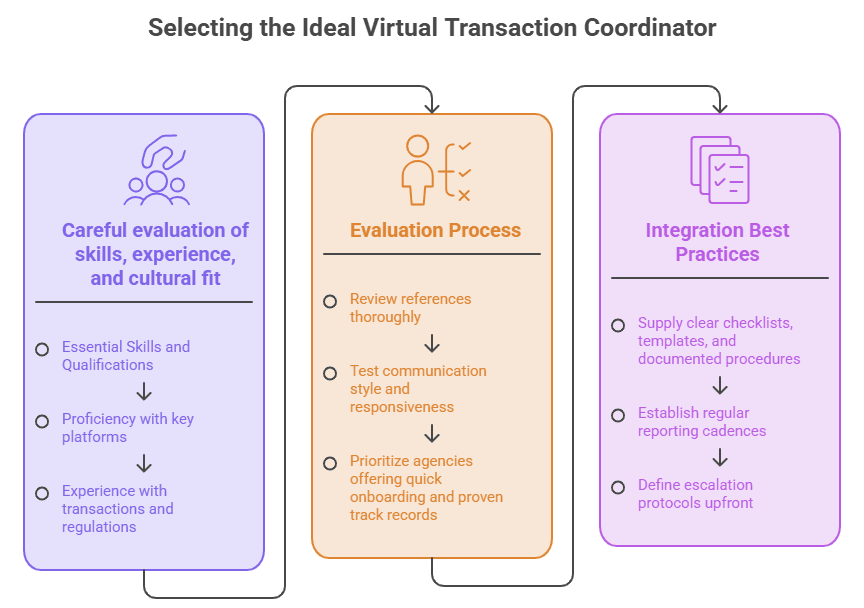
Selecting the ideal virtual transaction coordinator for real estate agents requires careful evaluation of skills, experience, and cultural fit to ensure seamless integration with your existing workflows. The right choice can transform your operations and support scalable growth. Focus on providers who demonstrate reliability, tech proficiency, and alignment with your specific market needs.
1. Essential Skills and Qualifications
Strong organizational abilities, clear communication skills, and meticulous attention to detail form the foundation of an effective virtual TC. Proficiency with key platforms such as Dotloop, SkySlope, DocuSign, and various CRMs is essential for smooth operations. Ideal candidates bring experience with 50–100+ transactions and relevant state regulations.
2. Evaluation Process
Review references thoroughly and request examples of past performance or sample workflows. Test communication style and responsiveness during initial interactions or trial periods. Prioritize agencies offering quick onboarding and proven track records.
3. Integration Best Practices
Supply clear checklists, templates, and documented procedures to accelerate the partnership. Establish regular reporting cadences like weekly pipeline updates. Define escalation protocols upfront for efficient handoffs.
Common Challenges and How Virtual Transaction Coordinators Solve Them

Real estate agents frequently encounter administrative bottlenecks that slow growth and increase stress. A transaction coordinator, real estate virtual assistant, addresses these issues head-on with specialized expertise and dedicated support.
- Eliminate disorganized files and missed deadlines with structured tracking.
- Bridge communication gaps as the central contact for all parties.
- Reduce compliance risks with audit-ready documentation.
- Solve scalability issues without adding fixed overhead.
- Manage complex transactions using proven checklists.
- Offload time-consuming document collection and verification.
- Improve client experience with consistent professional updates.
- Decrease agent burnout by focusing on high-value activities.
TaskVirtual: Your Partner in Real Estate Transaction Coordination

Real estate agents juggle numerous administrative demands that can overwhelm their schedules and limit business growth. From tracking deadlines to coordinating with multiple parties, the contract-to-close process requires precision and constant attention. TaskVirtual provides expert virtual transaction coordinator services that simplify these complexities, helping agents manage the full transaction lifecycle efficiently while focusing on sales and client relationships.
1. Expert Transaction Management and Review
TaskVirtual’s skilled virtual transaction coordinators assist in creating timelines, organizing documents through formatting, ensuring compliance, and coordinating with lenders, title companies, and all stakeholders. They deliver proactive oversight so every transaction moves forward smoothly with minimal agent involvement.
2. Affordable and Flexible Pricing
Hiring a full-time personal assistant can be expensive, but TaskVirtual makes it cost-effective. With pricing plans starting from just $3.12/hour to $14.99/hour, their services are budget-friendly and accessible to individuals, families, and businesses.
3. Comprehensive Transaction Support Solutions
From document collection and milestone tracking to closing preparation and post-closing follow-ups, TaskVirtual covers it all. Their scalable services adapt whether you need occasional help on a few deals or consistent support for high-volume operations.
4. Ongoing Support and Quality Assurance
TaskVirtual goes beyond basic coordination by offering regular status updates, proactive problem-solving, and seamless integration with tools like Dotloop and DocuSign. Their dedicated support ensures transactions close on time while reducing errors and stress.
5. Proven Track Record of Excellence
With 364 positive reviews and a 4.7-star rating on trusted VA platforms, TaskVirtual is recognised as a reliable partner worldwide. Clients count on their expertise to simplify transaction coordination and streamline real estate operations.
FAQ Section
1. What is a virtual transaction coordinator?
A remote specialist who manages administrative tasks in real estate deals from contract to close, including timelines, documents, and coordination.
2. How much does a virtual transaction coordinator cost?
Typically $250–$600 per transaction, or monthly packages for volume. Virtual models are more affordable than in-house hires.
3. What tasks does a transaction coordinator virtual assistant handle?
Timeline tracking, document management, stakeholder communication, compliance, and closing preparation.
4. Is a virtual TC right for solo agents?
Yes—per-transaction pricing offers flexibility without fixed costs, ideal for 3–5+ deals/month.
5. How do virtual TCs ensure compliance?
They maintain audit-ready files, stay updated on regulations, and use standardized checklists.
6. Can a virtual coordinator replace an in-house TC?
For many, yes—especially with strong systems. High-volume teams may combine both.
Conclusion
A virtual transaction coordinator is a strategic investment that streamlines operations, reduces stress, and fuels growth for virtual real estate transaction coordinators and agents alike. By handling the details, they let you excel where it matters most: building relationships and closing more deals.
Transaction coordination can involve numerous deadlines, documents, communications, and follow-ups, making it an ideal area for structured support. Explore the key benefits of hiring a real estate VA to understand how transaction support can reduce operational pressure.
Ready to reclaim your time? Explore virtual TC services or schedule a consultation with a reputable provider to find the perfect fit for your business. Scale smarter in 2026 and beyond.
Sources
- Expert VA Transaction Coordinator Guide and Pricing Resources
- Premier TC Services, Virtual Wizards, TransactionCoordinator.com, and others are referenced.
- NAR Research and Statistics (existing-home sales data).
- Industry analyses from Statista and related reports.
For more such content, visit our website.
 Siddhartha Basu is a Technical Writer at Task Virtual. He loves online games, e-book reading, and Yoga.