Contents
show
Legal Transcription Service: Reliable, Secure, and Accurate for Legal Experts
A Legal Transcription Service converts spoken or recorded legal proceedings into written, text-based documents. These services ensure accuracy, confidentiality, and compliance, providing law firms, courts, and legal professionals with high-quality transcripts for hearings, depositions, trials, and client meetings.
What Is a Legal Transcription Service?

A Legal Transcription Service involves the conversion of legal audio or video recordings into written text. These services are used by attorneys, law firms, paralegals, and court reporters who require precise documentation of legal events.
Legal transcriptionists are trained to handle complex legal terminology, maintain formatting standards, and ensure confidentiality. The transcripts they produce are often used for legal proceedings, case preparation, evidence analysis, and official records that must meet compliance and procedural standards.
How Legal Transcription Services Work

Before understanding the specific steps, it’s important to know that legal transcription services follow a structured process to ensure accuracy, confidentiality, and timely delivery. Every stage—from receiving the recording to producing the final transcript carefully managed. Below is a breakdown of how professional legal transcription typically functions in a real-world legal workflow.
1. Audio or Video Submission
Clients securely upload recorded legal proceedings, including court hearings, depositions, client meetings, or witness interviews. The process usually begins on an encrypted platform to maintain client privacy and data protection. Law firms can also use cloud storage or legal document management systems for easy submission and tracking.
2. Transcription Process
Once received, experienced legal transcriptionists or AI-assisted tools convert the audio into accurate written text. Every spoken word, pause, and relevant nonverbal cue is carefully captured to maintain the integrity of the record. Legal terms are transcribed verbatim to ensure the final transcript matches the original recording’s tone and meaning.
3. Editing and Proofreading
After transcription, the draft transcript undergoes multiple levels of proofreading and review. Editors verify accuracy, punctuation, and speaker labeling to ensure consistency and readability. This process guarantees an industry-standard accuracy rate of 99% or higher, making it dependable for official legal use.
4. Formatting and Labelling
Once editing is complete, the transcript is formatted to meet court-specific or client-specific requirements. Formatting includes adding timestamps, speaker labels, and exhibit references for clarity. Legal transcriptionists ensure that every page adheres to the standards required by judicial bodies and legal departments.
5. Secure Delivery
The final transcript is encrypted and delivered via a secure file transfer system. Clients receive their completed documents in formats like Word, PDF, or court template layouts. All files are transmitted and stored in compliance with data protection laws such as HIPAA, GDPR, or relevant local regulations.
Key Features of Legal Transcription Services
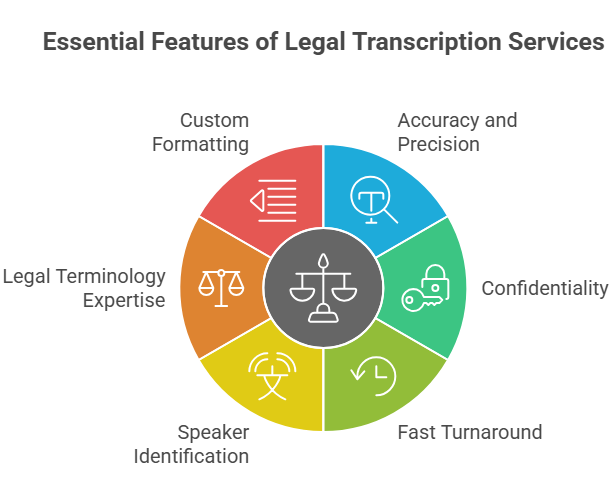
A professional Legal Transcription Service comes with a range of specialized features that ensure the quality and reliability of every document produced. These features are designed to meet the demands of law firms, judicial offices, and corporate legal departments, emphasising precision, confidentiality, and efficiency.
1. Accuracy and Precision
Professional legal transcriptionists ensure that all legal terms, witness statements, and arguments are transcribed verbatim. They use specialized software to minimize human error while preserving the speaker’s tone and intent. This commitment to precision helps prevent misinterpretation and supports fair legal outcomes.
2. Confidentiality
Strict data protection and privacy protocols are enforced to maintain client confidentiality. Every transcriptionist is bound by non-disclosure agreements (NDAs) and trained in secure data handling. Files are stored and shared through encrypted systems to eliminate risks of data breaches or unauthorized access.
3. Fast Turnaround
Legal cases often demand quick access to transcripts, and professional services provide fast delivery options. Clients can request expedited transcription for urgent hearings, appeals, or client meetings. This flexibility allows law firms to meet deadlines and improve operational efficiency.
4. Speaker Identification
Transcriptionists label all speakers, including judges, attorneys, and witnesses, with accuracy. This feature ensures clarity in multi-speaker recordings like depositions or trials. Clear speaker tags make referencing specific testimony or arguments significantly easier during case reviews.
5. Legal Terminology Expertise
Experienced transcriptionists are familiar with complex legal jargon, case law references, and courtroom dialogue. Their background knowledge ensures that terminology is always used correctly and in context. This expertise minimizes the need for revisions and strengthens the transcript’s legal validity.
6. Custom Formatting
Every transcript is formatted according to client specifications or court guidelines. Formatting includes headings, paragraph alignment, and legal exhibit indexing. The result is a professional, submission-ready document that aligns with your jurisdiction’s documentation standards.
Benefits of Using a Legal Transcription Service

Professional legal transcription services offer numerous benefits that help attorneys, law firms, and legal departments streamline operations. The advantages go beyond accuracy – they also improve productivity, cost-efficiency, and legal compliance.
1. Enhanced Accuracy
Accurate transcription minimizes miscommunication and supports the legal record’s integrity. It ensures that every spoken word is preserved exactly as it was said, providing reliable reference material for appeals or hearings. This accuracy is essential for cross-examinations and official record-keeping.
2. Time Efficiency
Using a transcription service allows legal professionals to dedicate more time to strategic casework. Instead of manually transcribing hours of recordings, attorneys can rely on experts to deliver polished transcripts. This results in faster preparation for court hearings and client presentations.
3. Cost-Effective Solution
Outsourcing transcription is more affordable than hiring in-house staff for administrative tasks. It eliminates the cost of training, software, and labor associated with full-time transcription. Law firms save on operational expenses while maintaining high-quality documentation.
4. Accessibility
Written transcripts provide instant access to specific statements, evidence, or quotations. They are easier to search, cite, and review compared to lengthy audio recordings. This accessibility improves productivity during case preparation and enhances collaboration among legal teams.
5. Legal Compliance
Professional services comply with data protection regulations such as HIPAA and GDPR, ensuring client information remains secure. Compliance with confidentiality laws helps law firms maintain ethical and professional standards. These services are particularly vital in cases involving sensitive or classified information.
6. Scalability
Whether you manage a solo practice or a large legal organization, legal transcription services can easily scale. Providers can handle a single deposition or thousands of pages of testimony within tight deadlines. This scalability ensures consistency in documentation across all projects.
Legal Transcription Service vs. In-House Transcription
| Feature | Legal Transcription Service | In-House Transcription |
|---|---|---|
| Accuracy | Professionally verified | May lack expertise |
| Cost | More affordable | Higher staff costs |
| Turnaround Time | Fast and flexible | Limited by workload |
| Confidentiality | Encrypted and secure | Risk of data leaks |
| Legal Expertise | Experienced professionals | General administrative staff |
| Scalability | Easily expandable | Resource-constrained |
How to Use a Legal Transcription Service

Before starting, it’s important to understand that using a legal transcription service involves a few essential steps. Each step ensures the final transcript meets your legal, confidentiality, and formatting requirements. The process is designed to be seamless and user-friendly for busy legal professionals.
1. Choose a Provider
Select a trusted transcription provider with a strong track record in legal accuracy and data security. Research reviews and verifies that the provider complies with confidentiality standards like NDAs and encryption. The right partner will offer transparency, reliability, and flexible pricing.
2. Upload Recordings
Upload your audio or video files through a secure online portal or encrypted email system. These platforms typically support a wide range of formats like MP3, WAV, or MP4. Ensure that you include all relevant notes, case IDs, or file labels for smoother processing.
3. Specify Requirements
Provide specific instructions regarding turnaround time, formatting preferences, or timestamp intervals. Mention if you require verbatim transcription or cleaned-up text for readability. Clear guidelines help transcriptionists deliver results that perfectly match your expectations.
4. Review Draft Transcripts
After the first draft is ready, review the document for any necessary changes or clarifications. Most services allow collaborative editing or note-based feedback within a secure platform. This ensures the final transcript reflects your preferred structure and accuracy standards.
5. Approve and Download
Once satisfied, approve the final transcript for completion. You can then download it in your chosen format—usually Word, PDF, or court-specific templates. This ready-to-use document can be stored, shared, or submitted as part of official case documentation.
6. Store Securely
Finally, store the transcript in your legal document management system or cloud archive. Proper organization helps maintain version control and ensures quick retrieval for future reference. Always ensure storage methods comply with data protection and legal retention requirements.
Limitations of Legal Transcription Services

Even the best transcription services have certain limitations that users should be aware of. Understanding these challenges helps set realistic expectations and ensures smoother collaboration between legal teams and transcription providers.
1. Audio Quality Dependency
Transcription accuracy depends heavily on the clarity of the original audio. Background noise, overlapping speech, or poor recording equipment can affect precision. Clients should use professional-grade recorders or microphones during proceedings whenever possible.
2. Cost Variations
The total cost may vary based on turnaround time, recording clarity, and complexity. Rush jobs or multi-speaker recordings can incur additional charges. It’s always recommended to discuss pricing in advance to avoid unexpected costs.
3. Confidentiality Concerns
While most providers follow strict security protocols, there’s always a risk if the provider lacks certification or a reputation. Legal firms must choose vendors with verified security credentials and audited encryption systems. Partnering with a trusted provider ensures that sensitive legal information remains fully protected.
TaskVirtual: Your Partner in Professional Legal Transcription Assistance

Managing transcription tasks for legal cases, hearings, or depositions can be demanding and time-consuming. Law firms often deal with large volumes of recordings that require accuracy, confidentiality, and compliance within strict deadlines. TaskVirtual provides dedicated legal transcription support designed specifically for legal professionals seeking dependable and efficient documentation services.
1. Expert Legal Transcription Support
TaskVirtual’s skilled virtual assistants are trained to handle complex legal audio and video materials with precision. They ensure every statement, term, and citation is accurately transcribed, proofread, and formatted according to court standards. Whether for litigation, arbitration, or client consultations, TaskVirtual’s transcription experts deliver unmatched reliability.
2. Affordable and Transparent Pricing
Hiring a full-time legal transcriptionist can be costly, but TaskVirtual offers flexible and cost-effective plans that suit firms of all sizes. With pricing starting from just $3.12/hour to $14.99/hour, legal teams gain access to professional transcription support without overspending. These scalable plans allow firms to manage costs while maintaining consistent documentation quality.
3. Comprehensive Legal Documentation Solutions
Beyond transcription, TaskVirtual assists in formatting, reviewing, and organizing case-related documents for better accessibility. Their assistants help integrate transcripts into legal management systems, prepare court submissions, and ensure version control. This all-in-one support system helps attorneys stay focused on core legal strategy.
4. Continuous Support and Quality Control
TaskVirtual ensures every transcript undergoes stringent quality checks and proofreading. Clients receive constant updates on progress, revisions, and final delivery through secure communication channels. Their proactive quality assurance system guarantees accuracy, confidentiality, and on-time completion for every project.
5. Trusted Reputation and Global Recognition
With 364 positive client reviews and an impressive 4.7-star rating across major VA platforms, TaskVirtual is recognized as a trusted partner for legal professionals worldwide. Their proven expertise, dedication to confidentiality, and customer-first approach make them a reliable choice for outsourcing legal transcription tasks with confidence.
Final Thoughts on Legal Transcription Services
A Legal Transcription Service is an essential resource for attorneys, law firms, and judicial institutions. By combining human expertise with AI-driven tools, these services deliver unmatched precision, confidentiality, and professionalism. Outsourcing transcription not only saves time but also strengthens case documentation integrity.
Legal transcription can help law firms turn interviews, depositions, meetings, and recordings into searchable working documents. As part of a broader support model, a virtual assistant for lawyers can also coordinate transcription workflows, organize files, and track review requirements.
Whether used for depositions, court hearings, or client consultations, professional transcription ensures every word is captured with accuracy. Law firms that embrace this service can operate more efficiently, uphold compliance standards, and maintain reliable case records.
FAQ: Legal Transcription Service
1. What is a Legal Transcription Service?
It’s a professional service that converts legal audio or video recordings into accurate, formatted text documents for official and reference use.
2. Who uses Legal Transcription Services?
Attorneys, law firms, court reporters, paralegals, and government agencies rely on these services for reliable documentation.
3. Are these services confidential?
Yes. Trusted providers use encrypted systems, NDAs, and secure servers to maintain the highest standards of confidentiality.
4. Can they handle different accents or languages?
Yes. Many providers employ multilingual specialists skilled in handling regional accents and multiple legal languages.
5. Is outsourcing legal transcription cost-effective?
Absolutely. It minimizes internal workload, reduces overhead, and ensures consistent professional accuracy at a lower cost.
 Siddhartha Basu is a Technical Writer at Task Virtual. He loves online games, e-book reading, and Yoga.