Contents
show
How Manuscript Proofreading Services Improve Writing Quality for Better Results
Manuscript Proofreading Services provide expert review of written manuscripts to correct grammar, spelling, punctuation, formatting, and consistency errors. These services help authors, researchers, students, and publishers polish their manuscripts before submission or publication—ensuring clarity, accuracy, and professional quality.
What Are Manuscript Proofreading Services?
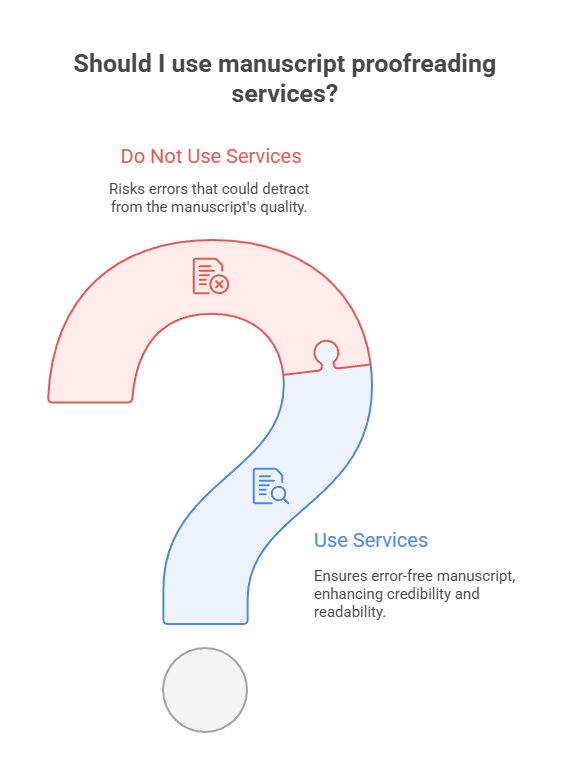
Manuscript Proofreading Services are specialized editing solutions that focus on identifying and correcting errors in manuscripts before publication or submission. Proofreaders examine your work line by line to eliminate grammar mistakes, typos, punctuation issues, formatting inconsistencies, and style errors. Considering that many journals reject up to 70% of manuscript submissions—including for poor writing quality—proofreading becomes an especially important step for authors, researchers, students, and publishers to ensure clarity, accuracy, and professional presentation.
These services are essential for authors of novels, academic papers, research articles, business manuscripts, nonfiction books, and creative writing projects.
How Manuscript Proofreading Services Work
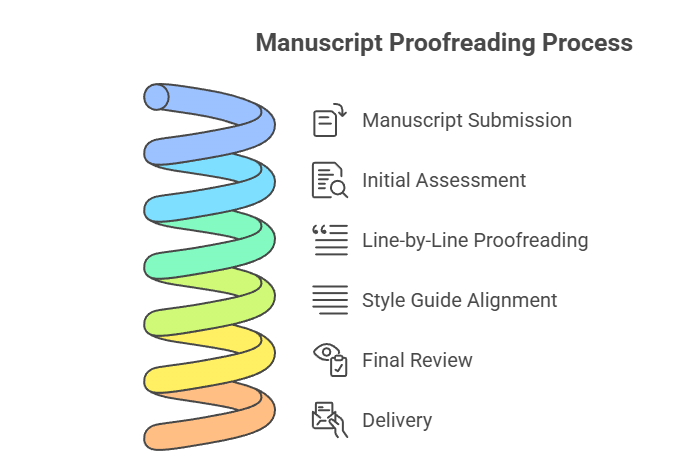
Before reviewing the steps involved, it’s important to understand that proofreading follows a structured and methodical process. Each phase is designed to improve the clarity, accuracy, and correctness of your manuscript without altering your voice. These steps ensure your document is professionally polished before reaching any reviewers or publishers.
1. Manuscript Submission
You upload your manuscript in Word, PDF, or Google Docs format. The submission provides proofreaders with the working file needed to begin their evaluation. Once uploaded, the document enters the professional review pipeline.
2. Initial Assessment
Proofreaders evaluate the document’s length, complexity, and submission guidelines. This assessment allows them to determine the scope of work and identify specific requirements you may have. It also ensures they follow the correct academic or publishing standards.
3. Line-by-Line Proofreading
Experts carefully correct grammar, typos, punctuation errors, spelling mistakes, and consistency problems. Each line is reviewed independently to ensure accuracy and readability. This close attention helps eliminate overlooked errors.
4. Style Guide Alignment
Your manuscript is adjusted to APA, MLA, Chicago, Harvard, or any custom publisher guidelines. Proofreaders verify that citations, headings, and formatting follow the required style rules. This guarantees your document meets professional or academic expectations.
5. Final Review
The proofreader performs a comprehensive check after completing the corrections. This additional pass ensures all changes are accurate and consistent throughout the manuscript. Any lingering issues are addressed before delivery.
6. Delivery
You receive the polished version of your manuscript with tracked changes or a clean final copy. This allows you to review every update and maintain full control over the outcome. The document is then ready for submission or publication.
Key Features of Manuscript Proofreading Services

These features contribute to producing a professional and clean final manuscript. They address structural, grammatical, stylistic, and formatting details that significantly influence readability. Each feature plays a unique role in elevating the quality of your writing.
1. Grammar & Spelling Corrections
Proofreaders eliminate grammar, spelling, and linguistic errors throughout the manuscript. They ensure proper word usage and correct typographical mistakes. This improves clarity and overall writing quality.
2. Punctuation & Syntax Improvements
Comma placement, apostrophes, colons, semicolons, and sentence-level issues are corrected. Syntax adjustments help improve flow while maintaining your tone. These refinements make your writing more precise and engaging.
3. Formatting & Layout Consistency
Uniform headings, spacing, margins, fonts, and numbering are applied consistently. Proofreaders also refine citation formatting to meet guidelines, and that matters because one study found that manuscripts adhering to exact formatting standards received editorial decisions 63% faster than those with inconsistent formatting. This creates a clean and professional layout.
4. Style Guide Compliance
The manuscript is adjusted to APA, MLA, Harvard, Chicago, or customized formatting requirements. Proofreaders ensure in-text citations, references, and structural elements follow the chosen style accurately. This is especially critical for academic or research writing.
5. Consistency Check
Names, chapter headings, terminology, and tense usage are reviewed. Consistency improves coherence and strengthens the reader’s understanding. Even small inconsistencies are corrected for a polished result.
6. Clarity & Flow Polishing
Minor adjustments enhance readability without altering your voice. Proofreaders smooth awkward phrasing where needed. This step ensures your message remains clear and well-structured.
7. Final Polished Output
You receive a manuscript ready for submission or printing. The final file reflects refined structure and accuracy. This professional output increases your chance of publication success.
Benefits of Using Manuscript Proofreading Services
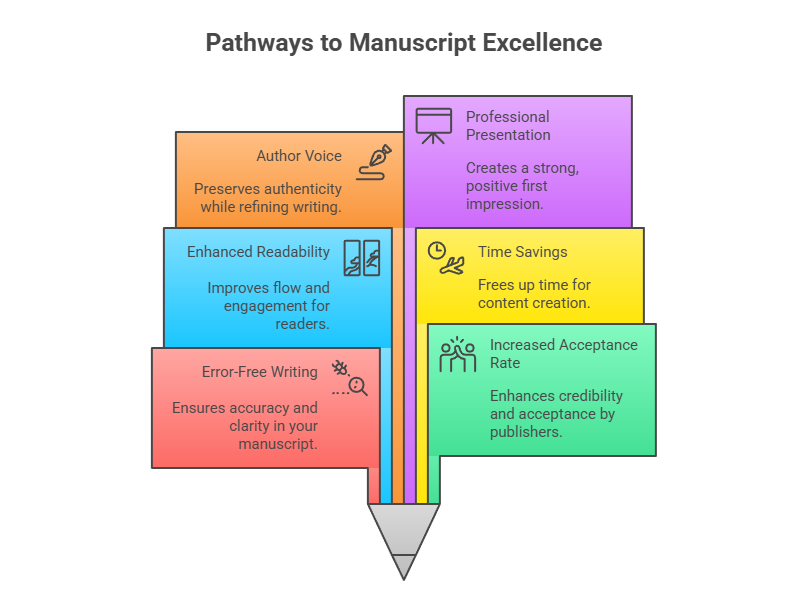
Proofreading offers advantages that enhance the value of your manuscript. These benefits help you present your best work to publishers, reviewers, or academic evaluators. They also reduce the time and effort needed for revision.
1. Error-Free Writing
Your manuscript becomes polished, accurate, and professional. Proofreaders identify issues that automated tools often miss. This ensures your writing communicates effectively.
2. Increased Acceptance Rate
Publishers and academic journals favour manuscripts that are clean and error-free. A pre-submission language editing service found that manuscripts undergoing such editing had an acceptance rate ~24% higher than those without. Well-proofread documents appear more credible and polished. This can significantly improve your acceptance probability.
3. Enhances Readability
Professional proofreading improves the overall flow of your writing. Readers can engage with your ideas without distraction from errors. This strengthens the impact of your message.
4. Saves Time
Proofreaders manage the detailed review process for you. This allows you to focus on content creation rather than corrections. The result is faster completion of your manuscript.
5. Maintains Author Voice
Proofreaders refine your writing without rewriting it. Your style and tone remain intact throughout the manuscript. This balance preserves authenticity while improving quality.
6. Ensures Professional Presentation
A polished manuscript creates a strong first impression. A professional presentation increases reader confidence in your work. This is especially important for academic and publishing contexts.
Manuscript Proofreading Services vs. Editing Services
Proofreading and editing serve different purposes depending on the needs of the manuscript. Proofreading focuses on precision and error correction, while editing restructures content more deeply. Understanding the difference helps you choose the right service for your project.
| Feature | Proofreading | Editing |
|---|---|---|
| Grammar & Spelling | Yes | Yes |
| Sentence Structure | Minor fixes only | Major improvements |
| Content Clarity | Not included | Included |
| Rewriting | No | Yes |
| Style Guide Application | Yes | Yes |
| Purpose | Final polish | Deep improvement |
Proofreading is the final step before publication, while editing involves deeper rewriting and restructuring.
How to Use Manuscript Proofreading Services
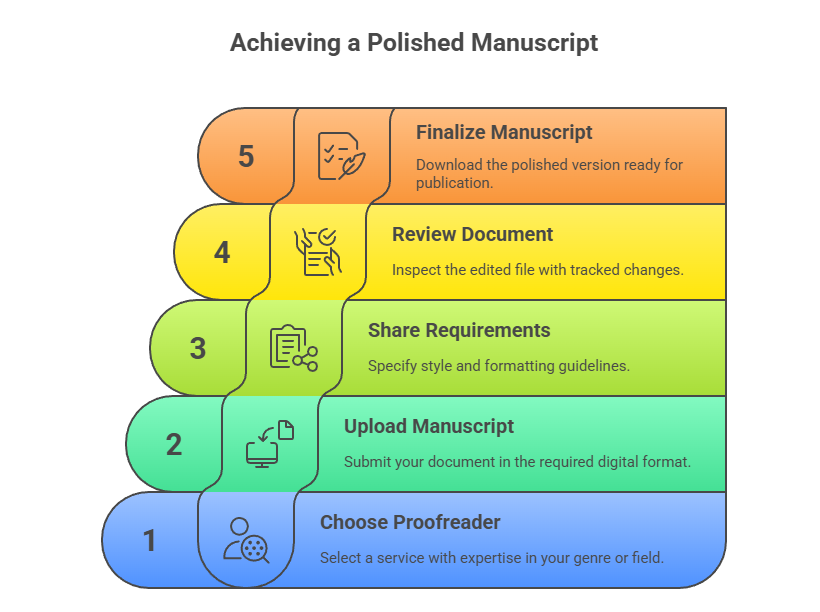
Before using a proofreading service, it helps to understand the simple workflow involved. These steps guide your interaction with the proofreader and ensure your expectations are met. Following them helps deliver a clean and professional final manuscript.
1. Choose a Professional Proofreader
Select a service with experience in your genre or academic field. Expertise ensures your manuscript is handled with appropriate knowledge. Specialized proofreaders understand specific standards relevant to your subject.
2. Upload Your Manuscript
Submit your document in the required digital format. The uploaded file becomes the working document for the proofreader. Clear formatting helps them begin the review efficiently.
Specify APA, MLA, Chicago, or custom guidelines that must be followed. Providing these details helps ensure full compliance from the start. Proofreaders can then align every section to the proper style.
4. Review Proofread Document
You receive the edited file with tracked changes for inspection. This allows you to confirm that corrections meet your expectations. You may request clarifications if needed.
5. Finalize Your Manuscript
After reviewing the changes, you can download the final polished version. This version is ready for publication, submission, or sharing. Your manuscript now presents itself professionally and accurately.
Limitations of Manuscript Proofreading Services

Proofreading has a defined scope that focuses on correcting technical errors rather than reshaping ideas. These limitations help set realistic expectations and ensure you choose the service that best supports your writing goals. Understanding these boundaries prevents confusion and ensures your manuscript receives the appropriate level of improvement.
1. Not a Full Rewrite
Proofreading corrects mistakes but does not revise the underlying ideas or structure. The proofreader will not rework argument flow, chapter organization, or conceptual clarity. This level of change is part of developmental or substantive editing rather than proofreading.
2. Limited Content Changes
Proofreaders adjust wording only when necessary for clarity or correctness. They avoid altering your tone, meaning, or narrative intent. Any major rewriting or rephrasing is outside the proofreading scope.
3. Requires Clear Instructions
Proofreaders follow the provided guidelines closely, especially regarding formatting and style rules. If instructions are unclear, the final result may not match your expectations. Clear direction ensures the service aligns with your intended outcome.
TaskVirtual: Your Partner in Manuscript Support Services

Preparing a manuscript can be demanding, especially when you’re balancing writing deadlines, formatting requirements, and submission guidelines. From managing research materials to organizing document structure and keeping track of revision timelines, the entire process can become overwhelming. TaskVirtual offers Manuscript proofreading services tailored to writers, helping you streamline your manuscript preparation, formatting, and organization while ensuring you stay focused on your creative or academic goals.
1. Expert Support for Writing & Document Preparation
TaskVirtual’s skilled virtual assistants help you manage supporting tasks such as organizing chapters, arranging research references, and preparing submission-ready documents. They ensure every file is properly named, stored, and aligned with your writing workflow. This structured support makes your proofreading and editing process smoother from start to finish.
2. Affordable and Flexible Pricing
Hiring a full-time personal assistant or research aide can be costly, but TaskVirtual provides a budget-friendly alternative. With pricing plans starting from just $3.12/hour to $14.99/hour, their services remain accessible to authors, students, researchers, and publishing professionals. You get reliable support without stretching your budget.
3. Comprehensive Manuscript Management Solutions
From tracking revisions to coordinating communication with proofreaders or editors, TaskVirtual covers multiple aspects of manuscript planning. Their assistants can help schedule drafts, organize style guide requirements, and maintain documentation consistency across all versions. Whether you need occasional help or ongoing manuscript support, their services can adapt to your workload.
4. Ongoing Support and Quality Assurance
TaskVirtual goes beyond simple task completion by offering proactive updates, reminders, and timeline monitoring. They ensure you meet submission dates, maintain version control, and stay on track throughout your writing journey. This ongoing partnership eliminates stress and keeps your manuscript progress steady.
5. Proven Track Record of Excellence
With 364 positive reviews and a 4.7-star rating on trusted VA platforms, TaskVirtual has earned recognition as a reliable partner globally. Writers and professionals trust their consistent support, efficient workflow management, and commitment to quality. Their reputation highlights their dedication to helping clients succeed with confidence.
Final Thoughts on Manuscript Proofreading Services
A Manuscript Proofreading Service is essential if you want your writing to appear polished, professional, and ready for submission. Whether you’re preparing a book, thesis, article, or business document, proofreading helps eliminate errors and improve the overall quality of your work. With expert attention to detail, proofreaders give your manuscript the final polish it needs to stand out, gain acceptance, and reflect your best writing.
FAQ: Manuscript Proofreading Services
1. What do manuscript proofreading services include?
They correct grammar, spelling, punctuation, formatting, and consistency issues.
2. Do proofreaders change my writing style?
No, they preserve your voice while fixing errors.
3. Can this service help with academic manuscripts?
Yes, especially for theses, dissertations, and journal submissions.
4. How is proofreading different from editing?
Proofreading fixes errors, while editing improves structure, clarity, and content.
5. Can I request changes after receiving the document?
Most services allow revisions or clarifications.
 Siddhartha Basu is a Technical Writer at Task Virtual. He loves online games, e-book reading, and Yoga.