
Contents
show
What Does a Virtual Assistant Actually Do?
A Virtual Assistant (VA) is a remote professional who provides structured, ongoing support to businesses, entrepreneurs, and professionals by handling essential operational and execution-based tasks. Rather than focusing on strategic decision-making, a VA concentrates on implementation, coordination, and consistency across daily business functions. The primary objective is to free up time, reduce operational friction, and allow business owners and teams to focus on growth, leadership, and revenue-generating activities.
Virtual Assistants operate using digital tools, cloud-based platforms, and online communication systems, making them highly adaptable to modern business environments. They can be engaged on an hourly, part-time, full-time, or project basis, depending on workload and business needs. By delegating repeatable or time-intensive responsibilities to a VA, organizations can scale efficiently without the fixed costs associated with traditional in-house staffing.
The Role of a Virtual Assistant in Modern Businesses
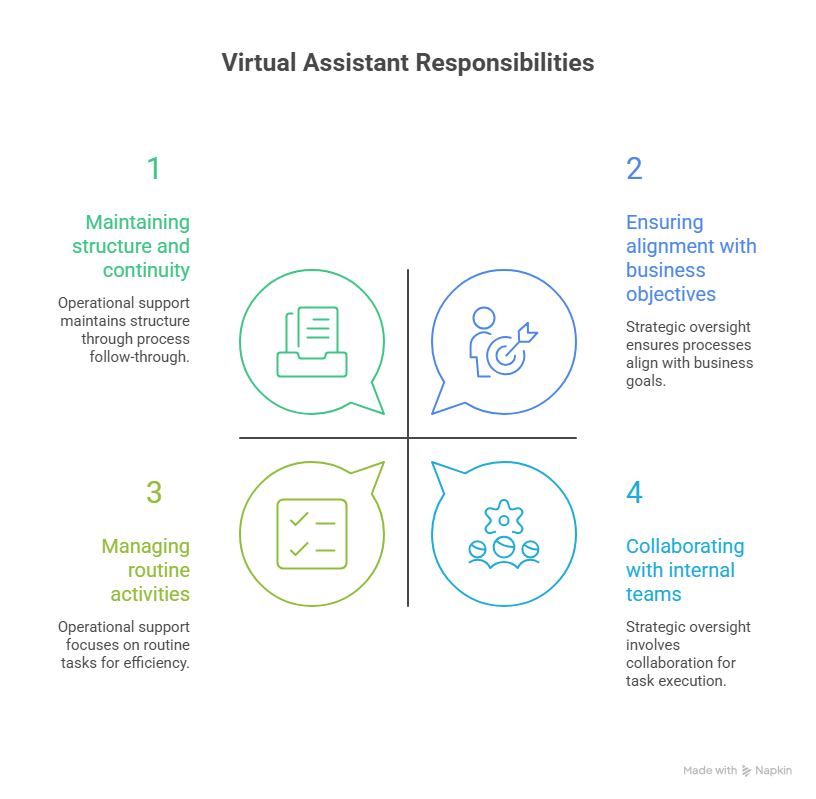
A Virtual Assistant serves as an extension of a business or professional team, taking ownership of clearly defined tasks and ensuring they are executed accurately and on time. Their role is centered on operational support, task execution, and process follow-through rather than strategic oversight or leadership responsibilities. By managing routine but essential activities, a VA helps maintain structure and continuity across business operations.
In practice, a Virtual Assistant works within established systems, workflows, and guidelines provided by the client, ensuring alignment with business objectives and standards. They collaborate remotely using task management tools, communication platforms, and shared documentation to remain integrated with internal teams. This arrangement allows businesses to remain agile while maintaining high levels of productivity and accountability.
Core Tasks a Virtual Assistant Can Handle
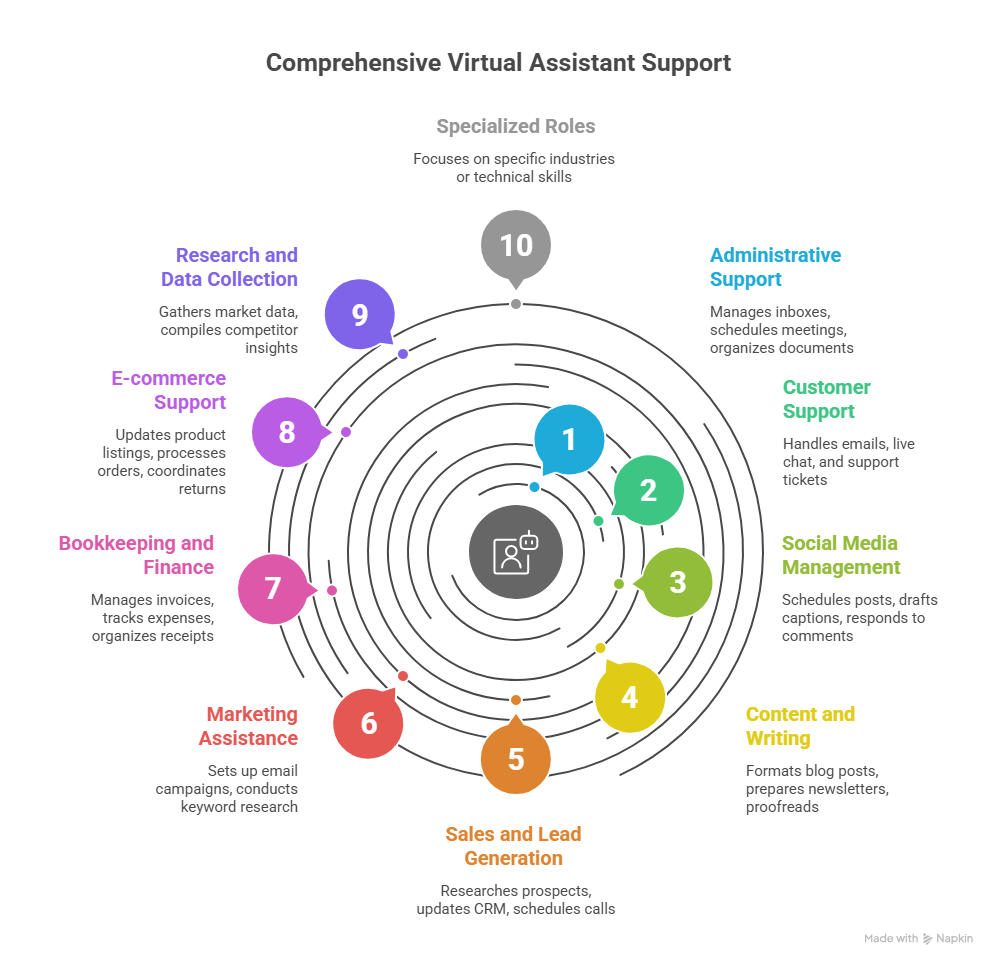
Virtual Assistants support a wide range of business functions, depending on their skill set and the needs of the organization. While responsibilities may vary by industry or role, most VA tasks focus on execution, organization, communication, and process management. These tasks are designed to reduce workload pressure on internal teams while maintaining operational efficiency.
1. Administrative Support
Administrative support is one of the most common functions handled by Virtual Assistants, as it forms the backbone of daily operations. A VA manages inboxes, schedules meetings, organizes documents, and maintains digital filing systems to ensure information is accessible and up to date. By handling coordination and administrative follow-through, they help businesses stay organized and responsive without constant oversight.
2. Customer Support and Communication
Virtual Assistants often manage customer-facing communication to ensure timely and professional responses. They handle emails, live chat messages, support tickets, and routine inquiries while following predefined scripts or service guidelines. This consistent communication improves customer experience, strengthens brand credibility, and prevents internal teams from being overwhelmed by day-to-day support requests.
3. Social Media Management Support
In social media support roles, Virtual Assistants focus on execution rather than strategy. They schedule posts, draft captions based on provided guidelines, respond to comments and direct messages, and perform hashtag or trend research. By maintaining posting consistency and engagement, they help businesses remain visible and active across social platforms.
4. Content and Writing Support
Virtual Assistants frequently assist with content-related tasks that support marketing and communication efforts. They format and publish blog posts, prepare email newsletters, proofread written materials, and repurpose existing content for different channels. This support ensures content pipelines remain active without placing additional strain on internal writers or marketers.
5. Sales and Lead Generation Support
Sales-focused Virtual Assistants help maintain momentum within sales pipelines by handling preparatory and follow-up tasks. They research prospects, update CRM systems, schedule sales calls, and send outreach or follow-up emails based on templates. This structured support allows sales teams to focus on closing deals rather than administrative coordination.
6. Marketing Assistance
Marketing Virtual Assistants provide hands-on support for campaign execution and research-based activities. They assist with email campaign setup, keyword research, SEO content uploads, competitor analysis, and basic advertising support. By managing execution-level tasks, they allow marketing teams to prioritize strategy, optimization, and performance analysis.
7. Bookkeeping and Finance Support
While Virtual Assistants do not replace licensed financial professionals, they play a valuable role in financial organization. They manage invoices, track expenses, categorize transactions, organize receipts, and prepare reports for accountants or bookkeepers. This administrative support ensures financial records remain accurate, current, and easy to review.
8. E-commerce and Online Business Support
For e-commerce businesses, Virtual Assistants manage operational tasks that keep online stores running smoothly. They update product listings, process orders, track inventory, respond to customer inquiries, and coordinate returns or refunds. This allows store owners to focus on marketing, supplier relationships, and growth planning.
9. Research and Data Collection
Virtual Assistants frequently conduct structured research to support business decisions and planning. They gather market data, compile competitor insights, organize findings into spreadsheets, and prepare summarized reports. This research support saves significant time while providing organized information that teams can act on quickly.
10. Specialized Virtual Assistant Roles
Some Virtual Assistants specialize in specific industries or technical skill sets. These roles include SEO-focused VAs, real estate VAs, medical or legal administrative VAs, podcast or video editing assistants, and LinkedIn or social media specialists. Specialized VAs bring domain-specific knowledge that allows them to integrate seamlessly into niche workflows.
Benefits of Hiring a Virtual Assistant

Hiring a Virtual Assistant provides practical, measurable advantages for businesses of all sizes. Rather than increasing internal workload or expanding headcount prematurely, organizations can delegate execution-based tasks efficiently. This approach supports sustainable growth while maintaining operational control.
1. Saves Time
A Virtual Assistant takes ownership of routine and repetitive tasks that would otherwise consume valuable hours. By delegating these responsibilities, business owners and teams regain time to focus on strategic planning, client relationships, and revenue-driving activities. Over time, this time savings compounds into improved decision-making and reduced burnout.
2. Reduces Costs
Virtual Assistants offer a cost-effective alternative to traditional employment models. Businesses avoid expenses related to office space, equipment, benefits, and long-term payroll commitments. Paying only for the hours or services needed allows organizations to manage budgets more efficiently while maintaining high-quality support.
3. Improves Productivity
With a VA handling execution-level tasks, internal teams can operate with greater focus and efficiency. Workflows become more streamlined, deadlines are met more consistently, and operational bottlenecks are reduced. This structured division of labor leads to higher overall productivity across the organization.
4. Increases Flexibility
Virtual Assistant arrangements allow businesses to scale support up or down based on demand. Companies can increase hours during peak periods or reduce workload during slower cycles without disruption. This flexibility is particularly valuable for startups, seasonal businesses, and project-based teams.
5. Access to Global Talent
Hiring a Virtual Assistant removes geographic limitations from the talent search. Businesses gain access to skilled professionals with diverse expertise, language capabilities, and industry experience. This global reach enables organizations to build highly capable support teams without being constrained by local labor markets.
Who Uses a Virtual Assistant?

Virtual Assistants are used across industries and business sizes due to their adaptability and cost efficiency. Any role that involves repeatable, time-consuming, or process-driven tasks can benefit from VA support. Their versatility makes them a practical resource for both individuals and organizations.
1. Entrepreneurs and Small Business Owners
Entrepreneurs and small business owners use Virtual Assistants to manage daily operations while focusing on growth and innovation. A VA handles administrative coordination, customer communication, and content execution that would otherwise slow decision-making. This support allows founders to operate more strategically without being buried in operational details.
2. Growing Teams and Startups
Startups and expanding teams rely on Virtual Assistants to scale operations without immediate full-time hires. VAs provide flexible support for marketing, sales, research, and administrative functions as workloads increase. This approach helps maintain agility while controlling costs during growth phases.
3. Professionals and Service-Based Businesses
Consultants, coaches, executives, and service providers use Virtual Assistants to manage scheduling, client communication, documentation, and follow-ups. This operational support enhances professionalism, responsiveness, and consistency. As a result, professionals can focus on delivering value rather than managing logistics.
How to Work Efficiently With a Virtual Assistant

Working effectively with a Virtual Assistant requires structure, clarity, and ongoing communication. When expectations are clearly defined and processes are documented, VAs can operate with minimal supervision. This collaborative approach maximizes efficiency and long-term value.
1. Define Tasks Clearly
Clearly outlining responsibilities, deadlines, and expected outcomes sets the foundation for successful collaboration. When tasks are specific and measurable, a VA can execute them accurately without repeated clarification.
2. Create SOPs
Standard Operating Procedures provide step-by-step guidance for recurring tasks. Documented processes ensure consistency, quality control, and continuity even as workloads change.
3. Use Collaboration Tools
Task management and communication tools keep workflows transparent and organized. These systems help Virtual Assistants stay aligned with priorities and deadlines.
4. Communicate Regularly
Consistent communication prevents misunderstandings and ensures alignment with business goals. Regular check-ins strengthen accountability and trust.
5. Track Performance
Setting clear performance metrics helps measure effectiveness and identify areas for improvement. Performance reviews support long-term collaboration and role expansion.
TaskVirtual: A Structured Approach to Virtual Assistant Support

As businesses increasingly rely on remote support, having a dependable VA service partner becomes critical to maintaining consistency and quality. Managing administrative workflows, customer communication, and operational tasks across multiple systems can quickly become overwhelming without dedicated support. TaskVirtual offers structured virtual assistant solutions designed to integrate seamlessly into modern business operations.
1. Expert Task Review and Operational Alignment
TaskVirtual’s experienced virtual assistants work within defined workflows to support administrative, marketing, sales, and operational tasks. They align closely with client processes, ensuring execution accuracy, timely delivery, and adherence to established guidelines.
2. Affordable and Flexible Pricing
Instead of committing to full-time hires, businesses can leverage TaskVirtual’s cost-effective model. Pricing plans start from just $3.12/hour to $14.99/hour, making professional VA support accessible to startups, growing teams, and established organizations.
3. Comprehensive Business Support Services
TaskVirtual covers a broad range of execution-focused services, including administrative management, research, content support, CRM updates, and e-commerce operations. Their scalable solutions adapt to both short-term projects and long-term support needs.
4. Ongoing Support and Quality Assurance
TaskVirtual emphasizes consistency and accountability through continuous monitoring and structured communication. Regular updates, performance tracking, and quality checks ensure tasks are completed reliably and to standard.
5. Proven Reliability and Client Trust
With 364 positive reviews and a 4.7-star rating across trusted VA platforms, TaskVirtual has established a strong reputation for dependable service delivery. Clients rely on their virtual assistants to maintain operational stability and reduce workload pressure.
Final Answer: What Does a Virtual Assistant Actually Do?
A Virtual Assistant provides remote, execution-focused support across administrative, operational, marketing, sales, and customer service functions, working within defined systems and processes to ensure consistency and efficiency. By taking ownership of routine, time-intensive tasks, a VA reduces operational friction, lowers costs, and improves productivity without adding internal headcount. Their value lies in reliable execution, structured support, and operational follow-through, enabling business owners and teams to focus on strategic decisions, leadership responsibilities, and sustainable growth.
FAQ: What Does a Virtual Assistant Actually Do?
1. Can a virtual assistant replace an employee?
In many task-based roles, yes—especially for admin and support work.
2. Do virtual assistants work full-time?
They can work hourly, part-time, or full-time.
3. Are virtual assistants only for admin tasks?
No. Many handle marketing, sales, content, and technical support.
Yes, with NDAs, secure tools, and limited permissions.
5. Are virtual assistants cost-effective?
Yes. They reduce overhead while increasing productivity.
 Siddhartha Basu is a Technical Writer at Task Virtual. He loves online games, e-book reading, and Yoga.