
Contents
show
How Virtual Nursing Assistants Support Modern Healthcare Operations
Virtual nursing assistants are remote healthcare support professionals who help medical providers, clinics, and healthcare organizations manage non-clinical nursing-related tasks. They contribute to patient communication, documentation, scheduling, remote monitoring workflows, and administrative coordination, significantly reducing the clerical burden on clinical teams. Studies show that documentation and administrative tasks can consume up to 30% of nurses’ time, which virtual nursing support models aim to relieve to allow more focus on patient care. By redistributing operational workload, they improve efficiency, reduce staff burnout, and allow licensed nurses and physicians to concentrate on direct clinical responsibilities without compromising compliance or patient experience.
What Are Virtual Nursing Assistants?

Virtual nursing assistants are remote professionals who deliver structured administrative and operational support within healthcare environments. They work alongside nurses, physicians, and care teams by managing tasks that do not require physical presence, bedside care, or clinical decision-making. A healthcare virtual nursing assistant functions as an extension of the medical team, operating securely through digital systems and standardized workflows.
A medical virtual nursing assistant typically supports patient-facing and documentation-related activities while remaining strictly within non-clinical boundaries. These professionals are increasingly utilized across telehealth ecosystems, outpatient practices, specialty clinics, and remote care programs, especially as demand for virtual healthcare grows: at the height of the COVID-19 surge, telemedicine accounted for 30.1% of all outpatient visits in the U.S., demonstrating how digital care channels have become part of mainstream clinical operations. The role of a virtual nurse assistant is designed to enhance care delivery infrastructure rather than substitute licensed clinical staff.
How Virtual Nursing Assistants Differ From Traditional Nursing Staff
Virtual nursing assistants work remotely and concentrate on non-clinical responsibilities that support healthcare operations. Unlike bedside personnel, a remote nursing assistant does not provide direct patient care, perform procedures, or interpret clinical data. Instead, a nursing virtual assistant focuses on communication workflows, documentation management, coordination tasks, and system-based processes while operating through secure digital platforms.
What Do Virtual Nursing Assistants Do?

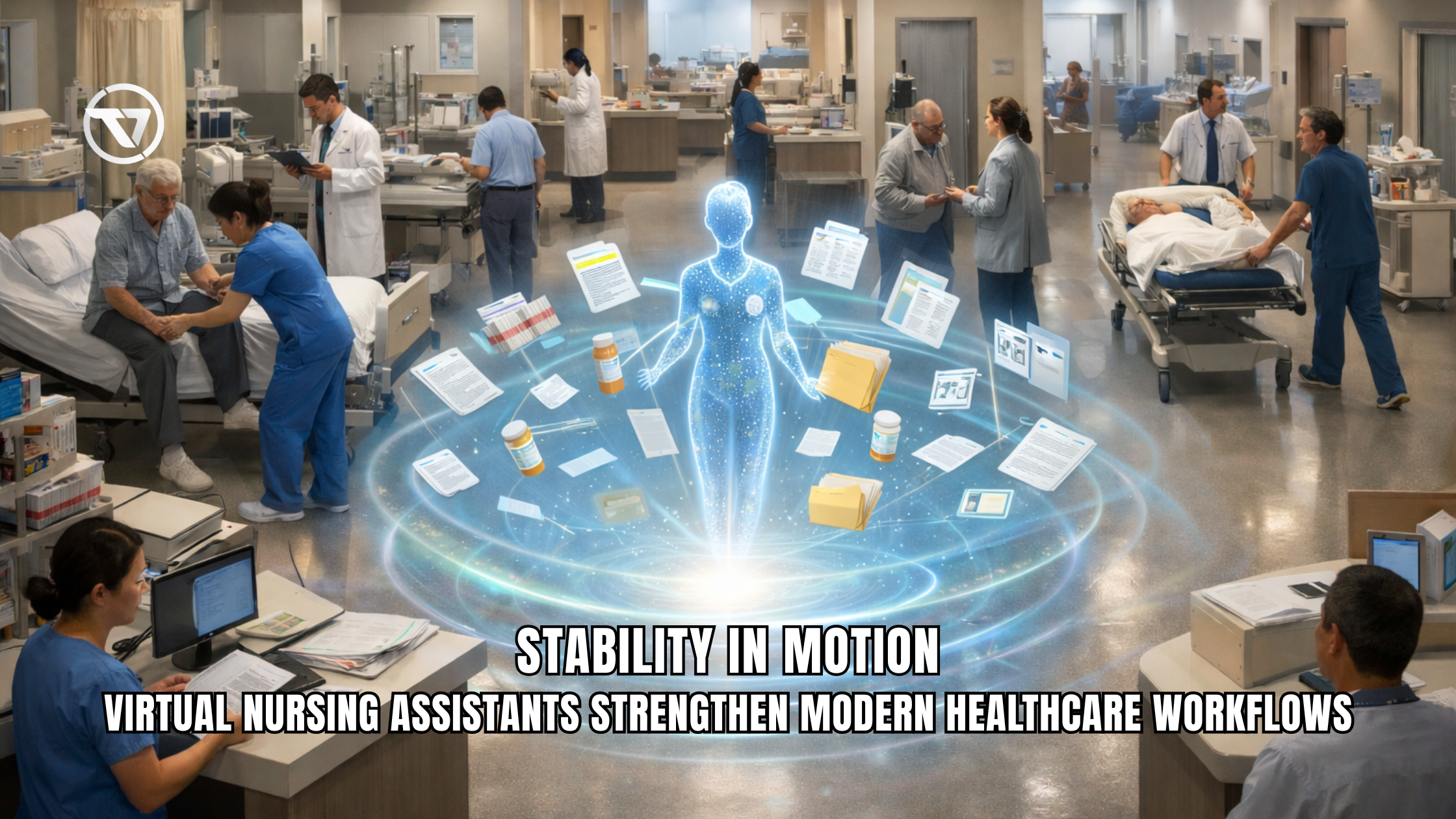
Virtual nursing assistants support a wide spectrum of operational, coordination, and patient-engagement activities within modern healthcare systems. Their responsibilities align with administrative efficiency, continuity of care processes, and documentation accuracy rather than clinical intervention. A virtual assistant for nurses or physicians typically integrates into existing workflows to stabilize routine but time-intensive tasks.
1. Patient Communication and Coordination
Virtual nursing assistants manage appointment reminders, respond to administrative inquiries, and maintain consistent patient outreach channels. They facilitate communication related to scheduling, documentation requirements, and non-clinical instructions without offering medical advice. A virtual nursing assistant for patient follow-up ensures that patients remain informed, engaged, and responsive throughout care cycles.
2. Appointment Scheduling and Calendar Management
A virtual nursing assistant for clinics or physicians coordinates patient bookings, handles rescheduling requests, and maintains provider calendars. They monitor visit confirmations and telehealth sessions to minimize disruptions and administrative delays. Efficient scheduling support directly reduces no-shows, improves resource utilization, and stabilizes clinical operations.
3. Medical Documentation and Record Support
Virtual nursing assistant services frequently include EMR and EHR data entry, record updates, and structured documentation management. They organize patient files, assist with report preparation, and maintain accuracy across digital records. Consistent documentation workflows contribute to regulatory compliance, audit readiness, and continuity of care.
4. Remote Patient Monitoring (RPM) Assistance
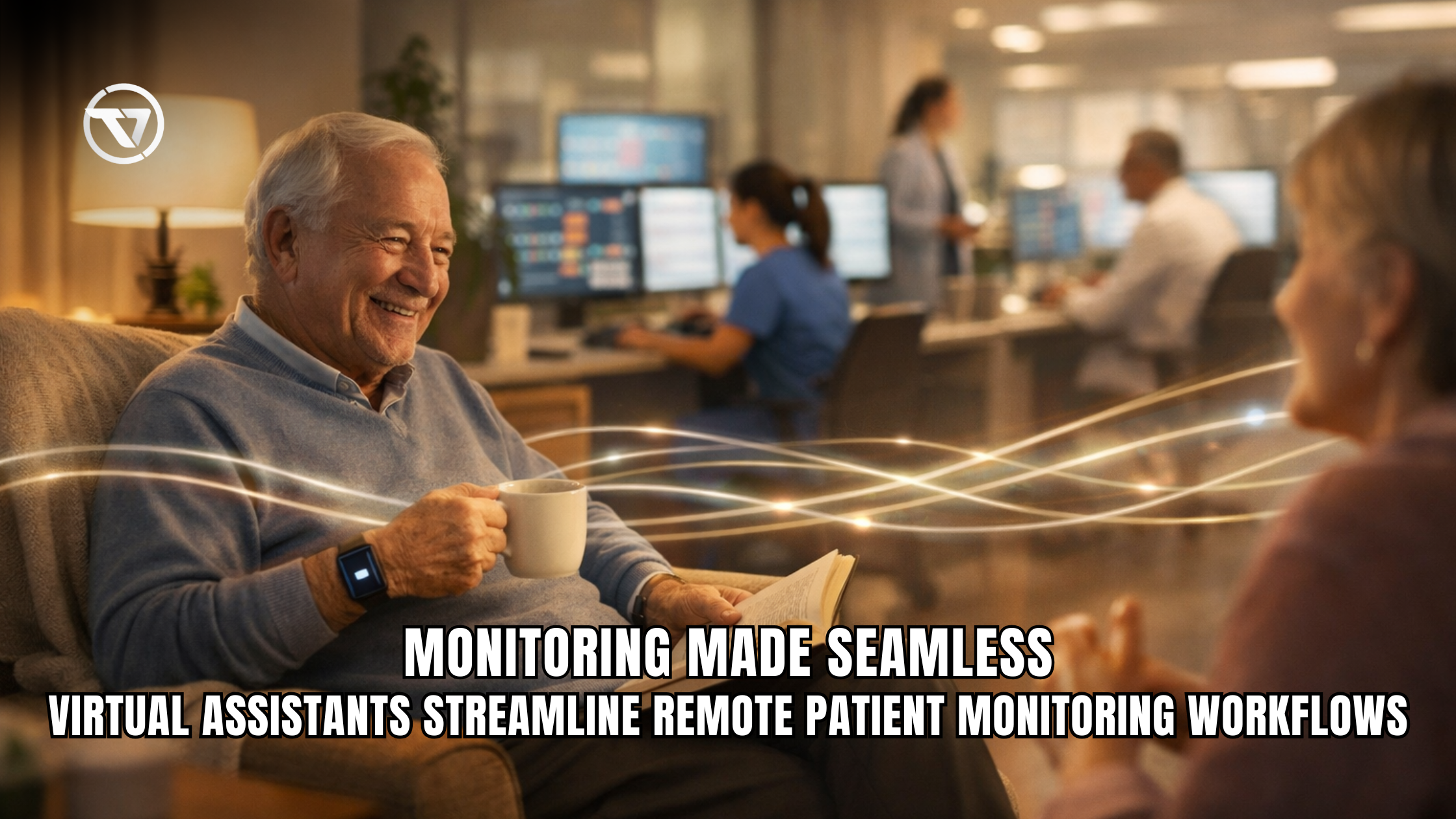
Within RPM programs, a healthcare virtual nursing assistant monitors incoming dashboards, tracks system alerts, and escalates anomalies for clinical review. They maintain logs and documentation trails without interpreting medical results. A virtual nursing assistant for triage-related workflows supports data management rather than diagnostic evaluation.
5. Care Coordination Support
Virtual nursing assistants track follow-up timelines, manage administrative aspects of care plans, and facilitate communication between stakeholders. They ensure that documentation, scheduling, and patient interactions remain synchronized. A virtual nursing assistant for care coordination strengthens workflow continuity and reduces operational gaps.
6. Insurance and Billing Support Tasks
These assistants verify patient information, update insurance records, and maintain documentation required for claims processing. They help align administrative details that influence reimbursement cycles and revenue integrity. Structured billing support minimizes errors and accelerates back-office efficiency.
7. Administrative and Operational Assistance
Virtual nursing assistants handle email workflows, data entry tasks, reporting requirements, and internal coordination activities. They standardize repetitive processes that would otherwise burden clinical staff. A dedicated virtual nursing assistant stabilizes daily operations while preserving staff productivity.
Skills Required for Virtual Nursing Assistants

The effectiveness of virtual nursing assistants depends on a combination of healthcare knowledge, communication discipline, and technical proficiency. Their role demands precision, confidentiality awareness, and structured workflow execution. A high-performing virtual nurse assistant consistently operates within defined non-clinical parameters.
1. Healthcare Systems and Documentation Proficiency
Virtual nursing assistants require familiarity with EMR and EHR environments, documentation protocols, and administrative healthcare terminology. They must understand record accuracy standards, data integrity practices, and workflow dependencies. Competence in digital systems directly influences efficiency, compliance, and error prevention.
2. Communication and Coordination Capabilities
A remote nursing assistant must demonstrate clear, structured, and professional communication across patient and provider interactions. They manage scheduling inquiries, follow-ups, and coordination tasks while maintaining clarity and consistency. Effective communication reduces misunderstandings, delays, and operational friction.
3. Compliance, Confidentiality, and Organization
Healthcare workflows demand strict adherence to privacy safeguards, confidentiality standards, and documentation discipline. Virtual nursing assistants operate within regulated environments requiring structured organization and procedural accuracy. Compliance awareness ensures risk mitigation and operational reliability.
Benefits of Using Virtual Nursing Assistants

Healthcare organizations adopt virtual nursing assistant services to optimize operational efficiency, stabilize administrative workflows, and reduce clinical staff overload. These professionals introduce scalability, cost control, and process consistency without altering clinical authority structures. The model is particularly valuable within digitally driven care ecosystems.
1. Reduced Workload for Clinical Staff
Virtual nursing assistants absorb documentation, coordination, and scheduling responsibilities that consume substantial nursing time. This redistribution allows licensed personnel to prioritize patient care and clinical decision-making. Operational efficiency improves without increasing staff fatigue.
2. Improved Patient Communication
Consistent outreach, reminders, and follow-up communication enhance patient engagement and responsiveness. Virtual assistants maintain reliable contact channels that reduce missed interactions. Patient satisfaction and continuity metrics benefit directly.
3. Better Documentation Accuracy
Structured record management and standardized data entry reduce inconsistencies and omissions. Accurate documentation supports compliance, reporting, and care continuity. Error rates decline as workflows become more systematic.
4. Cost-Effective Staffing Model
Organizations reduce overhead expenses associated with physical workspace, infrastructure, and full-time staffing commitments. An affordable virtual nursing assistant model offers financial flexibility and resource optimization. Budget efficiency improves without operational compromise.
5. Scalability for Growing Practices
Healthcare providers can expand patient volumes and service lines without proportional increases in in-house staff. Virtual workforce models adapt rapidly to fluctuating demands. Operational resilience strengthens during growth phases.
6. Support for Telehealth and Remote Care Models
Virtual nursing assistants align naturally with telemedicine platforms and remote patient management systems. They stabilize administrative layers within digital care delivery. Telehealth adoption becomes more sustainable and organized.
Virtual Nursing Assistants vs In-House Nursing Support Staff
| Aspect | Virtual Nursing Assistants | In-House Staff |
|---|---|---|
| Cost | Lower | Higher |
| Flexibility | High | Limited |
| Location | Remote | On-site |
| Scalability | Easy | Difficult |
| Overhead | Minimal | High |
Many healthcare providers adopt hybrid workforce models.
Who Should Use Virtual Nursing Assistants?

Virtual nursing assistants provide measurable value across diverse healthcare environments where administrative load, documentation volume, and patient coordination demands are significant. Clinics, outpatient facilities, and telehealth providers frequently integrate a virtual nursing assistant for clinics to stabilize operational workflows. Physicians, specialists, and multidisciplinary teams benefit from structured support without expanding physical staffing requirements.
Healthcare startups, RPM programs, and distributed care networks often hire virtual nursing assistant professionals to scale efficiently. A virtual nursing assistant for doctors or remote care teams enables process continuity, documentation reliability, and patient communication consistency. The model is especially effective within high-volume, digitally dependent care ecosystems.
TaskVirtual: Specialized Virtual Nursing Assistant Support

Healthcare operations often involve repetitive coordination, documentation, and patient communication tasks that consume valuable clinical time. Managing these workflows internally can increase staff workload, slow administrative processes, and introduce avoidable inefficiencies. TaskVirtual delivers structured virtual nursing assistant services designed to support healthcare providers, clinics, and care teams through secure and scalable remote assistance.
1. Healthcare-Focused Operational Support
TaskVirtual’s virtual nursing assistants assist with patient communication workflows, appointment coordination, and administrative follow-ups aligned with clinical schedules. They help maintain documentation consistency, scheduling accuracy, and organized care-related records. This structured support reduces interruptions and stabilizes daily operational demands.
2. Affordable and Flexible Pricing
Expanding internal administrative capacity can be costly for growing healthcare practices. TaskVirtual offers an affordable virtual nursing assistant model with pricing plans starting from just $3.12/hour to $14.99/hour. This approach enables cost control while maintaining workflow efficiency.
3. Comprehensive Administrative Assistance
TaskVirtual provides support across documentation workflows, data entry processes, calendar management, and remote coordination activities. Their virtual assistants integrate into existing systems to maintain continuity and procedural consistency. Services adapt to both short-term and long-term operational needs.
4. Workflow Stability and Ongoing Support
TaskVirtual emphasizes reliability through continuous assistance, structured task management, and consistent communication channels. Their virtual nursing assistants help organizations manage workload fluctuations and administrative cycles. This ensures predictable operational performance.
5. Proven Service Reliability
With 364 positive reviews and a 4.7-star rating on trusted VA platforms, TaskVirtual is recognized as a dependable virtual support provider. Healthcare organizations leverage their services to strengthen administrative efficiency and patient coordination workflows. Consistent performance metrics reinforce service credibility.
Final Answer: What Are Virtual Nursing Assistants?
Virtual nursing assistants are remote healthcare support professionals who strengthen operational infrastructure by managing patient communication, scheduling workflows, documentation processes, remote monitoring coordination, and administrative responsibilities. A US-based virtual nursing assistant or virtual nursing assistant USA model offers regulatory familiarity, communication alignment, and timezone compatibility for domestic providers. By integrating a dedicated virtual nursing assistant, healthcare organizations improve efficiency, enhance patient engagement, and maintain documentation accuracy while preserving the clinical authority of licensed nurses and physicians.
FAQ: Virtual Nursing Assistants
1. Are virtual nursing assistants licensed nurses?
Not always. Many focus on administrative and support functions.
2. Can virtual nursing assistants access patient records?
Yes, with secure permissions and compliance protocols.
3. Do virtual nursing assistants provide medical advice?
No. They handle non-clinical tasks only.
4. Are virtual nursing assistants HIPAA compliant?
Yes, when trained and using compliant systems.
5. Can small clinics benefit from virtual nursing assistants?
Yes. Smaller practices often gain significant efficiency improvements.
 Siddhartha Basu is a Technical Writer at Task Virtual. He loves online games, e-book reading, and Yoga.