
Contents
show
What Is Perplexity AI vs ChatGPT
Perplexity AI and ChatGPT are two of the most widely discussed AI tools in 2026, often compared because both allow users to ask questions and receive intelligent responses in natural language. Despite surface-level similarities, they are built with very different objectives, architectures, and use cases in mind. Perplexity AI functions primarily as an AI-powered search and information retrieval engine, emphasizing factual accuracy, citations, and access to recent or live web data. ChatGPT, by contrast, is a generative conversational AI designed to understand context, reason through problems, and produce high-quality language output across creative, analytical, and instructional tasks. Rather than competing head-to-head in every scenario, the two tools address different stages of the information and content lifecycle and are often most effective when used together.
What Is Perplexity AI?
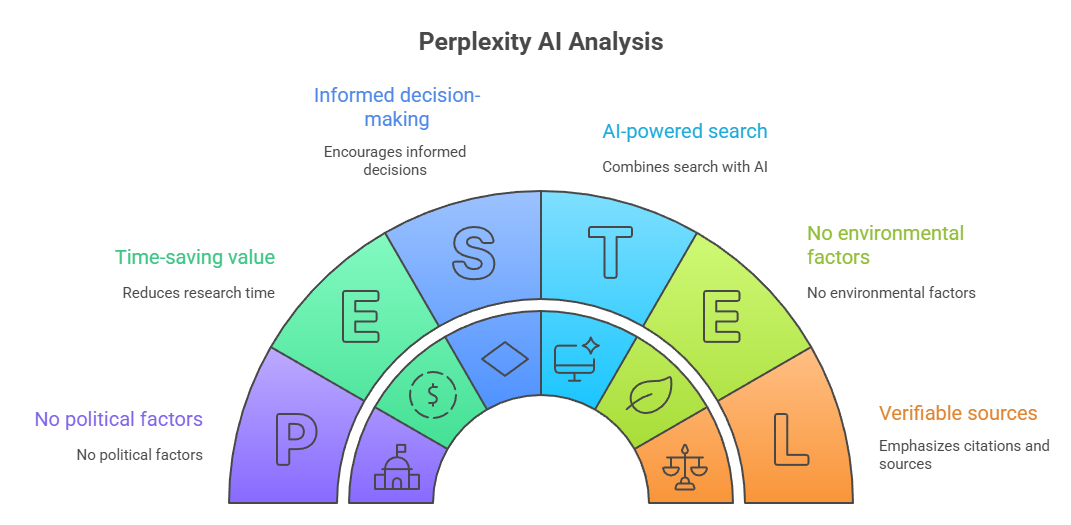
Perplexity AI is designed to help users find accurate, verifiable information quickly by combining search engine capabilities with natural language understanding. It acts as an intelligent research assistant that retrieves information from multiple sources and presents it in a concise, readable format, helping users make informed decisions with greater confidence. Its primary value lies in reducing the time spent searching, filtering, and validating information across the web, which matters because nearly 30% of knowledge workers’ time is lost looking for data and information they need to do their jobs effectively, a gap that AI-based information tools can help close.
1. Focus on AI-Powered Search and Retrieval
Perplexity AI centers its functionality on search-driven question answering, where user queries are treated as research prompts rather than conversational exchanges. It analyzes relevant web pages, academic papers, and structured sources to construct a summarized response that reflects the most reliable information available. This approach allows users to move from question to evidence-backed answer with minimal friction. The experience feels closer to an enhanced search engine than a traditional chat assistant.
2. Emphasis on Citations and Verifiable Sources
A defining feature of Perplexity AI is its commitment to transparency through citations and source links. Each answer is typically accompanied by references that allow users to verify claims or explore the original material in more depth. This makes the tool particularly valuable for academic research, journalism, and professional analysis where accuracy and attribution matter. By foregrounding sources, Perplexity encourages informed decision-making rather than blind trust in AI output.
What Is ChatGPT?
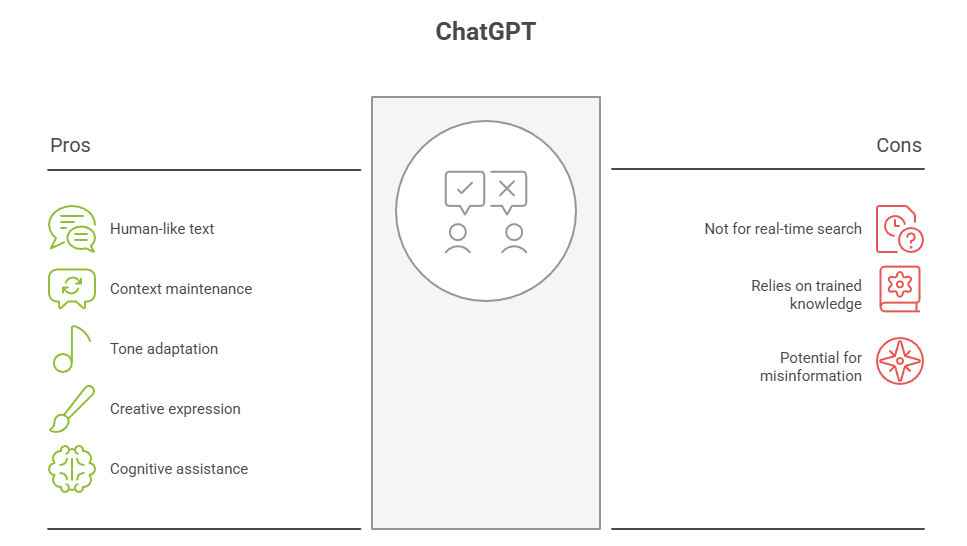
ChatGPT is a large language model developed to generate human-like text responses across a wide range of tasks. It is optimized for conversation, reasoning, and creative expression rather than direct information retrieval, which contributes to its broad adoption in professional and personal workflows—according to industry data, 49% of companies currently use ChatGPT, with many planning to expand its use for communication, analysis, and productivity tasks in the future. The system excels at understanding intent, maintaining context over long interactions, and adapting tone and structure to user needs.
ChatGPT is commonly used for writing articles, drafting emails, brainstorming ideas, explaining complex topics, generating code, and engaging in extended dialogue. While it can provide factual information, its core strength lies in language generation and cognitive assistance rather than real-time search. Depending on configuration, it may rely on trained knowledge or optional browsing features to supplement its responses.
Core Differences: Perplexity AI vs ChatGPT
| Feature | Perplexity AI | ChatGPT |
|---|---|---|
| Primary Function | AI-enhanced search + factual answers | Conversational AI & generative tasks |
| Source Citations | Yes — links and references included | Not by default |
| Live Web Data | Often yes (depending on implementation) | No (unless browsing mode is enabled) |
| Best For | Factual research, precise citations | Creative writing, explanations, tutorials |
| Conversation Depth | Moderate | High |
| Content Creation | Not core focus | Strong |
| Integration | Search-style interface | Chat/assistant interface |
How They Work: Perplexity AI vs ChatGPT
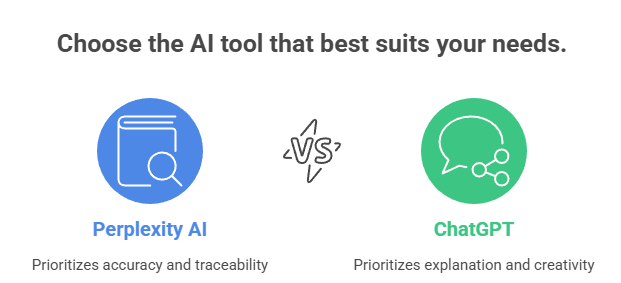
Although both tools accept natural language input, the underlying mechanisms that power their responses are fundamentally different. Perplexity AI operates by retrieving and synthesizing external information, while ChatGPT relies on probabilistic language generation informed by training data and context. Understanding how each system works helps clarify why their outputs feel distinct in practice.
1. Perplexity AI – Answering with Sources
Perplexity AI processes a user query by identifying relevant external sources and extracting key information from them. It then synthesizes this information into a coherent summary while preserving references to the original materials. The response is designed to be concise, factual, and verifiable rather than conversational. This method prioritizes accuracy and traceability over stylistic flexibility.
2. ChatGPT – Generating Natural Responses
ChatGPT generates responses by predicting the most appropriate next words based on context, intent, and learned language patterns. Rather than pulling information directly from the web, it constructs answers that aim to be clear, engaging, and logically structured. The system is optimized for explanation, creativity, and dialogue rather than citation. As a result, its outputs often feel more fluid and personalized but may lack explicit sourcing.
When to Use Perplexity AI vs ChatGPT
Choosing between Perplexity AI and ChatGPT depends largely on the nature of the task and the desired outcome. Some scenarios require verified facts and up-to-date information, while others benefit more from nuanced explanations or creative synthesis. Understanding these distinctions helps users select the most efficient tool for their objectives.
1. Researching Up-to-Date or Time-Sensitive Information
Perplexity AI is well suited for tasks that depend on current data or recent developments. It can retrieve the latest statistics, policy updates, or scientific findings and present them with clear references. This makes it especially useful in fields where information changes rapidly. Users can trust that the answers are grounded in recent sources rather than historical training data.
2. Verifying Facts and Cross-Checking Claims
When accuracy and credibility are critical, Perplexity AI offers a clear advantage through its citation-first approach. Users can review the original sources behind each claim and assess reliability independently, which matters because 71% of researchers say that having access to accurate sources with citations significantly improves the quality of their work, according to a survey by the Association of Research Managers and Administrators. This capability is particularly valuable for academic writing, professional reports, and investigative research. By grounding answers in verifiable sources, the tool reduces the risk of relying on unsupported or outdated information.
3. Conducting Structured Research and Source Discovery
Perplexity AI excels at helping users discover relevant articles, papers, and documents related to a topic. It provides a starting point for deeper research by surfacing authoritative sources efficiently. This structured approach saves time and improves research quality. It functions as both a research assistant and a discovery engine.
Use ChatGPT When:
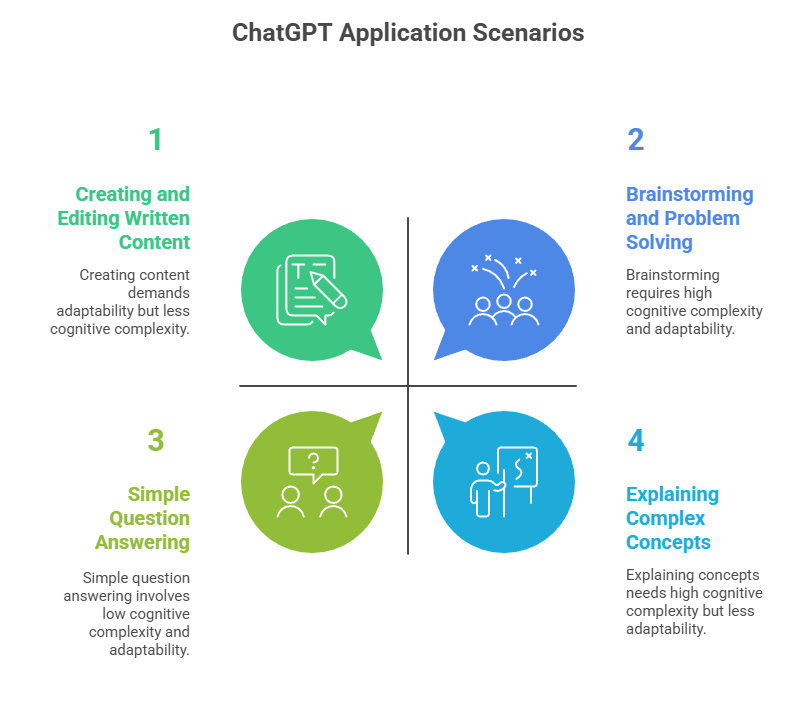
ChatGPT is most effective in scenarios where language quality, reasoning, and adaptability are more important than direct source attribution. It supports a wide range of cognitive and creative workflows that extend beyond simple question answering. Its flexibility makes it a general-purpose assistant for both professional and personal use.
1. Creating and Editing Written Content
ChatGPT is highly effective for drafting blogs, emails, reports, and marketing copy. It can adapt tone, style, and structure to match specific audiences or objectives. The model also excels at editing, rewriting, and improving existing text for clarity and impact. This makes it a valuable tool for content-heavy workflows.
2. Explaining Complex Concepts Clearly
For learning and education, ChatGPT provides clear explanations tailored to the user’s level of understanding. It can break down technical or abstract topics using analogies and step-by-step reasoning. This capability supports self-learning and knowledge transfer across domains. The conversational format encourages follow-up questions and deeper exploration.
3. Brainstorming and Problem Solving
ChatGPT is well suited for ideation, strategic thinking, and exploratory problem solving. It can generate multiple perspectives, suggest alternatives, and help structure complex decisions. The model maintains context over extended conversations, allowing ideas to evolve naturally. This makes it useful for planning, innovation, and analysis.
Strengths & Limitations
Both Perplexity AI and ChatGPT offer distinct advantages, but neither tool is without limitations. Evaluating their strengths in context helps users apply them effectively while avoiding misuse. Each system reflects trade-offs inherent in its design philosophy.
1. Perplexity AI Strengths
Perplexity AI excels in factual accuracy, transparency, and access to recent information. Its citation-driven approach builds trust and supports professional research standards. The tool is especially effective for users who need quick, reliable answers grounded in external sources. These strengths make it a strong choice for research-intensive tasks.
2. ChatGPT Strengths
ChatGPT’s primary strength lies in its language generation capabilities and conversational depth. It adapts seamlessly to creative, instructional, and analytical tasks across many domains. The model supports extended dialogue and nuanced reasoning. This flexibility makes it a powerful general assistant despite its lack of default citations.
How They Complement Each Other
Perplexity AI and ChatGPT are often most effective when used together rather than in isolation. Each tool addresses different stages of the information workflow, from data gathering to interpretation and communication. Combining them creates a more complete and efficient process.
1. Research and Fact Collection
Perplexity AI serves as a reliable starting point for gathering verified information and sources. It helps users establish a factual foundation before moving into interpretation or synthesis. This reduces uncertainty and improves confidence in downstream outputs. Accurate inputs lead to stronger results overall.
2. Interpretation and Content Development
Once facts are gathered, ChatGPT can transform raw information into clear explanations, narratives, or structured documents. It adds context, insight, and readability to research findings. This stage focuses on understanding and communication rather than verification. The result is polished, user-friendly content.
TaskVirtual: Streamlining AI Research and Content Workflows

Managing AI-driven research, content planning, and digital tasks alongside daily responsibilities can quickly become complex and time-consuming. From organizing research inputs generated by tools like Perplexity AI to structuring drafts, summaries, and documentation produced with ChatGPT, maintaining efficiency requires consistent oversight. TaskVirtual supports by providing skilled virtual assistants who help coordinate AI-assisted workflows, manage research outputs, and streamline content-related operations with precision.
1. AI Workflow Support and Task Coordination
TaskVirtual’s virtual assistants help organize AI-generated research, manage source documentation, and structure content drafts for blogs, reports, and business materials. They assist in aligning factual research with creative outputs, ensuring consistency and clarity across projects. This support allows users to focus on strategy and decision-making rather than administrative overhead.
2. Affordable and Flexible Pricing
Instead of hiring full-time staff to manage research and content operations, TaskVirtual offers a cost-effective alternative. Their pricing plans range from $3.12/hour to $14.99/hour, making professional virtual assistance accessible to startups, professionals, and growing teams. This flexibility allows users to scale support based on workload and project complexity.
3. End-to-End Research and Content Assistance
TaskVirtual provides comprehensive support across the research and content lifecycle, from organizing citations and references to preparing structured drafts and revisions. Their services adapt whether you need short-term assistance for a specific project or ongoing support for continuous content production. This ensures smoother execution across AI-powered workflows.
4. Consistent Support and Quality Monitoring
Beyond task execution, TaskVirtual emphasizes reliability and consistency through ongoing support and quality checks. Virtual assistants provide updates, maintain documentation accuracy, and ensure timelines are met. This proactive approach minimizes errors and improves overall workflow efficiency.
5. Trusted Performance and Client Satisfaction
TaskVirtual has earned 364 positive reviews with an average 4.7-star rating across trusted virtual assistant platforms. Their proven track record reflects consistent service quality and dependable support. Clients rely on TaskVirtual to simplify complex digital workflows and enhance productivity.
Final Verdict: Is Perplexity AI Better Than ChatGPT?
Whether Perplexity AI is better than ChatGPT depends entirely on the user’s goal rather than on any absolute measure of quality. Perplexity AI is the stronger choice for factual research, source verification, and accessing recent information, particularly in academic or professional contexts where credibility matters. ChatGPT, on the other hand, excels at explanation, creativity, reasoning, and content generation, making it more suitable for writing, learning, and ideation. In practice, the most effective approach is not choosing one over the other, but using Perplexity AI for evidence and ChatGPT for insight and expression.
FAQ: Perplexity AI vs ChatGPT
1. Is Perplexity AI a competitor to ChatGPT?
Partially — it competes in the AI answer space, especially for research, but they serve different primary purposes.
2. Can ChatGPT browse the web like Perplexity?
Only if web browsing is enabled; otherwise, it uses trained knowledge.
3. Which is better for student research?
Use Perplexity AI for sources + ChatGPT for explanations.
4. Can they be used together?
Yes — research with Perplexity and write with ChatGPT.
5. Is one free and the other paid?
Both offer free tiers, but features vary by provider and plan.
 Siddhartha Basu is a Technical Writer at Task Virtual. He loves online games, e-book reading, and Yoga.