

Contents
show
Virtual Sales Assistant: Boost Sales Performance with Remote Sales Support
A Virtual Sales Assistant is a remote professional who supports sales teams by handling lead generation, CRM updates, follow-ups, appointment setting, email outreach, and customer communication. By outsourcing routine sales tasks to a virtual assistant, businesses can close more deals, improve efficiency, and reduce operational costs. Virtual sales assistants help organizations scale sales operations without the overhead of hiring full-time, in-house sales support staff.
What Is a Virtual Sales Assistant?
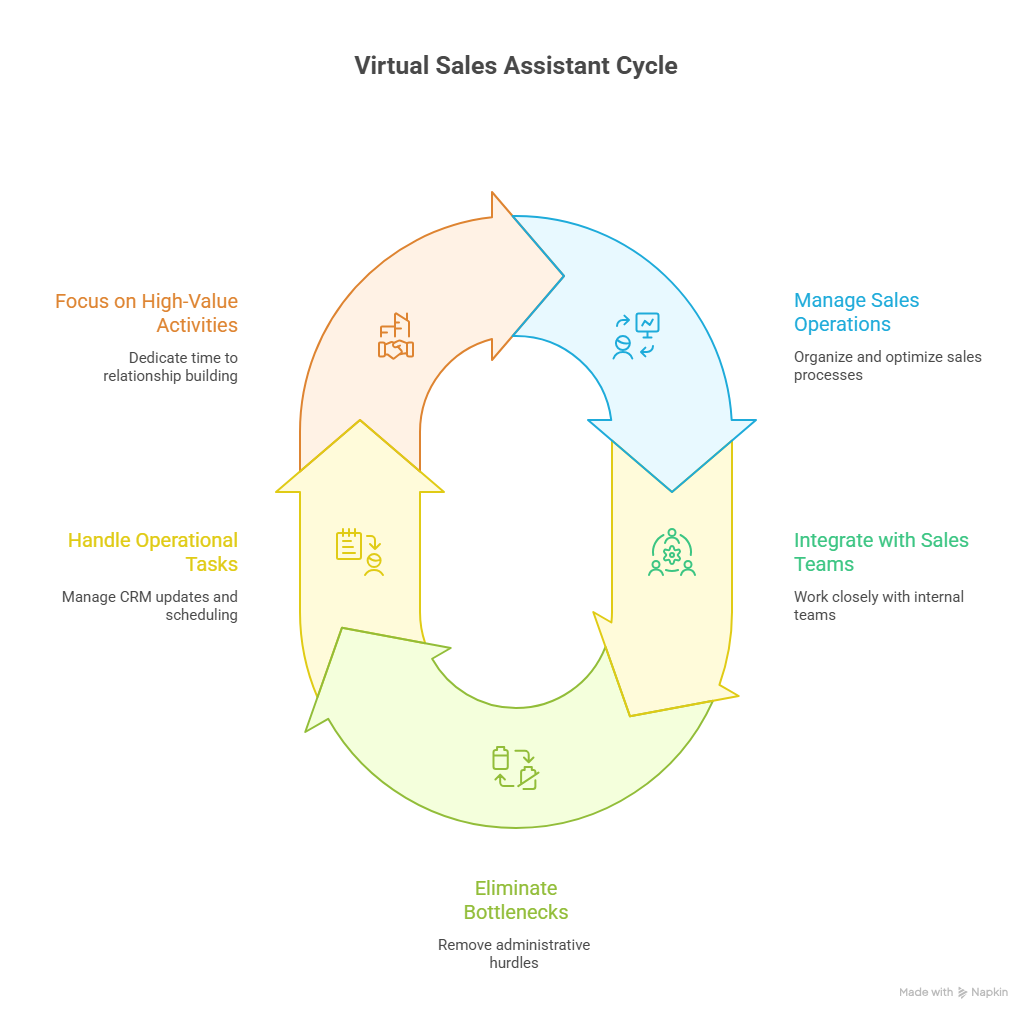
A Virtual Sales Assistant is a trained remote specialist who helps businesses manage, organize, and optimize their sales operations. These professionals work off-site but integrate closely with internal sales teams, founders, or account executives to maintain consistency across the sales process. Their primary objective is to keep the sales pipeline moving efficiently while eliminating administrative bottlenecks that slow down revenue generation.
Instead of assigning repetitive and time-consuming sales tasks to in-house staff, companies rely on virtual sales assistants to handle operational sales activities such as CRM updates, follow-ups, and scheduling. According to HubSpot, sales representatives spend only 28% of their time actually selling, with the rest consumed by administrative and non-selling tasks, making virtual sales support a strategic advantage. This shift allows sales leaders and representatives to dedicate more time to high-value activities such as relationship building, negotiations, and deal closing, while virtual sales assistants operate across industries, including B2B, B2C, SaaS, real estate, insurance, and consulting.
How a Virtual Sales Assistant Works
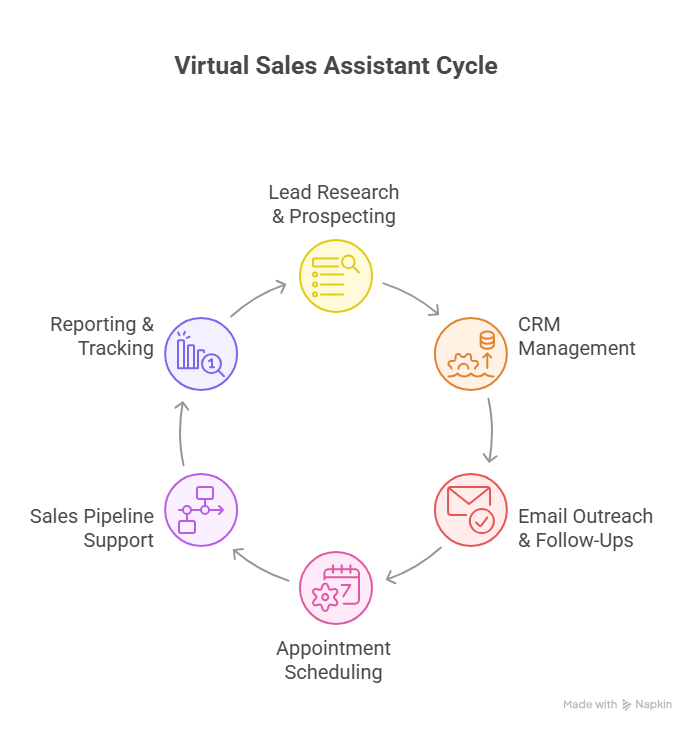
Virtual sales assistants operate as an extension of your sales team, supporting daily activities that ensure consistency and momentum across the sales pipeline. Their work follows clearly defined workflows, sales processes, and communication guidelines established by the business. By systematizing sales support, they help reduce delays, errors, and missed opportunities.
1. Lead Research & Prospecting
Before any outreach begins, a clear understanding of the target audience is essential. Virtual sales assistants start by identifying prospects that match your ideal customer profile, ensuring relevance and higher engagement rates. They use structured criteria to build targeted lead lists that support long-term sales success. The assistant researches potential customers using databases, LinkedIn, websites, and industry tools to gather accurate contact information. They verify company size, job titles, and decision-making authority to improve lead quality. This structured prospecting process ensures that sales teams engage only with qualified and relevant leads.
2. CRM Management
A well-maintained CRM system is critical for tracking every sales interaction. Virtual sales assistants ensure that customer relationship management platforms remain accurate, organized, and consistently updated. This creates a single source of truth for the entire sales team. They enter lead details, update deal stages, log conversations, and maintain follow-up notes within the CRM. This ongoing data management improves visibility into pipeline health and sales performance. As a result, sales leaders can make informed decisions based on real-time data.
3. Email Outreach & Follow-Ups
Consistent communication is essential for converting prospects into customers. Virtual sales assistants manage outbound email campaigns while adhering to approved messaging and brand tone. Their structured outreach ensures no prospect is overlooked. They send cold emails, follow-ups, and nurture sequences based on predefined schedules. Responses are tracked, categorized, and escalated to sales representatives when needed. This systematic approach enhances response rates and maintains prospect engagement throughout the sales cycle.
4. Appointment Scheduling
Timely scheduling plays a major role in converting interested prospects. Virtual sales assistants manage calendars to ensure smooth coordination between prospects and sales representatives. This eliminates back-and-forth emails and scheduling conflicts. They book discovery calls, product demos, and meetings directly into shared calendars. Automated reminders and confirmations are sent to reduce no-shows. This streamlined scheduling process improves the overall prospect experience.
5. Sales Pipeline Support
A healthy sales pipeline requires constant attention and follow-through. Virtual sales assistants help monitor deal progression and identify stalled opportunities. Their support ensures momentum is maintained across all active leads. They remind sales representatives of upcoming tasks, follow-ups, and deadlines. Pipeline statuses are reviewed regularly to identify gaps or delays. This proactive approach prevents leads from falling through the cracks.
6. Reporting & Tracking
Sales data provides valuable insights into performance and trends. Virtual sales assistants compile basic reports that help teams understand outreach effectiveness and conversion rates. These reports support strategic decision-making. They track metrics such as the number of leads contacted, responses received, and appointments booked. Reports are prepared on a daily, weekly, or monthly basis. This visibility enables continuous optimization of sales strategies.
Key Features of Virtual Sales Assistant Services

Virtual sales assistant services are designed to cover the most critical support functions within a sales organization. These services adapt to different business sizes and industries while maintaining operational consistency. By centralizing sales support, businesses improve efficiency and predictability.
1. Lead Generation
Lead generation is the foundation of every successful sales strategy. Virtual sales assistants focus on identifying prospects who are most likely to convert. Their efforts help maintain a steady inflow of opportunities. They use online platforms, professional networks, and databases to source leads. Prospects are filtered based on predefined qualification criteria. This ensures that sales teams focus on high-potential opportunities only.
2. CRM Data Management
Accurate sales data is essential for forecasting and reporting. Virtual sales assistants ensure CRM systems remain clean and reliable. This reduces confusion and improves collaboration. They continuously update records with new information and activity logs. Duplicate entries and outdated data are removed. This disciplined approach supports efficient sales operations.
3. Cold Email & Outreach Support
Outbound communication requires consistency and precision to drive engagement. Virtual sales assistants manage outreach campaigns using tested templates, ensuring messaging aligns with brand standards and maintains a professional tone. This structured approach helps create uniform communication across all touchpoints. They monitor open rates, replies, and engagement levels to identify interested prospects and flag them for immediate follow-up. According to Campaign Monitor, emails with personalized subject lines are 26% more likely to be opened, reinforcing the value of structured, data-driven outreach management. By tracking engagement and prioritizing warm leads, this approach improves overall campaign effectiveness and conversion potential.
4. Appointment Setting
Efficient scheduling accelerates the sales process. Virtual sales assistants coordinate meetings without disrupting sales workflows. Their involvement reduces administrative friction. They manage availability, confirm attendance, and send reminders. This minimizes cancellations and rescheduling. As a result, sales teams spend more time selling.
5. Sales Admin Support
Sales operations involve significant documentation and organization. Virtual sales assistants handle administrative tasks that support deal progression. This reduces the workload on sales representatives. They prepare proposals, update spreadsheets, and organize contracts. Documents are stored systematically for easy access. This administrative support improves operational efficiency.
6. Follow-Up Management
Consistent follow-up is critical for closing deals. Virtual sales assistants ensure timely communication at every stage. Their efforts maintain prospect engagement. They track follow-up schedules and send reminders or messages as required. Missed follow-ups are minimized through structured workflows. This consistency increases conversion rates.
7. Basic Market Research
Understanding market conditions strengthens sales strategies. Virtual sales assistants conduct basic research to support informed decision-making. Their insights add strategic value. They gather information on competitors, pricing, and customer preferences. Findings are summarized and shared with sales teams. This knowledge supports more effective positioning.
Benefits of Hiring a Virtual Sales Assistant
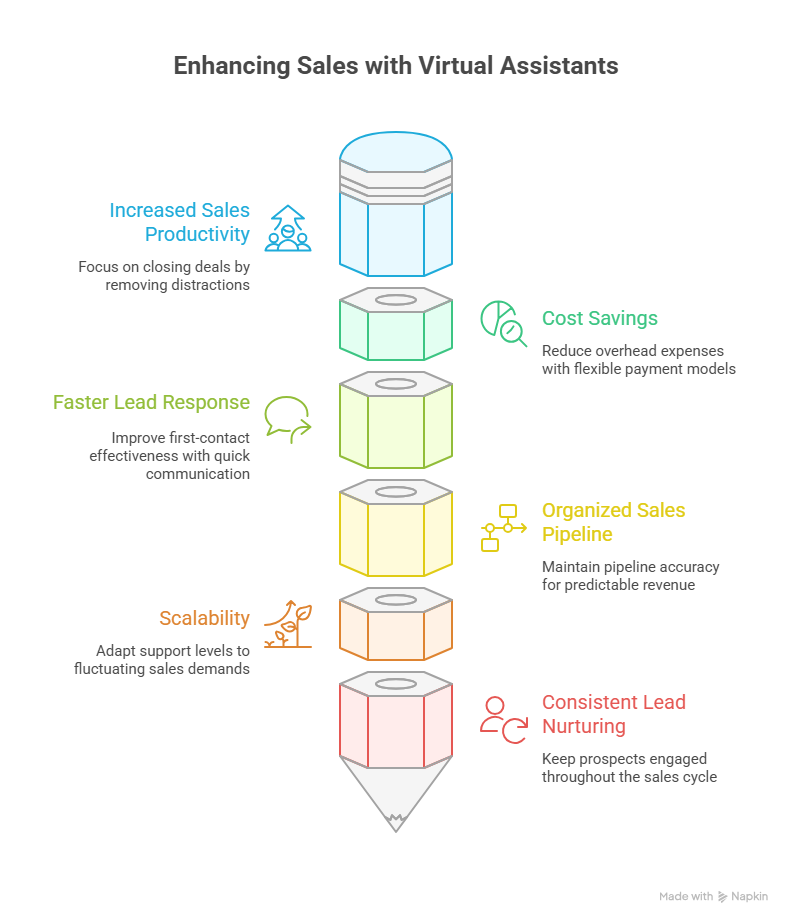
Hiring a virtual sales assistant delivers measurable benefits across productivity, cost efficiency, and scalability. Businesses gain access to skilled support without long-term commitments. This model supports sustainable sales growth.
1. Increased Sales Productivity
Sales representatives perform best when focused on closing deals. Virtual sales assistants remove administrative distractions. This improves overall productivity. They handle repetitive tasks that consume valuable time. Sales teams can concentrate on relationship-building activities. This focus leads to higher revenue generation.
2. Cost Savings
Managing in-house staff involves significant expenses. Virtual sales assistants reduce overhead costs. This makes sales support more affordable. Businesses avoid expenses related to office space, benefits, and equipment. Payment models are flexible and scalable. This improves budget efficiency.
3. Faster Lead Response
Speed matters in sales engagement. Virtual sales assistants ensure quick responses to inquiries. This improves first-contact effectiveness. They monitor inboxes and CRM alerts consistently. Prospects receive timely communication. Faster responses increase conversion potential.
4. Organized Sales Pipeline
A structured pipeline supports predictable revenue. Virtual sales assistants maintain pipeline accuracy. This improves visibility and control. They ensure that deal stages reflect the current status. Follow-ups are tracked systematically. This organization reduces revenue leakage.
5. Scalability
Sales demands fluctuate over time. Virtual sales assistants offer flexible scaling options. This supports growth without risk. Businesses can increase or reduce support as needed. There is no long-term staffing commitment. This adaptability supports agile sales operations.
6. Consistent Lead Nurturing
Long sales cycles require ongoing engagement. Virtual sales assistants maintain consistent communication. This keeps prospects warm. They manage and nurture sequences and reminders. Engagement remains steady throughout the funnel. This consistency improves closing rates.
Virtual Sales Assistant vs In-House Sales Support
When comparing virtual sales assistants with in-house sales support, cost and flexibility are major differentiators. Virtual models reduce overhead while maintaining performance. Businesses benefit from faster deployment and scalability.
| Feature | Virtual Sales Assistant | In-House Sales Assistant |
|---|---|---|
| Cost | Lower | Higher salary + benefits |
| Flexibility | Highly flexible | Fixed hours |
| Hiring Time | Fast | Slow |
| Scalability | Easy | Limited |
| Overhead | Minimal | High |
Who Should Hire a Virtual Sales Assistant?
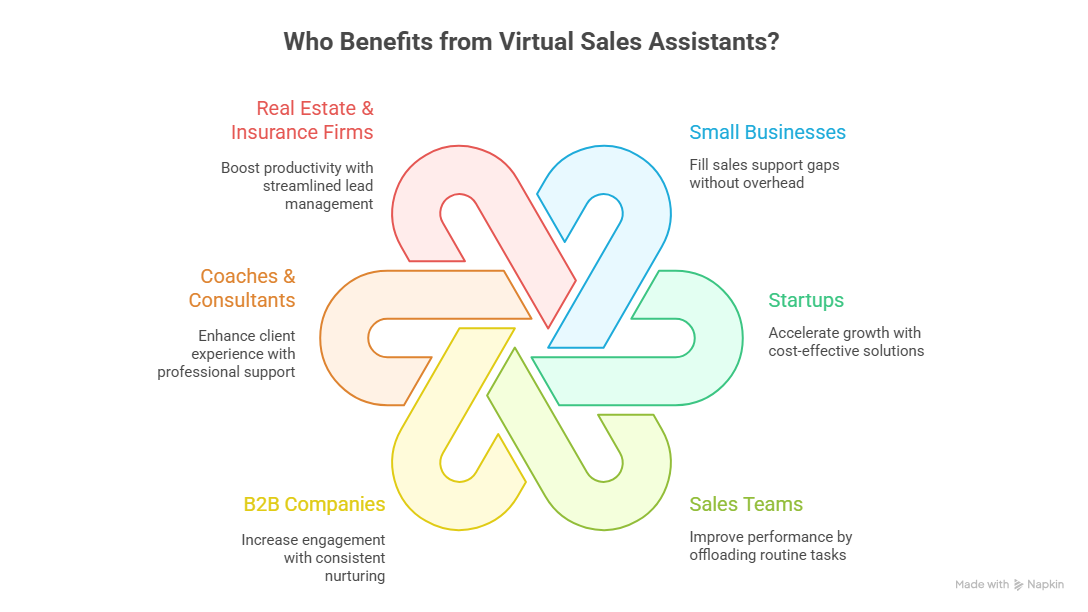
Virtual sales assistants serve a wide range of businesses. Their adaptability makes them suitable for various sales models. Companies benefit regardless of size or industry.
1. Small Businesses
Small businesses often lack dedicated sales support. Virtual sales assistants fill this gap efficiently. They provide structure without overhead. They manage leads and follow-ups consistently. Owners can focus on strategy and growth. This improves operational balance.
2. Startups
Startups require agility and cost control. Virtual sales assistants support early pipeline development. This accelerates growth. They help build structured sales processes. Resources are used efficiently. This supports sustainable scaling.
3. Sales Teams
Growing sales teams face administrative overload. Virtual sales assistants offload routine tasks. This improves performance. Reps focus on closing deals. Administrative delays are reduced. Team efficiency increases.
4. B2B Companies
B2B sales cycles require consistent nurturing. Virtual sales assistants manage outreach and follow-ups. This improves engagement. They support lead qualification and scheduling. Sales cycles become more predictable. Conversion rates improve.
5. Coaches & Consultants
Service-based professionals require scheduling and follow-up support. Virtual sales assistants manage inquiries efficiently. This improves client experience. They handle bookings and CRM updates. Communication remains professional. This supports brand credibility.
6. Real Estate & Insurance Firms
These industries rely heavily on prospecting. Virtual sales assistants support lead management. This improves pipeline flow. They manage client communication and appointments. Agents focus on closing. Productivity increases.
How to Hire a Virtual Sales Assistant

Hiring the right virtual sales assistant requires structure and clarity. A defined process ensures alignment and performance. Following proven steps reduces onboarding challenges.
1. Define Sales Tasks
Clarity is essential before outsourcing. Businesses must identify which tasks to delegate. This ensures effective support. List administrative and operational sales activities. Prioritize tasks that consume the most time. This creates a clear scope.
2. Choose an Experienced VA
Experience determines effectiveness. Virtual sales assistants should understand sales workflows. This reduces training time. Review past sales support roles. Assess CRM and outreach experience. Select based on skill alignment.
3. Provide Sales Scripts & Tools
Clear guidelines enable consistency. Virtual sales assistants rely on the provided materials. This ensures brand alignment. Share email templates and CRM access. Provide documentation and scripts. This supports smooth execution.
4. Set KPIs
Performance must be measurable. Key performance indicators guide accountability. This drives results. Define metrics such as response time and booked calls. Review regularly. Adjust as needed.
5. Monitor Performance
Ongoing review ensures quality. Virtual sales assistants thrive with feedback. This supports continuous improvement. Schedule regular check-ins. Review reports and outcomes. Optimize workflows collaboratively.
6. Scale Support
Sales needs evolve. Virtual sales assistants offer scalable support. This aligns with growth. Increase workload as pipeline expands. Adjust hours or tasks. Maintain flexibility.
Limitations of Virtual Sales Assistants
While highly effective, virtual sales assistants have limitations. Understanding these ensures realistic expectations. Proper planning mitigates risks.
1. Limited Closing Authority
Virtual sales assistants typically do not close deals. Their role focuses on support. Closing remains with sales professionals. They prepare prospects for handoff. Sales reps handle negotiations. This division maintains control.
2. Requires Clear Sales Processes
Ambiguity reduces effectiveness. Virtual sales assistants need defined workflows. This ensures consistency. Businesses must document processes. Clear instructions improve outcomes. Structure is essential.
3. Training Time
Initial onboarding is required. Virtual sales assistants need alignment. This ensures quality output. Training investment pays off long-term. Performance improves over time. Consistency is achieved.
TaskVirtual: Reliable Virtual Sales Support for Growing Businesses

Managing sales operations alongside lead generation, CRM updates, outreach, and follow-ups can quickly overwhelm internal teams. As sales pipelines grow, maintaining consistency, speed, and organization becomes increasingly challenging without dedicated support. TaskVirtual provides professional virtual sales assistant services that help businesses streamline sales operations while allowing sales teams to stay focused on closing deals.
1. Specialized Virtual Sales Assistant Expertise
TaskVirtual offers trained virtual sales assistants with hands-on experience in lead research, CRM management, email outreach, and appointment scheduling. Their assistants integrate seamlessly with your existing sales workflows and tools to ensure accuracy and consistency. This specialized support helps keep your sales pipeline active, organized, and conversion-focused.
2. Cost-Effective and Flexible Pricing Plans
Hiring full-time in-house sales support can be costly and inflexible for many businesses. TaskVirtual delivers affordable virtual sales assistant services with pricing plans ranging from $3.12/hour to $14.99/hour, making professional sales support accessible to startups, small businesses, and growing sales teams. Flexible engagement models allow you to scale support based on sales volume and business needs.
3. End-to-End Sales Operations Support
TaskVirtual covers essential sales support tasks, including lead generation, CRM updates, follow-up management, reporting, and appointment setting. Their assistants work closely with your sales team to ensure no lead is missed and every opportunity is tracked. This end-to-end support strengthens sales efficiency and improves overall pipeline performance.
4. Continuous Monitoring and Quality Assurance
TaskVirtual emphasizes consistency and reliability through ongoing performance monitoring and quality checks. Regular updates, reporting, and communication ensure transparency across sales activities. This proactive approach helps maintain high service standards and continuous improvement.
5. Proven Results and Client Trust
With 364 positive reviews and an average 4.7-star rating across trusted virtual assistant platforms, TaskVirtual has established a strong reputation for dependable service delivery. Businesses worldwide rely on TaskVirtual to support sales operations, improve productivity, and scale efficiently. Their proven track record reflects consistent client satisfaction and operational excellence.
Final Thoughts on Virtual Sales Assistants
A Virtual Sales Assistant is a strategic asset for modern businesses seeking efficient growth. By handling lead generation, CRM management, follow-ups, and scheduling, they enable sales teams to focus on revenue-driving activities. Whether you are a startup, small business, or established organization, virtual sales assistants provide scalable, cost-effective sales support that improves productivity, conversions, and pipeline organization.
FAQ: Virtual Sales Assistant
1. What does a virtual sales assistant do?
They support sales operations through lead research, CRM updates, follow-ups, and appointment scheduling.
2. Can a virtual sales assistant generate leads?
Yes, they often handle lead research and qualification.
3. Do virtual sales assistants close deals?
Typically, no—they support the sales process, while sales reps close deals.
4. Is hiring a virtual sales assistant affordable?
Yes, it is more cost-effective than hiring in-house sales staff.
5. What tools do virtual sales assistants use?
They use CRMs, email platforms, LinkedIn, scheduling tools, and spreadsheets.
 Siddhartha Basu is a Technical Writer at Task Virtual. He loves online games, e-book reading, and Yoga.