


Contents
show
On Page SEO Service: Optimize Your Website for Maximum Search Visibility
An On-Page SEO Service helps businesses optimize individual web pages to improve search engine rankings, increase organic traffic, and enhance user experience. By focusing on content, meta tags, URL structure, internal linking, and technical elements, these services ensure your website is fully optimized for search engines and users alike.
What Is an On Page SEO Service?
On-Page SEO Service is a professional solution that focuses on optimizing the content and structure of a website to improve search engine performance. Unlike off-page SEO, which targets external signals like backlinks, on-page SEO deals with elements directly under your control, including content, HTML tags, images, internal links, and page load speed. These services are ideal for businesses, e-commerce websites, and content creators looking to enhance visibility, attract organic traffic, and provide a better user experience.
How On-Page SEO Services Work
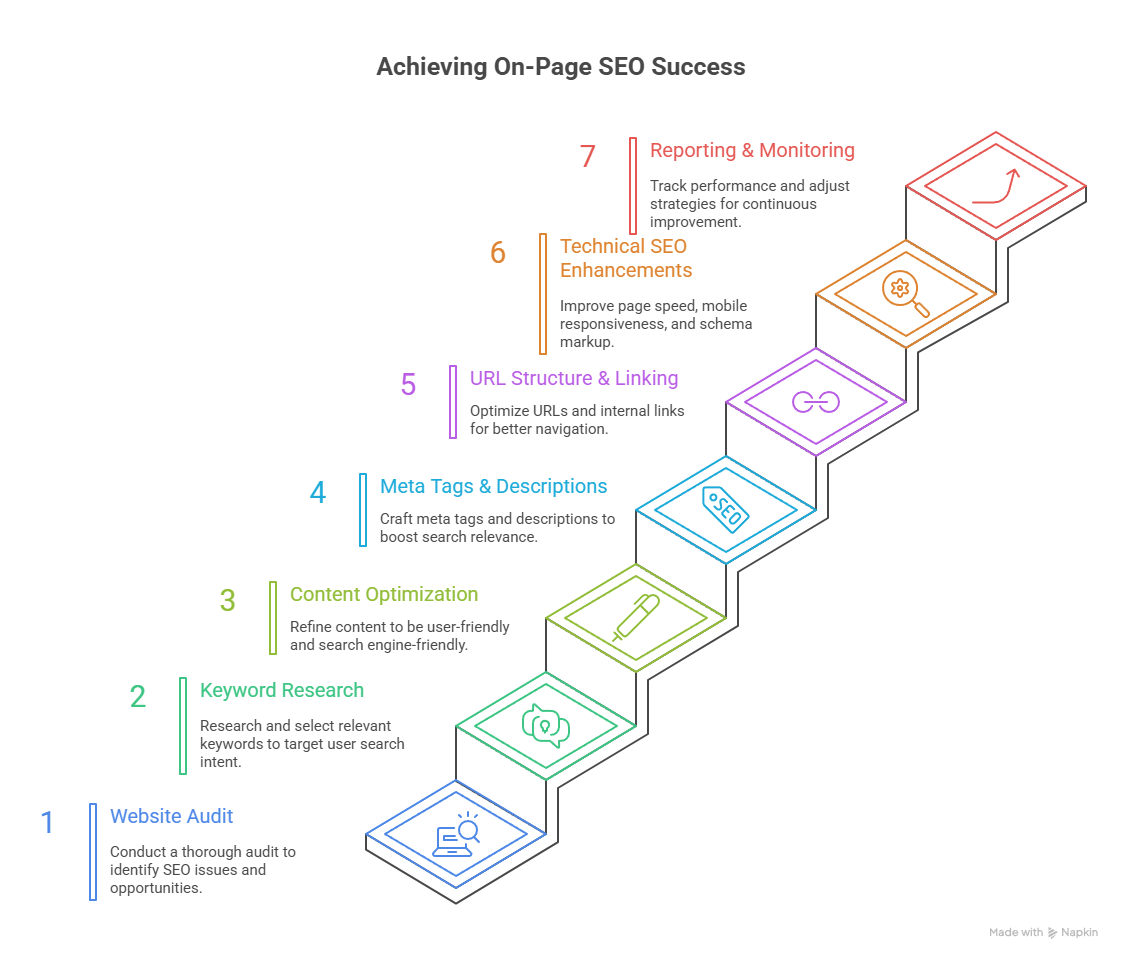
On-Page SEO Services work by systematically analyzing and optimizing every element of your website to improve search visibility and user engagement. The process begins with a detailed SEO audit that identifies technical issues, content gaps, and keyword opportunities. Based on these insights, experts refine your page structure, meta tags, and internal links to align with search engine algorithms. They also optimize images, URLs, and loading speed for better performance. Continuous tracking and reporting ensure that each optimization delivers measurable improvements in rankings and traffic.
1. Website Audit
The service provider conducts a thorough website audit to uncover SEO issues such as broken links, duplicate content, and inefficient page structures. This process evaluates both user experience and search engine compatibility. Technical errors, slow-loading pages, and missing elements are identified for correction. The audit also highlights opportunities for keyword optimization and content improvement. Ultimately, this foundational step ensures your website is ready for effective on-page SEO enhancements.
2. Keyword Research
Relevant keywords are carefully researched and selected for each page to match user search intent. Competitor analysis is conducted to identify high-value opportunities and gaps. Long-tail and primary keywords are strategically incorporated into content, headings, and meta tags. This ensures pages attract qualified traffic while avoiding keyword stuffing. Proper keyword targeting increases the chances of higher search rankings and better organic visibility.
3. Content Optimization
Page content is refined to be both user-friendly and search engine-friendly. Keywords are naturally integrated into headings, paragraphs, and bullet points. Readability improvements, formatting, and content structuring enhance engagement and retention. The optimization process also aligns content with search intent, providing value to visitors. Well-optimized content improves ranking potential while driving meaningful traffic to your site.
4. Meta Tags and Descriptions
Meta titles, descriptions, and alt tags for images are crafted to boost search engine relevance and click-through rates. Descriptive and engaging tags encourage users to click from search results. Alt text for images also improves accessibility and indexing. Consistent meta optimization ensures each page communicates its topic clearly to search engines. This step strengthens overall on-page SEO and contributes to higher visibility.
5. URL Structure and Internal Linking
URLs are structured to be short, descriptive, and SEO-friendly, making them easy for users and search engines to understand. Internal linking is strategically implemented to distribute page authority across your website. This improves navigation and helps search engines index all pages effectively. Anchor texts are optimized to enhance relevance and user experience. Together, optimized URLs and links increase the site’s crawlability and ranking potential.
6. Technical SEO Enhancements
Technical elements such as page speed, mobile responsiveness, and schema markup are optimized for performance. Slow-loading pages are improved to reduce bounce rates and enhance user experience. Mobile-friendly designs ensure seamless access across devices. Schema markup helps search engines understand page content better, potentially boosting rich snippets. Addressing technical SEO issues strengthens both usability and search engine rankings.
7. Reporting and Monitoring
Regular SEO reporting and monitoring are essential for tracking page performance, keyword rankings, and overall website traffic. According to a 2025 survey, approximately 46% of companies track 3–5 primary SEO metrics, while 40% monitor 6–10 metrics. This approach allows businesses to identify areas for improvement and opportunities for optimization. Regular monitoring ensures that SEO strategies remain effective and up-to-date with algorithm changes. Progress tracking helps in adjusting tactics to maintain or improve rankings. Continuous reporting supports long-term growth and sustainable SEO success.
Key Features of On-Page SEO Services

The key features of On-Page SEO Services include optimizing content, metadata, and technical elements to boost search visibility and user experience. These services focus on precise keyword integration, compelling meta tags, and SEO-friendly URL structures that enhance website performance. Internal linking strategies improve navigation and help search engines crawl your site efficiently. Image optimization ensures faster load times and better accessibility. Together, these features create a strong on-page foundation that supports higher rankings and sustained organic growth.
1. Keyword Optimization
Targeted keywords are seamlessly integrated into headings, body content, and metadata to improve search visibility. Keywords are chosen based on relevance, search volume, and user intent. The placement is strategic to enhance SEO without compromising readability. Optimized keywords help search engines understand the page topic clearly. This approach drives qualified organic traffic while maintaining a natural flow for readers.
2. Content Structuring
Organizing content with headings, subheadings, bullet points, and short paragraphs improves readability and user engagement. Studies show that well-structured content increases user engagement by 11%. Proper formatting also helps search engines crawl and index pages effectively. Key points and bullet lists make scanning effortless for readers. Overall, structured content enhances both SEO performance and positive user experience.
3. Meta Tag Optimization
Meta titles and descriptions are crafted to be compelling, relevant, and optimized for search engines. They accurately describe page content while encouraging clicks from search results. Alt tags for images are included to improve accessibility and indexing. Optimized meta tags increase CTR and relevance, directly impacting search performance. Consistent meta optimization across pages strengthens the overall SEO strategy.
4. Image Optimization
Images are resized, compressed, and assigned descriptive alt text for faster load times and better SEO. Optimized images improve page speed, which is a key ranking factor. Alt attributes enhance accessibility and help search engines understand image content. Proper image optimization reduces bounce rates and improves overall user experience. This ensures visuals support SEO without slowing down the website.
5. Internal Linking
Internal links are strategically added to connect relevant pages and distribute authority across the website. Proper linking improves site navigation for users and enhances crawlability for search engines. Anchor texts are chosen to be descriptive and keyword-relevant. Effective internal linking helps important pages rank higher in search results. This structure strengthens the website’s SEO architecture and user experience.
6. Technical SEO
Technical SEO enhancements include optimizing page speed, mobile responsiveness, schema markup, and secure HTTPS protocols. These elements ensure a website is fast, accessible, and easily indexed by search engines. Technical fixes reduce errors and enhance overall user experience. Regular audits maintain the website’s compliance with the latest SEO standards. Strong technical SEO underpins all other optimization efforts and supports long-term rankings.
Benefits of Using On-Page SEO Services
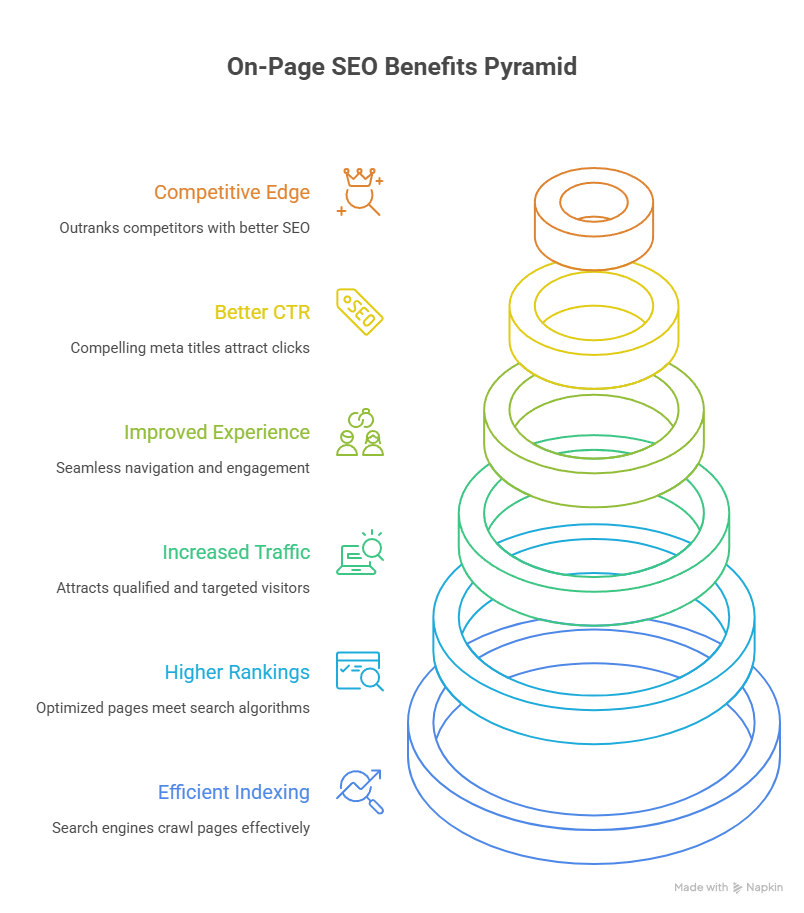
Using On-Page SEO Services helps businesses achieve higher search rankings and attract more qualified organic traffic. Optimized content, meta tags, and technical elements enhance both visibility and user experience. These services ensure your pages load faster, engage visitors better, and convert more effectively. With improved internal linking and structured data, your website becomes easier for search engines to index. Overall, professional on-page optimization delivers long-term growth, credibility, and a stronger competitive edge online.
1. Higher Search Engine Rankings
Optimized pages are designed to meet search engine algorithms and user expectations, helping your site rank higher in search results. Strategic keyword placement, meta tag optimization, and content structuring all contribute to improved rankings. Higher positions increase your website’s visibility to potential customers. Consistent on-page SEO ensures long-term ranking stability. This visibility ultimately drives more organic traffic and growth for your business.
2. Increased Organic Traffic
By ranking higher in search results, your website attracts more qualified and targeted visitors. Optimized content and pages match user search intent, ensuring relevant traffic lands on your site. Enhanced meta descriptions and titles encourage clicks from search results. Internal linking and optimized URLs guide visitors to key pages efficiently. This influx of organic traffic supports lead generation, conversions, and overall online growth.
3. Improved User Experience
On-page SEO improves not just rankings but also the overall user experience. Clear headings, structured content, fast-loading pages, and mobile responsiveness make navigation seamless. Users find the information they need quickly, reducing bounce rates. Optimized images and readable formatting enhance engagement. A positive user experience increases trust, repeat visits, and conversion potential.
4. Better CTR
Well-crafted meta titles and descriptions attract clicks directly from search results. Compelling copy highlights your unique value and encourages users to explore your site. Optimized snippets help your listings stand out among competitors. Including targeted keywords in meta tags improves relevance for search queries. Higher click-through rates drive more traffic, supporting both rankings and conversions.
5. Efficient Indexing
Search engines can crawl and index your pages more effectively with optimized URLs, structured internal links, and clean page architecture. Proper indexing ensures all content is discoverable and searchable. Sitemap updates and schema markup further aid search engines in understanding your site. Efficient indexing reduces errors and enhances visibility across search results. This foundational SEO element ensures your website’s pages perform consistently.
6. Competitive Advantage
A fully optimized website can significantly outperform competitors by enhancing content quality, technical SEO, and user experience. Studies indicate that 53.3% of all website traffic originates from organic search, underscoring the importance of SEO in driving visibility and engagement. Moreover, the top result on Google captures approximately 27.6% of all clicks, highlighting the competitive edge gained through high search rankings. Continuous on-page optimization allows businesses to attract high-intent traffic, often before competitors can capitalize on emerging trends. This strategic advantage not only strengthens market position but also supports sustainable online growth.
How to Use On-Page SEO Services

To effectively use On-Page SEO Services, start by selecting a reliable provider with proven expertise in your industry. Share your website details and analytics access so the team can conduct a comprehensive audit. Review and approve the keyword strategy, content updates, and technical recommendations before implementation. Once optimizations are made, monitor rankings, traffic, and engagement metrics to measure progress. Regular follow-ups and continuous adjustments ensure your website maintains strong visibility and long-term SEO success.
Step 1: Choose a Provider
Start by selecting a reliable SEO service provider with proven experience in your industry. Look for a track record of successful on-page optimization and satisfied clients. Check reviews, case studies, and portfolios to ensure expertise. Choosing the right provider sets the foundation for effective SEO improvements. A trusted partner maximizes the potential for long-term website growth and visibility.
Provide the service provider with access to your website, CMS, and analytics tools. Sharing comprehensive details allows for a thorough audit of content, structure, and technical elements. The team can identify issues like broken links, duplicate content, or slow pages. Transparency ensures accurate recommendations and effective optimization. This step is crucial for creating a targeted SEO strategy that aligns with your business goals.
Step 3: Approve Strategy
Review the proposed keyword targets, content updates, and technical recommendations carefully. Ensure the strategy aligns with your brand voice, marketing goals, and audience needs. Providing feedback allows the SEO team to fine-tune optimizations before implementation. Approval confirms that all actions reflect your business priorities. A well-approved strategy ensures optimized pages deliver maximum results.
Step 4: Implement Optimizations
The service provider updates meta tags, headings, images, URLs, and technical elements as planned. Content is refined, internal links are structured, and performance issues are resolved. Technical improvements like page speed and mobile responsiveness are applied. Implementation follows the approved strategy to ensure consistency across the website. This step turns recommendations into measurable SEO improvements.
Step 5: Monitor Performance
Track website rankings, organic traffic, and user engagement to measure the impact of optimizations. Analytics and reporting provide insights into what is working and what needs adjustment. Continuous monitoring helps identify trends and detect potential issues early. Data-driven insights ensure SEO efforts remain aligned with goals. Regular tracking maintains performance and supports ongoing growth.
Step 6: Continuous Optimization
SEO is an ongoing process that requires regular updates and refinements. Content, technical elements, and keywords are adjusted to stay current with search engine algorithms. Continuous optimization ensures long-term visibility, improved user experience, and sustained traffic growth. The provider can implement A/B testing and performance tweaks for better results. This approach secures a competitive edge and maximizes the ROI of SEO investments.
Limitations of On-Page SEO Services
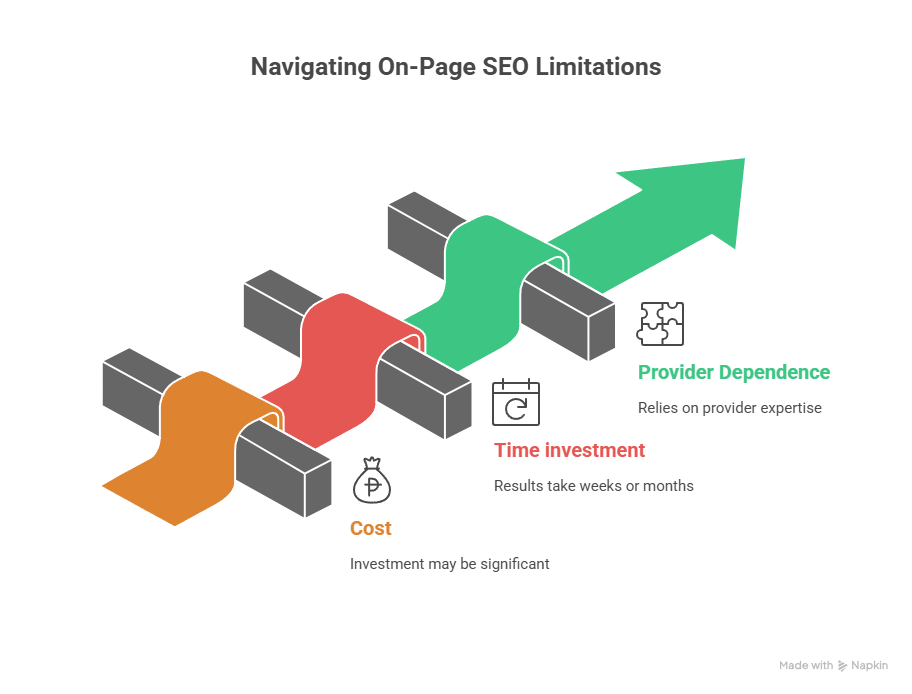
While On-Page SEO Services offer significant benefits, there are a few limitations to consider. Results are not immediate—optimizations may take weeks or months to reflect in rankings. Costs can vary depending on the website size, complexity, and the service provider’s expertise. The effectiveness of improvements also relies heavily on the quality of keyword research and implementation. Additionally, without consistent updates and monitoring, even well-optimized pages can lose performance over time.
1. Cost
Professional on-page SEO services often require a monthly subscription or one-time investment, depending on the scope and complexity of your website. Costs vary based on the number of pages, level of optimization, and additional technical services. While it may seem like an upfront expense, outsourcing saves time and reduces the need for in-house staff. Investing in professional expertise ensures higher-quality optimizations. Over time, the ROI from improved rankings and traffic often outweighs the initial cost.
2. Time to See Results
SEO improvements are not instantaneous and typically take several weeks to months to reflect in search rankings. Factors such as website authority, competition, and keyword difficulty influence the timeline. Consistent on-page optimization and monitoring are essential to achieving measurable results. Patience and ongoing adjustments are part of a successful SEO strategy. Understanding this timeframe helps set realistic expectations for growth and performance.
3. Dependence on Provider Expertise
The success of on-page SEO relies heavily on the provider’s knowledge, experience, and skill set. Poor implementation or outdated strategies can limit results and even harm search visibility. Choosing a reputable and experienced provider ensures that best practices are followed. Collaboration and clear communication enhance the effectiveness of the optimizations. Ultimately, expert guidance is crucial for maximizing the impact of on-page SEO efforts.
TaskVirtual: Your Trusted Partner for On-Page SEO Services

Optimizing your website for higher visibility and improved search rankings takes both technical expertise and strategic content execution. For businesses that lack in-house SEO specialists or need scalable optimization support, TaskVirtual offers dedicated On-Page SEO Services designed to enhance your website’s performance from the ground up. Their virtual assistants help fine-tune every element of your web pages, from meta tags and content to internal linking and technical SEO, ensuring your site is fully optimized for both search engines and users.
1. Professional SEO Optimization Support
TaskVirtual’s SEO-trained virtual assistants specialize in improving on-page performance through keyword research, content refinement, and technical audits. They optimize headings, metadata, URLs, and image attributes while maintaining your brand tone and user engagement. This results in stronger search rankings and a seamless user experience that converts visitors into customers.
2. Cost-Effective SEO Expertise
Building an in-house SEO team can be expensive, but TaskVirtual offers an affordable solution. With flexible pricing between $3.12/hour and $14.99/hour, businesses of all sizes can access expert on-page optimization support. Their plans are scalable, so you only pay for what your website needs—making high-quality SEO both accessible and budget-friendly.
3. Comprehensive Optimization Services
From auditing page structures and fixing broken links to optimizing keyword placement and schema markup, TaskVirtual covers every aspect of on-page SEO. Their experts ensure your website adheres to the latest Google SEO guidelines, helping your content rank higher and perform better across all devices. This makes TaskVirtual a complete solution for brands aiming to dominate search results.
4. Continuous Monitoring and Improvement
TaskVirtual’s services go beyond initial optimization. Their assistants monitor website analytics, track keyword performance, and adjust strategies to maintain consistent growth. This ongoing support helps your website adapt to algorithm updates and stay competitive in evolving search landscapes.
5. Proven Trust and Global Recognition
With over 364 verified reviews and a 4.7-star rating on trusted platforms, TaskVirtual has built a strong reputation for reliability and measurable SEO success. Businesses across industries trust them to enhance website visibility, drive organic traffic, and achieve sustainable online growth. Partnering with TaskVirtual ensures your on-page SEO is managed by skilled professionals dedicated to achieving real, lasting results.
Final Thoughts on On-Page SEO Services
On-page SEO Services are essential for businesses seeking to improve website visibility, attract targeted traffic, and enhance user experience. These services optimize your website’s content, meta tags, technical elements, and structure to boost search engine rankings and user experience.
Outsourcing on-page SEO saves time, leverages professional expertise, and delivers measurable results, making it a critical investment for long-term digital success.
FAQ: On-Page SEO Service
1. What is an On-Page SEO Service?
A professional service that optimizes individual web pages for search engines, focusing on content, metadata, internal links, and technical elements.
2. Who can benefit from these services?
Businesses, e-commerce websites, bloggers, and content creators aiming to improve search rankings and organic traffic.
3. Does it include keyword research?
Yes, we research relevant keywords and incorporate them strategically into content and meta tags.
4. How long does it take to see results?
SEO improvements typically show results within weeks to months, depending on competition and website authority.
5. Is outsourcing on-page SEO cost-effective?
Yes, it ensures professional optimization, saves time, and enhances website performance, leading to better ROI.
 Siddhartha Basu is a Technical Writer at Task Virtual. He loves online games, e-book reading, and Yoga.




Thanks for this detailed guide. The sections on URL structure, internal linking and image optimization stood out because they are often overlooked. It’s refreshing to see them given strong attention alongside content and metadata.
Really solid article. I like how you clearly explain what on-page SEO involves and how service providers can optimize each element for better visibility. The practical focus on tasks like meta tags, site structure, and content alignment makes it very actionable.