Contents
show
How to Generate Leads Through Facebook
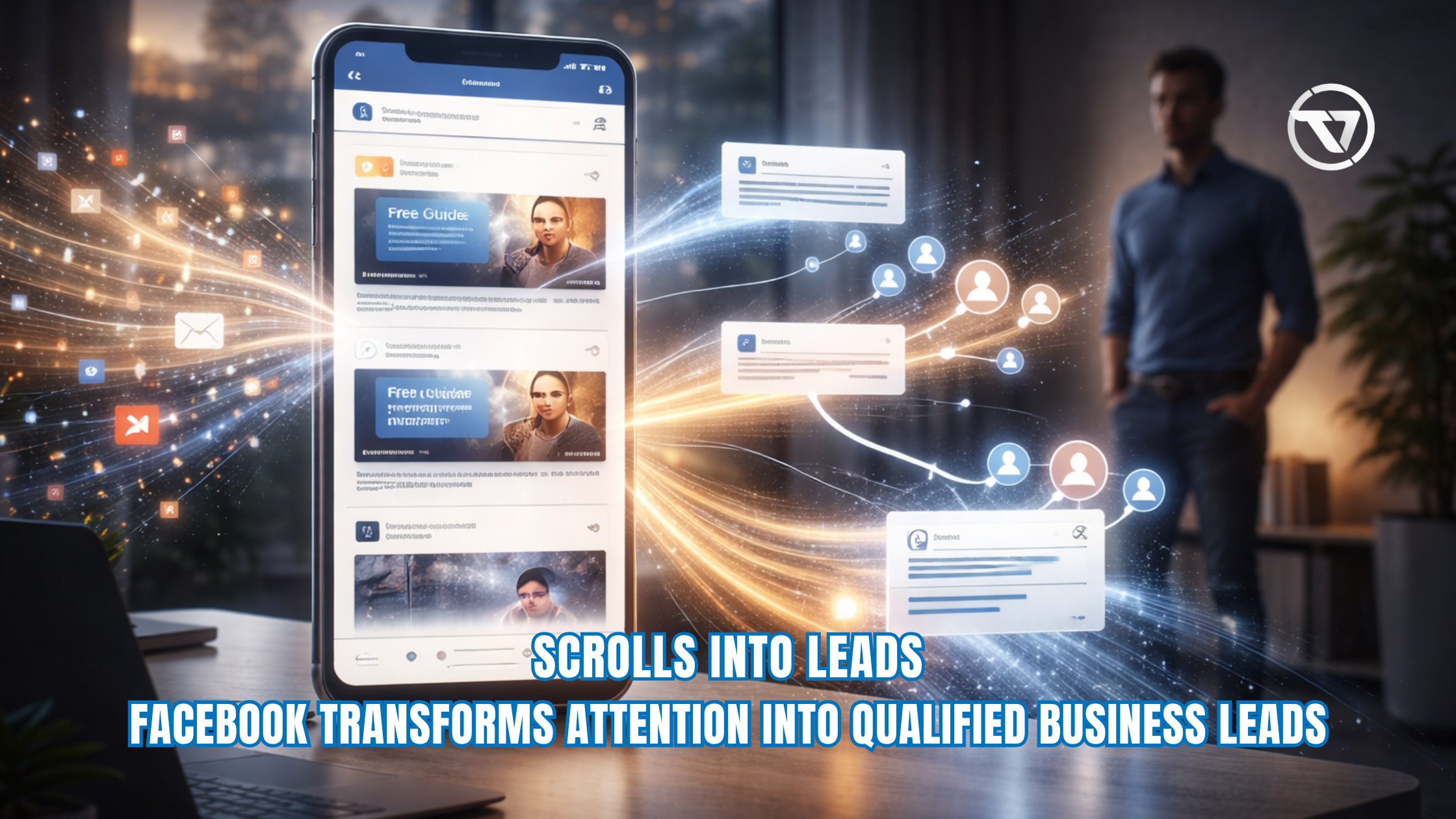
Generating leads through Facebook is no longer just about running ads; it requires a coordinated system that blends strategy, execution, and ongoing optimization. Businesses that succeed on Facebook treat lead generation as a process, not a one-time campaign, and they rely on consistent monitoring and refinement to improve results over time. In fact, the average conversion rate for Facebook ads in lead generation campaigns across all industries is about 8.25%, demonstrating that structured execution often delivers measurable results when targeting and optimization are done correctly. This is where a virtual assistant plays a crucial role, supporting everything from audience research and ad setup to lead management and follow-up coordination, ensuring no opportunity is missed. When the right systems and support are in place, Facebook becomes a predictable and scalable source of qualified leads.
You can generate leads through Facebook by combining clear offers, high-converting ads, optimized landing experiences, and consistent follow-up. The most effective methods include Facebook Lead Ads, conversion campaigns to landing pages, retargeting warm audiences, and organic engagement through content and groups. With the help of a virtual assistant managing targeting, tracking, and lead nurturing tasks, businesses can improve efficiency, reduce costs, and scale lead generation without operational bottlenecks.
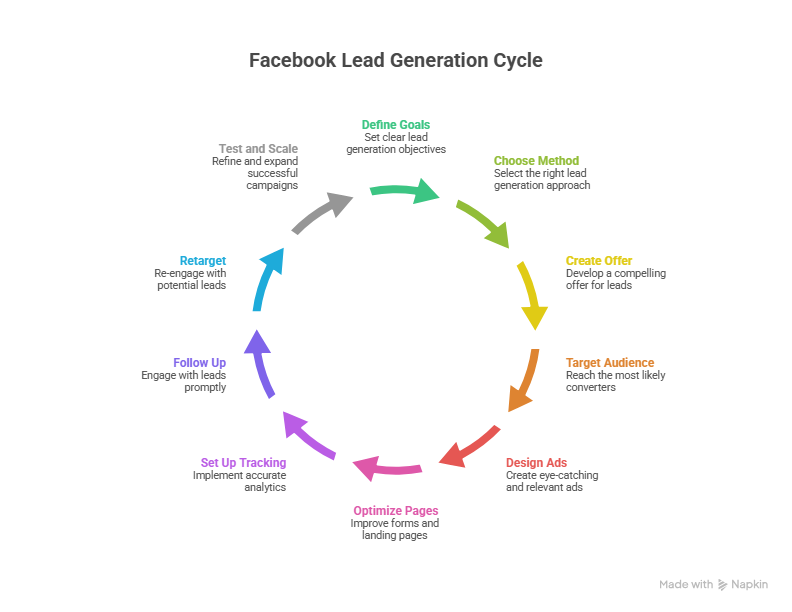
Steps To Follow To Generate Leads Through Facebook
Facebook remains one of the most effective platforms for lead generation because of its advanced targeting, massive user base, and conversion-focused ad formats. When executed correctly, Facebook helps businesses capture qualified leads at scale across B2B and B2C markets. Lead generation success depends on strategy, targeting, creatives, and follow-up, not just ad spend, and a virtual assistant can help coordinate these moving parts to ensure consistency and accuracy across campaigns.
Step 1: Define Your Lead Generation Goal
Before launching anything, define what a lead means for your business, whether it is an email subscriber, demo request, or consultation booking. Clear lead definitions ensure that campaigns are optimized for the right outcomes rather than vanity metrics. A virtual assistant can help document these goals, align them with campaign objectives, and ensure tracking is configured correctly from the start.
Step 2: Choose the Right Facebook Lead Generation Method
Selecting the right lead generation method determines both lead quality and conversion volume, making this step critical. Each method serves a different intent level and business model, and improper selection can reduce effectiveness. A virtual assistant can analyze past performance data and recommend the most suitable format for each offer.
1. Facebook Lead Ads (Instant Forms)
Facebook Lead Ads allow users to submit their details without leaving the platform, reducing friction and increasing conversion rates. These ads are ideal for top-of-funnel offers like ebooks, webinars, and newsletters. A virtual assistant can design streamlined forms, manage CRM connections, and monitor submission quality to ensure relevance.
2. Conversion Ads to Landing Pages
Conversion ads drive users to external landing pages, offering greater control over branding, messaging, and lead qualification. This method works best for high-intent offers such as paid services or demos. Virtual assistants support this approach by testing landing page elements, tracking conversions, and coordinating with web teams.
3. Messenger Lead Generation
Messenger-based lead generation uses automated conversations to capture and qualify leads in real time. This approach increases engagement—Facebook Messenger marketing can achieve open rates of up to 80%, significantly higher than traditional channels—and works well for service-based businesses. A virtual assistant can set up chatbot flows, manage responses, and escalate qualified leads to sales teams efficiently.
Step 3: Create a High-Converting Offer
Your offer determines your results more than your ad design, as users respond to value, not visuals alone. Effective offers address a specific pain point and present a clear benefit to the target audience. Virtual assistants can research competitor offers, help position lead magnets, and coordinate content creation to ensure relevance and appeal.
Step 4: Target the Right Audience
Facebook’s targeting capabilities are key to success, allowing advertisers to reach users most likely to convert. Proper audience segmentation improves lead quality and reduces acquisition costs. A virtual assistant can build and manage custom audiences, lookalikes, and interest-based segments while continuously optimizing based on performance data.
Step 5: Design Scroll-Stopping Ads
Your ad must capture attention quickly in a crowded feed, making clarity and relevance essential. Strong headlines, concise messaging, and clear calls-to-action improve engagement and click-through rates. Virtual assistants often manage creative testing, coordinate design updates, and track engagement metrics to identify winning ad variations.
Step 6: Optimize Your Lead Forms or Landing Pages
Optimization ensures that interested users complete the lead process without friction or confusion. Even small improvements in form length or page speed can significantly increase conversion rates. A virtual assistant can audit forms, test variations, and ensure mobile optimization is consistently maintained.
Step 7: Set Up Proper Tracking and Analytics
Accurate tracking enables informed decision-making and continuous improvement. Without proper analytics, it is impossible to determine which campaigns are profitable. Virtual assistants can manage Facebook Pixel setup, verify conversion events, and generate performance reports for ongoing optimization.
Step 8: Follow Up With Leads Immediately
Speed matters in lead conversion, as delays often result in lost opportunities. Automated and manual follow-up systems ensure consistent communication with new leads. A virtual assistant can manage email sequences, schedule calls, and oversee CRM updates to maintain timely engagement.
Step 9: Use Retargeting to Maximize Results
Not all users convert on the first interaction, making retargeting essential for improving ROI. Retargeting warm audiences often results in lower CPL and higher conversion rates. Virtual assistants can segment retargeting audiences, create tailored messaging, and monitor frequency to avoid ad fatigue.
Step 10: Test, Optimize, and Scale
Continuous testing is essential for long-term success, as audience behavior and platform algorithms evolve. Scaling should only occur after identifying consistent performers. Virtual assistants support this phase by documenting test results, managing budgets, and scaling campaigns methodically to maintain profitability.
Benefits of Generating Leads through Facebook
Facebook lead generation offers businesses a unique combination of reach, precision, and scalability that few other platforms can match. With the right strategy and operational support, companies can generate predictable lead flow while maintaining cost efficiency. Virtual assistants further enhance these benefits by handling execution-heavy tasks that often slow down internal teams.
1. Cost-Effective Audience Targeting
Facebook allows businesses to reach highly specific audiences based on interests, behaviors, and demographics, reducing wasted ad spend and improving lead relevance. A virtual assistant can continuously refine targeting settings, exclude low-performing segments, and test new audience combinations to keep costs under control. This structured approach ensures that budgets are spent on audiences most likely to convert.
2. Scalable Lead Generation
Facebook campaigns can be scaled quickly once winning ads and audiences are identified, making it suitable for both small businesses and growing enterprises. Virtual assistants support scalability by duplicating campaigns, adjusting budgets, and monitoring performance without disrupting core business operations. This allows businesses to grow lead volume without overwhelming internal resources.
3. Integrated Follow-Up Opportunities
Facebook integrates seamlessly with CRMs, email platforms, and automation tools, making how to generate leads through Facebook far more effective by enabling immediate and structured lead follow-up. A virtual assistant can manage these integrations, ensure leads are routed correctly, and trigger follow-up sequences on time. This consistency significantly improves lead-to-customer conversion rates and prevents qualified leads from slipping through the cracks.
Example Scenarios
Real-world applications illustrate how Facebook lead generation strategies work across industries. These scenarios highlight the role of structured execution and ongoing support. Virtual assistants often serve as the operational backbone in each case.
1. B2B Consulting Firm
A consulting firm uses Facebook Lead Ads to promote a free strategy session, targeting decision-makers through lookalike audiences. A virtual assistant manages form integrations and schedules calls automatically. This system produces a steady flow of qualified leads with minimal manual intervention.
2. E-commerce Brand
An e-commerce brand runs conversion ads offering a discount code in exchange for email sign-ups. A virtual assistant monitors landing page performance and manages retargeting campaigns for abandoned visitors. This approach increases both lead volume and repeat purchases.
3. Local Service Business
A local service provider uses Messenger ads to book appointments directly through automated chats. A virtual assistant oversees chatbot logic and follows up with unresponsive leads. This results in higher booking rates and improved customer experience.
Common Mistakes to Avoid
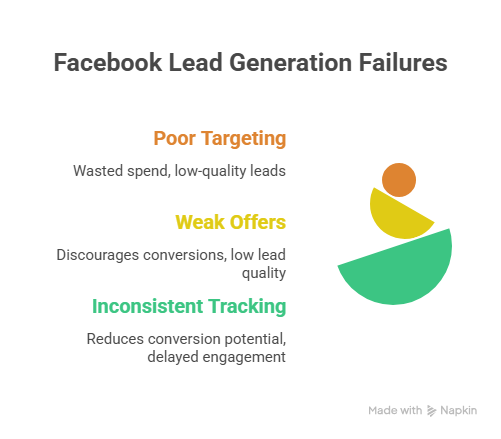
Facebook lead generation failures often stem from avoidable strategic and operational errors. Understanding these mistakes helps businesses course-correct early. Virtual assistants play a key role in preventing and resolving these issues.
1. Poor Targeting and Low Relevance
Targeting audiences that are too broad leads to wasted spend and low-quality leads. Refined targeting improves relevance and conversion rates. A virtual assistant can continuously adjust targeting based on performance data.
2. Weak Offers and Overcomplicated Forms
Low-value lead magnets and lengthy forms discourage conversions. Simplified offers increase completion rates and lead quality. Virtual assistants can audit offers and streamline forms for better results.
3. Inconsistent Tracking and Follow-Up
Ignoring tracking and delaying follow-up reduces conversion potential. Proper systems ensure visibility and timely engagement. Virtual assistants help maintain tracking accuracy and consistently manage follow-up workflows.
TaskVirtual: Your Partner in Facebook Lead Generation Support
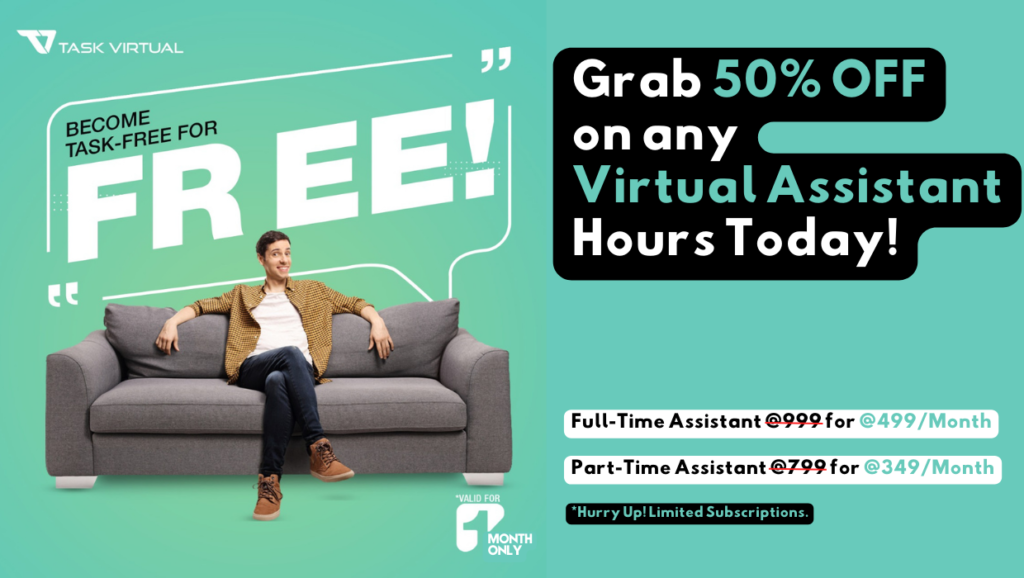
Running effective Facebook lead generation campaigns requires constant attention to targeting, creatives, data, and follow-up, which can quickly overwhelm in-house teams. TaskVirtual provides specialized virtual assistant support designed to handle the operational side of Facebook lead generation, allowing businesses to focus on strategy and closing deals. At the same time, campaigns run smoothly in the background.
1. Facebook Campaign Setup and Lead Management Assistance
TaskVirtual’s trained virtual assistants support Facebook lead generation by managing audience research, setting up Lead Ads, organizing Instant Forms, and ensuring leads are properly synced with CRMs and email tools. They also assist with monitoring daily performance, checking lead quality, and flagging issues before they impact results.
2. Affordable and Flexible Pricing
Hiring a full-time marketing coordinator or ads specialist can be costly, especially for growing businesses. TaskVirtual offers flexible virtual assistant services with pricing starting from $3.12/hour to $14.99/hour, making professional Facebook lead generation support accessible without long-term overhead or fixed salaries.
3. End-to-End Lead Generation Support
From managing retargeting audiences and updating ad creatives to organizing lead lists and coordinating follow-up workflows, TaskVirtual covers the full execution layer of Facebook lead generation. Their services scale easily, whether you are running a single campaign or managing multiple offers across markets.
4. Ongoing Monitoring and Optimization Support
TaskVirtual virtual assistants provide consistent oversight by tracking key metrics, preparing performance summaries, and assisting with A/B test documentation. This ongoing support ensures campaigns remain optimized and aligned with business goals as performance data evolves.
5. Proven Reliability and Client Satisfaction
With 364 positive reviews and a 4.7-star rating on trusted virtual assistant platforms, TaskVirtual is recognized globally for reliability and execution quality. Businesses rely on their virtual assistants to keep Facebook lead generation systems organized, efficient, and conversion-focused.
Final Answer: How to Generate Leads Through Facebook
You generate leads through Facebook by implementing a structured system that combines compelling offers, precise audience targeting, conversion-focused ad formats, optimized landing experiences, and immediate follow-up mechanisms, all supported by consistent tracking and testing. Whether you rely on Facebook Lead Ads, landing page conversions, or Messenger automation, long-term success depends on relevance, simplicity, and continuous optimization, and a virtual assistant significantly enhances this process by managing execution-heavy tasks such as audience research, ad monitoring, CRM integration, retargeting setup, and lead nurturing coordination. When these elements work together, Facebook becomes a reliable, scalable, and cost-effective lead generation channel that supports sustainable business growth.
FAQ: Generating Leads Through Facebook
1. Are Facebook Lead Ads better than landing pages?
Lead Ads convert faster; landing pages often deliver higher-quality leads.
2. How much budget do I need for lead generation?
You can start with a small daily budget and scale based on results.
3. Is Facebook lead generation suitable for B2B?
Yes, especially for webinars, demos, and consultations.
4. How long does it take to see results?
Initial data appears within days; optimization improves results over weeks.
5. Do I need a CRM for Facebook leads?
Yes, a CRM helps manage, nurture, and convert leads efficiently.
 Siddhartha Basu is a Technical Writer at Task Virtual. He loves online games, e-book reading, and Yoga.