Contents
show
How AI Can Affect Your Digital Marketing Campaigns
AI can significantly affect your digital marketing campaigns by improving targeting, automating tasks, personalizing content, optimizing ads, enhancing customer experience, and enabling data-driven decision-making. When used correctly, AI increases efficiency, reduces costs, and delivers better campaign performance without replacing human strategy.
Artificial Intelligence has rapidly become a core component of modern digital marketing, reshaping how campaigns are planned, executed, and optimized. Businesses now rely on AI to process vast datasets, uncover actionable insights, and respond to customer behavior in real time. As competition increases across digital channels, AI-driven marketing strategies provide the precision, scalability, and efficiency needed to achieve consistent growth.
What Is a Digital Marketing Campaign?
A digital marketing campaign is a structured and goal-oriented effort designed to promote a brand, product, or service through online channels. It integrates multiple platforms such as search engines, social media, email, websites, and paid advertising to reach a defined audience. Each campaign is guided by measurable objectives such as increasing traffic, generating leads, improving conversions, or strengthening brand awareness.
1. Campaign Strategy and Objectives
A digital marketing campaign begins with clear objectives that define success, such as sales growth, lead acquisition, or audience engagement. These objectives shape the messaging, channel selection, and performance metrics used throughout the campaign. A well-defined strategy ensures consistency across platforms while aligning marketing activities with broader business goals.
2. Channels and Execution
Campaigns leverage multiple digital channels, including search engines, social media platforms, email marketing, and display advertising. Each channel serves a specific purpose, whether it is discovery, engagement, or conversion. Effective execution requires coordinating content, timing, and messaging to deliver a seamless customer experience.
3. Measurement and Optimization
Performance tracking is a critical component of digital marketing campaigns. Metrics such as click-through rates, conversions, engagement, and return on investment are continuously monitored. Optimization efforts are applied based on data insights to improve outcomes and ensure campaign efficiency over time.
How AI Can Affect Your Digital Marketing Campaigns
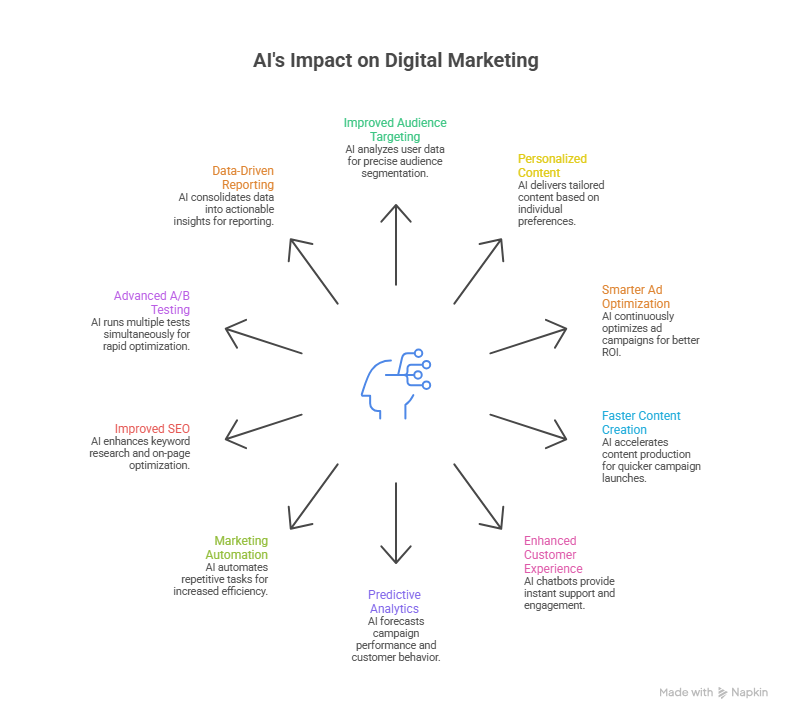
Artificial Intelligence has transformed digital marketing from manual, guesswork-driven efforts into data-backed, automated, and highly personalized campaigns. AI tools analyze vast amounts of data, identify patterns, and make real-time optimizations that were previously impossible at scale. From content creation to ad optimization, AI now plays a central role in how digital marketing campaigns are planned, executed, and measured.
1. Improved Audience Targeting and Segmentation
AI enhances audience targeting by analyzing user behavior, demographics, interests, and engagement patterns across multiple platforms. Instead of relying on broad assumptions, marketers can segment audiences based on actual behavior and predict which users are most likely to convert. This precision targeting reduces wasted spend, improves relevance, and increases overall campaign effectiveness.
2. Personalized Content and Messaging at Scale
AI enables advanced personalization by delivering tailored content based on individual user preferences and behaviors. Emails, website content, advertisements, and product recommendations can be dynamically customized for each user. This level of personalization improves engagement, builds stronger customer relationships, and increases conversion rates across digital touchpoints.
3. Smarter Ad Campaign Optimization
AI-driven advertising platforms continuously optimize campaigns by adjusting bids, placements, and creatives in real time. Budget allocation is automatically shifted toward high-performing ads while underperforming variations are reduced or eliminated. This results in improved ROI and allows marketers to scale campaigns efficiently without constant manual oversight.
4. Faster and More Efficient Content Creation
AI tools accelerate content production by generating drafts, outlines, headlines, and variations for marketing assets. While human input is still essential for refinement and brand consistency, AI significantly reduces production time. This allows teams to launch campaigns faster and respond quickly to market trends.
5. Enhanced Customer Experience Through AI Chatbots
AI-powered chatbots provide immediate responses to customer inquiries, ensuring consistent engagement around the clock. They assist with lead qualification, guide users through conversion funnels, and resolve common support issues. This improves customer satisfaction while reducing operational costs associated with manual support.
6. Predictive Analytics and Better Decision-Making
AI analyzes historical and real-time data to forecast campaign performance and customer behavior. Marketers gain insights into emerging trends, potential risks, and growth opportunities before they fully materialize. Predictive analytics enable proactive decision-making, resulting in more resilient and adaptable campaigns.
7. Marketing Automation and Workflow Efficiency
AI automates repetitive tasks such as email scheduling, lead scoring, CRM updates, and performance reporting. Automation minimizes errors, ensures consistency, and frees marketing teams to focus on strategic planning and creative initiatives. This efficiency is especially valuable for scaling campaigns across multiple channels.
8. Improved SEO and Content Optimization
AI assists with keyword research, search intent analysis, and on-page optimization. It identifies content gaps, improves internal linking strategies, and enhances readability for both users and search engines. These capabilities lead to higher rankings, increased organic traffic, and improved long-term visibility.
9. Advanced A/B Testing and Experimentation
AI accelerates experimentation by running multiple tests simultaneously and analyzing results in real time. It identifies winning variations across headlines, CTAs, layouts, and formats faster than traditional methods. This rapid optimization cycle leads to continuous performance improvement.
10. Data-Driven Performance Measurement and Reporting
AI consolidates performance data from multiple platforms into actionable insights. It highlights trends, identifies inefficiencies, and recommends optimization actions automatically. This ensures marketing decisions are based on accurate data rather than assumptions or intuition.
Benefits of Using AI in Digital Marketing Campaigns
AI delivers measurable advantages that enhance both efficiency and performance across marketing initiatives. Its ability to process data, automate tasks, and optimize campaigns makes it a powerful asset for businesses of all sizes.
1. Increased Efficiency and Speed
AI streamlines campaign execution by automating time-consuming tasks and reducing manual effort. Processes that once took days can now be completed in minutes with greater accuracy. This allows marketing teams to move faster and respond more effectively to changing market conditions.
2. Better Targeting and Personalization
AI enables precise audience segmentation and individualized messaging at scale. Campaigns become more relevant, leading to higher engagement and conversion rates. Personalized experiences strengthen customer relationships and improve long-term brand loyalty.
3. Improved ROI and Scalability
By optimizing budgets, bids, and creatives in real time, AI maximizes return on investment. Campaigns can be scaled efficiently without proportional increases in resources. This makes AI-driven marketing both cost-effective and sustainable for growth.
Limitations and Challenges of AI in Digital Marketing
Despite its advantages, AI also presents challenges that require careful management. Understanding these limitations is essential for responsible and effective implementation.
1. Dependence on Data Quality
AI systems rely heavily on accurate and comprehensive data to perform effectively. Poor-quality or incomplete data can lead to flawed insights and suboptimal decisions. Maintaining clean and compliant data is critical for reliable outcomes.
2. Limited Creativity and Brand Understanding
AI lacks true creativity and cannot fully replicate human intuition or brand storytelling. Without human oversight, AI-generated content may feel generic or misaligned with brand voice. Strategic and creative input remains essential for authenticity.
3. Ethical and Privacy Concerns
AI-driven marketing raises concerns related to data privacy, consent, and regulatory compliance. Over-automation or misuse of personal data can damage trust and expose businesses to legal risks. Ethical guidelines and human governance are necessary safeguards.
How to Use AI Effectively in Digital Marketing Campaigns
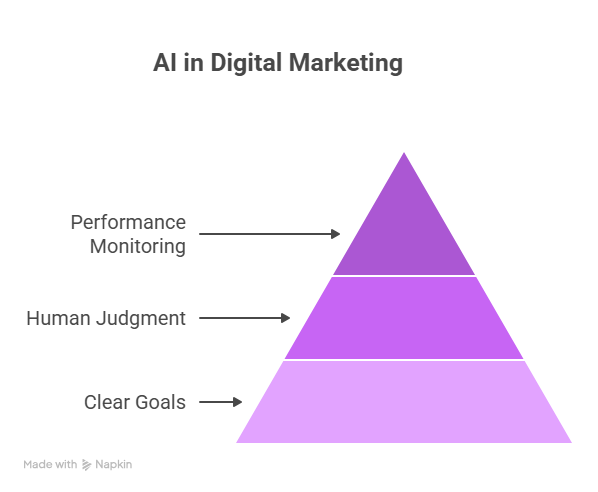
Maximizing the value of AI requires a balanced approach that combines automation with strategic oversight. When implemented thoughtfully, AI enhances rather than replaces human expertise.
1. Define Clear Goals and Use Cases
AI should be applied with specific objectives in mind, such as improving conversions or reducing acquisition costs. Clear goals ensure AI tools are aligned with business priorities. This focus prevents over-reliance on automation without measurable outcomes.
2. Combine AI Insights with Human Judgment
AI provides data-driven recommendations, but final decisions should involve human evaluation. Marketers must assess context, brand alignment, and customer impact before implementation. This collaboration ensures both efficiency and strategic integrity.
3. Monitor Performance and Ensure Compliance
Continuous monitoring is essential to validate AI-driven actions and identify potential issues early. Marketers should regularly review outputs, adjust parameters, and ensure compliance with privacy regulations. Responsible oversight maintains trust and long-term effectiveness.
TaskVirtual: Smart Virtual Assistance for AI-Driven Digital Marketing

Managing AI-powered digital marketing campaigns requires consistent monitoring, data analysis, content coordination, and automation oversight. From handling campaign dashboards to organizing performance reports and managing AI tools, these operational tasks can consume valuable time. TaskVirtual provides dedicated Virtual AI Assistance services designed to support businesses implementing AI in digital marketing, ensuring smoother execution and better outcomes.
1. AI Marketing Support and Campaign Assistance
TaskVirtual’s experienced virtual assistants help manage AI-driven marketing workflows, including campaign setup coordination, content scheduling, CRM updates, and reporting support. They assist with organizing data inputs, monitoring automation tools, and ensuring campaigns run efficiently across platforms, allowing marketers to focus on strategy and creativity.
2. Affordable and Flexible Pricing
Building an in-house marketing operations team can be costly, especially for growing businesses. TaskVirtual offers cost-effective virtual assistance with pricing plans ranging from just $3.12/hour to $14.99/hour. This flexible structure makes professional support accessible to startups, small businesses, and established enterprises alike.
3. Scalable Digital Marketing Operations
Whether supporting SEO tasks, managing email automation, handling ad performance tracking, or assisting with content workflows, TaskVirtual adapts to your business needs. Their services scale seamlessly as campaigns grow, providing reliable operational support without increasing overhead or complexity.
4. Ongoing Support and Quality Assurance
TaskVirtual ensures consistent communication, regular updates, and proactive task management. Their quality assurance processes help maintain accuracy in reporting, automation execution, and campaign support, reducing errors and ensuring smooth day-to-day operations.
5. Proven Trust and Client Satisfaction
With 364 positive reviews and a 4.7-star rating on trusted virtual assistant platforms, TaskVirtual is recognized as a dependable global partner. Businesses rely on their expertise to streamline digital marketing operations and support AI-powered campaign execution with confidence.
Final Answer: How AI Can Affect Your Digital Marketing Campaigns
AI can positively affect your digital marketing campaigns by improving targeting, personalization, automation, optimization, and analytics. It enables marketers to launch smarter campaigns, reach the right audience, and make data-driven decisions faster. When combined with human expertise, AI becomes a powerful driver of digital marketing success.
FAQ: How AI Affects Digital Marketing Campaigns
1. Does AI replace digital marketers?
No. AI supports marketers but does not replace creativity or strategy.
2. Can AI improve ad campaign ROI?
Yes. AI optimizes bidding, targeting, and creatives in real time.
3. Is AI useful for small businesses?
Yes. AI helps small teams compete by automating and optimizing campaigns.
4. Does AI help with SEO and content marketing?
Yes. AI improves keyword research, content optimization, and performance analysis.
5. Is AI-driven marketing safe?
Yes, when data privacy and compliance guidelines are followed.
 Siddhartha Basu is a Technical Writer at Task Virtual. He loves online games, e-book reading, and Yoga.