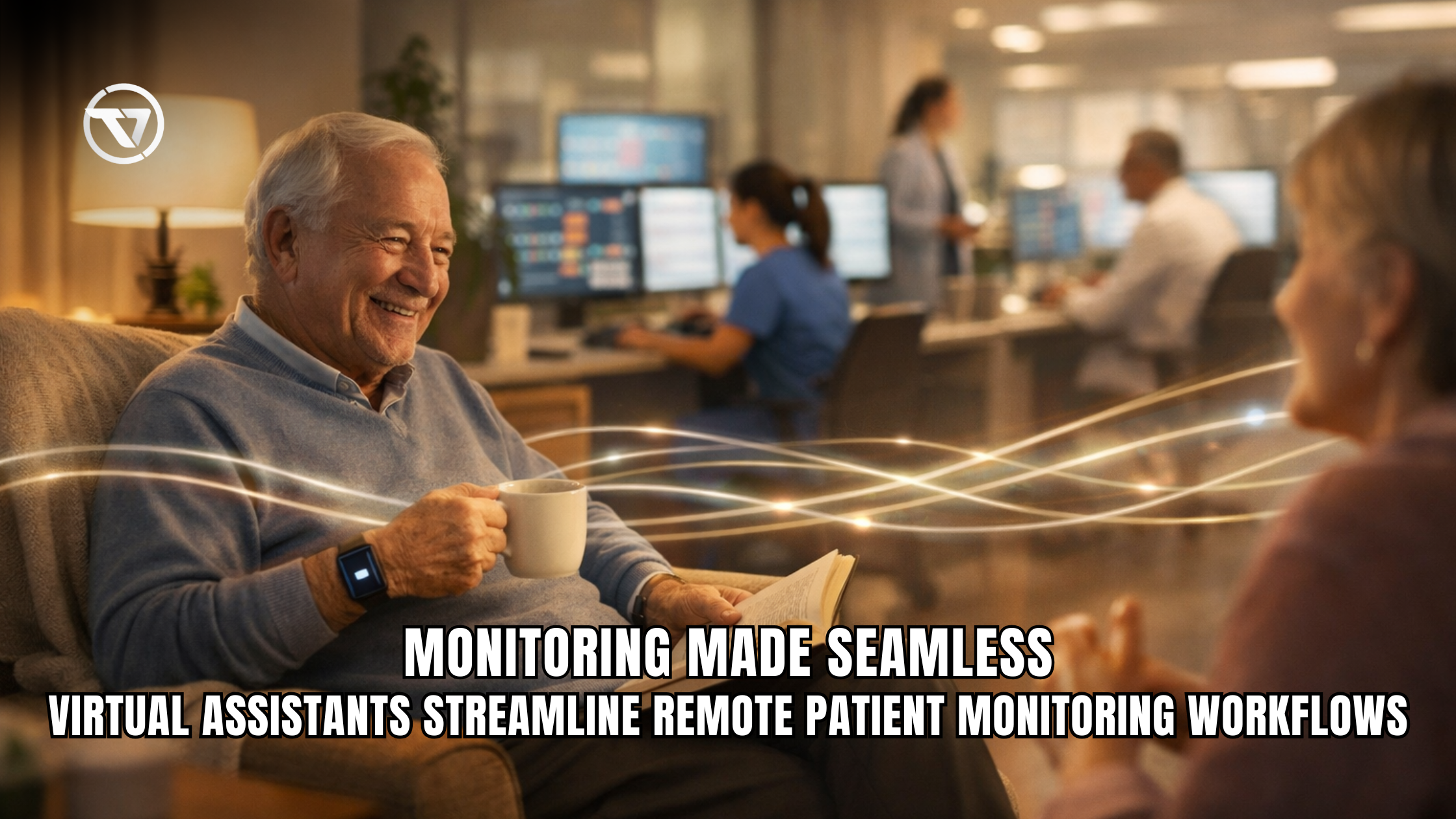
A virtual assistant for remote patient monitoring (RPM) is a remote healthcare support professional who helps medical providers manage patient data, device coordination, scheduling, alerts, documentation, and communication within RPM programs. They improve efficiency, ensure timely follow-ups, and support better patient outcomes without increasing in-house workload.
What Is a Virtual Assistant for Remote Patient Monitoring?
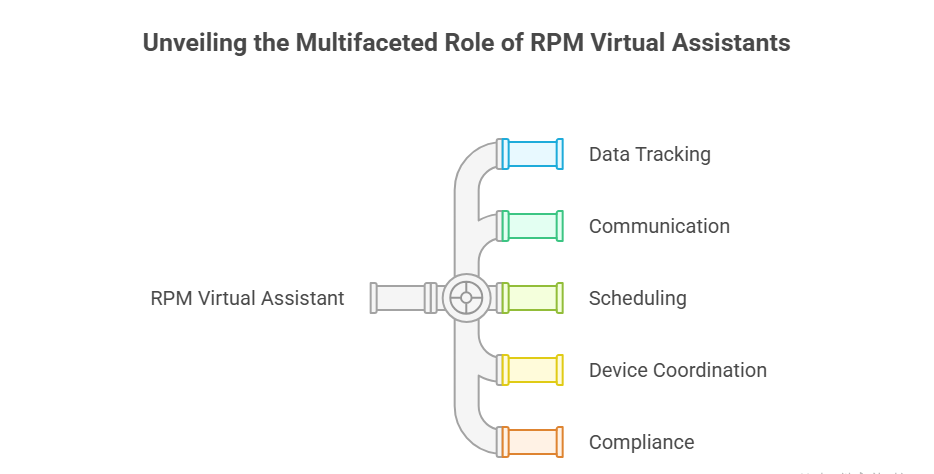
A remote patient monitoring virtual assistant is a specialized support professional who assists healthcare organizations in managing the operational side of digital monitoring programs. These assistants work remotely but integrate directly into clinical workflows, helping providers handle data tracking, communication, scheduling, and device coordination tasks. Their involvement allows care teams to operate RPM initiatives more efficiently, especially as studies show remote monitoring can reduce hospital readmissions by up to 76%, boosting overall care efficiency.
Unlike general administrative staff, an RPM virtual assistant understands monitoring platforms, patient engagement processes, and compliance-sensitive documentation requirements. They act as a bridge between technology systems, patients, and providers, ensuring that monitoring programs remain organized and responsive. This role is particularly valuable in practices where clinicians need structured support to manage continuous streams of patient-generated health data.
Understanding Remote Patient Monitoring
Remote Patient Monitoring (RPM) refers to the use of connected medical devices and digital health tools that collect patient health metrics outside traditional care environments. These programs enable providers to track physiological data remotely, allowing earlier intervention, trend analysis, and proactive care management. RPM has become a foundational component of chronic disease management, post-discharge supervision, and preventative care strategies across modern healthcare systems.
Common devices used in RPM programs include blood pressure monitors, glucose meters, pulse oximeters, heart rate monitors, and wearable sensors. While these technologies enable continuous data capture, successful monitoring programs depend on consistent oversight, accurate recordkeeping, and structured follow-up processes. This operational complexity is precisely where a remote patient monitoring assistant delivers measurable value.
What Does a Virtual Assistant for Remote Patient Monitoring Do?
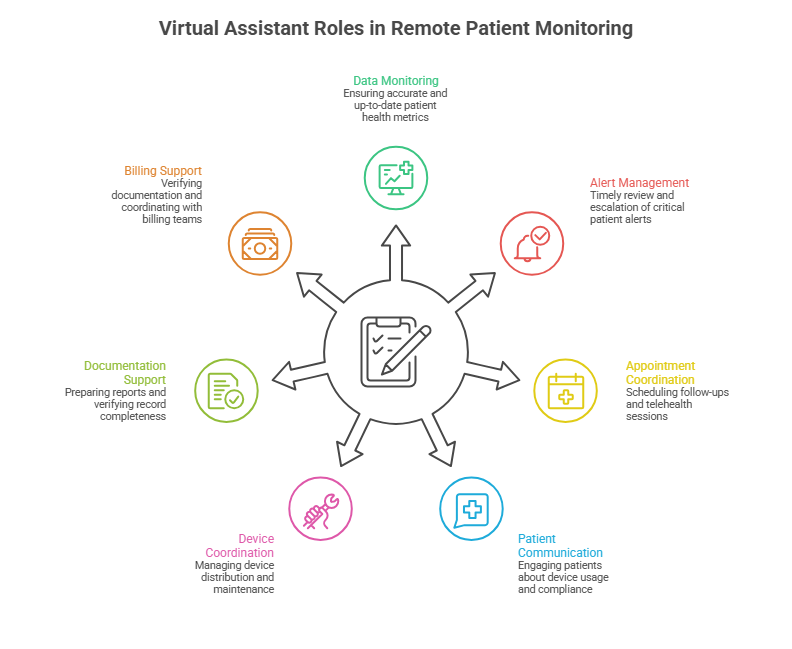
A medical virtual assistant for remote patient monitoring supports the administrative and coordination functions required to sustain continuous monitoring initiatives. Their responsibilities focus on organizing patient data flows, ensuring alerts are handled appropriately, and maintaining communication consistency. By absorbing time-intensive operational duties, they allow licensed professionals to concentrate on clinical evaluation and decision-making.
1. Patient Data Monitoring and Record Updates
A virtual assistant for patient data monitoring helps maintain the integrity and usability of incoming health metrics. They review monitoring dashboards, identify missing readings, and update electronic medical records to reflect current patient information. This structured oversight ensures clinicians have reliable data for assessment and care planning.
2. Alert and Notification Management
RPM systems generate alerts that require timely review and categorization. A remote patient monitoring support assistant monitors these notifications, escalates priority events, and tracks resolution workflows. This process reduces the risk of overlooked warnings and strengthens patient safety protocols.
3. Appointment and Follow-Up Coordination
Monitoring programs rely on regular patient interactions and evaluations. A virtual assistant for RPM services schedules follow-ups, coordinates telehealth sessions, and manages reminder workflows. These actions improve adherence to monitoring plans and maintain continuity of care.
4. Patient Communication and Support
Consistent engagement is critical to long-term monitoring success. A healthcare virtual assistant for remote monitoring contacts patients regarding device usage, compliance reminders, and administrative inquiries. This communication layer enhances participation and minimizes program attrition.
5. Device and Technology Coordination
RPM programs rely heavily on proper device distribution and maintenance to ensure continuous patient monitoring. Studies indicate that over 80% of Americans support remote patient monitoring devices, demonstrating strong technology acceptance. A virtual assistant for RPM device management helps coordinate devices, records, and support to avoid data collection interruptions.
6. Documentation and Compliance Support
Healthcare monitoring programs require precise documentation practices. A virtual assistant for RPM documentation prepares reports, updates patient logs, and verifies record completeness. These actions support regulatory alignment and internal audit readiness.
7. Billing and Administrative Support
Reimbursement processes often depend on accurate monitoring records. A virtual assistant for RPM services may verify documentation criteria, update billing-related data, and coordinate with revenue cycle teams. Proper administrative support reduces claim denials and payment delays.
Skills Required for an RPM Virtual Assistant

An effective RPM virtual assistant must combine administrative competence with domain-specific knowledge of monitoring workflows and healthcare data handling. The role demands precision, consistency, and familiarity with digital health platforms. Without these competencies, monitoring programs can experience data inconsistencies and operational bottlenecks.
1. Healthcare Technology and Workflow Familiarity
A remote patient monitoring virtual assistant must understand RPM platforms, dashboards, and device ecosystems. Familiarity with electronic medical record systems is necessary to maintain accurate documentation. Technical fluency reduces onboarding friction and improves operational efficiency.
2. Communication and Coordination Competence
A remote patient monitoring assistant interacts with patients, providers, and support teams. Clear, structured communication is essential for managing alerts, scheduling, and follow-up processes. Effective coordination prevents misunderstandings and workflow disruptions.
3. Compliance Awareness and Data Accuracy
Monitoring programs operate within strict privacy and documentation regulations. A virtual assistant for RPM documentation must handle sensitive information responsibly while maintaining record precision. Compliance awareness safeguards patient confidentiality and organizational risk management.
Benefits of Hiring a Virtual Assistant for Remote Patient Monitoring
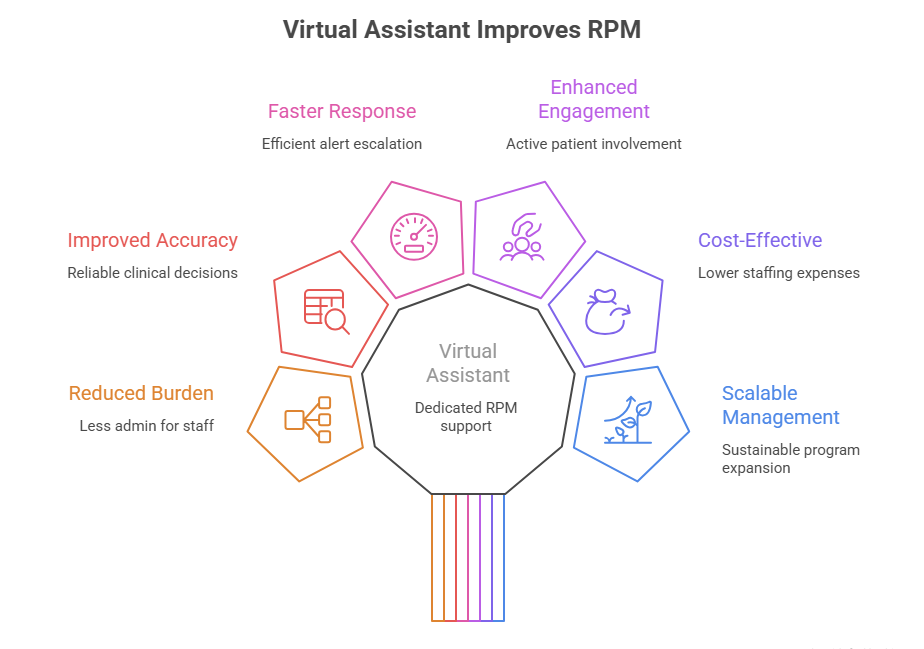
Integrating a dedicated remote patient monitoring assistant into care operations delivers measurable improvements in efficiency, responsiveness, and scalability. Healthcare providers increasingly rely on remote assistants to manage the growing administrative demands of monitoring programs. This staffing model supports expansion without proportionate increases in overhead expenses.
1. Reduced Administrative Burden on Healthcare Staff
Clinical personnel spend less time on scheduling, record updates, and dashboard oversight. Providers can allocate greater attention to direct patient care activities.
2. Improved Data Accuracy and Record Management
Continuous monitoring oversight reduces documentation gaps and inconsistencies. Structured updates enhance the reliability of clinical decision-making inputs.
3. Faster Response to Patient Alerts
Alerts receive consistent review and categorization rather than sporadic attention. Escalation workflows become more predictable and efficient.
4. Enhanced Patient Engagement
Regular communication improves adherence to device usage and reporting routines. Patients remain more actively involved in monitoring programs.
5. Cost-Effective Healthcare Support
An affordable RPM virtual assistant lowers staffing costs compared to full-time in-house hires. Organizations gain operational support with minimal infrastructure expenses.
6. Scalable RPM Program Management
Practices can expand remote monitoring services without proportional administrative strain. Virtual support enables controlled and sustainable growth.
Virtual Assistant vs In-House Staff for RPM Programs
| Aspect | Virtual Assistant for RPM | In-House Staff |
|---|---|---|
| Cost | Lower | Higher |
| Flexibility | High | Limited |
| Scalability | Easy | Difficult |
| Overhead | Minimal | High |
| Availability | Remote coverage | Office-bound |
Who Should Use a Virtual Assistant for Remote Patient Monitoring?

Healthcare organizations managing ongoing monitoring workflows often encounter increasing administrative complexity as patient volumes grow. Telehealth providers, chronic care programs, and specialty clinics frequently rely on remote assistants to stabilize operations and maintain consistency across scheduling, alerts, and documentation. These environments benefit from structured remote support that complements clinical functions without expanding internal staffing burdens.
Primary care practices and home healthcare services also gain operational advantages from remote monitoring support models. Programs involving continuous device usage, recurring patient communication, and regular data oversight align naturally with virtual administrative roles. For growing practices, integrating remote assistance becomes a practical strategy for sustaining efficiency and scalability.
TaskVirtual: Specialized Support for Remote Patient Monitoring Programs

Managing a remote monitoring program requires continuous coordination, structured documentation, and reliable oversight of patient-generated health data. Healthcare providers must ensure that alerts are reviewed promptly, records remain accurate, and patients stay engaged with monitoring devices. TaskVirtual delivers virtual medical assistant solutions designed specifically for remote patient monitoring environments.
1. Expert Consultation and Program Alignment
TaskVirtual’s trained assistants support healthcare organizations in designing efficient monitoring workflows and operational structures. They help practices optimize data management routines, scheduling processes, and communication pathways. This alignment ensures RPM programs operate with consistency and reduced administrative friction.
2. Affordable and Flexible Pricing
Expanding monitoring services with full-time internal staff can significantly increase overhead costs. TaskVirtual offers scalable support models with pricing plans starting from just $3.12/hour to $14.99/hour, providing predictable and budget-conscious staffing options. This structure allows practices to adjust support levels as monitoring demands evolve.
3. Comprehensive RPM Support Capabilities
TaskVirtual assistants handle essential non-clinical functions, including patient data tracking, alert monitoring, scheduling coordination, and documentation workflows. They integrate with existing RPM platforms and electronic medical record systems to maintain operational continuity. These services reduce the administrative strain associated with growing patient volumes.
4. Ongoing Operational Assistance
Remote monitoring programs generate recurring tasks that require consistent oversight rather than sporadic attention. TaskVirtual provides sustained support for device coordination, patient follow-ups, and record maintenance activities. Continuous assistance improves workflow stability and program reliability.
5. Proven Service Reliability
TaskVirtual maintains a strong reputation within the virtual assistance industry, supported by 364 positive reviews and a 4.7-star rating across established VA platforms. Healthcare clients rely on this consistency when delegating sensitive administrative responsibilities. The emphasis on accuracy and structured processes makes TaskVirtual a dependable operational partner.
Final Answer: What Is a Virtual Assistant for Remote Patient Monitoring?
A virtual assistant for patient monitoring is a remote support professional responsible for managing the administrative, coordination, and operational functions of RPM programs. Their responsibilities span patient data oversight, scheduling workflows, alert handling, device logistics, compliance documentation, and billing support activities. By absorbing non-clinical workload, these assistants allow healthcare providers to maintain efficient monitoring operations while prioritizing patient-centered clinical care.
This role does not replace licensed medical professionals but instead strengthens the infrastructure surrounding remote monitoring initiatives. Whether deployed as a US-based remote patient monitoring virtual assistant or through international staffing models, the function remains focused on efficiency, accuracy, and workflow continuity. For organizations evaluating remote patient monitoring virtual assistant cost considerations, the model frequently proves both economically and operationally advantageous.
FAQ: Virtual Assistant for Remote Patient Monitoring
1. Is a virtual assistant suitable for remote patient monitoring programs?
Yes. They are widely used for administrative and coordination tasks.
2. Can an RPM virtual assistant access patient data?
Yes, with secure permissions and compliance safeguards.
3. Are virtual assistants compliant with healthcare regulations?
Yes, when trained and using secure, compliant systems.
4. Do RPM virtual assistants provide medical advice?
No. They perform non-clinical support functions only.
5. Can small clinics use RPM virtual assistants?
Yes. They are especially valuable for growing practices.
 Siddhartha Basu is a Technical Writer at Task Virtual. He loves online games, e-book reading, and Yoga.