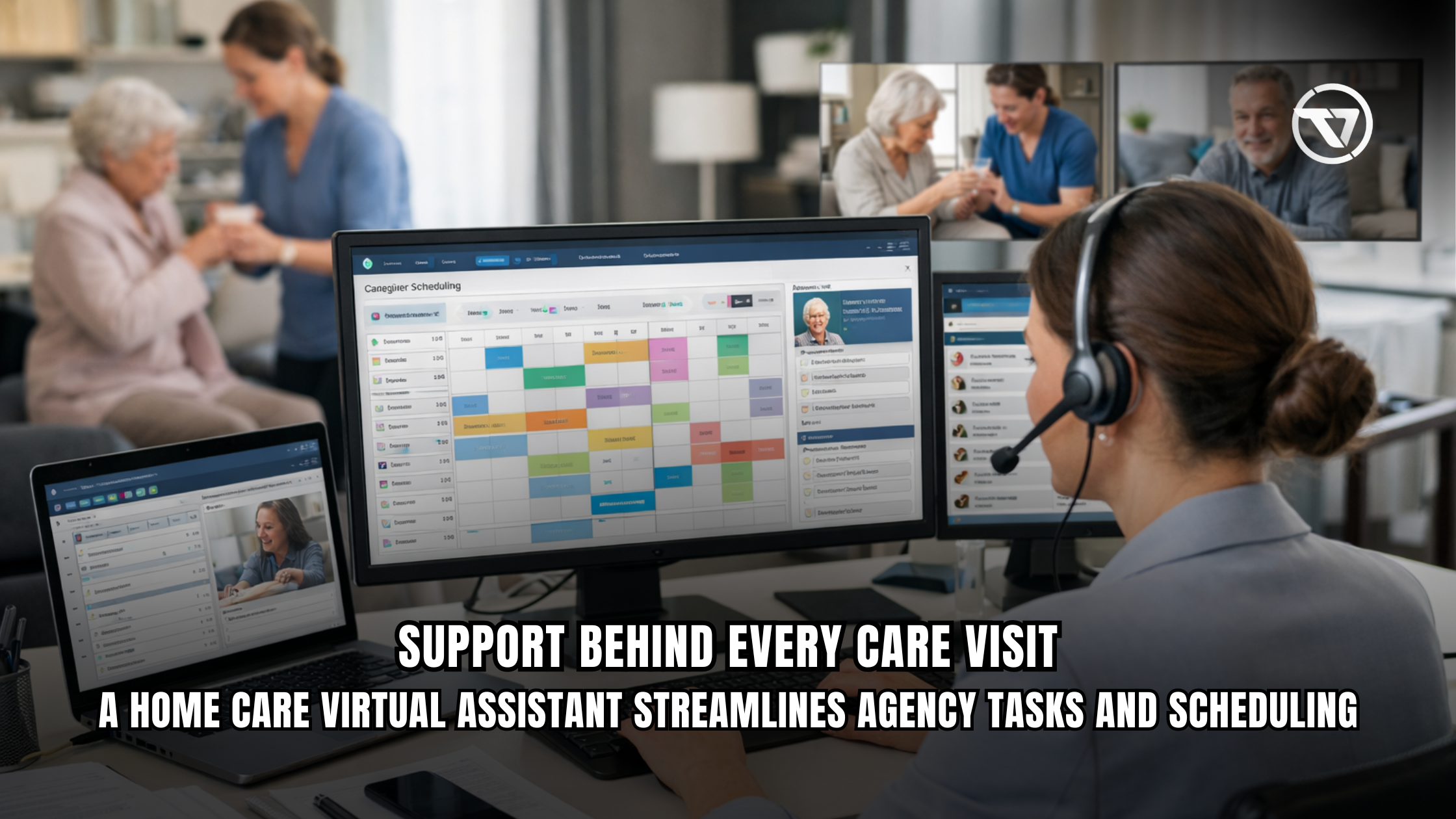

How a Home Care Virtual Assistant Streamlines Care Agencies
A home care virtual assistant is a remote professional who supports care agencies, caregivers, and healthcare coordinators by managing scheduling, patient communication, documentation, billing support, and administrative operations. These professionals help healthcare organizations maintain smooth workflows while reducing administrative pressure on caregivers and office teams. In fact, research shows that about 73% of people in the U.S. report handling at least one healthcare-related administrative task each year, highlighting how significant administrative work can be in healthcare operations. By outsourcing non-clinical responsibilities to a remote home care assistant, agencies can improve efficiency, maintain accurate records, and deliver better patient experiences without hiring additional in-office staff.
What Is a Home Care Virtual Assistant?
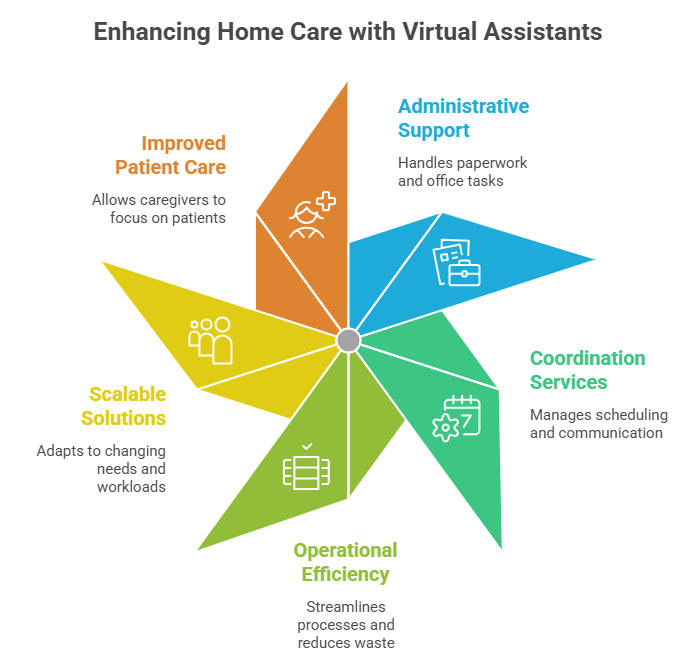
A virtual assistant for home care is a remote professional who supports healthcare agencies by handling administrative, coordination, and operational tasks related to patient services. These professionals assist agencies with documentation, scheduling, patient communication, and intake management so caregivers can focus more on delivering care. Many organizations rely on a home care administrative virtual assistant to improve operational structure and reduce paperwork.
A home health virtual assistant can help providers manage digital systems, maintain patient records, and support daily administrative processes. As healthcare organizations handle increasing documentation and coordination tasks, administrative efficiency has become essential for maintaining quality care. In fact, nearly 25% of U.S. healthcare spending is considered waste related to administrative complexity, showing how significant the administrative workload is in the healthcare system. Agencies that need scalable administrative support often use home care VA services to streamline operations and improve response times for patients and families, especially those seeking a virtual assistant for home health agency operations.
What Does a Home Care Virtual Assistant Do?

Remote administrative professionals play an important role in supporting healthcare operations. Agencies often rely on assistants for scheduling coordination, documentation management, and patient communication tasks. Many organizations also depend on a home care scheduling virtual assistant or home care intake virtual assistant to maintain organized workflows and ensure patients receive timely services.
1. Appointment Scheduling and Care Coordination
A remote assistant helps coordinate caregiver visits, organize patient appointments, and maintain accurate staff schedules. This demonstrates how a home care VA can help manage patient scheduling by ensuring caregivers are assigned efficiently and patient needs are prioritized. A home care VA for patient coordination can also manage appointment reminders, cancellations, and rescheduling requests to maintain consistent care delivery.
2. Patient Communication and Support
Patient communication is essential in home healthcare services. A remote home care assistant may answer calls, respond to emails, provide appointment updates, and follow up after caregiver visits. These communication tasks help build trust with patients and ensure families remain informed about care schedules and services.
3. Documentation and Record Management
Healthcare agencies must maintain organized records for compliance and care coordination. A home care VA for documentation can update patient files, enter visit notes, and organize digital forms used by the agency. Proper record management helps caregivers and administrators access important information quickly.
4. Billing and Insurance Support
Administrative support often includes billing coordination handled by a home care billing virtual assistant. These assistants may prepare invoices, track payments, update billing systems, and organize insurance documentation. Many agencies rely on a home care VA for medical billing and appointment coordination to keep financial records aligned with patient visits.
5. Caregiver Scheduling and Staff Coordination
Healthcare agencies often manage multiple caregivers working different shifts. A home care scheduling virtual assistant can monitor staff availability, assign visits, and notify caregivers about schedule updates. This support helps agencies maintain consistent patient care and avoid scheduling conflicts.
6. CRM and Database Management
Healthcare organizations depend on accurate data to manage operations effectively. A home care administrative virtual assistant maintains patient databases, caregiver records, service logs, and contact lists. Clean and organized data improves follow-ups, reporting, and coordination across the agency.
7. Telehealth and Remote Care Support
Telehealth services are becoming increasingly common in healthcare. A home health virtual assistant can schedule virtual consultations, send meeting links, and update online records after telehealth visits. This ensures remote care services remain organized and accessible for patients.
8. Administrative and Office Support
General administrative tasks are a major part of remote healthcare assistance. A dedicated home care VA may handle email management, report preparation, file organization, and task coordination. These tasks help streamline daily healthcare operations and reduce pressure on office teams.
Skills Required for a Home Care Virtual Assistant

Healthcare administrative roles require strong communication and organizational skills. A virtual assistant for home health agency operations must manage scheduling platforms, documentation systems, and patient communication tools efficiently. Attention to detail and familiarity with healthcare workflows are important for maintaining accurate records and supporting agency operations.
A home care intake virtual assistant should be comfortable with data entry, patient onboarding processes, and scheduling systems commonly used in healthcare environments. Efficient patient intake and scheduling are critical for care coordination, especially as demand for home healthcare continues to grow. In fact, about 70% of adults aged 65 and older will require some form of long-term care during their lifetime, which increases the need for organized intake and administrative support. Many agencies also prefer working with a US-based home care VA who understands healthcare regulations and privacy standards in the United States. Strong time management and coordination skills help assistants manage multiple administrative responsibilities effectively.
Benefits of Hiring a Home Care Virtual Assistant
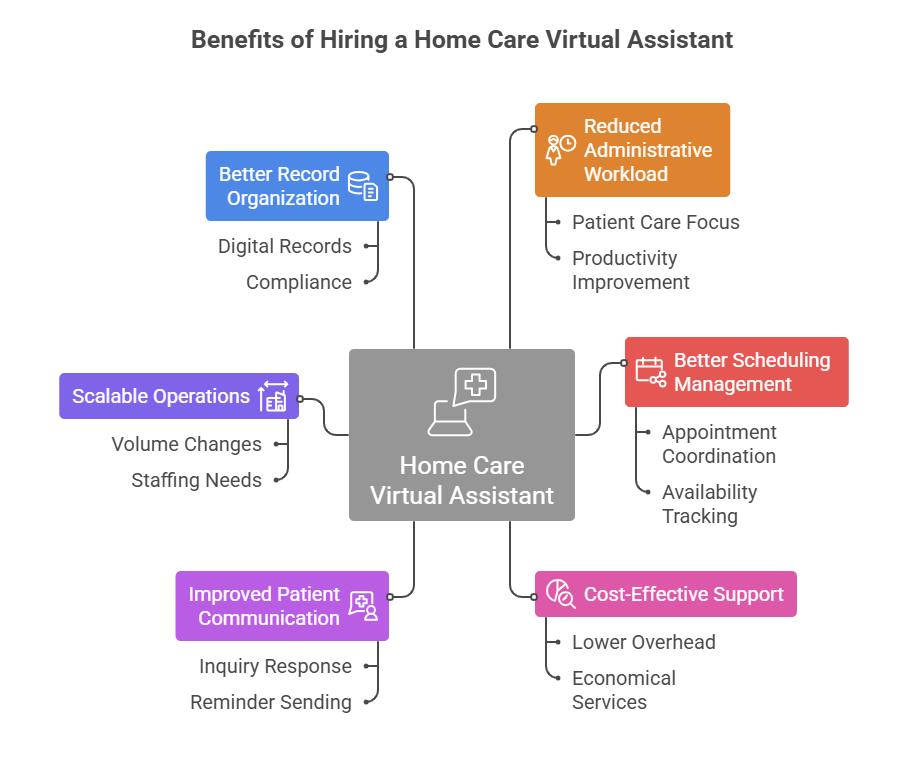
Healthcare agencies often face growing administrative workloads that can limit the time caregivers spend with patients. Hiring remote support helps organizations manage scheduling, documentation, and communication more efficiently without increasing office overhead. This approach highlights why home care agencies need a home care VA and demonstrates how a home care VA improves home healthcare administration, especially for agencies seeking affordable home care VA services for small home care providers.
1. Reduced Administrative Workload
Administrative responsibilities often take valuable time away from caregivers and office teams. By outsourcing tasks to a remote home care assistant, agencies allow healthcare professionals to focus more on patient care. This improves productivity while maintaining organized workflows.
2. Better Scheduling Management
Scheduling errors can disrupt patient services and caregiver availability. A home care scheduling virtual assistant helps coordinate appointments, track caregiver availability, and update schedules when changes occur. Efficient scheduling reduces missed visits and improves service reliability.
3. Cost-Effective Support
Hiring remote administrative support is often more affordable than maintaining additional office staff. Agencies evaluating home care VA costs frequently find remote services economical due to lower overhead expenses. Many organizations choose an affordable home care VA to maintain efficiency without expanding office teams.
4. Improved Patient Communication
Clear communication improves patient satisfaction and service quality. Remote assistants can respond to patient inquiries, send appointment reminders, and manage follow-up communication. This helps ensure patients remain informed and engaged in their care process.
5. Scalable Operations
Healthcare agencies often experience changes in patient volume and staffing requirements. A dedicated home care VA can scale support as the organization grows. This flexibility allows agencies to adapt quickly without hiring additional administrative employees.
6. Better Record Organization
Accurate documentation is essential for compliance and patient care coordination. A home care administrative virtual assistant helps maintain organized digital records and ensures information remains accessible when needed. Proper documentation improves reporting accuracy and regulatory compliance.
Home Care Virtual Assistant vs In-House Staff
| Aspect | Home Care Virtual Assistant | In-House Staff |
|---|---|---|
| Cost | Lower | Higher |
| Location | Remote | Office |
| Flexibility | High | Limited |
| Scalability | Easy | Difficult |
| Overhead | Minimal | High |
Many agencies evaluate home care virtual assistant vs in-house admin staff, which is better when choosing administrative support solutions. Remote professionals offer flexibility and lower operational costs. This model allows agencies to maintain productivity without expanding office infrastructure.
Who Should Hire a Home Care Virtual Assistant?

Healthcare organizations that manage patient visits, caregiver scheduling, and documentation tasks often benefit from remote administrative support. Agencies, assisted living providers, and telehealth services frequently choose to hire home care VA professionals to handle scheduling, communication, and coordination tasks. These assistants help maintain efficient collaboration between caregivers and patients.
Caregiver agencies and senior care providers also benefit from administrative assistance. A virtual assistant for a caregiver agency can coordinate caregiver assignments and patient follow-ups.
TaskVirtual: Your Partner in Home Care Virtual Assistant Services

Managing patient schedules, caregiver coordination, documentation, and administrative communication can quickly become overwhelming for home care agencies. As patient demands grow, administrative tasks often take valuable time away from caregivers and healthcare coordinators who should be focusing on quality care. TaskVirtual provides specialized home care virtual assistant services that help agencies streamline operations, improve scheduling efficiency, and maintain organized healthcare administration.
1. Expert Healthcare Administrative Support
TaskVirtual offers trained virtual assistants who understand healthcare workflows, caregiver coordination, and patient scheduling requirements. Their assistants can help manage appointments, update documentation, support patient communication, and assist with administrative systems used by home care agencies. This expertise allows healthcare providers to maintain organized operations while improving patient service.
2. Affordable and Flexible Pricing
Hiring additional office staff can significantly increase operational costs for home care agencies. TaskVirtual offers cost-effective solutions with pricing plans starting from just $3.12/hour to $14.99/hour, making professional administrative support accessible to agencies of all sizes. This flexible pricing structure helps organizations scale support without increasing overhead expenses.
3. Comprehensive Home Care Administrative Solutions
TaskVirtual supports agencies with a wide range of administrative services, including caregiver scheduling, patient intake management, CRM updates, documentation organization, and billing coordination. Their assistants adapt to the specific workflow needs of each healthcare provider. Whether an agency needs occasional administrative help or ongoing operational support, TaskVirtual offers scalable solutions.
4. Reliable Operational Support and Coordination
TaskVirtual ensures consistent administrative support to help agencies maintain smooth daily operations. Their assistants assist with appointment reminders, schedule updates, documentation management, and communication with patients and caregivers. This proactive support helps reduce scheduling errors and keeps healthcare workflows running efficiently.
5. Proven Track Record of Excellence
With 364 positive reviews and a 4.7-star rating on trusted VA platforms, TaskVirtual has built a reputation as a reliable provider of virtual assistant services. Healthcare organizations worldwide trust their assistants to manage administrative tasks and improve operational efficiency. Their experience supporting service-based businesses makes them a dependable partner for home care agencies.
Final Answer: What Is a Home Care Virtual Assistant?
A home care virtual assistant is a remote professional who supports healthcare agencies by managing administrative tasks such as scheduling, patient communication, documentation, billing coordination, and caregiver organization. These professionals help agencies streamline daily healthcare operations, reduce administrative workload, and maintain accurate records without expanding in-office staff. By outsourcing operational responsibilities to a virtual assistant for home care, healthcare organizations can improve efficiency, lower operational costs, and focus more resources on delivering high-quality patient care.
FAQ: Home Care Virtual Assistant
1. What is a Home Care Virtual Assistant?
A remote professional who supports home care agencies with scheduling, documentation, patient communication, and administrative coordination.
2. What Does a Home Care Virtual Assistant Do for Home Care Agencies?
They assist with appointment scheduling, caregiver coordination, patient communication, record management, and administrative tasks.
3. How Can a Home Care Virtual Assistant Help with Scheduling and Patient Coordination?
They organize caregiver schedules, manage appointment calendars, and send reminders to patients and staff.
4. Can a Home Care Virtual Assistant Handle Medical Office Administrative Tasks?
Yes, they commonly manage data entry, documentation updates, CRM records, and administrative communication.
5. How Much Does a Home Care Virtual Assistant Cost in the USA?
Costs vary depending on experience and workload, but are generally lower than hiring full-time in-house administrative staff.
6. Is It HIPAA-Compliant to Hire a Home Care Virtual Assistant?
Yes, as long as secure systems and confidentiality practices are followed.
7. What Tasks Can a Home Care Virtual Assistant Manage Daily?
Daily tasks include scheduling, patient communication, documentation updates, billing coordination, and administrative support.
8. Can a Home Care Virtual Assistant Help with Billing and Insurance Processing?
Yes, they can assist with invoice preparation, payment tracking, and insurance documentation.
9. How Do Home Care Agencies Benefit from Hiring a Virtual Assistant?
Agencies benefit from reduced administrative workload, improved efficiency, and cost-effective operational support.
10. What Software Do Home Care Virtual Assistants Usually Work With?
They typically work with scheduling systems, CRM platforms, telehealth software, and healthcare documentation tools.
11. How Do I Hire a Reliable Home Care Virtual Assistant in the United States?
Agencies should evaluate experience, healthcare knowledge, communication skills, and familiarity with healthcare systems.
12. Can a Home Care Virtual Assistant Handle Client Calls and Follow-ups?
Yes, they can manage incoming calls and follow-up communication with patients and families.
13. What Is the Difference Between a Medical Virtual Assistant and a Home Care Virtual Assistant?
A medical assistant supports broader healthcare operations, while a home care assistant focuses on caregiver coordination and home care administration.
14. How Can a Home Care Virtual Assistant Reduce Workload for Care Providers?
By managing administrative tasks, they allow caregivers to focus more on patient care.
15. When Should a Home Care Agency Hire a Virtual Assistant?
Agencies should consider hiring one when administrative tasks begin affecting productivity or operational efficiency.
Siddhartha Basu
 Siddhartha Basu is a Technical Writer at Task Virtual. He loves online games, e-book reading, and Yoga.