

Contents
show
Why Using a Virtual Call Assistant Gives Businesses a Competitive Edge
A Virtual Call Assistant is a remote professional who manages inbound and outbound calls for businesses. They handle tasks such as answering calls, appointment scheduling, lead qualification, customer support, and call follow-ups. By outsourcing call handling, businesses improve response times, reduce costs, and ensure no opportunity or customer inquiry is missed.
What Is a Virtual Call Assistant?
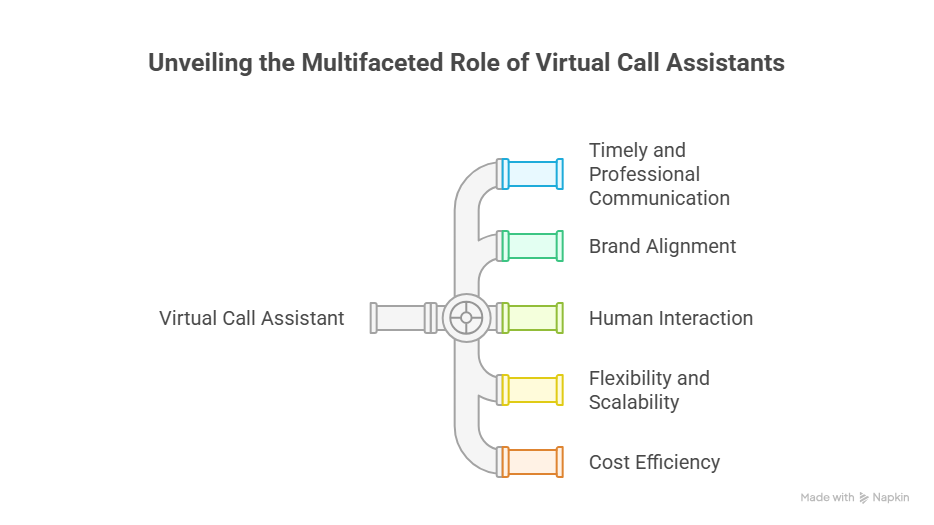
A virtual call assistant is a trained remote professional who manages business phone communications on behalf of an organization. Often referred to as a virtual call answering assistant or virtual phone call assistant, this role goes beyond simply answering calls by ensuring that every caller receives timely, professional, and brand-aligned communication, especially as studies show 75% of customers expect immediate responses. Businesses use virtual call assistant services to maintain consistent call coverage without investing in physical office staff or infrastructure.
Unlike automated IVR systems, a remote call assistant is a real human who can adapt conversations, understand caller intent, and respond empathetically. A virtual call handling assistant represents your business directly, answering calls in your company’s name and following predefined scripts, workflows, and protocols. Many organizations choose to hire a virtual call assistant because it provides flexibility, scalability, and cost efficiency, especially for growing teams, service-based businesses, and companies that require extended or 24/7 virtual call assistant coverage.
What Does a Virtual Call Assistant Do?
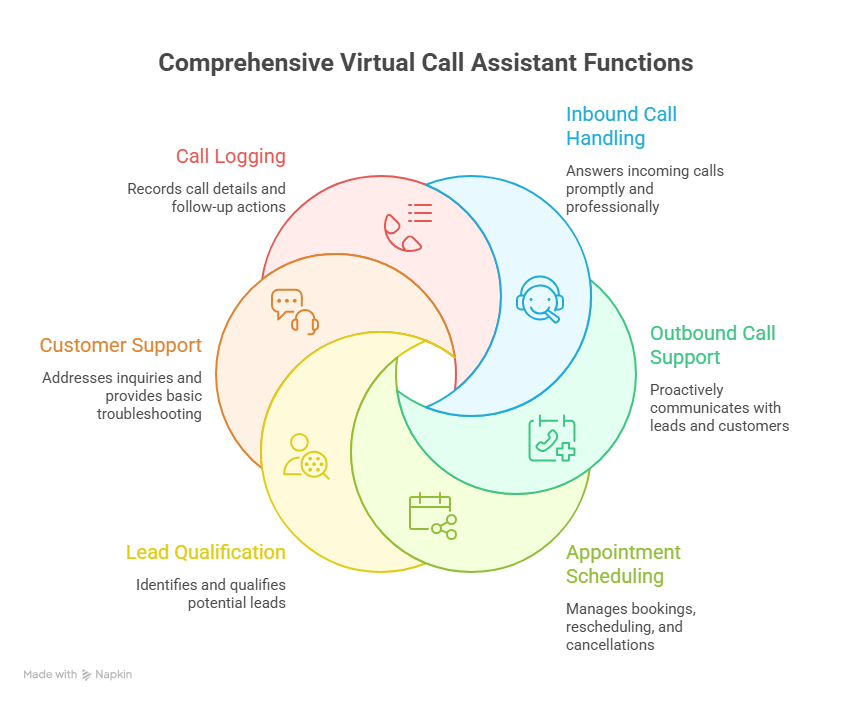
A virtual call assistant supports businesses by managing phone-based communication in a structured, professional, and reliable manner. Their responsibilities cover both inbound and outbound interactions, ensuring that callers receive accurate information and timely responses. Acting as a virtual receptionist, call assistant, or virtual call center assistant, they serve as the first point of contact for customers, prospects, and partners.
1. Inbound Call Handling
An inbound call virtual assistant answers incoming business calls promptly and professionally, ensuring no call goes unanswered during peak hours or after hours. They greet callers in your business name, identify the purpose of the call, and provide basic information or assistance based on predefined guidelines. When required, the call answering virtual assistant routes calls to the appropriate team member or takes detailed messages for follow-up.
2. Outbound Call Support
An outbound call virtual assistant handles proactive communication such as follow-up calls, appointment confirmations, and customer outreach. These calls help businesses stay connected with leads and existing customers while maintaining a consistent communication schedule. By managing outbound calls, a virtual phone call assistant improves engagement, follow-through, and overall conversion opportunities.
3. Appointment Scheduling and Calendar Management
A virtual call assistant for appointment scheduling manages bookings, rescheduling, and cancellations with accuracy and efficiency. They coordinate calendars, ensure availability is updated, and send confirmations or reminders to clients, which matters because businesses that use appointment scheduling software report up to a 30% reduction in missed appointments. This structured scheduling support reduces no-shows and ensures smoother daily operations for businesses and service providers.
4. Lead Qualification and Call Screening
A virtual call assistant supports sales teams by qualifying incoming leads using predefined questions and criteria. They capture contact details, identify intent, and assess urgency before passing qualified prospects forward. This lead screening process allows internal teams to focus on high-quality opportunities while the virtual call handling assistant manages initial conversations.
5. Customer Support and Information Requests
A virtual call assistant for customer support addresses common inquiries, provides product or service information, and assists callers with basic troubleshooting. When issues require escalation, they ensure the matter is documented and routed correctly. This approach improves customer satisfaction while maintaining organized support workflows.
6. Call Logging and CRM Updates
A virtual call assistant records call details, caller information, and required follow-up actions in your CRM or call management system. Accurate documentation ensures continuity across teams and prevents missed opportunities. These records also support reporting, performance tracking, and long-term customer relationship management.
Industries That Commonly Use Virtual Call Assistants

Virtual call assistants are widely adopted across industries that depend on consistent, professional phone communication. Whether acting as a virtual call assistant USA provider or a US-based virtual call assistant, these professionals support organizations of all sizes. Their adaptability makes them valuable across service-driven and customer-facing sectors.
1. Service-Based and Local Businesses
Industries such as real estate, home services, and legal practices rely heavily on inbound inquiries and appointment requests. A virtual call assistant for small businesses ensures calls are answered even when teams are busy or unavailable. This improves lead capture and client experience without increasing overhead.
2. Healthcare, Coaching, and Consulting
Healthcare providers, telehealth platforms, coaches, and consultants use virtual call assistant services to manage scheduling, confirmations, and patient or client inquiries. A virtual call answering assistant ensures sensitive conversations are handled professionally while maintaining privacy protocols. Reliable call handling enhances trust and operational efficiency.
3. E-commerce, Financial, and Growing Enterprises
E-commerce brands and financial service firms use virtual call center assistants to handle customer support, order inquiries, and follow-ups. As businesses scale, a remote call assistant provides flexible call coverage without the limitations of fixed in-house staffing. This scalability supports growth while maintaining service quality.
Benefits of Hiring a Virtual Call Assistant
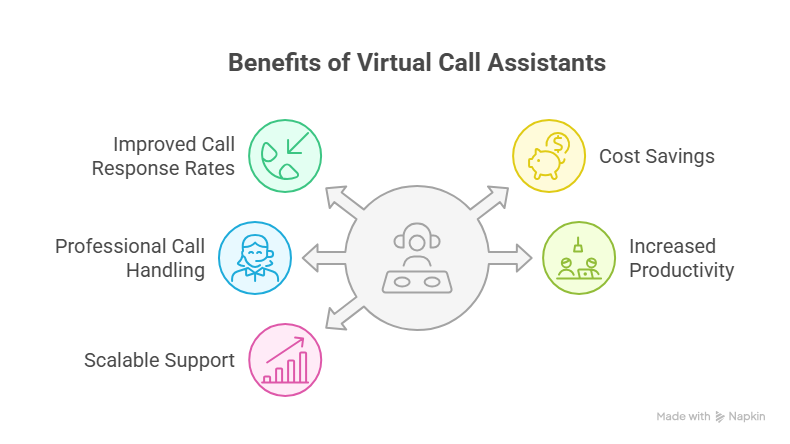
Hiring a virtual call assistant provides measurable operational and financial advantages for businesses seeking professional call management. These benefits apply whether you need basic call answering or full-service virtual call assistant services. The flexibility and efficiency of remote support contribute directly to business growth.
1. Improved Call Response Rates
A virtual call assistant ensures that inbound calls are answered promptly, even during peak times or outside standard business hours. This prevents missed opportunities and enhances first impressions with potential customers. Consistent call coverage builds reliability and trust with callers.
2. Cost Savings
Hiring an affordable virtual call assistant reduces expenses associated with full-time, in-house staff, such as salaries, benefits, and office space. Businesses can scale services up or down based on call volume without long-term commitments. This cost-effective model supports sustainable growth.
3. Professional Call Handling
A trained virtual receptionist call assistant delivers consistent, brand-aligned communication across every interaction. Callers receive clear, courteous responses that reflect professionalism. This consistency strengthens brand reputation and customer confidence.
4. Increased Productivity
By outsourcing call management, internal teams can focus on revenue-generating and strategic tasks. Virtual call handling assistants reduce interruptions and administrative burden. This leads to improved efficiency across departments.
5. Scalable and Flexible Support
This service allow businesses to adjust coverage as needs change, including access to a 24/7 virtual call assistant. Whether expanding into new markets or managing seasonal demand, scalability ensures uninterrupted support. This flexibility is difficult to achieve with traditional staffing models.
Virtual Call Assistant vs In-House Receptionist
| Aspect | Virtual Call Assistant | In-House Receptionist |
|---|---|---|
| Location | Remote | On-site |
| Cost | Lower | Higher |
| Coverage | Flexible | Fixed hours |
| Scalability | Easy | Limited |
| Hiring Time | Fast | Slow |
Virtual call assistants offer greater flexibility and affordability.
Skills Required for a Virtual Call Assistant

A successful virtual call assistant must combine communication expertise with operational discipline. These skills ensure they can function effectively as a call answering virtual assistant or virtual call center assistant. Strong fundamentals are critical for consistent service quality.
1. Communication and Listening Skills
A virtual call assistant must speak clearly, professionally, and confidently while actively listening to caller’s needs. Strong listening ensures accurate responses and proper call routing. These skills directly impact customer satisfaction.
2. Organizational and Time Management Skills
Managing multiple calls, schedules, and follow-ups requires excellent organization. A remote call assistant must prioritize tasks and adhere to workflows consistently. This ensures smooth daily operations.
3. Technical and CRM Proficiency
Experience with CRM systems, call logging tools, and scheduling software is essential. A virtual call assistant must document interactions accurately and follow protocols. Technical proficiency supports accountability and reporting.
TaskVirtual: Your Partner in Virtual Call Assistant Services

Handling high call volumes, managing appointments, and responding to customer inquiries can quickly overwhelm internal teams, especially for growing businesses. Missed calls often translate into lost leads, delayed support, and reduced customer satisfaction. TaskVirtual delivers reliable virtual call assistant services designed to ensure every inbound and outbound call is handled professionally, efficiently, and in alignment with your business goals.
1. Specialized Virtual Call Management Expertise
TaskVirtual provides trained virtual call assistants who manage inbound call handling, outbound follow-ups, appointment scheduling, and customer support. Acting as a virtual receptionist, call assistant, or virtual call center assistant, they represent your business seamlessly while following your scripts, workflows, and CRM processes. This ensures consistent communication and accurate call handling across all touchpoints.
2. Affordable and Flexible Pricing
Hiring and maintaining in-house call staff can be costly, especially for small and mid-sized businesses. TaskVirtual offers cost-effective solutions with pricing plans ranging from $3.12/hour to $14.99/hour, making professional call support accessible without long-term commitments. Businesses can scale services up or down based on call volume and operational needs.
3. Comprehensive Call Support Solutions
From acting as an inbound call virtual assistant to managing outbound call campaigns and appointment confirmations, TaskVirtual covers the full call lifecycle. Their services include call logging, CRM updates, lead qualification, and customer support coordination. This end-to-end approach ensures no call, lead, or follow-up is missed.
4. Continuous Support and Quality Monitoring
TaskVirtual emphasizes accuracy, consistency, and service quality through ongoing monitoring and performance reviews. Regular reporting and feedback loops ensure virtual call assistants meet business standards and customer expectations. This proactive support model helps maintain long-term reliability.
5. Trusted by Businesses Worldwide
With 364 positive reviews and an average 4.7-star rating on leading virtual assistant platforms, TaskVirtual has built a strong reputation for dependable and professional call assistant services. Businesses trust TaskVirtual to enhance customer experience, improve response times, and support scalable growth.
Final Answer: What Is a Virtual Call Assistant?
A virtual call assistant is a remote professional who manages inbound and outbound business calls, supports appointment scheduling, qualifies leads, and delivers customer support with consistency and professionalism. Acting as a virtual call answering assistant or virtual phone call assistant, they ensure that every caller interaction reflects your brand while reducing operational strain on internal teams. By leveraging virtual call assistant services, businesses gain scalable, cost-effective, and reliable call coverage, including access to US-based virtual call assistant support and 24/7 availability when needed. This model improves customer experience, boosts productivity, and enables sustainable business growth without the limitations of traditional in-house staffing.
FAQ: Virtual Call Assistant
1. Can a virtual call assistant answer calls in my business name?
Yes. They act as an extension of your business.
2. Do virtual call assistants work full-time or part-time?
They can work hourly, part-time, or full-time.
3. Are virtual call assistants cost-effective?
Yes. They reduce overhead while improving call coverage.
4. Can they integrate with my CRM?
Yes. Most can update CRMs and call logs.
5. Is a virtual call assistant suitable for small businesses?
Absolutely. Small businesses benefit greatly from professional call handling.
 Siddhartha Basu is a Technical Writer at Task Virtual. He loves online games, e-book reading, and Yoga.