Contents
show
Why Academic Transcription Services Are Key to Learning Success
Academic Transcription Services convert lectures, seminars, research interviews, and academic discussions into accurate, written text. These services are essential for students, researchers, and educators who need reliable records of educational content. By providing precise and organized transcripts, academic transcription services improve accessibility, research documentation, and study efficiency.
What Are Academic Transcription Services?
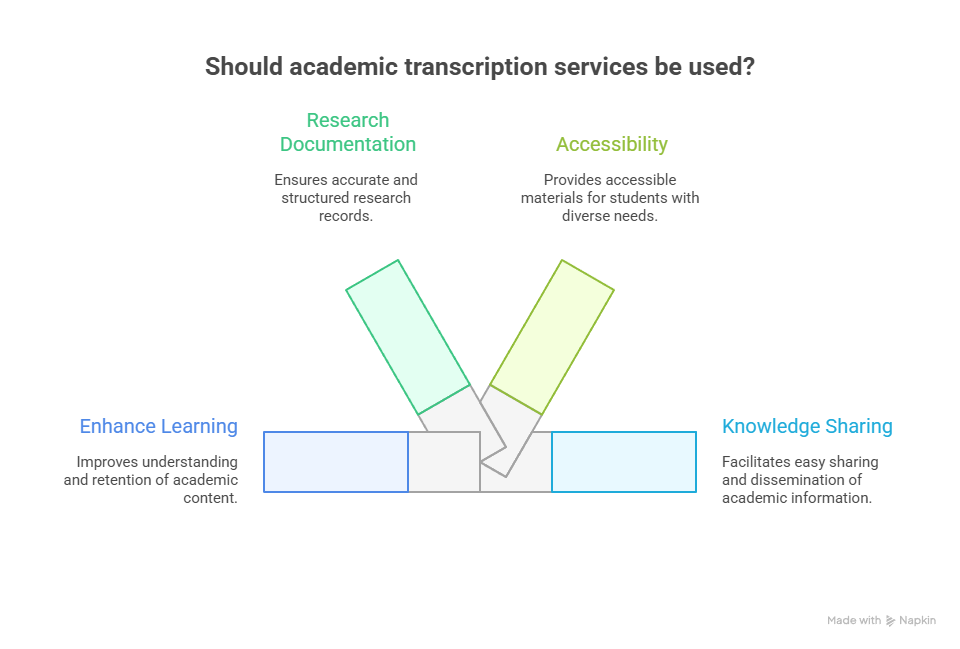
Academic Transcription Services are specialized solutions that transform spoken academic content into written format. They cater to educational institutions, researchers, and students, ensuring that lectures, presentations, focus groups, and interviews are transcribed accurately and efficiently.
Unlike general transcription services, academic transcription emphasizes technical accuracy, formatting, and adherence to academic standards. It’s an essential tool for enhancing learning, research documentation, and accessibility for students with different needs. These services also play a vital role in maintaining structured academic records. Having transcripts readily available boosts knowledge sharing and research credibility.
How Academic Transcription Services Work
Academic transcription follows a step-by-step process to ensure clarity and accuracy. It begins with the submission of files, followed by review, transcription, proofreading, and final delivery. Each step is carefully executed to maintain the quality of academic content. The process relies on both skilled professionals and technology for the best outcome. Institutions benefit greatly by outsourcing this structured workflow.
1. Audio/Video Submission
Clients submit recorded lectures, seminars, interviews, or presentations to the transcription service. High-quality audio or video ensures the most accurate transcription. These files form the foundation for error-free transcripts.
2. Content Analysis
Transcription professionals review the recordings, noting speaker identity, context, and specialized academic terminology. This ensures the transcription matches the subject matter. Careful analysis helps avoid misinterpretation of technical terms. Professionals also check for consistency in tone and phrasing across multiple speakers. This step guarantees that transcripts are both accurate and coherent for academic use.
3. Transcription Process
Using a combination of skilled transcribers and advanced transcription software, the spoken content is converted into written form. Services often include time-stamping and speaker labels. This balance of human and AI tools improves efficiency. Transcribers cross-check technical terms against research or subject-specific references. The process ensures that transcripts are precise, professionally formatted, and ready for immediate academic use.
4. Review and Proofreading
Proofreading plays a critical role in improving transcription accuracy. A U.S. study found that speech recognition software alone had an error rate of about 7.4%, which dropped to just 0.4% after professional review and proofreading, ensuring high-quality documentation. This highlights how human checks significantly reduce mistakes and improve transcript reliability.
5. Delivery
Final transcripts are delivered in formats such as Word documents or PDFs, ready for research and study. Timely delivery ensures usability. Files are structured to meet academic standards. Some services also offer cloud-based access for easier sharing and collaboration. This ensures transcripts are accessible anytime and compatible with multiple devices.
Key Features of Academic Transcription Services
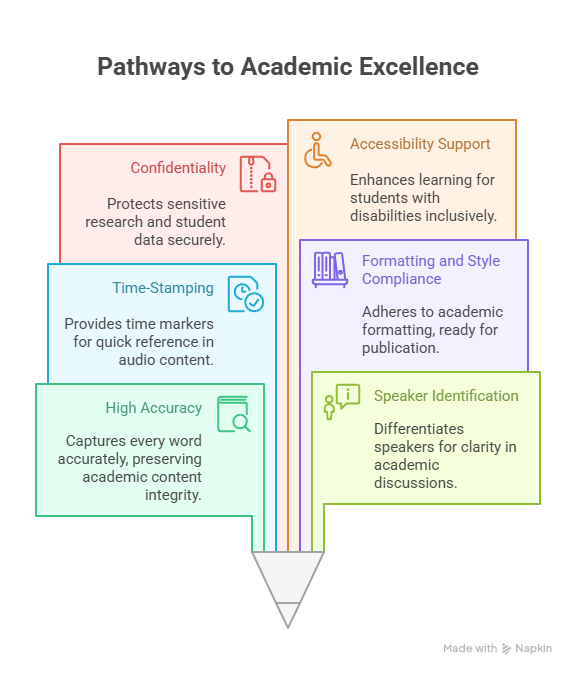
These services are designed to meet the unique requirements of academic users. Features like speaker identification, formatting, and accessibility support make them reliable tools for institutions. The focus remains on ensuring transcripts are precise and well-structured for academic success. They add value by making academic knowledge universally accessible.
1. High Accuracy
Ensures that every word, technical term, and reference is captured correctly, preserving the integrity of academic content. Reliable accuracy supports both students and researchers. Precision also minimizes misunderstandings in complex academic discussions. This ensures that transcripts remain a dependable resource for learning. Quality-driven transcription builds trust in research and study materials.
2. Speaker Identification
Differentiates between speakers in interviews, panel discussions, or group seminars for clarity and proper documentation. It prevents confusion in group studies. Correctly labeling speakers helps in maintaining accountability in academic debates. It also supports accurate analysis in qualitative research studies. This clarity strengthens the usability of transcripts for collaborative projects.
3. Time-Stamping
Provides time markers in transcripts, helping users quickly reference specific portions of audio or video content. This improves study convenience. Students can instantly navigate to key moments without rewatching long recordings. Time stamps make transcripts ideal for data coding in research. This structured approach simplifies both learning and analysis. In one study of qualitative interviews in the UK, adding time-coded transcripts reduced the time taken for data immersion by up to 46.2% compared to traditional methods.
4. Formatting and Style Compliance
Transcripts follow academic formatting and citation guidelines, making them ready for research, assignments, or publication. Compliance avoids extra editing. Consistent formatting aligns with institutional requirements, saving time for students. Style adherence also improves the readability and professionalism of transcripts. This ensures documents are immediately usable in academic work.
5. Confidentiality
Academic transcription services maintain strict confidentiality to protect sensitive research, student data, and institutional information. Security is always prioritized. Providers often use encrypted systems to safeguard files. This protection is especially vital for unpublished research and private academic discussions. Confidentiality builds trust and ensures ethical handling of data.
6. Accessibility Support
Enhances accessibility for students with disabilities, including those who are hearing-impaired. Written transcripts provide equal learning opportunities. Accessibility also benefits students with learning differences or language barriers. Providing inclusive academic resources ensures no learner is left behind. This feature aligns with global education equity goals.
Benefits of Using Academic Transcription Services

The advantages go far beyond simple documentation. They provide time-saving, accessibility, and research benefits that manual note-taking often cannot. Academic transcription not only helps individuals but also strengthens institutional knowledge. It ensures no learning opportunity is lost due to missing or incomplete notes.
1. Improved Study Efficiency
Transcripts allow students to review lectures and seminars quickly, ensuring better retention. They act as reliable study companions. Students can revisit complex discussions multiple times without relying on memory alone. This strengthens preparation for exams and assignments. Well-structured transcripts also reduce the stress of last-minute revisions.
2. Accurate Research Documentation
Researchers can rely on precise transcripts for citations and data analysis. This reduces academic errors. Reliable transcripts make it easier to trace original discussions or quotes. They also prevent misrepresentation of participants’ views in research. Accuracy at this stage supports stronger publications and findings. In a U.S. study of clinical documentation, speech recognition (SR) transcriptions had an error rate of 7.4%, which plummeted to 0.4% after human review by transcriptionists.
3. Accessibility and Inclusivity
Provides written records for students with hearing impairments or comprehension challenges. It encourages inclusive education. Written transcripts break language barriers and support ESL (English as a Second Language) learners. They allow everyone to engage equally in academic activities. Institutions benefit from stronger inclusivity and compliance with accessibility standards.
4. Time-Saving
Reduces the need to manually take notes during lectures, letting learners focus on listening. This increases engagement. Educators and students save hours that would otherwise go into rewriting notes. Saved time can be redirected to deeper research and discussion. This improves overall productivity in academic settings.
5. Enhanced Collaboration
Group projects, interviews, and seminars benefit from structured transcripts. Sharing becomes easier. Transcripts provide a common reference point for all members. They help ensure no detail is lost when collaborating remotely. This creates smoother communication and stronger teamwork outcomes.
6. Compliance with Academic Standards
Ensures that all work follows citation norms and ethical guidelines. It supports academic credibility. Academic transcription services are trained to format documents according to institutional requirements. This minimizes the risk of rejection during submissions. Compliance also strengthens trust in academic outputs
How to Use Academic Transcription Services
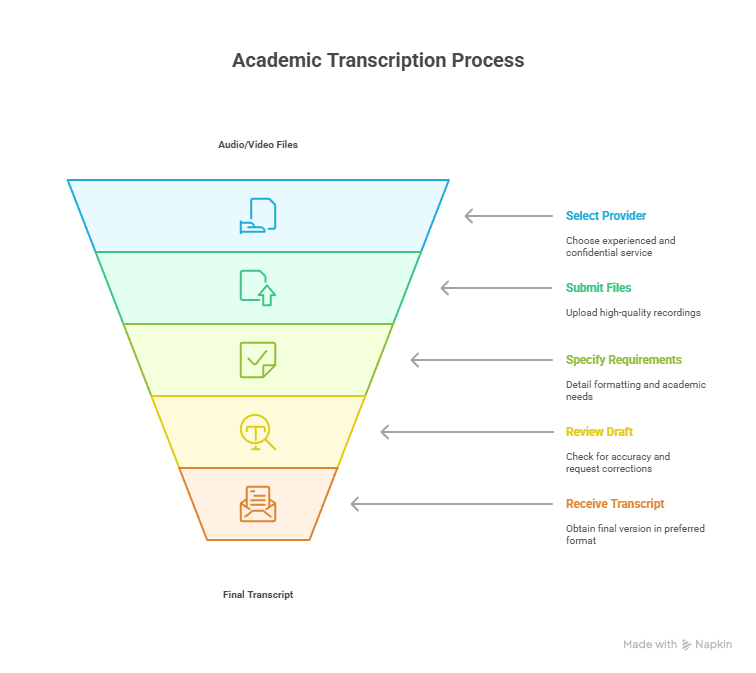
Making the best use of these services requires a structured approach. By following a few simple steps, users can ensure accuracy and efficiency. Students and researchers should always provide detailed instructions to improve transcript quality. Collaboration with the provider ensures academic requirements are met consistently.
Step 1: Select a Provider
Choose a service experienced in academic content with strong confidentiality. The right choice improves reliability. A skilled provider ensures technical accuracy in handling academic terminology. They also guarantee secure management of sensitive student or research data. Selecting carefully at this stage reduces future transcription errors.
Step 2: Submit Audio/Video Files
Upload recordings in high-quality formats for best results. Clear sound ensures precise output. Background noise, poor equipment, or overlapping speakers can reduce transcript quality. High-definition formats support better accuracy during transcription. Ensuring clarity at this step saves significant editing time later.
Step 3: Specify Requirements
Provide details about formatting, timestamps, and academic preferences. Customization enhances usability. Some users may need speaker identification, while others require citation-ready formatting. By sharing preferences upfront, the service can tailor transcripts for direct use. This ensures documents align with research and academic needs.
Step 4: Review Draft
Check the initial transcript for accuracy and request corrections. Early review saves time later. Draft review allows users to catch technical errors or misinterpretations. Feedback at this stage improves the final transcript’s precision. Collaboration between user and the provider ensures a higher-quality outcome.
Step 5: Receive Final Transcript
Obtain the final version in your preferred format. The transcript is now ready for academic use. Delivery options may include Word, PDF, or direct cloud sharing. Flexible formats allow seamless integration into research projects or study materials. The polished transcript ensures accessibility, accuracy, and academic compliance.
Limitations of Academic Transcription Services
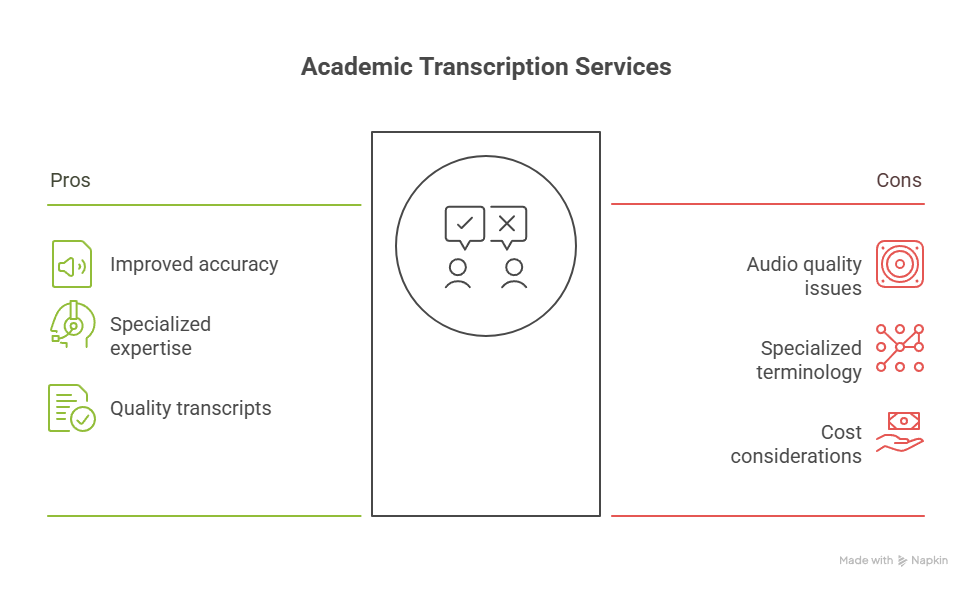
Despite their advantages, there are certain challenges to consider. Understanding these limitations helps in setting realistic expectations. Academic users should prepare their recordings and instructions carefully to minimize issues. Clear planning ensures the best outcomes from transcription providers.
1. Audio Quality Dependence
Poor-quality recordings with background noise can affect transcription accuracy. Clear input ensures better results. When audio is distorted, even skilled transcribers and advanced tools struggle to maintain precision. This often requires additional editing, increasing turnaround time. Preparing recordings in quiet environments greatly improves transcript quality.
2. Specialized Terminology
Highly technical content may require transcribers familiar with the subject. This may limit service providers. Academic fields like medicine, law, or engineering often use niche vocabulary that generalists may miss. Without subject expertise, transcripts risk losing accuracy and meaning. Partnering with specialised providers ensures better handling of complex content.
3. Cost Considerations
Professional services are charged based on complexity and length. Longer recordings increase expenses. Urgent deadlines or specialized formatting needs may also raise costs. For students and small institutions, affordability can be a concern. Balancing quality against budget is essential when selecting a provider.
How TaskVirtual Can Help with Academic Transcription Services

TaskVirtual provides specialized academic transcription support tailored for academia, ensuring lectures, interviews, and research discussions are transcribed with the highest accuracy. Combining expert human skills with AI-powered tools, TaskVirtual delivers transcripts that are reliable, confidential, and ready for academic use. Their services are designed to match academic rigor while staying affordable. By partnering with TaskVirtual, institutions and individuals can save time and enhance learning efficiency.
1. Expert Consultation on AI-Powered Efficiency
TaskVirtual’s academic transcription assistants leverage AI tools to boost accuracy and speed. From identifying complex terminology to integrating timestamps, they ensure every transcript is polished and reliable. This efficiency saves time for both students and educators.
2. Professional Academic Formatting and Research Support
With expertise in academic standards, TaskVirtual provides transcripts formatted for research papers, assignments, and institutional requirements. Their support ensures compliance and eliminates the need for additional editing. TaskVirtual also assists with proper citation styles and structured headings for easy integration into research projects. This ensures transcripts are immediately usable for publication, study, or collaborative work.
3. Confidentiality and Ethical Standards
TaskVirtual safeguards sensitive academic data, whether related to unpublished research or confidential interviews. Their ethical approach ensures trust and long-term reliability. All files are managed through secure platforms with restricted access, preventing unauthorized sharing. This commitment to confidentiality allows students, educators, and researchers to focus on their work without worrying about data breaches.
4. Affordable and Scalable Services
TaskVirtual offers competitive pricing—starting as low as $3.12/hour to $14.99/hour—making professional transcription accessible to individuals, universities, and research organizations. Flexible plans allow scaling based on workload.
5. Proven Reliability and Client Trust
With 364 positive reviews and a 4.7-star rating on leading VA reviewing platforms, TaskVirtual is recognized for dependable and high-quality services. Their consistent accuracy has earned trust across industries. By partnering with TaskVirtual, students, educators, and researchers gain a cost-effective yet professional extension to their academic journey. This ensures accurate transcripts, better accessibility, and more time to focus on learning and research.
Conclusion
Academic Transcription Services are vital for students, educators, and researchers who require precise and organized written records of spoken academic content. They save time, enhance learning efficiency, support research documentation, and improve accessibility for diverse learners. By outsourcing transcription needs to professionals, educational institutions and individuals can focus on learning, teaching, and research while ensuring accurate and reliable records of academic content. Ultimately, transcription services act as a bridge between knowledge delivery and knowledge retention.
FAQ: Academic Transcription Services
1. What are Academic Transcription Services?
They convert recorded lectures, interviews, seminars, and academic discussions into accurate written text for study, research, or documentation.
2. Who can benefit from these services?
Students, educators, researchers, and institutions need precise and organized academic records.
3. Are these services accurate for technical content?
Yes, professional services ensure technical terms, academic references, and subject-specific language are correctly transcribed.
4. Can these services help with accessibility?
Yes, transcripts provide accessibility for hearing-impaired students or those who need written content for easier comprehension.
5. How long does it take to get transcripts?
Turnaround times vary depending on the length and complexity of the audio but are often faster than manual note-taking.
 Siddhartha Basu is a Technical Writer at Task Virtual. He loves online games, e-book reading, and Yoga.