

Contents
show
Virtual Assistant for Lawyers: Roles, Benefits, and Modern Use
A virtual assistant for lawyers is a specialized remote legal support professional who helps attorneys and law firms manage administrative, operational, and case-related responsibilities without practicing law. A legal virtual assistant handles scheduling, client communication, document preparation, case organization, billing coordination, and CRM updates using secure systems that comply with U.S. confidentiality standards. According to the reports, attorneys spend nearly 48% of their work time on non-billable administrative tasks. By delegating these time-consuming tasks to a law firm virtual assistant, attorneys can focus on legal strategy, client advocacy, and billable work while reducing overhead and improving operational efficiency.
What Is a Virtual Assistant for Lawyers?
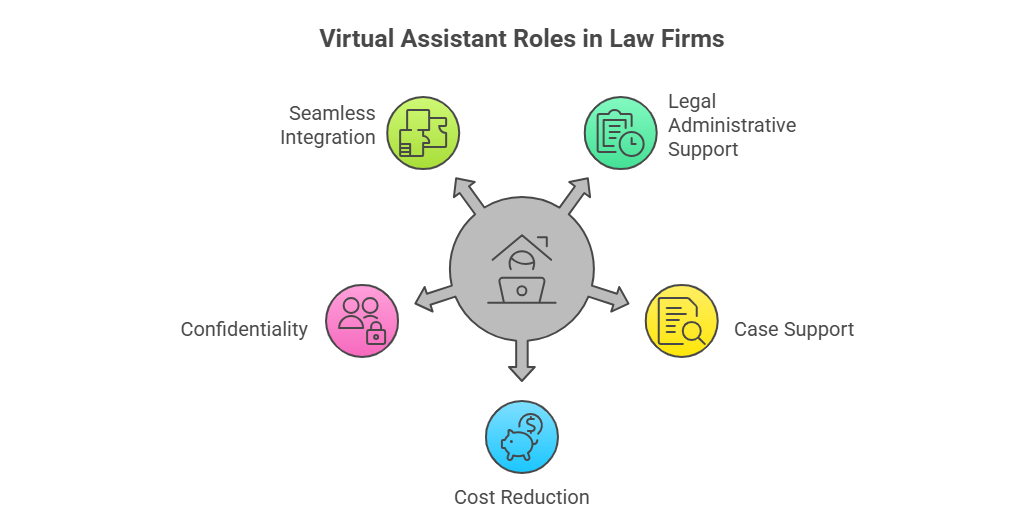
A virtual assistant for lawyers is a trained legal support professional who works remotely to assist attorneys, solo practitioners, and law firms with day-to-day non-legal tasks. Often referred to as a legal administrative virtual assistant or virtual assistant for attorneys, this role is designed to streamline law firm operations while maintaining strict confidentiality and compliance standards required in the United States. Many firms choose a remote legal virtual assistant to reduce overhead costs while maintaining high-quality administrative and case support.
Unlike a general VA, a legal virtual assistant understands U.S. legal workflows, court systems, terminology, and law firm software. They work under attorney supervision and provide structured support that aligns with ethical rules, data privacy regulations, and professional responsibility guidelines. Whether supporting a solo practice or acting as a virtual assistant for law firms, they integrate seamlessly into existing legal operations using secure, cloud-based systems.
What Does a Virtual Assistant for Lawyers Do?
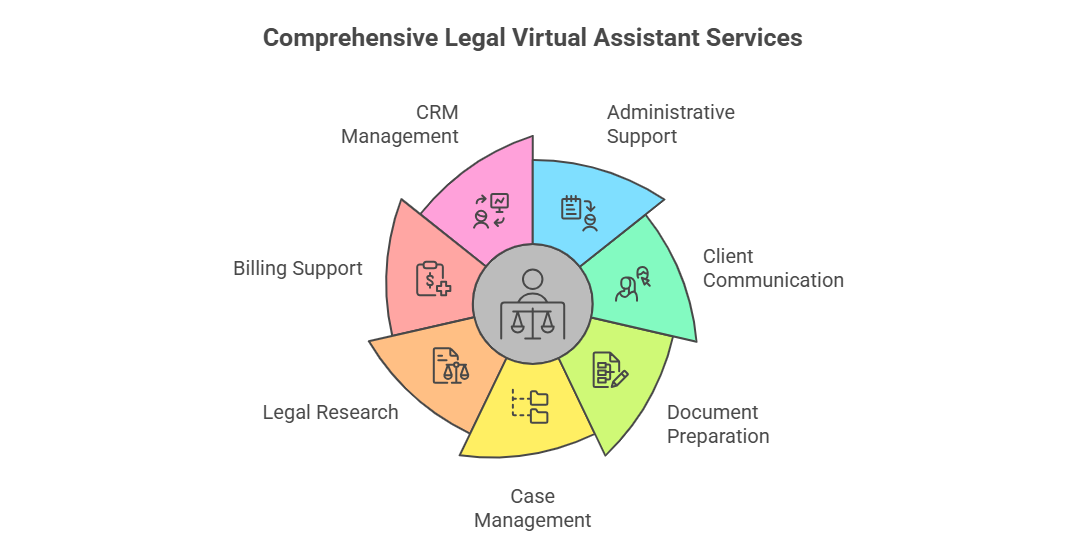
A virtual assistant for legal support performs a wide range of operational and case-related tasks, allowing attorneys to work more efficiently. These professionals function as an extension of the firm, providing consistent administrative assistance without the limitations of on-site staffing. From intake to invoicing, a legal virtual assistant services model ensures continuity, scalability, and compliance.
1. Administrative and Scheduling Support
Administrative support is one of the core responsibilities of a legal virtual assistant. They manage attorney calendars, schedule court dates, coordinate meetings, and handle appointment reminders with precision. A virtual assistant for small law firms or solo attorneys helps prevent missed deadlines and improves overall time management.
2. Client Communication and Intake
A virtual assistant for attorneys often serves as the first point of contact for prospective and existing clients. They manage initial inquiries, distribute intake forms, follow up on documentation, and provide non-legal status updates. This structured communication improves responsiveness, professionalism, and client satisfaction for U.S.-based practices.
3. Legal Document Preparation Support
A legal virtual assistant for document drafting assists attorneys by formatting, proofreading, and organizing legal documents. They prepare standardized templates for pleadings, contracts, and correspondence based strictly on attorney instructions. This support reduces drafting time while ensuring consistency and accuracy across case files.
4. Case Management and File Organization
A legal virtual assistant for case management ensures that digital case files remain organized, indexed, and up to date. They track deadlines, upload documents, and maintain case management software used by U.S. law firms. Proper file organization reduces risk, improves compliance, and supports efficient case progression.
5. Legal Research Assistance (Non-Advisory)
A legal virtual assistant for legal research conducts preliminary, non-advisory research tasks. They locate statutes, regulations, and case summaries, then compile organized research notes for attorney review. This research support saves time while ensuring attorneys retain full responsibility for legal interpretation.
6. Billing, Time Tracking, and Invoicing Support
Billing support is another key function of a law firm virtual assistant. They track time entries, prepare invoices, manage expense records, and follow up on outstanding payments. Accurate billing coordination supports consistent cash flow and reduces administrative backlogs.
7. CRM and Database Management
A legal administrative virtual assistant manages CRM systems and internal databases. They update client records, track leads, and schedule follow-ups to support business development efforts. Clean, organized data improves client retention and long-term firm growth.
Types of Lawyers Who Use Virtual Assistants

Virtual legal support has become increasingly common across many U.S. practice areas. A virtual assistant for law firms offers flexibility that adapts to different legal specialties and firm sizes. From solo practices to corporate legal departments, adoption continues to grow.
1. Solo Attorneys and Small Law Firms
A virtual assistant for solo attorneys and small practices provides essential administrative coverage without the cost of full-time staff. These attorneys benefit from scalable support that adjusts to fluctuating caseloads. Many choose to hire a legal virtual assistant to maintain professionalism while controlling expenses.
2. Litigation, Family Law, and Immigration Practices
High-volume practice areas often rely on a virtual paralegal assistant for case organization and client communication. Litigation, family law, and immigration attorneys benefit from consistent intake handling, document preparation, and deadline tracking. A virtual assistant for legal support helps manage complex workflows efficiently.
3. Business, Real Estate, and Corporate Legal Teams
Transactional and corporate practices use legal virtual assistant services to manage contracts, compliance documentation, and client records. A US-based legal virtual assistant ensures familiarity with domestic regulations and business standards. This support allows attorneys to focus on negotiations and strategic advisory work.
Skills Required for a Virtual Assistant for Lawyers
A qualified legal virtual assistant possesses a strong understanding of legal terminology, U.S. law firm workflows, and administrative best practices. They are highly organized, detail-oriented, and capable of managing multiple priorities in fast-paced legal environments. Familiarity with case management systems, billing software, and secure document-sharing platforms is essential.
In addition to technical skills, a remote legal virtual assistant must demonstrate professionalism, discretion, and excellent written communication. Understanding confidentiality requirements, ethical boundaries, and data security protocols is critical for compliance in the USA, as 83% of breaches involve human error, and ensuring secure support.
Benefits of Hiring a Virtual Assistant for Lawyers
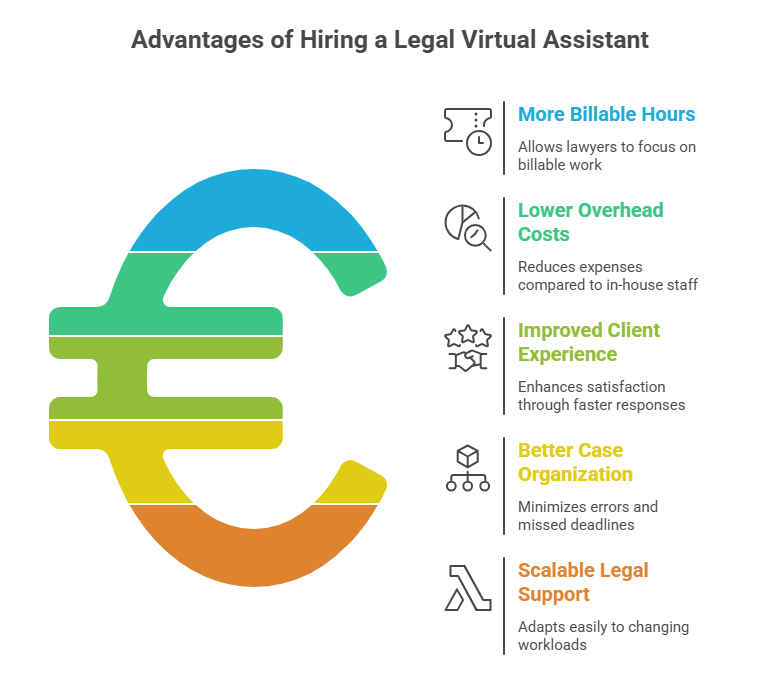
Hiring a legal virtual assistant provides law firms with measurable operational and financial advantages. These professionals help attorneys reclaim time, reduce stress, and improve service quality. For U.S. practices, virtual support offers a competitive edge in efficiency and scalability.
1. More Billable Hours
By delegating administrative tasks to a virtual assistant for attorneys, lawyers spend more time on billable legal work. This directly increases revenue potential without extending work hours.
2. Lower Overhead Costs
The legal virtual assistant cost is significantly lower than hiring in-house staff. Firms save on office space, equipment, benefits, and long-term employment obligations, making an affordable legal virtual assistant an attractive option.
3. Improved Client Experience
Faster response times and consistent communication enhance client satisfaction. A law firm virtual assistant ensures no inquiry or follow-up is overlooked.
4. Better Case Organization
A legal virtual assistant for case management reduces errors and missed deadlines. Organized files support compliance and improve internal efficiency.
5. Scalable Legal Support
Legal virtual assistant services scale easily with workload changes. Firms can increase or reduce support without restructuring staff.
Virtual Assistant for Lawyers vs In-House Legal Staff

| Aspect | Virtual Assistant for Lawyers | In-House Legal Staff |
|---|---|---|
| Location | Remote | On-site |
| Cost | Lower | Higher |
| Flexibility | High | Limited |
| Scalability | Easy | Difficult |
| Hiring Time | Fast | Slow |
Many U.S. law firms adopt a hybrid staffing model to balance flexibility and in-office needs.
TaskVirtual: Trusted Legal Virtual Assistant Services for Law Firms

Managing administrative workloads, case coordination, and client communication can place significant strain on attorneys and legal teams. From juggling deadlines to maintaining accurate records, these operational demands often reduce the time available for billable legal work. TaskVirtual provides specialized legal virtual assistant services that support attorneys, solo practitioners, and law firms across the USA with reliable, secure, and scalable assistance.
1. Specialized Legal Administrative Support
TaskVirtual’s trained legal virtual assistants support law firms with scheduling, intake coordination, document preparation, billing assistance, and CRM management. They understand U.S. legal workflows and work strictly under attorney-defined processes to ensure compliance and confidentiality. This allows attorneys to delegate confidently while maintaining full control over legal decision-making.
2. Affordable and Flexible Pricing
Hiring in-house staff can be costly, especially for small practices and solo attorneys. TaskVirtual offers flexible engagement models with pricing ranging from $3.12/hour to $14.99/hour, making it an affordable legal virtual assistant solution. Firms can scale support up or down based on caseload without long-term commitments.
3. End-to-End Legal Support Solutions
From case file organization and deadline tracking to non-advisory legal research and document formatting, TaskVirtual covers a wide range of legal support needs. Their services adapt seamlessly, whether a firm requires part-time assistance or ongoing operational support. This flexibility makes TaskVirtual suitable for both small law firms and growing legal practices.
4. Consistent Quality and Ongoing Oversight
TaskVirtual emphasizes accuracy, data security, and consistency in all legal virtual assistant services. Attorneys receive regular updates, clear communication, and reliable task execution aligned with firm protocols. This structured approach ensures long-term efficiency and trust.
5. Proven Client Satisfaction
With 364 positive reviews and a 4.7-star rating across leading virtual assistant platforms, TaskVirtual has established a strong reputation for reliability and professionalism. Law firms across the USA trust TaskVirtual as a dependable partner for legal administrative and operational support.
Final Answer: What Is a Virtual Assistant for Lawyers?
A virtual assistant for lawyers is a remote legal support professional who provides structured administrative, documentation, scheduling, research assistance, and billing support under attorney supervision. Whether working as a legal administrative virtual assistant, virtual paralegal assistant, or US-based legal virtual assistant, they help law firms operate more efficiently without practicing law. By choosing to hire a legal virtual assistant, attorneys in the USA can reduce overhead, improve client service, and focus on high-value legal work while maintaining confidentiality, compliance, and professional standards.
FAQ: Virtual Assistant for Lawyers
1. Is a virtual assistant for lawyers legally allowed?
Yes, when they work under attorney supervision and do not practice law.
2. Do virtual assistants for lawyers need legal training?
They need legal administrative experience, not a law license.
3. Are virtual assistants for lawyers secure?
Yes, with NDAs, secure systems, and access controls.
4. Can small law firms afford a virtual assistant?
Yes. Many hire part-time or task-based legal VAs.
5. Do virtual assistants work with legal software?
Yes. Many are experienced with case management and billing tools.
 Siddhartha Basu is a Technical Writer at Task Virtual. He loves online games, e-book reading, and Yoga.