
Contents
show
How a Telehealth Virtual Assistant Supports Modern Healthcare
A Telehealth Virtual Assistant is a remote healthcare support professional who assists medical practices with scheduling, patient communication, medical data handling, billing support, and telehealth platform coordination. They help clinics and providers deliver efficient, compliant, and patient-friendly virtual care while reducing administrative workload and operational costs.
What Is a Telehealth Virtual Assistant?
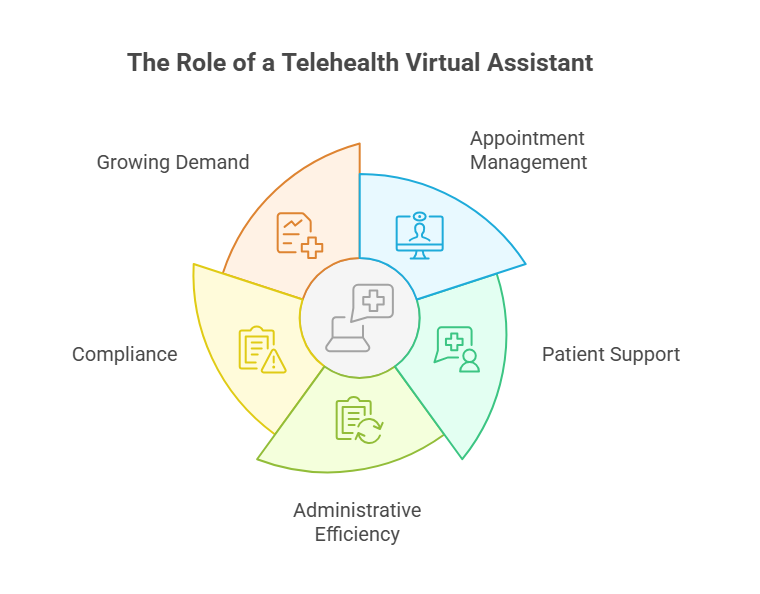
A Telehealth Virtual Assistant (Telehealth VA) is a trained remote assistant who supports healthcare providers in managing non-clinical tasks related to telemedicine services. They work behind the scenes to ensure virtual appointments run smoothly, patients are supported, and administrative processes remain compliant and efficient.
A telehealth virtual assistant functions as a specialized extension of the healthcare team, focusing on virtual care workflows rather than in-person operations. Whether serving as a virtual assistant for telehealth, a telemedicine virtual assistant, or a healthcare virtual assistant for telehealth, they help providers manage the growing administrative demands of remote care. With over 37% of U.S. adults using telehealth services, their role has become valuable, making telehealth virtual assistant services essential for modern healthcare delivery.
What Does a Telehealth Virtual Assistant Do?
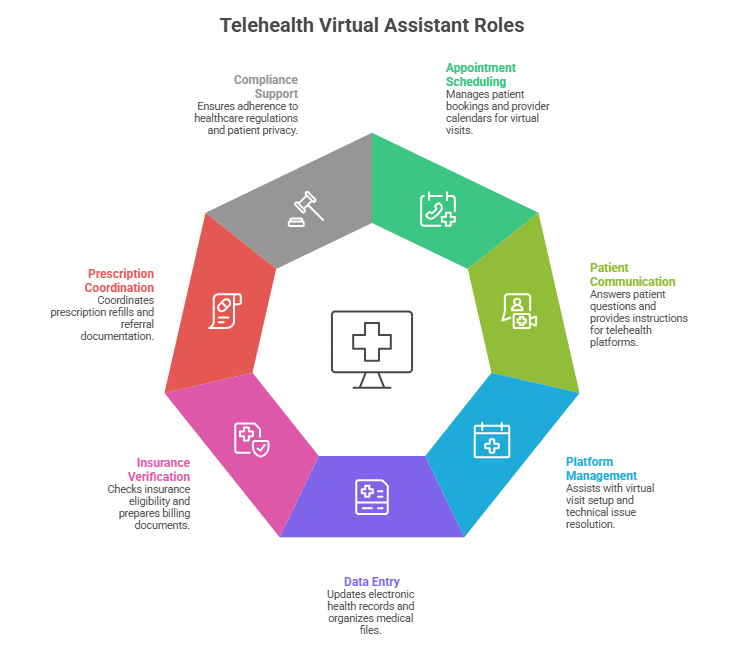
A Telehealth Virtual Assistant supports the operational backbone of telemedicine by handling administrative and coordination tasks. Their work ensures that virtual visits are organized, accessible, and compliant with healthcare regulations. Understanding how Virtual Assistants help in telehealth support begins with recognizing their role in streamlining everyday telehealth operations.
1. Appointment Scheduling and Coordination
A telehealth virtual assistant for patient scheduling manages appointment bookings and provider calendars for virtual visits. They handle confirmations, reminders, cancellations, and rescheduling using secure communication tools. This structured scheduling approach reduces no-shows and improves appointment efficiency.
2. Patient Communication and Support
A telehealth support virtual assistant communicates directly with patients for non-clinical needs. They answer questions about virtual visits, provide instructions, and guide patients through telehealth platforms. Consistent communication improves patient confidence and satisfaction.
3. Telehealth Platform Management
A telemedicine virtual assistant assists with setup and platform access. They support logins, manage waiting rooms, and fix basic issues—important when 70% of U.S. telemedicine visits are video. This ensures virtual consultations.
4. Medical Data Entry and Documentation Support
A medical virtual assistant for telehealth manages non-clinical documentation tasks. They update electronic health records, organize medical files, and enter visit-related information accurately. Proper data handling supports continuity of care and compliance.
5. Insurance Verification and Billing Support
A telehealth virtual assistant for medical billing assists with insurance eligibility checks and billing preparation. They track claim statuses and coordinate prior authorizations when required. This support helps maintain steady revenue cycles.
6. Prescription and Referral Coordination
A telehealth administrative virtual assistant coordinates prescription refill requests and referral documentation. They communicate with pharmacies, specialists, and internal staff as needed. Their coordination prevents administrative delays in patient care.
7. Compliance and Confidentiality Support
A remote telehealth virtual assistant follows HIPAA and applicable healthcare regulations. They use secure systems and controlled access protocols. Compliance-focused support protects patient privacy and provider liability.
Skills Required for a Telehealth Virtual Assistant
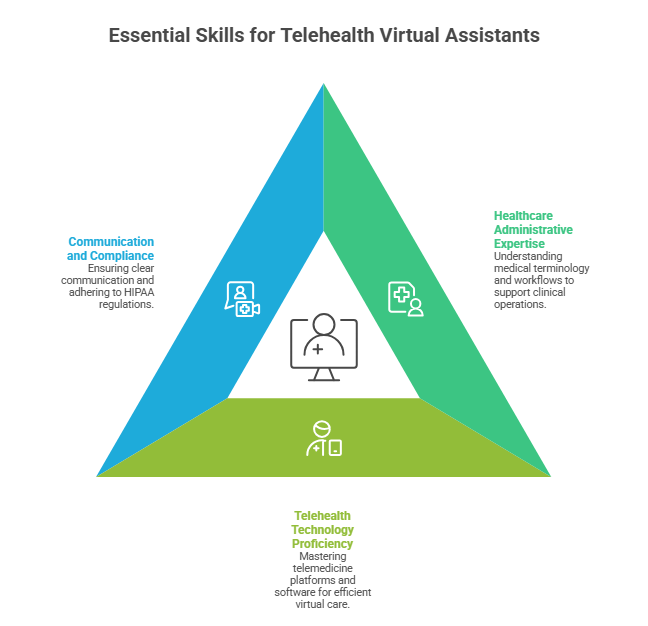
A successful telehealth virtual assistant must combine healthcare knowledge with strong technical and communication skills. These competencies allow them to operate effectively in virtual care environments while maintaining compliance. Understanding how Virtual Assistants help in telehealth support also requires recognizing the expertise behind their role.
1. Healthcare Administrative Expertise
A telehealth virtual assistant must understand medical terminology, workflows, and healthcare documentation standards. This knowledge enables them to support telehealth virtual assistant services without interfering with clinical decision-making.
2. Telehealth Technology and Software Proficiency
A virtual assistant for telehealth must be proficient in telemedicine platforms, EHR systems, and secure communication tools. Their technical capability ensures smooth virtual visits and minimal disruption for providers and patients.
3. Communication Skills and Compliance Awareness
Clear and professional communication is essential for patient and provider interactions. A US-based telehealth virtual assistant must also understand HIPAA requirements and confidentiality standards to ensure regulatory compliance.
Benefits of Hiring a Telehealth Virtual Assistant

Hiring a telehealth virtual assistant offers both operational and financial advantages for healthcare providers. These benefits extend across patient experience, staff workload, and long-term scalability. Providers evaluating how Virtual Assistants help in telehealth support often find significant improvements in efficiency and care delivery.
1. Reduced Administrative Burden
A telehealth administrative virtual assistant handles repetitive and time-consuming tasks. This allows providers to focus more on patient care rather than administrative duties.
2. Improved Patient Experience
Patients receive timely responses, clear instructions, and consistent follow-ups from a telehealth support virtual assistant. This creates a smoother and more professional virtual care experience.
3. Cost-Effective Healthcare Support
The telehealth virtual assistant cost is lower than hiring full-time in-house staff. An affordable telehealth virtual assistant helps practices control expenses while maintaining high service quality.
4. Increased Appointment Efficiency
A telehealth virtual assistant for clinics improves scheduling accuracy and appointment flow. This results in fewer missed appointments and better utilization of provider time.
5. Scalable Telehealth Operations
A remote telehealth virtual assistant enables practices to scale services easily. Support can be expanded without additional office space or long-term staffing commitments.
Telehealth Virtual Assistant vs In-House Healthcare Staff
| Aspect | Telehealth Virtual Assistant | In-House Staff |
|---|---|---|
| Location | Remote | On-site |
| Cost | Lower | Higher |
| Flexibility | High | Limited |
| Scalability | Easy | Difficult |
| Coverage | Virtual care support | Physical clinic support |
Who Should Hire a Telehealth Virtual Assistant?

Telehealth virtual assistants are ideal for telemedicine practices, primary care clinics, mental health professionals, specialists offering virtual consultations, home healthcare agencies, healthcare startups, and private practices expanding into virtual care. A telehealth virtual assistant for doctors or clinics provides the flexibility and expertise needed to manage remote operations efficiently. Providers across the United States increasingly choose to hire a telehealth virtual assistant to support growth while maintaining compliance and patient satisfaction.
TaskVirtual: A Trusted Partner for Telehealth Virtual Assistant Services

Managing telehealth operations requires consistent administrative support, reliable communication, and strict compliance with healthcare standards. From appointment scheduling to billing coordination, balancing these responsibilities internally can strain clinical teams and slow down virtual care delivery. TaskVirtual supports healthcare providers by offering dedicated telehealth virtual assistant services that streamline operations and enhance patient experience.
1. Specialized Telehealth Administrative Support
TaskVirtual provides trained virtual assistants experienced in telehealth workflows, patient scheduling, documentation support, and insurance coordination. Their assistants work as telehealth administrative virtual assistants who understand healthcare terminology, telemedicine platforms, and compliance requirements. This allows providers to maintain efficient virtual operations without adding internal staffing pressure.
2. Affordable and Flexible Pricing
Hiring full-time in-house staff for telehealth support can be costly and inflexible. TaskVirtual offers budget-friendly options with pricing ranging from $3.12/hour to $14.99/hour, making it easier for clinics, private practices, and telemedicine providers to scale support as needed. This cost-effective model helps control the overall telehealth virtual assistant cost.
3. Comprehensive Telehealth Support Services
TaskVirtual’s services cover a wide range of telehealth needs, including patient communication, telehealth platform coordination, medical data entry, and billing assistance. Whether you need a virtual assistant for telehealth or a medical virtual assistant for telehealth, their solutions adapt to both small practices and growing healthcare organizations.
4. Consistent Support and Quality Oversight
Beyond task execution, TaskVirtual ensures reliability through ongoing performance monitoring and communication. Their support model helps maintain consistency in patient interactions and administrative workflows. This proactive approach reduces errors and improves continuity in virtual care delivery.
5. Proven Reputation and Client Trust
TaskVirtual has earned 364 positive reviews with an average 4.7-star rating across trusted virtual assistant platforms. Healthcare providers rely on their expertise and professionalism to support telehealth operations effectively. Their proven track record makes them a dependable partner for long-term telehealth support.
Final Answer: What Is a Telehealth Virtual Assistant?
A Telehealth Virtual Assistant is a remote professional who provides administrative and operational support for telemedicine services. They manage scheduling, patient communication, telehealth platform coordination, documentation support, insurance verification, and billing-related tasks. By handling these responsibilities, a virtual assistant for telemedicine practices allows providers to deliver consistent, compliant, and patient-centered virtual care.
From solo providers to large healthcare organizations, telehealth virtual assistant services support efficiency, scalability, and cost control. Whether working as a telehealth virtual assistant, USA–based or globally, their role has become a critical component of modern digital healthcare delivery.
FAQ: Telehealth Virtual Assistant
1. Is a Telehealth Virtual Assistant HIPAA compliant?
Yes, when properly trained and using secure systems.
2. Can a Telehealth VA talk directly to patients?
Yes, for administrative and support purposes only.
3. Do Telehealth Virtual Assistants need medical training?
They need healthcare administrative knowledge, not clinical licenses.
4. Are Telehealth Virtual Assistants cost-effective?
Yes. They reduce overhead while improving operational efficiency.
5. Can small clinics use Telehealth Virtual Assistants?
Absolutely. They are ideal for clinics scaling virtual care services.
 Siddhartha Basu is a Technical Writer at Task Virtual. He loves online games, e-book reading, and Yoga.